
Comorerne
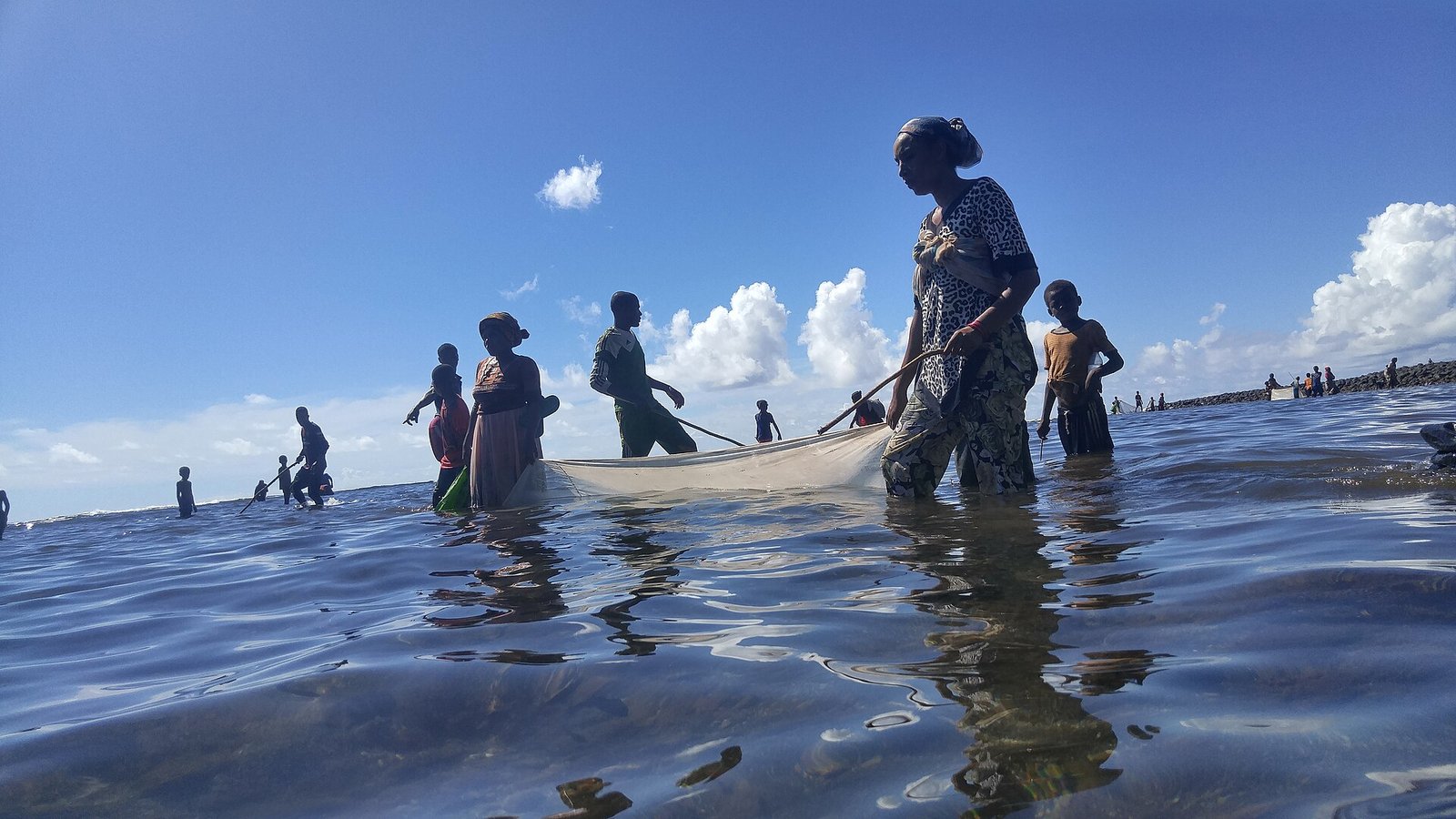
Foto af Sarahmcq, CC BY-SA 4.0, via Wikimedia Commons
Overblik
Comorerne er et land i det Indiske Ocean i Mozambique-kanalens nordlige udmunding mellem Madagaskars nordspids og det afrikanske kontinent. Pr. 2022 er der ca. 900.000 indbyggere på 2.034 km2 Republikken Comorerne består af øerne Grande Comore, Anjouan og Mohéli, som er tre ud af de fire hovedøer i øgruppen Comorerne. Den sidste er Mayotte, som tidligere hørte til Republikken Comorerne, men i dag er et fransk departement. De fleste af øerne i øgruppen er små koralrev, men de fire hovedøer er af vulkansk oprindelse og udgør hovedparten af arealet. Øerne ligger på 12 grader sydlig bredde og 44 grader østlig længde.
Tekst fra Wikipedia, licens CC BY-SA.
Hvor skal man hen i Comorerne

Skjulte perler
Mindre kendte steder, som rejsende på Wikivoyage anbefaler uden for de store byer i Comorerne: landsbyer, nationalparker og stille hjørner. De korte beskrivelser kommer fra de lister (CC BY-SA).

Helligdage
Nationale fridage i Comorerne de næste tolv måneder. Kontorer, banker og mange butikker lukker, og transport og overnatning bliver mere travl. Regionale helligdage og lokale festivaler er ikke med, og helligdage, der følger månen, kan flytte sig en dag.
- Nytårsdag · Nouvel An
- Laylat al-Mi'raj · الإسراء والمعراج
- End of Ramadan (Eid al-Fitr) · Fête de fin du Ramadan
- Cheikh Al Maarouf Day · Journée de Cheikh Al Maarouf
- 1. maj · Fête du travail
- Feast of the Sacrifice (Eid al-Adha) · Fête du mouton
- Islamic New Year · Nouvel an islamique
- Independence Day · Jour de l’Indépendance
- Birthday of Muhammad (Mawlid) · Mawlid
- Maore Day · Journée Maoré
Datoer fra projektet date-holidays, overvejende baseret på Wikipedia (CC BY-SA 3.0). Navnene vises på dit sprog, hvor der findes en oversættelse. Tjek lokalt, før du planlægger efter en helligdag.
At rejse i Comorerne
Denne del er på engelsk, som den er skrevet på Wikivoyage.
At komme rundt i landet
By plane. Int'Air Îles flies between Moroni, Anjouan, and Moheli daily. In Moroni their office is near the Volo Volo Market.
By car. It's possible to rent cars on Grand Comore for approximately CF15,000 to CF25,000 a day, depending on the type of car. In Moheli there are no rental agencies, but still you might try to rent a car or motorbike directly to a local with the help of your hotel. Petrol price varies from island to island. While you may pay CF600 per litre in Grand Comore, the price in Moheli (where petrol is scarce) can rise up to CF1000 per litre. Each island has a mainroad around the island. Road conditions can be really bad on certain sections, but still doable by regular vehicles without 4WD. Hitch-hiking is a very common practice among locals, specially in Moheli where there are fewer transportation options. If you look like a tourist, some fee may be requested. As the locals have no access to public transport and children have to walk to and from school, tourists with a car may wish to consider aiding hitch-hikers.
By public transport. Each capital is connected by bus with the villages on their respective island main road. Buses are usually packed, have no fixed schedule and stop running well before sunset. Shared taxis are the most common mode of public transport within cities.
By boat. Speedboats operate from Chindini on the southern coast of Grand Comore, to Hoani on the northern coast of Moheli. These boats are small fibreglass fishing boats with boat and engines in variable condition.
Penge og udgifter
Money. The country's currency is the Comorian franc, on Moheli denoted by the symbol "CF" (ISO code: KMF). Often, tourists will be given the price also in euros, even if just for reference. In those cases, an invariable exchange rate of €1 = CF500 is used. Coins of the Comorian franc are issued in denominations of CF25, CF50, CF100 and CF250. Banknotes of the Comorian franc are issued in denominations of CF500, CF1,000, CF2,000, CF5,000 and CF10,000. It is best to bring euro notes to the island. They can be exchanged at most shops for slightly better than the official rate (€1 = 500 francs). Note that barely noticeable torn banknotes won't be exchanged. There are four ATMs in Moroni in roughly the same area, however travellers report they are often broken and cannot be relied on. Banks may charge about 10% of withdrawal amount as transaction fees. Therefore it's more cost efficient to bring Euros cash. Other hard currency might be exchanged at a bureau de change.
Shopping. Handicrafts are not usually of good quality, though women of Mayotte as well as a few women in Grand Comore make quality baskets. One can buy CDs, colourful cloths that women wear (CF500 for a numbawani and CF750 for a finer shawl), beautiful scarves (CF2,000) and other imports. Most handicrafts and tourist curios for sale at Volo Volo market in Moroni are made in Madagascar, and sold by Malagasy expatriates in the market. Local crafts are hard to find, but some are available at CNAC in Itsandra.
Sprog
The official languages are French and Arabic. Most Comorians speak their own language known as Shikomori (Comorian), which is a group of Swahili dialects, as a first language and French as a second. Some can also speak Arabic. Finding a fluent English speaker is a very rare occurrence. However, an educated person will know a few words in English. Your best bet would be to learn French, which has a strong influence on media, education and business. Each island has its own dialect. The greetings below are not necessarily direct translations. Greetings nearly always follow this pattern:
Grand Comore. Yedje? (How are you?), response: Ndjema (good) Bariza? (News?), response: Ndjema Mahabari (News?), response: Salimina (peaceful) Hufanyiha dje? (How are you?), response: Ndjema Na kozazidi?
Moheli. Jeje?
Skikke og takt og tone
Although the Comoros is a rather liberal Muslim country, it is disrespectful for women to expose their shoulders, much of their chest, knees, and especially stomach and lower back. Wear shirts or shawls that cover these areas. Locals will not expect foreign, non-Muslim women to cover their heads. When swimming, local women are fully dressed. Foreigners are not expected to do this, but shorts and a swimming shirt is more respectful than a bikini or topless swimming. Men should wear shorts below the knee, though a man wearing shorter shorts is less offensive than a woman doing so. Public affection between men and women is not acceptable, though one may rarely see a Comorian man and woman holding hands briefly (in the nightclubs some locals seem to ignore Muslim convention). Non-Muslim religious proselytizing is illegal, as is giving Bibles to locals. Locals are very tolerant and friendly towards non-Muslims, but do not attempt to convert them. Drinking alcohol in public is disrespectful, though it occurs in nightclubs. Restaurants generally do not serve alcohol unless they cater to foreigners. To greet an elder, you say "kwesi". The elder says something like "mbona, mkana baraka" to which you respond "salaama". It is a big mistake to hand out sweets to children on the street. Since locals are unused to tourists, this rarely occurs and they are usually just happy to talk with you, children included.
Sikkerhed
Comoros is a really safe country. You will feel safe walking on your own on an empty street late at night, even if you are a woman, and it is very unlikely that you will suffer any kind of theft. However, as pavements and city lights are scarce, take caution if you are walking on the road side, especially on weekend nights. The political situation can be tense, especially in Anjouan island, where there are clashes between rebel and African Union forces. Some state that a civil war is possible. In October 2018, not long after the celebration of a referendum that reinforced the power of the president, Moutsamoudou suffered a week-long period of strike and revolts that ended with several dead. Cyclones possible during rainy season (December to April). Le Kartala on Grand Comore is an active volcano. Most countries' diplomatic presence in Comoros is carried out through embassies located in nearby Madagascar, Kenya, Tanzania, Mauritius, or South Africa, though a few countries do operate full embassies or other diplomatic offices in Moroni.
Fra Wikivoyage-guiden, skrevet af rejsende (CC BY-SA), forkortet. Tjek altid din regerings officielle rejsevejledning om indrejse, visum, sundhed og den aktuelle sikkerhed (linket ovenfor).