

Congo-Brazzaville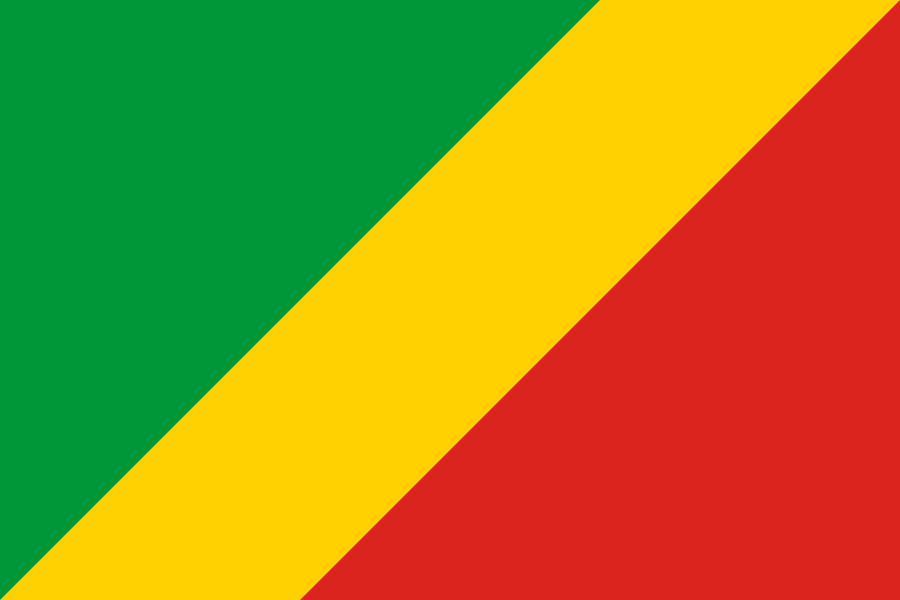
Foto af Africany, CC0, via Wikimedia Commons
Overblik
Denne artikel omhandler det afrikanske land Republikken Congo. Opslagsordet har også en anden betydning, se Congo. Republikken Congo eller Congo Brazzaville er et selvstændigt land i Afrika. Republikken var tidligere en fransk koloni og opnåede uafhængighed i 1960. Congofloden i det vestlige Centralafrika danner grænse til den Demokratiske Republik Congo.
Tekst fra Wikipedia, licens CC BY-SA.
Hvor skal man hen i Congo-Brazzaville


Skjulte perler
Mindre kendte steder, som rejsende på Wikivoyage anbefaler uden for de store byer i Congo-Brazzaville: landsbyer, nationalparker og stille hjørner. De korte beskrivelser kommer fra de lister (CC BY-SA).

Ile Mbamou
Ingen steder på listen endnu
A government-owned island that is about one hour from Brazzaville

Nouabalé-Ndoki National Park
Ingen steder på listen endnu
The largest and most remote of Congo's national parks and reserves, in the far north bordering the Central African Republic's Dzanga Sangha National Reserve

Odzala-Kokoua National Park
Ingen steder på listen endnu
The country's most famous national park
Lesio Louna Gorilla Reserve
Ingen steder på listen endnu
A special reserve for endangered western lowland gorillas, bounded by three rivers
Helligdage
Nationale fridage i Congo-Brazzaville de næste tolv måneder. Kontorer, banker og mange butikker lukker, og transport og overnatning bliver mere travl. Regionale helligdage og lokale festivaler er ikke med, og helligdage, der følger månen, kan flytte sig en dag.
- Journée nationale de la République
- Juledag · Noël
- Nytårsdag · Nouvel An
- Anden påskedag · Lundi de Pâques
- 1. maj · Fête du travail
- Kristi Himmelfartsdag · Ascension
- Pinsedag · Pentecôte
- Anden Pinsedag · Lundi de Pentecôte
- Fête de la commémoration de la conférence nationale souveraine
- Assumption · Assomption
- All Saints' Day · Toussaint
Datoer fra projektet date-holidays, overvejende baseret på Wikipedia (CC BY-SA 3.0). Navnene vises på dit sprog, hvor der findes en oversættelse. Tjek lokalt, før du planlægger efter en helligdag.
At rejse i Congo-Brazzaville
Denne del er på engelsk, som den er skrevet på Wikivoyage.
At komme rundt i landet
By shared taxi or minibus. Ridiculously cheap shared taxis and minibuses run on an ad hoc basis between towns and villages, crammed with Congolese villagers taking all sorts of livestock for sale in Brazzaville.
By taxi. Taxis in the Republic of the Congo do not have a meter, which means you have to negotiate for a reasonable fare before going anywhere. Don't expect this to be an easy process if you do not possess solid French language and negotiation skills. In the capital city, Brazzaville, taxis are white and green in colour. If you want to go to the city centre from the airport, it will cost you 3000 CFA. In the main city, however, the official taxi fare stands at 700 CFA.
By train. train station]] The Congo-Ocean Railway (COR, or CFCO) re-opened between Pointe-Noire and Brazzaville in Apr 2023 after a 7-year closure. It is scheduled to take 16 hours to complete the 502 kilometres (312 mi) journey. It is the only land route between Congo's two major cities.
Penge og udgifter
Money. The currency of the country is the Central African CFA franc, denoted FCFA (ISO currency code: XAF). It's also used by five other Central African countries. It is interchangeable at par with the West African CFA franc (XOF), which is used by six countries. Both currencies are fixed at a rate of 1 euro = 655.957 CFA francs. The U.S. dollar is not widely accepted.
ATMs. All Ecobank ATMs in the Republic of the Congo take Mastercard and Visa card for cash withdrawal.
Shopping. There is an artisan mart and boutiques in the market near the BDEAC (Banque Developpement pour les Etats de l'Afrique Centrale). Really beautiful jewelry, masks, paintings, and other artwork. All business is conducted in cash. Small change is very scarce and hard to come by. Do not accept torn or taped banknotes.
Sprog
See also: French phrasebook The official language of the country is French. The main indigenous languages are Kituba and Lingala.
Skikke og takt og tone
White travelers should take care while travelling in the Republic. Racial tension and discrimination is not uncommon here, so be safe and keep to yourself.
Telefon og internet
You can talk to your loved ones using any of the three mobile operators MTN, CelTel (now Zain), or Warid. The local call rate are relatively cheap and cost you around FCFA 20-20 per minute.
Sikkerhed
Authorities. There are numerous police checkpoints throughout the country and it's difficult to know if you're coming across a police checkpoint since many of them are poorly marked. In the event you come across a police checkpoint, the police may ask you for your ID and they may conduct a thorough search of your vehicle. This is purely for security reasons, nothing more, nothing less. Corruption in the Congolese police is widespread. Since members of the police earn low salaries, it's possible they may coerce you into giving them bribes or they may abuse their powers. As with all authority figures, always remain calm, firm, and polite. If a policeman asks you to do something, just do it. Do not lose your temper if you end up meeting an ill-behaved official and do not challenge their authority.
Political unrest. The Republic of the Congo is one of the most corrupt and least efficiently governed countries in the world. Corruption, cronyism, and nepotism are widespread. The Congolese have a strained relationship with their government and demonstrations against the government can turn violent. Although no major protests have occurred since 2015, keep an eye out.
Civil conflict. As aforementioned, many Congolese people are frustrated with their government, and this has often lead to open warfare. The most recent war was the "Pool War", in which more than 13,000 people were displaced in the Pool region. Although ceasefire agreements remain in place, frustrations with the government mean that conflict can erupt at any time.
Fra Wikivoyage-guiden, skrevet af rejsende (CC BY-SA), forkortet. Tjek altid din regerings officielle rejsevejledning om indrejse, visum, sundhed og den aktuelle sikkerhed (linket ovenfor).