
Danmark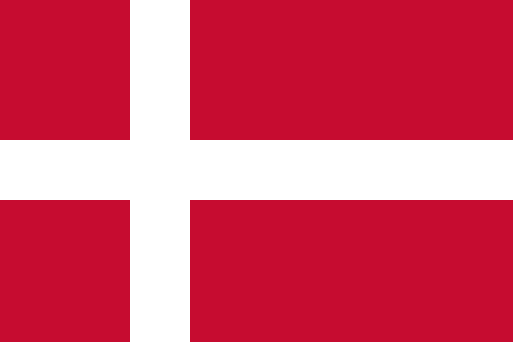
Foto af Pudelek, CC BY-SA 4.0, via Wikimedia Commons
Overblik
For alternative betydninger, se Danmark (flertydig). (Se også artikler, som begynder med Danmark) Danmark er et land i Skandinavien i Nordeuropa. Det er den sydligste af de skandinaviske nationer; sydvest for Sverige og syd for Norge, og med landegrænse til Tyskland mod syd. Danmark udgør sammen med Grønland og Færøerne Kongeriget Danmark, hvor Danmark, Grønland og Færøerne er rigsdele. Grønland har selvstyre og Færøerne har hjemmestyre. Rigsdelenes indbyrdes relation kaldes Rigsfællesskabet. Danmark er omgivet af flere have: Vesterhavet (Nordsøen), Skagerrak og Kattegat på henholdsvis vest-, nord- og østsiden af Jylland, og Kattegat og Østersøen henholdsvis nord og syd for de danske øer. Landet består af halvøen Jylland (undtagen den tyske del, og oftest medregnet Nørrejyske Ø) og 443 navngivne øer, småøer og holme, med de største øer Sjælland, Nørrejyske Ø og Fyn.
Tekst fra Wikipedia, licens CC BY-SA.
Hvor skal man hen i Danmark


Skjulte perler
Mindre kendte steder, som rejsende på Wikivoyage anbefaler uden for de store byer i Danmark: landsbyer, nationalparker og stille hjørner. De korte beskrivelser kommer fra de lister (CC BY-SA).

Skive
55 steder på listen
High cliffs and heather-covered hills. Unique geological formation renowned for its especially rich fossil finds from the Eocene, listed as a in 2026 together with similar fossil sites on the island of Mors. Experience some of the most interesting finds at Fur Museum. Fur Bryghus is a much appraised local micro-brewery. Rent a holiday home, use the campsite, or dock at the small harbour with your leisure boat. The island can be accessed by a small ferry from the top of the Salling peninsula.

Samsø
32 steder på listen
Denmark's "greenest" island has garnered international attention since the heat and energy consumption on the island is exclusively produced locally by renewable sources. Samsø is home to the annual music festival Samsø Festival, calling itself Denmark's "hyggeligste" (i.e. most cosy).

Thy National Park
28 steder på listen
A big windswept coastal wilderness of sand dunes, dune heaths, and woodland. One of Denmark's five national parks, designated in 2008.

Kongernes Nordsjælland National Park
24 steder på listen
A national park covering the old hunting grounds of ancient kings.

Ertholmene
9 steder på listen
This small group of islands, governed by the Ministry of Defence, makes up for Denmark's most eastern land and home to a large a bird reserve, as well as old defence installations.

Stevns
9 steder på listen
A 65-million-year-old cliff made up of lime and chalk, which stretches more than 12 km on the shoreline and up to 41m above sea-level.

Wadden Sea National Park
7 steder på listen
The largest of Denmark's national parks covers the Danish part of the Wadden Sea from Ho Bugt to the German border, and includes the islands of Fanø, Mandø and Rømø, Skallingen, the Varde Å valley, and many marshlands

Læsø
6 steder på listen
Get away from it all in this remote island in Denmark's "desert belt", ride through the sand dunes on horseback and see unique farmhouses with seaweed roofs.

Fanø
4 steder på listen
A 16 km long and 5 km wide island, with an unusual large mount of different natural environments on a small area: Sand, heath, meadow and pine wood.

Anholt
3 steder på listen
More than 45 km from nearest mainland and pretty much right between Sweden and Denmark, this secluded island offers the largest desert in Northern Europe and one of Scandinavia's largest seal populations.

Als
2 steder på listen
An island whose capital, Sønderborg, is home to Sønderborg Castle (Sønderborg Slot) and Sandbjerg Estate (Sandbjerg Gods).

Bogø
2 steder på listen
Bogø is a Danish island in the Baltic Sea, just west of Møn. The population is 1,173 with 897 living in the only town on the island, Bogø By. The island is approximately 7 km long by 3 km wide at the largest points, with a total area of 13 km2. The highest point of the island is 32 metres above sea level.

Almindingen
Ingen steder på listen endnu
The third largest Danish forest

Hirsholmene
Ingen steder på listen endnu
A group of 10 small islands 7 km to the northeast of Frederikshavn, noted for its high population of birds, but also home to some excellent beaches and a relatively large number of World War II-era bunkers.
Odsherred
38 steder på listen
Odsherred is a peninsula in the north-western part of the island Zealand (Sjælland) in Denmark. Odsherred stretches from the Sjællands Odde in the north-west to the now drained Lammefjord in the south, covering an area with a wide range of the most typical Danish landscapes: long sandy beaches, small rolling hills and farming. The peninsula is served by the railway Odsherredsbanen, which runs through the most important towns, including Nykøbing Sjælland, Asnæs and Hørve.
Smålandsfarvandet
1 sted på listen
Most famous for being one of the first bastions for the women's rights movement, it now attracts lesbians and feminists, while priding itself in welcoming all women.
Helligdage
Nationale fridage i Danmark de næste tolv måneder. Kontorer, banker og mange butikker lukker, og transport og overnatning bliver mere travl. Regionale helligdage og lokale festivaler er ikke med, og helligdage, der følger månen, kan flytte sig en dag.
- Juledag
- Anden Juledag
- Nytårsdag
- Skærtorsdag
- Langfredag
- Påskedag
- Anden påskedag
- Kristi Himmelfartsdag
- Pinsedag
- Anden Pinsedag
Datoer fra projektet date-holidays, overvejende baseret på Wikipedia (CC BY-SA 3.0). Navnene vises på dit sprog, hvor der findes en oversættelse. Tjek lokalt, før du planlægger efter en helligdag.
At rejse i Danmark
Denne del er på engelsk, som den er skrevet på Wikivoyage.
At komme rundt i landet
Long distance train travel is done with DSB, the Danish State Rail system. A number of long distance bus companies also operate. Each region in Denmark has its own local public transportation company. For public transportation (trains, buses and ferries) use the online travel planner Rejseplanen. There are two ways to buy tickets. For local trips you can buy a ticket from the regional transportation company based on a zone system. This ticket is valid on all public transportation including DSB trains for one to two hours (depending on the number of zones you travel). Most public transportation companies offer a number of passes which can save you a substantial amount on transportation. Rejsekort is an electronic ticketing system. For travellers it could makes sense to get the Anonymous prepaid card. The personal version will be expensive and take several weeks to obtain. The card costs 80 kr which is not refundable, and the balance on the card must be at least 70 kr when you start a trip (600 kr for inter-regional trips) which make it hard to end up with an empty card; but maybe you can pass the card on to a Dane when you leave. But the discounts are substantial so if you plan more than a few trips it is probably worth it. Several travellers can share the same card (on busses you have to tell the driver that you are more than one using the same card before you).
Penge og udgifter
Money. The national currency is the Danish krone (plural "kroner", abbreviated "kr", ISO code: DKK). The word krone means crown in English; some vendors may translate it as such. Denmark is the only EU country that has negotiated a legal opt-out from adopting the euro (i.e. all other remaining non-euro EU countries are legally required to adopt the single currency at some point in the future). In the more "touristy" shops in Copenhagen, and at the traditional beach resorts along the Jutland West Coast and Bornholm Island it will often be possible to pay in euros. The Danish krone is pegged to the euro at a rate of per euro with a narrow band of plus or minus 2.25%. Theoretically this means one euro may move anywhere between and. Kroner come in 50 øre (½ kroner) copper coins, 1, 2 and 5 kroner silver nickel coins with a hole in the centre, and finally solid 10 and 20 kroner bronze coins. Banknotes of the 2009-series with denominations of 50 kr (purple), 100 kr (orange), 200 kr (green) and 500 kr are legal tender. The National Bank is planning to introduce a new series of banknotes in 2028-2029. The National Bank no longer provides an outlet for numismatics to buy uncirculated coins and banknotes. Faroese króna are exchangeable in Danish banks at par (1:1 ratio) but are only legal tender in the Faroe Islands.
Banking and payment. Automatic teller machines are widely available even in small towns, but some ATMs are closed during night time out of security reasons.
Sprog
Denmark's national language is Danish (Dansk), a Scandinavian language rooted in Old Norse. For this reason, modern Danish is similar to Norwegian Bokmål and somewhat to Swedish, and is to some extent intelligible to speakers of those languages, especially in written form. However, its sound is more influenced by the guttural German language, rather than the lilting languages found to the north and understanding spoken Danish may be a trace more difficult to those who only speak Swedish or Norwegian. English is widely spoken in Denmark and many Danes (80-90% of the population) are fluent in the language; it is mandatory for Danes to learn English at school from a young age.
Skikke og takt og tone
In a country which has no direct equivalent to please in its vernacular, where the local version of Mr. and Ms. has all but disappeared from common usage, and where the people can hardly muster a sorry if they bump into you on the streets, you could be forgiven to think they are the rudest people on earth, and you can get away with pretty much anything. You'd be wrong. Most of the behaviour many tourists consider appalling can be attributed to either the Danes' blatant – and when you get to understand it, quite sympathetic – disregard for formality, or their unfortunate shyness (see Drink above), and there are rules to the madness, way too complex to get into here, but some of the most important ones can be summed up as follows: ]]It is generally not considered impolite to omit verbal formalities common in other cultures, such as generic compliments or courteous bromides. Likewise, Danes almost never use Sir or Madam to address each other, as it is perceived as distancing oneself. On the contrary, addressing even a stranger by their first name is considered a friendly gesture, unless they are royals. Employees, including waiters, are empowered in Denmark, so do not expect anybody to dance to your tune, even in expensive restaurants. If you are dissatisfied with something, handle the situation diplomatically. Honesty is valued and forms the foundation of most social interactions in Denmark. Danes generally expect you to be true to your word.
Telefon og internet
Internet. While Internet cafés are present in most larger cities, they are usually not geared for tourists and hence they can be a bit tricky to find. Hotels usually provide both wireless internet and computers with internet access, but whether this service is provided for free, varies greatly. Many cafés and bars also provide free wireless internet for paying customers, even when it is not signposted, so it is always a good idea to ask. A lot of the McDonald's restaurants in Denmark have a couple of internet terminals available for their customers. The easiest way to get online is often the public library, as there is one in almost every town. Public libraries are usually centrally located, well signposted (look for Bibliotek) and always free. There can be a bit of waiting time to get a free computer though, but there will normally also be some sort of reservation system in place. If staying for more than a few weeks, it might be worthwhile to get a mobile broadband connection. Most of the country has excellent coverage and speeds rivalling those of a fixed connection in the major cities and plenty for surfing the web, even in many of the more remote areas.
Sikkerhed
Dial [tel:112 1-1-2] (Alarm 112) for emergency services in situations that are dangerous for life, health, property, or the environment, such as accidents, serious crime and fire. This is toll free, and will work even from cell phones without a SIM card. For the police in non-emergencies call [tel:114 1-1-4] (Service 114). Generally: Denmark is a very safe country, with almost no risk of natural disasters or animal attacks. There is one poisonous snake in some heathlands (Hugorm, the European viper; rare and non-aggressive), and a stinging, bottom-dwelling fish called "Fjæsing", known as Greater Weever (Trachinus draco) in English. Its sting is painful, and strong enough that medical treatment is always encouraged; for children and the elderly it is indeed often lethal. Red stinging jellyfish sometimes infest bathing waters in great numbers. Their sting can be painful, but has no adverse effects on humans. They are dish-sized, easy to spot and avoid. As in the rest of Europe and the world at large, borrelia-carrying ticks have also been on the rise in Denmark. Always check your body for them when you have been in the wild, especially when legs and arms are bare and the vegetation high. If a red ring forms around the bite in a week or so, you should seek medical assistance as soon as possible.
Fra Wikivoyage-guiden, skrevet af rejsende (CC BY-SA), forkortet. Tjek altid din regerings officielle rejsevejledning om indrejse, visum, sundhed og den aktuelle sikkerhed (linket ovenfor).