

Laos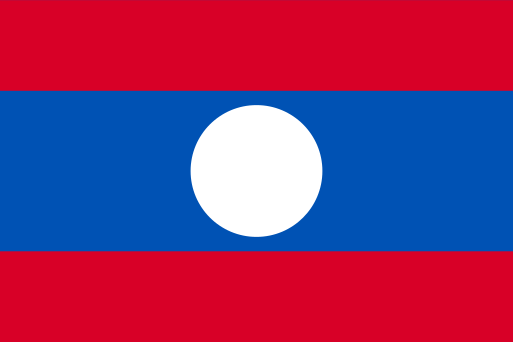
Foto af Basile Morin, CC BY-SA 4.0, via Wikimedia Commons
Overblik
Der er for få eller ingen kildehenvisninger i denne artikel, hvilket er et problem. Du kan hjælpe ved at angive troværdige kilder til de påstande, som fremføres i artiklen. Laos (laotisk: ປະເທດລາວ, Pa Thēt Lāo; officielt Demokratiske Folkerepublik Laos, laotisk: ສາທາລະນະລັດ ປະຊາທິປະໄຕ ປະຊາຊົນລາວ, Sathalanalat Paxathipatai Paxaxon Lao) er en stat i Sydøstasien og medlem af ASEAN, der grænser til Vietnam, Cambodja, Thailand, Myanmar og Folkerepublikken Kina. Pr. 2016[ref] anslås det at der bor 6.758.353 indbyggere i Laos. Hovedstaden er Vientiane (Viangchan), der anslås at have 783,000(2013) indbyggere. Landets økonomi er mestendels præget af landbrug, industri bidrager til bruttonationalproduktet med omtrent 22 % og servicesektoren med omtrent 25 %. Staten Laos har et etpartisystem under ledelse af Det laotiske folks revolutionære parti.
Tekst fra Wikipedia, licens CC BY-SA.
Hvor skal man hen i Laos


Skjulte perler
Mindre kendte steder, som rejsende på Wikivoyage anbefaler uden for de store byer i Laos: landsbyer, nationalparker og stille hjørner. De korte beskrivelser kommer fra de lister (CC BY-SA).

Vang Vieng
37 steder på listen
Backpacker hangout for exploring limestone caves and tubing on the Nam Song river

Nong Khiaw
27 steder på listen
Beautiful karst cliffs where you can discover hilltribe villages, kayak, bike ride or just hang out

Muang Ngoi Neua
25 steder på listen
A riverside village in Luang Prabang province. Only accessible by boat.

Muang Khua
6 steder på listen
Muang Khua is a village in Laos, near the Vietnamese border, in the province of Phongsali.

Champasak
5 steder på listen
Wat Phu is a UNESCO World Heritage Site with Angkor-style Khmer temples

Vieng Xai
5 steder på listen
Remote cultural oasis and symbolic cradle of Marxism; see the caves where the Pathet Lao leaders ran their operations in defiance of the West

Plain of Jars
1 sted på listen
Iron Age cemetery sites near Phonsavan; also one of the main locations to learn about the "Secret War".

Bolaven Plateau
Ingen steder på listen endnu
Highland with waterfalls, jungles and farmland

Phou Khao Khouay National Protected Area
Ingen steder på listen endnu
Phou Khao Khouay National Park is a protected area in Laos. It is located 40 kilometres (25 mi) northeast of Vientiane. It covers an area of 1920 km2, extending into Xaisomboun Province, Vientiane Prefecture, Vientiane Province, and Bolikhamsai Province. It was established on 29 October 1993 as Phou Khao Khouay National Biodiversity Conservation Area, and redesignated a national park in 2021. It includes a large stretch of mountain range with sandstone cliffs, river gorges and three large rivers with tributaries which flow into the Mekong River.

Si Phan Don
Ingen steder på listen endnu
The "four thousand islands" are nestled within the Mekong near the Cambodian border
Ban Nakasang
Ingen steder på listen endnu
A small riverside town that is one of the main stations for boat and bus services to Don Det and Don Kon, the two most popular of the "4,000 Islands"
Nam Et - Phou Louey National Park
Ingen steder på listen endnu
Protects one of Southeast Asia’s richest biodiversity areas in rugged, forested terrain, and steep valleys.
Tadlo
Ingen steder på listen endnu
A village with 3 waterfalls nearby
At rejse i Laos
Denne del er på engelsk, som den er skrevet på Wikivoyage.
At komme rundt i landet
Travel within Laos has historically been slow, often painful and sometimes dangerous, but the 2021 opening of a railway spanning the northern half of the country and the ongoing construction of a parallel expressway is set to shake things up. Nevertheless, if travelling off the beaten track, allow plenty of leeway in your schedule for the near-inevitable delays, cancellations and breakdowns.
By plane. In addition to the three international airports mentioned in the Get In section (Vientiane, Luang Prabang & Pakse), there are domestic airports with scheduled flights to Vientiane in Bokeo, Luang Namtha, Oudomsay, Xieng Khouang (flights to/from Luang Prabang too), Sam Neua & Sayaboury. State carrier Lao Airlines and private company Lao Skyway have a near-duopoly on domestic flights. Lao Airlines managed a 13-year accident-free streak until an October 2013 crash near Pakse resulted in 49 fatalities, the country's deadliest air disaster. The fairly comprehensive network is by far the fastest and, relatively speaking, the safest way of reaching many parts of the country, although the new train line (see below) offers real competition. As of 2024, tickets for the popular Vientiane-Luang Prabang route (40 minutes) can be had for as little as US$34 (Lao Skyway), but the new high-speed train connects these two places for only US$12, and takes 2 hours. Otherwise, the third option is 10 hours on a bus.
Penge og udgifter
Money. The Lao currency is the kip (ກີບ), pronounced kiip and officially denoted by the symbol "₭" (ISO code: LAK). Wikivoyage articles use kip to denote the currency. The largest note is ₭100,000 (less than US$5). Notes in common circulation are ₭1,000 (purple), ₭2,000 (light blue), ₭5,000 (brown), ₭10,000 (dark blue), ₭20,000 (red), ₭50,000 (pink) and ₭100,000 (green). Withdrawing the maximum of 2,500,000 kip from an ATM could result in 25 100,000-kip notes. This makes carrying large quantities of kip quite inconvenient. In speech, it's common to drop the final three zeroes, so "20" means 20,000. Each note shows its value twice: in western numerals and in Lao numerals. The Lao numeral for 1 (໑) looks a lot like a western 9, the Lao 2 (໒) could be confused with a western 6, and the Lao 0 (໐) is an oval, so ໑໐໐໐໐ (10,000) might be misinterpreted as “90000” at a glance. The Western numerals are usually printed alongside, so check those if in doubt. The Lao kip is a non-convertible currency, meaning that outside border towns, it's very hard to exchange kip in other countries, and rates can be poor even in Laos. It's best to exchange any excess kip before leaving the country. There are currency exchange counters at both Vientiane Airport and the Nong Khai-Vientiane land border (straight and right of the Visa on Arrival desk). Laos experienced a currency crisis between 2020 and 2024, with annual inflation of 25% and the kip crashing from 9,000 to 21,000 to the US dollar.
Sprog
The official language of Laos is Lao (ພາສາລາວ pháa-sǎa láo), a tonal language closely related to Thai. The Thai dialect spoken in the northeastern Isaan region of Thailand, historically a part of greater Laos, is in fact very similar to Lao. French, a legacy of the colonial days, is often used in government and commerce. It is taught in schools and is a working language in many professional sectors such as law and health. For instance, the state electricity generator is called Électricité du Laos. French is also often used to transliterate Lao words and is featured on a lot of public signage. English is gradually becoming popular, but proficiency in the language is generally poor. Try to speak slowly and carefully so that people can understand you.
Skikke og takt og tone
]] Dress respectfully (long trousers, sleeved shirts) when visiting temples and take your shoes off before entering temple buildings and private houses. As with other Buddhist countries, showing the soles of your feet is very poor manners. Never touch any person on the head. Despite the prevalence of cheap alcohol, public drunkenness is considered disrespectful and a loss of face. Things in Laos happen slowly and rarely as scheduled. Keep your cool, as Lao people will find humour in any tourist showing anger. They will remain calm, and venting your anger will make everybody involved lose face and is certainly not going to expedite things, particularly if dealing with government bureaucracy. Swastikas are commonly seen at Buddhist temples. They are regarded as a sacred symbol, and have no connection to Nazism or anti-Semitism whatsoever, predating fascism in this part of the world by centuries.
Religion. Theravada Buddhism is the dominant religion in Laos, and it plays an important role in Laotian society. Laotian men are generally expected to spend a certain amount of time living as a monk at least once in their lifetime. Try not to show any form of disrespect to Buddhism—inappropriately presenting Buddha or inappropriately behaving in a Buddhist temple is no laughing matter and will offend many. Buddhist monks are accorded a great deal of respect in Laos, so behave accordingly when you come face to face with a monk.
Telefon og internet
Laos phone numbers have the format +856 20 654 321 where "856" is the country code for Laos. Numbers starting with 20 are mobile numbers, while all others are landlines. Laos Country Code is "+856". International Call Prefix is "00". Laos Call Prefix is "0". Laos articles here use the convention "+856 xx xxxxxx" except for emergency numbers which use local format with leading zero, "0xx xxxxxx" Internet cafés can be found in larger towns, however access speeds are usually painfully slow and cafe staffs have less knowledge. The most reliable connections are in Vientiane, and usually cost around 100 kip/minute, with the cheapest offering 4,000 kip/hour. However, Internet security is not guaranteed and computer viruses are abundant. In most cases, Wi-Fi is the best option. Most Western-style cafés offer free Wi-Fi-access for customers. Most accommodations, even budget places in Vientiane, offer free Wi-Fi. Mobile phone usage in Laos has mushroomed, with four competing GSM operators. Two of these offer roaming services. Calling people on the same network is always cheaper than calling another network, but there is no clear market leader.
Sikkerhed
Laos in general is a safe country, in part because violent crime is punished to a significant extent by the government. This said, petty crime remains a concern. In accordance with the law, you are required to have an identification document on you at all times, and the police have the legal right to ask you for it. What this means: a copy of your national identity card or your passport. If they ask you for it, just give it to them. Failing to produce an identity document on request will result in a fine.
Corruption. Laos is one of the most corrupt countries in the world. Bribery, cronyism, and nepotism are not unheard of and have become accepted practices. Most government employees (policemen, border officials, etc.) do not earn much more than minimum wage. Their low wages are compounded by the ongoing inflation of the Laos kip (23% in 2024 alone) which means imported goods are rapidly rising in price. Foreign tourists are most exposed to corruption when entering or exiting Laos through a land border, and when driving a scooter or motorbike through a built-up area. To avoid being made to pay a bribe, watch what the locals do at border checkpoints. Owing to the volumes of people, bribes at land crossings tend to be small (a few USD). When you rent a scooter, ask at the rental shop which intersections are known to be favoured by corrupt police who lie in wait to pull over foreigners and accuse them of a made-up infraction of the road rules.
Crime. Laos is generally a safe low-crime country.
Fra Wikivoyage-guiden, skrevet af rejsende (CC BY-SA), forkortet. Tjek altid din regerings officielle rejsevejledning om indrejse, visum, sundhed og den aktuelle sikkerhed (linket ovenfor).