

Nepal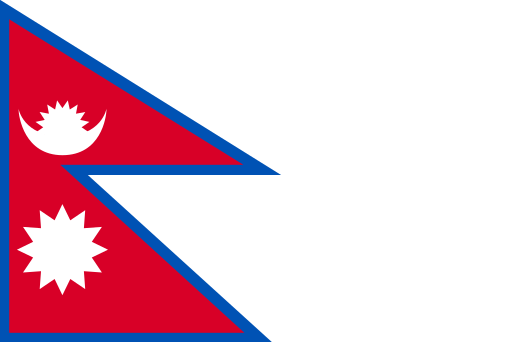
Foto af Gerd Eichmann, CC BY-SA 4.0, via Wikimedia Commons
Overblik
Nepal, (nəˈpɑːl, nepalesisk: नेपाल; officielt 2008 Kongeriget Nepal og herefter Den føderale demokratiske republik Nepal) er en indlandsstat, der ligger mellem Indien i øst, vest og syd og Kina (Tibet) mod nord. Landet er beliggende i Himalaya og ti af verdens 16 højeste bjerge ligger i Nepal. Verdens højeste bjerg, Mount Everest, lokalt kendt som Sagarmatha, ligger på grænsen mellem Nepal og Kina. Hovedstaden Kathmandu ligger sammen med byerne Lalitpur, Bhaktapur, Thimi og Kirtipur i Katmandudalen. Nepal har siden 2008 være en republik. Den politiske situation i Nepal var forinden gennem flere år præget af en voldelig konflikt mellem kong Gyanendra og hans regering på den ene side og Nepals Kommunistiske Parti (maoisterne) på den anden side, mens de traditionelle demokratiske politiske partier havde forskellige placeringer i konflikten.
Tekst fra Wikipedia, licens CC BY-SA.
Hvor skal man hen i Nepal


Skjulte perler
Mindre kendte steder, som rejsende på Wikivoyage anbefaler uden for de store byer i Nepal: landsbyer, nationalparker og stille hjørner. De korte beskrivelser kommer fra de lister (CC BY-SA).

Bardiya National Park
10 steder på listen
Bardiya National Park is a protected area in Nepal that was established in 1988 as Royal Bardia National Park. Covering an area of 968 km2 (374 sq mi) it is the largest and most undisturbed national park in Nepal's Terai, adjoining the eastern bank of the Karnali River and bisected by the Babai River in the Bardiya District. Its northern limits are demarcated by the crest of the Siwalik Hills. The Nepalgunj-Surkhet highway partly forms the southern boundary, but seriously disrupts the protected area.

Nagarkot
9 steder på listen
A hill station one hour from Kathmandu offering excellent views of the Himalayan Range.

Pharping
6 steder på listen
The site of several sacred caves associated with Padmasambhava, the founder of Tibetan Buddhism.

Shey-Phoksundo National Park
5 steder på listen
In the Dolpa district

Gokyo
3 steder på listen
Gokyo is a small village in Solukhumbu District in the Himalayas of Nepal, at the foot of Gokyo Ri, located on the eastern shore of the third Gokyo Lake, Dudh Pokhari. To the southeast is the village of Chharchung. Gokyo is best viewed on Google Earth at 27°57′16″N 86°41′43″E.

Khumbu
2 steder på listen
The tallest peak of the world.

Langtang National Park
1 sted på listen
Langtang National Park is a national park in north-central Nepal. It was established in 1976 as Nepal's first Himalayan national park and the country's fourth protected area. It covers an area of 1,710 km2 (660 sq mi) in the Nuwakot, Rasuwa and Sindhulpalchok Districts of the central Himalayan region. It contains 26 village communities and includes the Langtang valley. In the north and east it is linked with Qomolangma National Nature Preserve in the Tibet Autonomous Region. The eastern and western boundaries follow the Bhote Koshi and the Trishuli river, respectively.

Sri Antu
1 sted på listen
Shree Antu is a Village / Valley within Suryodaya Municipality in Ilam District in the Koshi Province of eastern Nepal. At the time of the 2021 Nepal census it had a population of 5,127.

Daman
Ingen steder på listen endnu
Tiny village in the mountains offering panoramic views of the Himalayas; especially stunning at sunrise and sunset.

Shuklaphanta National Park
Ingen steder på listen endnu
Shuklaphanta National Park is a national park in the Terai of the Far-Western Region, Nepal, covering 305 km2 (118 sq mi) of open grasslands, forests, riverbeds and wetlands at an elevation of 174 to 1,386 m. It is bounded by the Mahakali river in the west and south. A small part extends north of the Mahendra Highway to create a wildlife corridor for seasonal migration of wildlife into the Sivalik Hills. It was gazetted in 1976 as Royal Shuklaphanta Wildlife Reserve and was enlarged to its present size in the late 1980s. A buffer zone of 243.5 km2 (94.0 sq mi) was added in 2004. It receives a mean annual rainfall of 1,579 mm (62.2 in) and harbours 700 floral, 456 bird, 56 reptile and 15 amphibian species.
Tangting
2 steder på listen
A beautiful and undiscovered traditional Gurung village with a stunning view of the Annapurna range.
Haleshi
1 sted på listen
The site of a mountain cave where Padmasambhava attained a state beyond life and death.
At rejse i Nepal
Denne del er på engelsk, som den er skrevet på Wikivoyage.
At komme rundt i landet
By plane. There are a number of domestic airlines in Nepal such as Yeti Air, Tara Air and Nepal Airlines that offer frequent flights to many destinations around the country. Destinations to and from Kathmandu include places like Biratnagar, Nepalganj, Lukla, Pokhara, Simikot, Jomsom, Janakpur and Bharatpur. To arrange flights from outside Nepal, there are a number of on-line booking agents who can make bookings, take payment (credit/debit cards/PayPal) and then send e-tickets. If you are buying tickets while in Nepal or if you are flying at short notice, it is necessary to be flexible on flight times and dates as the planes often get fully booked in advance. Cancellations and delays due to severe weather conditions do occur. If you have time, just board the next plane.
By bus. Micro bus – They are 10-12 seaters with very fast and popular service. It has almost replaced local bus service given its fast service. However, apart from previous few routes, Micro Bus has come up with many other alternate routes and now has good coverage. The fare is more expensive than local buses. Tourists should be aware that microbuses are often driven with great speed and very little care and have unfortunately been the cause of a large percentage of the road accidents in Nepal. Use microbuses with caution. Tempo – These come in two types. One is a three-wheeled electric or propane powered micro-bus for 10-13 passengers. They run in different routes around Kathmandu and cost Rs5-12.
Penge og udgifter
Money. Nepalese rupees are the local currency, denoted by the symbol "रु" or "Rs" (ISO currency code: NPR). Coins of Nepal come in denominations of 1 and 2 rupees. Banknotes of Nepal come in denominations of 5, 10, 20, 50, 100, 500 and 1,000 rupees.
Acceptance of Indian rupees. Although Indian currency is also widely accepted in Nepal (at an official exchange rate of 1.60 Nepalese rupees to 1 Indian rupee), it is officially illegal to carry or trade in any Indian rupee note above 100 rupees. In practice though these higher value notes are still unofficially accepted, even at Kathmandu's Tribhuvan International Airport to pay for your government issued visa on arrival.
ATMs. There are banks in Kathmandu, Pokhara, Chitwan, Nepalgunj, Janakpur, Lumbini and other major cities that will allow you to retrieve cash from ATM or credit cards. There are many 24/7 ATMs in those cities. Keep all currency exchange and ATM receipts as they are required at the airport bank to convert back to your original currency. If you don't have them, they will refuse to convert your currency but they will suggest going to the Duty Free shop upstairs, even though it isn't a licensed money changer. Traveller's cheques may be useful outside of the major cities. All ATMs in Nepal charge a withdrawal fee of at least.
Sprog
The great biological and cultural diversity of present-day Nepal is matched by its linguistic diversity. Nepal boasts a variety of living languages many of which are remnants of the traditional Asiatic cultural amalgamation in the region, it has an impressively large number for a country with such a small land mass. Nepal has more distinct and individual languages in one country than the whole of the European community. The official language of Nepal is Nepali. It's related to Hindi, Punjabi, and other Indo-Aryan languages, and is normally written with the Devanagari script (as is Hindi), originated from Sanskrit.
Skikke og takt og tone
Greet people with a warm Namaste (or "Namaskar" – the formal version – to an older or high-status person) with palms together, fingers up. It is used in place of hello or goodbye. Don't say it more than once per person, per day. The least watered-down definition of the word: 'The divine in me salutes the divine in you.' Show respect to elders. Say Thank you: Dhanyabaad /'ðɅnjɅbɑ:d/ (Dhan-ya-baad) Feet are considered dirty. Don't point the bottoms of your feet at people or religious icons. Do not step over a person who may be seated or lying on the ground. Be sensitive to when it is proper to remove your hat or shoes. It is proper to take off your shoes before entering a residential house. The left hand is considered unclean because it is used to wash after defecating. Many Nepali hotel and guest house toilets have bidet attachments, like a kitchen sink sprayer, for this purpose in lieu of toilet paper. It is considered insulting to touch anyone with the left hand. It is proper to poke someone, take and give something with the right hand. Circumambulate Buddhist shrines and temples, chortens, stupas, mani walls, monasteries etc. in a clockwise direction. Hindu shrines and temples have no such practice. When haggling over prices, smile, laugh and be friendly. Be prepared to allow a reasonable profit. Don't be a miser or insult the quality of the goods on offer. Many Hindu temples do not allow non-Hindus inside certain parts of the temple complex.
Telefon og internet
Internet connectivity is increasing rapidly, and obviously its availability is most widespread in Kathmandu (especially in Thamel and around the Boudha Stupa in Boudhanath) or Pokhara. In those two cities, most hotels and lodges will have free Internet connection with Wi-Fi. So will many restaurants. More and more villages will have Internet available at some lodges, usually with Wi-Fi. For example, in 2013, Wi-Fi was available in lodges in Jomsom and Muktinath. In the more remote villages, however, there may only be the occasional Internet cafe that is available. For example, Chame (on the Annapurna circuit) has an Internet cafe with secured Wi-Fi for Rs15 per minute. Even more remote villages may have Internet via satellite connection, but it is quite pricey at over Rs100 per minute. Mail can be received at many guesthouses or at Everest Postal Care, opposite Fire & Ice on Tridevi Marg. Phone calls are best made from any of the international phone offices in Kathmandu. Voice over Internet (VOI) is usually Rs1-2/min. Mobile phones are the best option (see below).
Sikkerhed
Political extremism. Sometimes, there are strikes ("bandas") and demonstrations to contend with. Some businesses close, but many allowances are usually made for tourists, who are widely respected. Ask about strikes at your hotel or read the English language Nepali newspapers. The Maoist insurgency ended in 2006 after they signed comprehensive peace agreement with the government, in which they agreed to become a mainstream political party and participate in elections. The government is in the hand of Nepali Congress as it wins the election of 2014. Due to the change in government the tourists are now much more safer than before. The trekking routes and other tourist destinations are safe for travel. If your country has an embassy or consulate in Nepal, let them know your whereabouts & plans, and at least listen seriously to any cautionary advice they offer. It is not unheard of for Maoist "tax collectors" to collect "revolutionary taxes" from trekkers. They may approach you as a large group. Even though this is effectively extortion, it is not always an unfriendly encounter and should not assume the worst. They will usually provide a receipt for the tax and claim that it will provide you with security and safe passage within the area that you are in. It is best to defer to your guide and if your guide suggests that you pay the tax, accept the recommendation. You can negotiate and haggle, or refuse outright, and they will either press harder, threaten you or leave you alone entirely.
Fra Wikivoyage-guiden, skrevet af rejsende (CC BY-SA), forkortet. Tjek altid din regerings officielle rejsevejledning om indrejse, visum, sundhed og den aktuelle sikkerhed (linket ovenfor).