

Senegal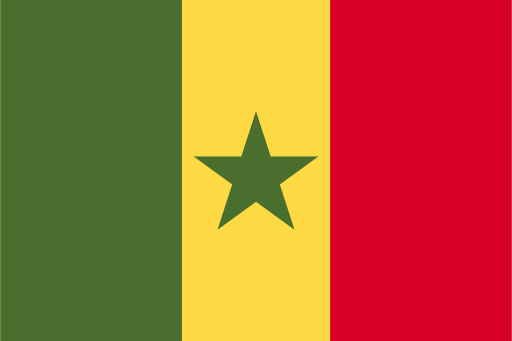
Foto af mostroneddo, CC BY 2.0, via Wikimedia Commons
Overblik
Denne artikel omhandler landet Senegal. Opslagsordet har også en anden betydning, se Senegal (flod). Senegal (fransk: Sénégal) er et land i Vestafrika. Grænselandene er Mauritania, Mali, Guinea, Guinea-Bissau, og Gambia. Senegal i føderation med Mali blev selvstændigt fra Frankrig 4. april 1960. Mali-Føderationen opløstes den 20. august samme år, hvor Senegal blev en helt selvstændig stat. I 1982 dannede Senegal og Gambia konføderationen Senegambia, men integrationen af landene blev aldrig gennemført, og unionen opløstes 1989. Senegal har en lang tradition for at deltage i internationalt fredsarbejde.
Tekst fra Wikipedia, licens CC BY-SA.
Hvor skal man hen i Senegal


Skjulte perler
Mindre kendte steder, som rejsende på Wikivoyage anbefaler uden for de store byer i Senegal: landsbyer, nationalparker og stille hjørner. De korte beskrivelser kommer fra de lister (CC BY-SA).

Langue de Barbarie National Park
21 steder på listen
Was created for the protection of important sea turtle nesting sites and is an important migratory bird sanctuary, hosting over 160 different species of migratory and sedentary birds, and numerous reptile species, crabs, monkeys and other wildlife

Podor
Ingen steder på listen endnu
Richard Toll, Dakar, Palmarin
Helligdage
Nationale fridage i Senegal de næste tolv måneder. Kontorer, banker og mange butikker lukker, og transport og overnatning bliver mere travl. Regionale helligdage og lokale festivaler er ikke med, og helligdage, der følger månen, kan flytte sig en dag.
- Juledag · Noël
- Nytårsdag · Nouvel An
- End of Ramadan (Eid al-Fitr) · Fête de fin du Ramadan
- Anden påskedag · Lundi de Pâques
- National Holiday · Fête nationale
- 1. maj · Fête du travail
- Kristi Himmelfartsdag · Ascension
- Feast of the Sacrifice (Eid al-Adha) · Fête du mouton
- Feast of the Sacrifice (Eid al-Adha) · Fête du mouton
- Anden Pinsedag · Lundi de Pentecôte
- Day of Ashura
- Magal de Touba
- Birthday of Muhammad (Mawlid) · Mawlid
- Assumption · Assomption
- All Saints' Day · Toussaint
Datoer fra projektet date-holidays, overvejende baseret på Wikipedia (CC BY-SA 3.0). Navnene vises på dit sprog, hvor der findes en oversættelse. Tjek lokalt, før du planlægger efter en helligdag.
At rejse i Senegal
Denne del er på engelsk, som den er skrevet på Wikivoyage.
At komme rundt i landet
Taxi, taxi-brousse, taxi-clando, car-charette, and transport commun (cars rapides) Buslines in Dakar and around Dakar are maintained by SOTRAC (Société des Transports en commun de Cap Vert), now managed by a private company and called Dakar Demm Dikk. Car hire is available in Dakar (city and airport) and sometimes in MBour and Saly Portudal. The main method of travel around the country is by sept places (from the French for "seven seats," literally questionable station wagons in which they will pack seven people so that you are basically sitting on the next person's lap throughout the journey). You can also come with a group and rent out an entire sept place, but this will be expensive. If you are obviously a tourist, they will try to rip you off, so make sure to set a price before you agree to a driver. If you want to travel more comfortably, buy 2 seats. There are set prices to often-travelled locations. The price per seat from Dakar to Ziguinchor, for example, is CFA9,500. Note that you also will have to negotiate a fee for luggage (CFA 500-1,000 per piece seems to be the going rate). Little ride hailing app works in Senegal. Keep in mind that if you wish to drive your own car, there are few street signs (mostly speed limits) and almost all of them are disregarded. Many streets are considered one way, but are never marked as such, and there are almost no stop signs. Heavy traffic areas such as Dakar are best left to experienced drivers and the bold.
Penge og udgifter
Money. The currency of the country is the West African CFA franc, denoted CFA (ISO currency code: XOF). It's also used by seven other West African countries. It is interchangeable at par with the Central African CFA franc (XAF), which is used by six countries. Both currencies are fixed at a rate of 1 euro = 655.957 CFA francs. Coins of the West African CFA franc come in denominations of 1-, 5-, 10-, 25-, 50-, 100-, 200 and 500 francs CFA. Banknotes of the West African CFA franc come in denominations of 500-, 1,000-, 2,000-, 5,000 and 10,000 francs CFA. West African CFA franc coins bear a common design on both the obverse and reverse sides and are valid in eight states that make up the West African Economic and Monetary Union (UEMOA; Union Économique et Monétaire Ouest Africaine). West African CFA franc banknotes share a common design on both the front and back sides and are valid in eight states of the Monetary Union, one difference is the code letter within the serial number, denoting the member states of the Monetary Union that uses the West African CFA franc.
ATMs. Ecobank accept MasterCard and Visa card at their ATMs. Outside major cities, ATMs are non-existent, and credit card transactions unheard of. Partly because of this, for day to day transactions like buying food and taxi rides, it is best to break the 5,000 and 10,000 CFA bills that you likely will get from ATMS into small bills (2,000 CFA or less) as soon as possible.
Maps. Tourist maps are available at the tourist offices.
Sprog
Wolof is the native language of some Senegalese people, but you will find that almost everyone speaks it. Knowing the basic Wolof greetings and phrases will go a long way in getting you better service and prices. French is the official language and learnt by all Senegalese in school, so it is a very useful language for visitors to know. While some Senegalese merchants speak English, most business is conducted in French or Wolof. Other languages used in Senegal include Sereer, Soninke, Pulaar, Jola and Mandinka. The basic Muslim greeting is often used: Salaam Aleikum - Peace to you. The response is Waleikum Salaam - And unto you peace.
Skikke og takt og tone
The Senegalese in general are very friendly and hospitable.
Etiquette. As this is a Muslim-majority country, the standard greeting is "Salaam Aleikum" as opposed to "Bonjour". As is the case in much of West Africa, always greet people wherever you go. Not doing so is considered extremely rude. As a foreigner, you might get some leeway, but still, greet and acknowledge people to not stand out like a sore thumb. Never beckon a Sengalese person directly, even if they have done something wrong in your opinion. The Senegalese are quite sensitive to being beckoned directly, and it is considered very rude. As a tourist, your words might have an even greater impact. Although Islam is the dominant religion, Senegal is a secular state and the form of Islam practiced by most Senegalese is liberal. Senegal is one of the few rare examples of religious tolerance and diversity. Interfaith marriages are common and there are no sectarian tensions whatsoever. You won't offend a Senegalese person by discussing religion; it's a highly popular conversational topic. Do not enter mosques and other religious places wearing shoes. It is disrespectful. Foreign women can expect to get many marriage proposals from Senegalese men. Handle this with a sense of humour, and caution. As far as dress goes, be aware that anything shorter than knee length is inappropriate. Tank tops are generally accepted in larger towns but should be avoided as much as possible. Shake hands as a greeting.
Sikkerhed
Although highly exaggerated, there is still fighting going on in the Casamance region of Senegal. The "struggle" goes on between the government and the Mouvement des forces démocratiques de la Casamance (MFDC). It would be wise to avoid travel to this area. If this is not possible, at least first check with the embassy for the latest situation. To find out how much the situation has improved look at this IRIN News report: In Dakar, take care when walking the streets: petty theft and scams are abundant. You will be approached by aggressive street vendors who will follow you for several blocks. If refused, often accusations of 'racism" will be leveled at white non-local non-buyers. Also, pickpockets use the following two-person tactic: one (the distraction) will grab one of your legs while the other (the thief) goes into your pocket. If someone grabs your clothing, beware the person on the other side more. Wear trousers/shorts with secure (buttons or snaps) pockets and leave your shirt untucked to cover the pockets. Be cautious of people claiming to have met you before or offering to guide you. Often, you will be led to a remote location and robbed. Women need to be particularly alert as they are frequently targeted at beaches or markets. Finally, there have been instances of street stall vendors grabbing cash out of non-local shoppers' hands and quickly stuffing the money into their own pocket.
Fra Wikivoyage-guiden, skrevet af rejsende (CC BY-SA), forkortet. Tjek altid din regerings officielle rejsevejledning om indrejse, visum, sundhed og den aktuelle sikkerhed (linket ovenfor).