

Irland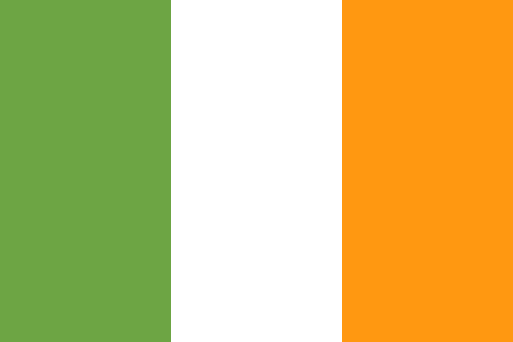
Foto von 瑞丽江的河水, CC BY-SA 4.0, über Wikimedia Commons
Überblick
Irland ([ˈɪʁlant] , irisch [ˈeːrʲə], englisch Ireland), auch als Republik Irland bekannt, ist ein Inselstaat in Westeuropa. Die offizielle Bezeichnung des Landes lautet Irland. Der Staat umfasst etwa fünf Sechstel der gleichnamigen Insel sowie eine Vielzahl kleinerer Inseln, welche ihr – überwiegend im Westen des Landes – vorgelagert sind. Die Republik Irland grenzt im Norden an Nordirland und damit an das Vereinigte Königreich. Im Osten liegt die Irische See, im Westen und Süden ist das Land vom Atlantik umgeben. Hauptstadt und größte Stadt Irlands ist Dublin, gelegen im östlichen Teil des Landes. In der Metropolregion Dublin lebt etwa ein Drittel der fünf Millionen Einwohner. Der größte Teil der Bevölkerung bekennt sich zum römisch-katholischen Glauben.
Text aus Wikipedia, Lizenz CC BY-SA.
Wohin in Irland


Geheimtipps
Weniger bekannte Orte abseits der großen Städte von Irland, die Reisende auf Wikivoyage empfehlen: Dörfer, Nationalparks und ruhige Ecken. Die Kurzbeschreibungen stammen aus diesen Listen (CC BY-SA).

Dingle
32 Orte eingetragen
In County Kerry is the former home of Fungi the dolphin and a lovely seaside town.

Slieve Bloom Mountains
24 Orte eingetragen
Form the boundary with County Offaly.

Burren
20 Orte eingetragen
Is a haunting, barren limestone upland in County Clare, ending in the great Cliffs of Moher.

Westport
20 Orte eingetragen
At the entrance to Clew Bay was the abode of "pirate queen" Gráinne O'Malley: her tower house still stands. The island is reached by ferry from Roonagh near Louisburgh.

Trim
17 Orte eingetragen
Is the focus of another complex: the oldest parts are Neolithic but its heyday was in the Iron Age and early Christian era.

Baltimore
9 Orte eingetragen
Are an archipelago in Roaringwater Bay. They actually number about 50, if you discount mere rocks, and several are inhabited. Those with a ferry service are Sherkin Island and Cape Clear from Baltimore, Heir Island from Cunnamore near Skibbereen, and Long Island from Schull.

Glendalough
8 Orte eingetragen
In County Wicklow is a remarkable medieval monastic complex in a deep scenic valley.

Achill Island
7 Orte eingetragen
Is reached by a bridge. It has several haunting deserted villages, Slievemore being the biggest.

Arranmore
6 Orte eingetragen
And have accommodation and ferries from the Donegal mainland.

Clonmacnoise
3 Orte eingetragen
Is a medieval monastery on the banks of the Shannon.

Kilmore Quay
3 Orte eingetragen
Is the largest of the little islands around the coast, and the only one routinely visited by boat trips.

Tory Island
2 Orte eingetragen
Is another quiet island to the north, with 100-m-high sea cliffs.

Glenveagh National Park
1 Ort eingetragen
Is extensive woodland by a 19th century mock-castle.

Aran Islands
Noch keine Orte eingetragen
Are the seaward continuation of the Burren. They're inhabited, and dotted with prehistoric and early Christian sites.

Blasket Islands
Noch keine Orte eingetragen
Are six little islands off the Dingle Peninsula, uninhabited since 1953. Boat trips visit, and you can stay on Great Blasket the largest island.

Brú Na Bóinne Archaeological Park
Noch keine Orte eingetragen
In County Meath are impressive neolithic monuments, the oldest dating back to 3100 BC.

Skellig Michael
Noch keine Orte eingetragen
Is an astonishing monastery in the Atlantic off County Kerry.
Feiertage
Landesweite Feiertage in Irland in den nächsten zwölf Monaten. Büros, Banken und viele Geschäfte schließen, Verkehr und Unterkünfte sind voller. Regionale Feiertage und lokale Feste sind nicht enthalten, und Feiertage nach dem Mondkalender können sich um einen Tag verschieben.
- Weihnachten · Christmas Day
- 2. Weihnachtstag · St. Stephen’s Day
- Neujahr · New Year's Day
- St. Brigid’s Day
- St. Patrick’s Day
- Ostermontag · Easter Monday
- First Monday in May
- First Monday in June
- First Monday in August
- Last Monday in October
Daten aus dem Projekt date-holidays, größtenteils nach Wikipedia (CC BY-SA 3.0). Die Namen stehen in deiner Sprache, wo es eine Übersetzung gibt. Prüfe vor Ort, bevor du deine Reise danach planst.
Unterwegs in Irland
Dieser Teil ist auf Englisch, so wie er auf Wikivoyage steht.
Unterwegs im Land
By car. File:IE road sign W-001.svg|Crossroads File:IE road sign W-140A.svg|Pedestrian crossing File:IE road sign RUS-006.svg|Turn Left File:M18-IE.svg|Motorway IE road sign RUS-027.svg|Stop File:IE road sign RUS-026.svg|Yield File:IE road sign RUS-014.svg|No overtaking File:IE road sign RUS-019-L-R.svg|No parking File:IE road sign RUS-044.svg|Speed limit Think: do you need one? If you'll be primarily in the cities, probably not, and you should actively avoid using a car in Dublin. To see the city then tour the country, ride into Dublin on the bus then return to the airport later to pick up a car. But out in the countryside there's limited public transport and lashings of rain, so yes you do need one, especially with small children or piles of sports gear. Many visitors bring their own car by ferry. For rental, the airports have the best selection – book ahead for the best deals and to ensure availability of their limited fleets. There's healthy price competition, but one-way rentals are expensive. You also need to check their rental requirements: these are typically to hold a full licence for at least 2 years, and to have no current "red flag" endorsements. There is no minimum age but the weasel words are "eligibility to hold a licence" for at least 8 years, and drivers over 75 face additional checks. The big cities and ferry ports have rental offices but surprisingly few.
Roads and routes. Roads are classed as M motorway, N national, R regional and L local.
Geld und Kosten
Money. Ireland uses the euro, the plural of which is also "euro", thus for €2, say "two euro". Stand-alone cash machines (ATMs) are widely available in every city and town in the country and credit cards are accepted most outlets. Fees are not generally charged by Irish ATMs (but beware that your bank may charge a fee). Along border areas, as the UK pound sterling is currency in Northern Ireland, it is common for UK pounds to be accepted as payment, with change given in euro. Some outlets, notably border petrol stations will give change in sterling if requested. There's a lot of cross-border shopping. It's partly driven by differences in VAT or other tax, for instance fuel has usually been cheaper in the Republic, so Northern Ireland motorists fill up south of the border. It also reflects swings in exchange rate, so Republic shoppers cross to Derry or Newry whenever their euro goes further against the UK pound. You may hear the slang term quid used by Irish people when referring to euro prices, e.g. "three quid" to mean €3.
ATMs. ATMs are widely available throughout Ireland. Even in small towns it is unlikely that you will be unable to find an ATM. Many shops and pubs will have an ATM in store, and unlike the UK, they cost the same to use as 'regular' ATMs on the street. Though in-shop ATMs are slightly more likely to run out of cash and be 'Out of Service'.
Credit cards. MasterCard, Maestro and Visa are accepted everywhere. American Express and Diners Club are now also fairly widely accepted.
Sprache
The official languages of Ireland are English and Irish. Almost everyone speaks English as their first language, though often in a way that reflects the influence of the Irish language. Irish (Gaeilge) is the first official language according to the constitution. It belongs to the Goidelic branch of the Celtic family of languages and is strikingly different to English. The main dialects of Irish are those of the provinces of Ulster, Munster and Connacht (with the last being historically a central dialect which stretched eastwards into Leinster). The Ulster dialect has most in common with Scottish Gaelic. Some Irish people may take offence if you call Irish "Gaelic," as this really refers to an entire branch of the Celtic languages including Irish, Manx, and Scottish Gaelic.
Sitten und Umgangsformen
In general, the Irish are incredibly welcoming, friendly, upbeat, and approachable. Telling stories, jokes or being witty is very common. You can freely approach the locals for advice and you can ask them specific directions on where to go somewhere. In smaller towns and villages, especially on a country road, if you walk past somebody it is customary to exchange pleasantries. They may also ask you "how are you?", or another similar variation. A simple hello or "how are you?" or a simple comment on the weather will suffice. The Irish have a relaxed and flexible view of time; it's not uncommon for them to be a few minutes late to something. However, when visiting a home or going to a business invitation, it's advisable to reach on time. The Irish are renowned for their sense of humour, but it can be difficult to understand for tourists not familiar with it. The Irish joke about themselves or other cultures, and may accidentally cause offence, but they are generally well-intentioned. Family is one of the pillars of Irish culture. Irish families tend to be close-knit. Children may be included in social activities. Criticising or joking about someone's family members is not appreciated. The Irish are notorious for the amount of cursing they do. Don't be put off by this as people don't intend to make you uncomfortable in any way. When accepting gifts, a polite refusal is common after the first offer of the item.
Telefon und Internet
Phone numbers in this guide are given in the form that you would dial them from outside Ireland. When using a landline within Ireland, the international dial prefix and country code of +353 should be substituted by a single 0. However, most landlines and mobile phones will accept the prefix 00353 or +353 to call Ireland numbers.
By mobile phone. There are more mobile phones than people in Ireland, and the majority of these are pre-paid. Phone credit is available in very many retailers, usually in denominations from €5 to €40. Some retailers charge a small commission on this credit, most don't. After a series of mergers, as of 2020 there are three mobile networks in Ireland: Eirmobile (incorporating Meteor): 085 Three (incorporating O2, BlueFace, Lycamobile, iD mobile, Virgin Mobile, 48 and Tesco mobile): 083, 086 and 089 Vodafone (incorporating Postfone): 087 Dublin has great coverage including 5G. Check other individual towns for network coverage - all but the smallest places have a signal, but it may not cover the approach roads or surrounding countryside. Close to the border with Northern Ireland, your mobile might latch onto a UK network, which could incur extra charges.
Sicherheit
The police force is known as An Garda Síochána, (literally, 'Guards of the Peace'), or just "Garda", and police officers as Garda (singular) and Gardaí (plural, pronounced Gar-dee), though informally the English term Guard(s) is usual. The term police is rarely used, but is of course understood. Regardless of what you call them, they are courteous and approachable. Uniformed members of the Garda Síochána do not carry firearms, but the police in Northern Ireland do. Firearms are, however, carried by detectives and officers assigned to special police units. Police security checks at Shannon Airport can be tough if you are a solo traveller. Crime is relatively low by most European standards, but not so different in kind from crime in other countries. Late-night streets in larger towns and cities can be dangerous, as anywhere. Don't walk alone after sunset in deserted areas in Dublin or Cork, and be sure to plan getting back home, preferably in a taxi. Fortunately, most violent crime is drink- or drug-related, so simply avoiding the visibly inebriated can keep you out of most potential difficulties. If you need Gardaí, ambulance, fire service, coast guard or mountain rescue dial 999 or 112 as the emergency number; both work from landline phones and mobile phones. In the unlikely event that you are confronted by a thief, be aware that Irish criminals in general are not afraid to resort to violence.
Aus dem Wikivoyage-Reiseführer, geschrieben von Reisenden (CC BY-SA), gekürzt. Für Einreise, Visa, Gesundheit und die aktuelle Sicherheitslage gelten immer die offiziellen Reisehinweise deiner Regierung (oben verlinkt).