

Liechtenstein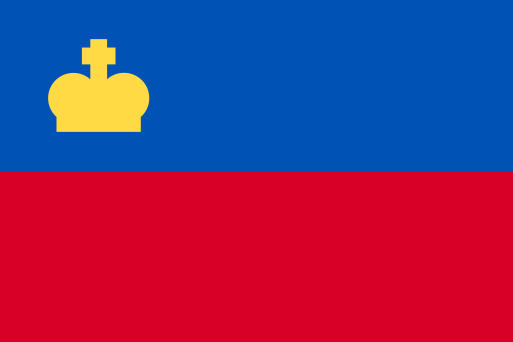
Foto von Lucas Kendall, CC BY-SA 4.0, über Wikimedia Commons
Überblick
Liechtenstein [ˈlɪçtn̩ˌʃtaɪ̯n] (amtlich Fürstentum Liechtenstein) ist ein Binnenstaat im Alpenraum Mitteleuropas und der sechstkleinste Staat der Erde. Laut seiner Verfassung ist es ein Fürstentum, das als konstitutionelle Erbmonarchie auf demokratisch-parlamentarischer Grundlage organisiert ist. Das Haus Liechtenstein, nach dem das Land benannt ist, stellt den Landesfürsten; die Souveränität ist gleichermassen zwischen Fürst und Volk geteilt. Der Alpenrhein bildet im Westen die Grenze zwischen den Alpenländern Liechtenstein und Schweiz; im Osten grenzt das Fürstentum an Österreich. Der Staat ist in zwei Wahlkreise und elf Gemeinden gegliedert. Hauptort und Fürstensitz ist Vaduz. Der flächengrösste Ort ist Triesenberg, der bevölkerungsreichste Ort Schaan. Die zusammengewachsenen Orte Schaan, Vaduz und Triesen bilden zusammen eine Agglomeration mit etwa 17'300 Einwohnern.
Text aus Wikipedia, Lizenz CC BY-SA.
Wohin in Liechtenstein
Feiertage
Landesweite Feiertage in Liechtenstein in den nächsten zwölf Monaten. Büros, Banken und viele Geschäfte schließen, Verkehr und Unterkünfte sind voller. Regionale Feiertage und lokale Feste sind nicht enthalten, und Feiertage nach dem Mondkalender können sich um einen Tag verschieben.
- Mariä Empfängnis
- Weihnachten
- Stephanstag
- Neujahr
- Heilige Drei Könige
- Karfreitag
- Ostermontag
- Tag der Arbeit
- Auffahrt
- Feiertagsbrücke
- Pfingstmontag
- Fronleichnam
- Feiertagsbrücke
- Mariä Geburt
Daten aus dem Projekt date-holidays, größtenteils nach Wikipedia (CC BY-SA 3.0). Die Namen stehen in deiner Sprache, wo es eine Übersetzung gibt. Prüfe vor Ort, bevor du deine Reise danach planst.
Unterwegs in Liechtenstein
Dieser Teil ist auf Englisch, so wie er auf Wikivoyage steht.
Unterwegs im Land
By bus. For a rural area of its size and wealth, Liechtenstein's bus system is decent and well patronized. The country's sole bus operator is Liemobil. Fares are reasonable. A day ticket costs Fr. 12 (as of Jan 2024) and a 7-day unlimited use card costs Fr. 24. Single ride tickets can be purchased from the driver, or through FAIRTIQ or SBB Mobile apps.
By train. It is possible to travel between the country's three active railway stations, but the bus is far more frequent. There are eleven daily trains between Schaan-Vaduz, Forst-Hilti, and Nendeln railway stations. The train is purely a commuter service, with nearly all trains running in the morning and evenings on weekdays. The Forst-Hilti station serves the Hilti complex, the biggest company in Liechtenstein, with over 2,000 employees.
By bike. Another cheap way to travel, weather permitting, is by bike. The roads in Liechtenstein are in excellent condition and many (in the Balzers-Schaan corridor) even offer bike lanes. Biking through the whole country (entering from Austria going all the way south through to Switzerland) takes only a few hours, but is worth every minute of the wonderful alpine scenery!
By car. Liechtenstein is a very sluggish place to drive. The majority of the roads are either uphill on extremely steep and winding stretches or in populated regions. If it has one, the automatic gearbox should be in sport setting there. The valley also has straighter roadways. The roads are frequently a little congested, particularly in the direction of Vaduz.
Geld und Kosten
Money. Liechtenstein uses the Swiss franc (CHF) as its currency since 1924. Many shops will also accept euros, but the exchange rate may not be very advantageous and you will get your change in Euro. An exception are supermarkets, where you will usually get the best exchange rate, which makes it a good place for exchanging your Euros into Francs: buy something and pay with a bigger euro bill, they accept up to €100 bills (especially if you continue to Switzerland afterwards and want to exchange money) For a short visit you might not need francs at all though, as even the parking garage accepts euros.
Costs. Costs in Liechtenstein are roughly equivalent to those in Switzerland and are therefore somewhat more expensive than other European countries.
Sprache
The official language is German, but the main language in everyday use is an Alemannic dialect, that can be hard to understand even for native speakers of standard German. The Alemannic dialect group is also spoken in German-speaking Eastern Switzerland, the German state of Baden-Württemberg and the Austrian state of Vorarlberg. While the dialect is on the retreat in Germany and to some extent even in Austria, it is alive and well in Switzerland and Liechtenstein with some even fearing a local extinction of standard German due to lack of situations in which it is actually spoken. Almost everyone can speak standard German, and English is also prevalent. French and Latin are also widely taught in the secondary public school system.
Sitten und Umgangsformen
The Principality of Liechtenstein has existed for centuries as an independent state and this should be remembered. Liechtensteiners are very proud of their national identity and would take offence at being wrongly labelled "German", "Austrian" or "Swiss". Remember that this is a traditional Catholic country. On Sundays, the streets are almost dead except for the tourists and the tourist shops. The Prince of Liechtenstein and the Monarchy are well respected in Liechtenstein. Bear that in mind when conversing with the locals.
Telefon und Internet
As of Sept 2021, the country has 4G from all Swiss carriers, but 5G has not yet arrived. The Austrian signal doesn't reach here because of the mountains. Wifi is widely available in public places.
Sicherheit
Liechtenstein is easily one of the safest countries in the world, though it is not without its problems. The most common crime in Liechtenstein is of a non-violent nature, though the principality maintains a well-equipped police force which maintains a presence on the streets. In the late 1990s, the Liechtenstein Landespolizei launched a crackdown on prostitution in Vaduz. Considering the largest cities nearby are Innsbruck and Zürich, outside of Schaan and Vaduz, the whole place can seem very rural. Drunk drivers and winter road conditions may be your only "realistic" concern. Speed limits are strictly enforced by speed cameras, which can lead to high fines. Don't speed, enjoy the scenery instead. The country's beautiful scenery is also very dangerous. Cases of hikers finding themselves in difficulty are very common, and extreme care should be taken when leaving the well-marked trails. Follow local advice, read local weather forecasts (newspapers in the principality print individual forecasts for the different cities in Liechtenstein, which is beneficial because the difference in altitude often cause different weather conditions), and ensure that you have the correct equipment before setting out.
Aus dem Wikivoyage-Reiseführer, geschrieben von Reisenden (CC BY-SA), gekürzt. Für Einreise, Visa, Gesundheit und die aktuelle Sicherheitslage gelten immer die offiziellen Reisehinweise deiner Regierung (oben verlinkt).