

Republik Moldau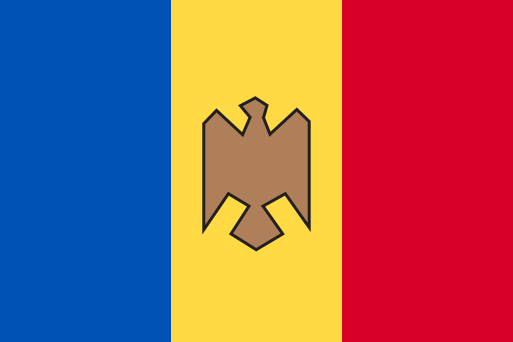
Foto von Rodion Gavriloi, CC BY-SA 4.0, über Wikimedia Commons
Überblick
Die Republik Moldau (rumänisch ; auch Moldawien genannt) ist ein Binnenstaat in Ost- bzw. Südosteuropa. Er grenzt im Westen an Rumänien. Im Norden, Osten und Süden wird die Republik Moldau vollständig von der Ukraine umschlossen, denn zwischen Moldau und dem Schwarzen Meer liegt die ukrainische Region Budschak, die von Bessarabien abgetrennt wurde. Historisch gehörte das Territorium ab der Gründung des Fürstentums Moldau zu diesem Staat, ab 1812 zum Russischen Kaiserreich, nach dem Ersten Weltkrieg großteils zu Rumänien und ab 1940 / 1944 zur Sowjetunion. Als eigenständiger Staat existiert die Republik Moldau seit 1991, als sich die Moldauische SSR während der Auflösung der Sowjetunion für unabhängig erklärte.
Text aus Wikipedia, Lizenz CC BY-SA.
Wohin in Republik Moldau


Geheimtipps
Weniger bekannte Orte abseits der großen Städte von Republik Moldau, die Reisende auf Wikivoyage empfehlen: Dörfer, Nationalparks und ruhige Ecken. Die Kurzbeschreibungen stammen aus diesen Listen (CC BY-SA).

Feiertage
Landesweite Feiertage in Republik Moldau in den nächsten zwölf Monaten. Büros, Banken und viele Geschäfte schließen, Verkehr und Unterkünfte sind voller. Regionale Feiertage und lokale Feste sind nicht enthalten, und Feiertage nach dem Mondkalender können sich um einen Tag verschieben.
- Weihnachten · Craciun pe stil Nou
- Neujahr · Anul nou
- Orthodox Christmas · Craciun pe Rit Vechi
- Internationaler Frauentag · Ziua Internationala a Femeii
- Tag der Arbeit · Ziua muncii
- Ostersonntag · Paștele
- Ostermontag · A doua zi de Paști
- Victory Day · Ziua Victoriei
- Memorial Day · Paştele Blăjinilor
- Unabhängigkeitstag · Ziua Independentei
- National Language Day · Limba noastră
Daten aus dem Projekt date-holidays, größtenteils nach Wikipedia (CC BY-SA 3.0). Die Namen stehen in deiner Sprache, wo es eine Übersetzung gibt. Prüfe vor Ort, bevor du deine Reise danach planst.
Unterwegs in Republik Moldau
Dieser Teil ist auf Englisch, so wie er auf Wikivoyage steht.
Unterwegs im Land
Moldova is small enough to be explored very quickly. For example, a long walk to Chișinău from Bolhrad − even though that sounds highly impractical − will take you about 34 hours. The most reliable way of getting around the country is by bus. Buses can get you to most parts of the country. You can find information about long-distance bus services in Moldova on the Autogari website, for example. This site contains information on bus stations in Moldova, timetables and routes between cities. Chișinău is the main transportation hub for the country. The three bus stations serve every city and town in Moldova. The fastest form of transport are small minibuses which seat around 15 people. Larger buses are also used and are marginally safer, because they travel at slower speeds. In Chișinău there is a state run trolleybus system which includes many new vehicles. Fare is 6 lei; a conductor collects fares and issues tickets. There is also a 'bus service which operates with fewer routes.
By minibus. Minibuses ( in Romanian; in Russian) are available in most cities. They are privately operated and are called by requesting the vehicle to stop, however can often be very crowded. Drivers should be paid on boarding (3 lei in Chișinău), however some insist on sitting down first and passing the money to the person in front of them to pass to the driver, so don't be alarmed if people behind you start handing you money.
Geld und Kosten
Money. The leu (plural: lei) is the currency of Moldova (ISO 4217 code MDL). Like the Romanian leu, the Moldovan leu is subdivided into 100 bani (singular: ban). The name of the currency originates in Romania, and means "lion". Banknotes are in denominations of 1, 5, 10, 20, 50, 100, 200, 500 and 1,000 lei. Coins come in denominations of 1, 5, 10, 25 and 50 bani, 1, 2, 5 and 10 lei.
Shopping. Local wine is of superb quality and cheap in comparison to other countries, but for political reasons is mostly unknown in Western Europe.
Tipping. Moldovans are not accustomed to tipping.
Sprache
The official language of the country is Romanian. Since 2023, it has been the state language of the country. Russian is widely spoken in the country, both as a first and second language. If you don't know any Romanian, communicating in Russian should be no problem. Gagauz, a Turkic language, is a language of Gagauzia. It is closely related to Azerbaijani, Turkish, and Turkmen. If you know either of those three languages, you shouldn't have a problem picking up Gagauz. Ukrainian is spoken by the Ukrainian minority and in parts of Transnistria. English has been taught in Moldova since the 1990s, but few people speak it well enough to have a full conversation. Therefore, knowledge of Romanian and/or Russian is useful to get around the country independently.
Sitten und Umgangsformen
Tourists are likely to attract stares from the locals. Do not be alarmed or surprised; this doesn't indicate hostility, but rather, curiosity. This may cause some to treat you as a "walking wallet" or someone who is "wealthy". If you feel like you are about to be scammed by someone, simply ignore them or tell them to go away. Don't feel the need to be polite with scammers; nobody should put up with such behaviour.
Women. Women are widely respected in Moldovan society, perhaps more so than any other country in Europe. There are many female mayors in Moldova and there are many women who have high positions in the government, including the president since 2020. As is the case throughout the former USSR, women are traditionally treated with chivalry in Moldova. Women should not be surprised or alarmed if their male Moldovan friends take the initiative to pay the bills at a restaurant, open every door in front of them, and help them carry items or objects. Men should understand that this will be expected by Moldovan women. In rural areas, it is a social taboo for women to smoke or drink alcohol.
Politics. Moldovan political discourse tends to be polarising. Moldovans are divided into three opposing camps − those who favour closer ties with the European Union, those who favour closer ties with Russia, and those who want Moldova to be committed to neutrality.
Sicherheit
Visitors to Moldova for business or romance should be aware of the potential risk of scams, particularly if first contact was made on the Internet. See International financial scams and Russian Internet dating schemes. Corrupt police and border guards may try to extort bribe money but 'normal' crime rates are low. Locals are generally very friendly and will go to great lengths to provide hospitality to foreigners. You can expect a lengthy, and inevitably boozy, meal to be offered to you just in your honour. Conservative dress must be worn at religious sites. Shorts are forbidden and women must cover their heads inside monasteries and churches. While bribery and police corruption are still problems in Moldova, the situation is improving. It is still advised that tourists have the number of their embassy and the contact information of where they are staying. Foreigners are also required to have their passports on them at all times. There is however usually no one checking this in any normal setting. Alcohol consumption can also be a problem. Running into drunks especially at night is common. Most are friendly; they often come off as aggressive and will invade your personal space. This can be scary the first couple of times. Politely walking away normally works. People coming from a country where less alcohol is consumed can find themselves becoming the drunks. There are few natural hazards in the country.
Aus dem Wikivoyage-Reiseführer, geschrieben von Reisenden (CC BY-SA), gekürzt. Für Einreise, Visa, Gesundheit und die aktuelle Sicherheitslage gelten immer die offiziellen Reisehinweise deiner Regierung (oben verlinkt).