

Norfolkinsel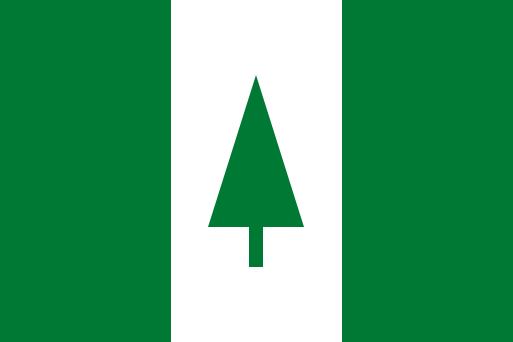
Foto von Peter James McNally, CC BY-SA 4.0, über Wikimedia Commons
Überblick
Die Norfolkinsel (Norfuk: Norfuk Ailen) ist eine Insel im Pazifischen Ozean, die zu Australien gehört. Nördlich von ihr liegt Neukaledonien, westlich Australien, im Süden Neuseeland. Der Name der Insel geht auf den englischen Seefahrer James Cook zurück, der sie 1774 entdeckte und zu Ehren von Mary Howard, Duchess of Norfolk benannte.
Text aus Wikipedia, Lizenz CC BY-SA.
Wohin in Norfolkinsel
Feiertage
Landesweite Feiertage in Norfolkinsel in den nächsten zwölf Monaten. Büros, Banken und viele Geschäfte schließen, Verkehr und Unterkünfte sind voller. Regionale Feiertage und lokale Feste sind nicht enthalten, und Feiertage nach dem Mondkalender können sich um einen Tag verschieben.
- Thanksgiving Day
- Weihnachten · Christmas Day
- 2. Weihnachtstag · Boxing Day
- 2. Weihnachtstag (Ersatztag) · Boxing Day (substitute day)
- Neujahr · New Year's Day
- Australia Day
- Foundation Day
- Foundation Day
- Karfreitag · Good Friday
- Ostermontag · Easter Monday
- Anzac Day
- Anniversary (Bounty) Day
- King's Birthday
- Norfolk Island Agricultural Show
- Thanksgiving Day
Daten aus dem Projekt date-holidays, größtenteils nach Wikipedia (CC BY-SA 3.0). Die Namen stehen in deiner Sprache, wo es eine Übersetzung gibt. Prüfe vor Ort, bevor du deine Reise danach planst.
Unterwegs in Norfolkinsel
Dieser Teil ist auf Englisch, so wie er auf Wikivoyage steht.
Unterwegs im Land
By car. There is no public transport system on Norfolk Island. The hilly terrain and distance between attractions make getting around on foot impractical for most visitors. Independent travellers tend to rent a car. There are a variety of tours available daily. It costs $85-$100 a day to rent a car and $50 a day for a scooter. It is usual when booking accommodation or a package that a rental car can be included in the tariff. Basic insurance is sometimes included, but excess reduction, petrol and additional drivers can be extra. Driving is on the left, with a speed limit outside Burnt Pine of 50 km/h and inside Burnt Pine of 40 km/h (30 km/h in the school zone between 8AM–3:30PM on school days). When driving outside of the town, remember that cows and other animals have right of way. Also remember to watch out for the "Norfolk Wave", a wave (ranging from a raised index finger off the steering wheel through to an enthusiastic movement of the arm) used by all locals to greet all passing traffic and pedestrians. Like everything on the island, planning ahead is a good idea. If they aren't expecting any business you can find the rental car places reducing their already short trading hours. If you are collecting a rental car from the airport, most operators will meet you at the airport unless otherwise instructed. When exiting the airport arrivals hall, turn left and head towards the carpark where information staff will direct you to the rental car operators.
Geld und Kosten
Norfolk Island only uses the Australian dollar. You'll have great difficulty using other currency on the island. The banks will convert currency during business hours. There is a single ATM on the island at the Commonwealth Bank in Burnt Pine. Given this level of redundancy, you shouldn't let your cash supply dwindle too far. Almost all shops and restaurants on the island accept credit cards, but you'll find an occasional one that is cash only. The main street of Burnt Pine is lined on both sides with shops selling local arts and crafts, shoes and clothes, toys and books. There are some bargains to be had, especially on shoes. A number of shops are described as "department stores", which can seem rather quaint to visitors from big cities, as these shops are often no larger than the others. The difference lies in the slightly wider range of merchandise available. One of the true delights of shopping on Norfolk Island is that in many shops you simply have no idea what will be for sale.
Markets. Saturday Morning Farmers' Market Sunday Arts & Craft Market
Local specialties. Locally produced items are for sale on Norfolk Island, homemade preserves being a particular specialty. Other local specialties include novelty soaps, homemade make-up and quality artwork. There is also a wide range of fictional and non-fictional books on Norfolk and the South Pacific in general available at most shops.
Supplies. Burnt Pine also has all of Norfolk's service industries. Three fuel stations, a few mini-markets and a supermarket.
Sprache
The main official language of Norfolk Island is English, and all the islanders speak it. However, among themselves they often use Norfuk (Norf'k), a language derived from the English spoken by the Bounty Mutineers and the Tahitian spoken by their wives. Norf'k is not readily comprehensible by speakers of any variety of English, including Australian English — though it's similar to (and, in fact, sometimes considered to be the same language as) Pitkern, spoken on the Pitcairn Islands by fellow descendants of the Bounty Mutineers. There are books to purchase on the local Norf'k language. Most are for readers with only a casual interest, but if you are interested in scholarship on the language, Speak Norfolk Today by Alice Inez Buffett is the best source.
Sitten und Umgangsformen
Some islanders are descended from the Bounty mutineers, so some information has a certain spin to align with the local mythology. If you're looking for a lighthearted way to engage with the story, you can lead with whether Marlon Brando or Mel Gibson was the better Fletcher Christian in the 1962 and 1984 movies. Everyone has seen both movies. There are convict ruins dotted around the island, and you're generally free to wander where you want. These are a valuable part of Australia's history, so do not climb them or touch the ruins and artifacts.
Telefon und Internet
The island mobile telephone network is really only useful for phone calls, and that's the common way to communicate on island. All phone numbers are five digits (the local part) and those beginning with a '5' are mobile numbers: Your smartphone won't seem so smart with a local SIM card, but it's very useful for bookings for tours and restaurants. There have been some recent improvements such as the introduction of NBN Satellite and 4G networks in some areas of the island. There are two local data providers: Norfolk Telecom Norfolk Island Data Services Australian networks are not present on the island, and roaming will not work in most cases. Telstra customers who have phones supporting WiFi-calling will have normal call/SMS functionality while connected to stable WiFi (updated Aug 2026). Most accommodations will have WiFi available, though some have data limits. Starlink is common on the island with most cafes having free WiFi for customers.
Sicherheit
Crime on Norfolk Island is very low, though not unknown. Most islanders leave their houses and cars unlocked with windows down. Always remember to exercise common sense when doing this, though, as most criminals are opportunists and it is not unknown for criminals to take "working vacations" too. Emily Bay and Slaughter Bay in Kingston are the only safe locations to swim on Norfolk as they are protected by a natural coral reef. All other bays are not patrolled and have unpredictable conditions. A Norfolk tradition is that of the "Seventh Wave", the unpredictable rising in wave height which can sweep unwary swimmers out to sea.
Aus dem Wikivoyage-Reiseführer, geschrieben von Reisenden (CC BY-SA), gekürzt. Für Einreise, Visa, Gesundheit und die aktuelle Sicherheitslage gelten immer die offiziellen Reisehinweise deiner Regierung (oben verlinkt).