

Slowakei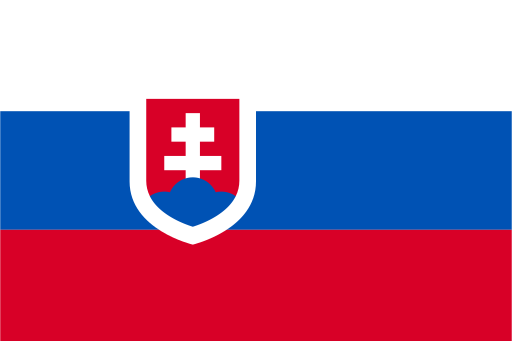
Foto von Rob Hurson from Kentstown, Ireland, CC BY-SA 2.0, über Wikimedia Commons
Überblick
Die Slowakei (slowakisch , amtlich Slowakische Republik, slowakisch ) ist ein Binnenstaat in Mitteleuropa, der an Österreich, Tschechien, Polen, die Ukraine und Ungarn grenzt. Die Hauptstadt und gleichzeitig größte Stadt des Landes ist Bratislava (deutsch Pressburg), weitere wichtige Städte sind Košice (Kaschau), Prešov (Eperies), Žilina (Sillein), Banská Bystrica (Neusohl), Nitra (Neutra), Trnava (Tyrnau) und Trenčín (Trentschin). Das Land ist zu zwei Dritteln gebirgig und hat einen beträchtlichen Anteil am Karpatenbogen. Im Westen reicht es bis zum nördlich der Donau liegenden Teil des Wiener Beckens, während der Süden und Südosten bis zur Donau und einem kleinen Teil der Theiß durch Ausläufer der Pannonischen Tiefebene geprägt sind. Die Slowakei liegt in der kontinental-gemäßigten Klimazone mit Unterschieden zwischen dem tiefer gelegenen Süden und dem gebirgigen Norden des Landes.
Text aus Wikipedia, Lizenz CC BY-SA.
Wohin in Slowakei


Geheimtipps
Weniger bekannte Orte abseits der großen Städte von Slowakei, die Reisende auf Wikivoyage empfehlen: Dörfer, Nationalparks und ruhige Ecken. Die Kurzbeschreibungen stammen aus diesen Listen (CC BY-SA).

Great Fatra
23 Orte eingetragen
Veľká Fatra is a mountain range in the Western Carpathians in Slovakia. The Veľká Fatra lie to the southeast of the better known Malá (Lesser) Fatra mountains and are less developed, as well as being lower.

High Tatras
22 Orte eingetragen
Vysoké Tatry is the biggest national park in Slovakia and a centre of winter sports and hiking.

Tatra National Park
21 Orte eingetragen
Their most visited part is High Tatras ("Vysoké Tatry"). Great place for one-day hikes, relaxation and skiing.

Slovak Karst National Park
14 Orte eingetragen
National Park - Slovenský kras, known for its cave systems, part of UNESCO world heritage

Záhorie
13 Orte eingetragen
Small mountains continuing into Austria, many hiking/cycling trails present. Also skiing is possible (Pezinská Baba).

Liptovska Mara
12 Orte eingetragen
The biggest water reservoir in Slovakia and a popular recreational site. The surroundings of the dam offers many cultural, spa and water activities.

Low Tatras
12 Orte eingetragen
Endless hiking possibilities, skiing, one of the most visited caves in Slovakia.

Horna Orava
7 Orte eingetragen
Is a Protected Landscape area, part of Beskids in Western Carpathians

Slovak Paradise National Park
7 Orte eingetragen
Slovenský Raj consists of deep ravines and canyons created by the water cascading in waterfalls through the limestone.

Piešťany
5 Orte eingetragen
The most famous spa town in Slovakia

Bojnice
4 Orte eingetragen
The most visited castle in Slovakia, almost intact with beautifully preserved interiors.

Choč Mountains
4 Orte eingetragen
Pretty ravines and great overview from the top of the main mountain.

Papradno
3 Orte eingetragen
A village in Javorníky mountains.

Čičmany
1 Ort eingetragen
This tiny village of 200 residents is famous for its beautiful decoratively painted wooden houses.

Muránska planina National Park
1 Ort eingetragen
Muránska planina National Park is one of the youngest national parks in Slovakia. The core area measures 21,318 ha and the protective belt 21,698 ha. It includes 14 smaller protected territories. The headquarters are located in Revúca.

Spiš
Noch keine Orte eingetragen
One of the largest castles in Europe and a UNESCO World Heritage Site.
Feiertage
Landesweite Feiertage in Slowakei in den nächsten zwölf Monaten. Büros, Banken und viele Geschäfte schließen, Verkehr und Unterkünfte sind voller. Regionale Feiertage und lokale Feste sind nicht enthalten, und Feiertage nach dem Mondkalender können sich um einen Tag verschieben.
- Heiliger Abend · Štedrý deň
- Weihnachten · Prvý sviatok vianočný
- 2. Weihnachtstag · Druhý sviatok vianočný
- Neujahr · Deň vzniku Slovenskej republiky
- Heilige Drei Könige · Zjavenie Pána
- Karfreitag · Veľký piatok
- Ostermontag · Veľkonočný pondelok
- Tag der Arbeit · Sviatok práce
- Saints Cyril and Methodius Day · Sviatok svätého Cyrila a Metoda
- Slovak National Uprising anniversary · Výročie Slovenského národného povstania
- Allerheiligen · Sviatok všetkých svätých
Daten aus dem Projekt date-holidays, größtenteils nach Wikipedia (CC BY-SA 3.0). Die Namen stehen in deiner Sprache, wo es eine Übersetzung gibt. Prüfe vor Ort, bevor du deine Reise danach planst.
Unterwegs in Slowakei
Dieser Teil ist auf Englisch, so wie er auf Wikivoyage steht.
Unterwegs im Land
CP offers an exceptionally useful website and smartphone app with integrated timetables for all trains and buses in Slovakia, including all intra-city and inter-city transports, even indicating from which lane your bus will depart. It is also useful for international travel from/to Slovakia.
By train. Train is by far the best option to travel across Slovakia, provided you don't have a private vehicle. Frequent fast trains connect all important cities, but there are less local trains, even at main lines. For local transport a bus is generally a better alternative. Trains are fairly priced, with the prices competitive with buses, and cheap by western standards. They are reliable and clean. Opt for an InterCity service if you want Western-style comfort; IC trains link Bratislava, Žilina, The High Tatras and Košice and have compulsory reservations. These can save you from the crowds: ordinary trains do get crowded, usually on Fridays and Sundays or around holidays. Watch out for pickpockets at major stations and steer clear of money scams. Also, sporadic robberies occur to sleeping passengers travelling the overnight longliners. Most train services within country is provided by ZSSK, other train operators are Leo Expres and Regiojet both offering long distance trains and Regiojet also regional trains between Bratislava and Komarno.
Discounts and tickets. Internet tickets by ZSSK - with 5% discount can be bought using credit account.
Geld und Kosten
Money. Until 2009, the official currency was the koruna ("crown", sk) which can still be exchanged by the National Bank of Slovakia at a rate of 30.126 sk to €1.
Banking. Automatic teller machines (ATM, "bankomat" in Slovak, pl. "bankomaty") are widely available in Slovakia except in smaller villages, and obtaining money there should not present a problem. In most of small villages you can gain money at local postal offices (cashback). Credit cards and debit cards such as Visa, MasterCard, Visa Electron, Cirrus Maestro are widely accepted both in shops and restaurants in bigger cities. It's worth carrying some cash, as a few places (smaller museums, coffee shops, churches in particular) still don't accept cards as of 2026. Cash is also useful for leaving tips, which are not included when paying by card (see below).
Tipping. Tipping is not compulsory in Slovakia, but in practice it is common in establishments where you sit in (cafes and restaurants), where rounding up the bill or leaving around 10% tip is common. The tip is given directly to the waiter (i.e. tell him/her how much to give you back), not left on the table in most establishments. Tips are not included in the bill, if there is a percentage shown on your bill, this is usually the VAT. Tip is added to the bill and should be handed to the waiter while you pay, before you leave the table. Tipping is not compulsory, so if you are not satisfied with the service, don't feel obliged to tip! You will not be hassled if you don't.
Sprache
The official and most widely-spoken language is Slovak. In some parts of the country, especially in the east, dialects are used which may sound quite different from the codified language. However, understanding the official language should rarely be a problem and attempts to speak Slovak will be appreciated. Slovak is written using the same Roman characters that English uses, with some added accents or diacritics, so Western travellers won't have any trouble reading signs and maps. While some words are tongue twisters, the knowledge of the alphabet including the letters with diacritics will go a long way as Slovaks pronounce every letter of a word with the stress always on the first syllable (it may be on the second syllable in some eastern dialects).
Sitten und Umgangsformen
Slovaks are friendly and peaceful people living in a free, democratic state. There are not really issues that would provoke actual hostility or trouble. Usually the worst thing that can happen is that you would be thought a bit boorish and have some history explained to you over a beer. However, it pays to be respectful and sensitive when discussing certain topics.
Culture. Slovaks are quite hospitable, and if they invite you into their home, expect to be well looked after and offered a variety of food and drinks. If you are invited in for lunch, expect a 2-3 course meal just as for dinner, as lunch is traditionally the main meal of the day. It is considered polite to bring a small gift for the host, such as a bottle of wine or good spirit, a box of chocolates, or a small bouquet of flowers, but never give money as it would be felt that you are trying to pay for the hospitality. Most people do not use their outdoor shoes inside for hygienic reasons, so take your shoes off in the hallway when entering somebody's home. Don't worry, they will find you a spare pair of slippers to keep your feet warm. When dining in a restaurant with the host's family, it is customary for them to pick the bill. This might not happen, but don't be surprised if they do. When being introduced to or meeting someone, even for the first time, it is not uncommon to kiss each other on the cheek once or twice (depending on the region) instead of shaking hands. As exception, doing so is not common between males.
Telefon und Internet
The international calling code for Slovakia is +421. You may dial emergency numbers from any phone for free. The universal European emergency number is 112. You may also dial 150 for the fire brigade, 155 for an ambulance, and 158 for the police. Dial 18300 for the Mountain Rescue Service or 18155 for the Air Rescue Service. Slovak phones operate on the GSM standard, which covers practically all of the country. Mobile network operators use the 900 and 1800MHz GSM frequency bands, which might not be compatible with some US phones operating on 1900MHz. Cellular network coverage of the three major networks (Slovak Telekom, Orange, and O2) is mostly excellent throughout the country. 4G (LTE) is available in the huge majority of the country, including the countryside, with some 5G coverage primarily in urban areas. They all (along with some virtual operators, biggest of which are Funfón and Tesco Mobile) offer a variety of prepaid cards with various "pay as you go" schemes (some market research is advised, if you want the best deal) and incentives. If you have an unlocked phone, these are easy to pick up in any phone shop, or you can purchase a cheap phone with a prepaid card included.
Sicherheit
Slovakia is a very safe country, even by European standards. As a visitor you are unlikely to encounter any problems whatsoever. Violent crime is especially uncommon, and Slovakia sees less violent crime per capita than many other European countries. In case of an emergency, dial 112, the universal European emergency number. You may also dial 150 for the fire brigade, 155 for an ambulance, and 158 for the police. When visiting cities, exercise the same caution as you would in any other European city - use common sense, be extra careful after the dark, stay aware of your surroundings, keep your belongings in sight, and avoid drunks and young men. Pickpockets can sometimes be found in bigger crowds and at major transit stations. Attitudes towards LGBT travellers are fairly tolerant, especially so in the Bratislava region. In other parts of the country you might get weird stares for open displays of homosexuality, however, you are at no real risk of violent crime. Nevertheless, exercise caution, especially so due to the 2022 Bratislava terrorist attack, which unfortunately inspired more open displays of hostility - but also empathy. Attitudes towards other races and ethnicities (i.e., not white) are generally very tolerant for much of the population. You might be stared upon if very "foreign-looking," but this is often simple curiosity.
Police. ]] The Slovak police you'll see in the street consist of two different police forces - state police and municipal police.
Aus dem Wikivoyage-Reiseführer, geschrieben von Reisenden (CC BY-SA), gekürzt. Für Einreise, Visa, Gesundheit und die aktuelle Sicherheitslage gelten immer die offiziellen Reisehinweise deiner Regierung (oben verlinkt).