

Syrien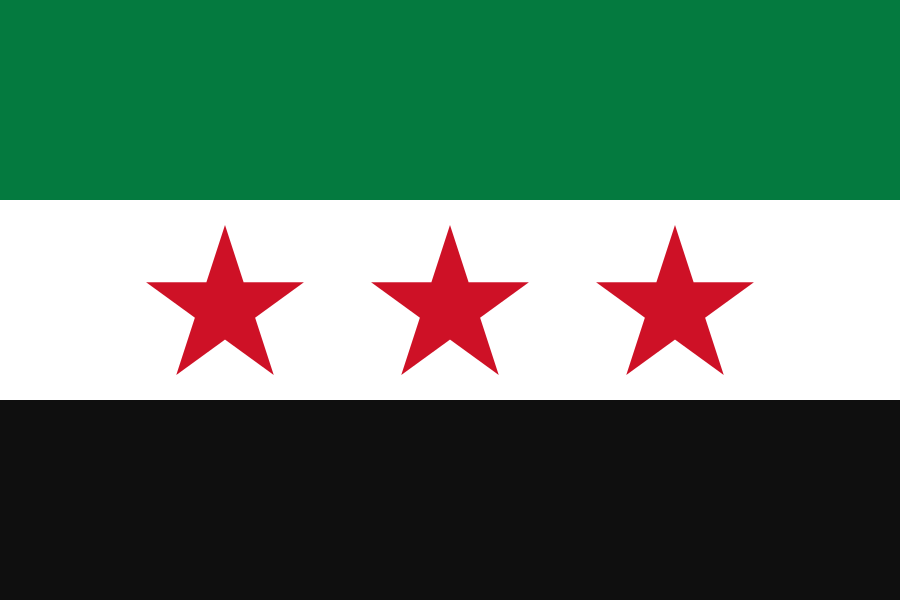
Foto von Vyacheslav Argenberg, CC BY 4.0, über Wikimedia Commons
Überblick
Syrien (arabisch سوريا, DMG Sūriyā; amtlich Arabische Republik Syrien) ist ein Staat in Vorderasien und Teil des Maschrek. Syrien grenzt im Süden an Israel und Jordanien, im Westen an den Libanon und das Mittelmeer, im Norden an die Türkei und im Osten an den Irak. Mit rund 185.000 km² ist Syrien ungefähr halb so groß wie Deutschland. Es leben mehr als 22 Millionen Menschen im Land, überwiegend sunnitische Muslime, daneben aber auch eine Vielzahl an religiösen Minderheiten wie Alawiten, Drusen und Christen. Vor Ausbruch des Bürgerkriegs waren die bevölkerungsreichsten Städte Aleppo, Damaskus, Homs, Hama und Latakia. Die 63 v. Chr. begründete römische Provinz Syria war reich und bedeutend, nach Beginn der Islamisierung ab 634 wechselte das Gebiet zwischen Herrschaftsansprüchen. Die Syrische Republik wurde erstmals im Jahr 1930 gegründet und im Jahr 1946 unabhängig.
Text aus Wikipedia, Lizenz CC BY-SA.
Wohin in Syrien


Geheimtipps
Weniger bekannte Orte abseits der großen Städte von Syrien, die Reisende auf Wikivoyage empfehlen: Dörfer, Nationalparks und ruhige Ecken. Die Kurzbeschreibungen stammen aus diesen Listen (CC BY-SA).

Dead Cities
11 Orte eingetragen
A series of towns that once formed part of Antioch. They have long since been abandoned but make an interesting stop for tourists. Al Bara boasts pyramidal tombs and formerly grand archways set on modern farm land. Serjilla is another famous dead city.

Hauran
8 Orte eingetragen
Not a tourist site, but an active Christian monastery actively promoting Islamic/Christian dialogue. Welcomes Christians and followers of other religious traditions. It is 80 km north of Damascus.

Golan Heights
1 Ort eingetragen
Mountainous area on the Israeli border

Apamea
Noch keine Orte eingetragen
A former Roman city that once housed about half a million people. Apamea was hit by an earthquake in the 12th century and much of it was destroyed but it still boasts a long street lined with columns, some of which have twisted fluting.

Kadesh
Noch keine Orte eingetragen
The site of the Battle of Kadesh between the Hittites and Egyptians in the 13th century BC. It was destroyed by the invading Sea Peoples in around 1178 BC. However, Hellenistic remains have been found in the upper levels of the tell (ruin-mound), and the summit is still occupied today.
Unterwegs in Syrien
Dieser Teil ist auf Englisch, so wie er auf Wikivoyage steht.
Unterwegs im Land
By taxi. The taxis (usually yellow, always clearly marked) quickly get around Damascus, Aleppo, and other cities. All licensed taxis carry meters, and it is best to insist that the driver put the meter on and watch it stay on. Most drivers expect to haggle prices with foreigners, and the pricing may be horrible. Other options include taxi apps (Yallago being the most popular one), which probably are cheaper, and private cab services (which advertise prominently at the airport), which charge substantially more. Arabic would be helpful: most taxi drivers do not speak English.
By car. Visitors can rent cars at various Sixt, Budget, and Europcar locations. Cham Tours (formerly Hertz) has an office next to the Cham Palace Hotel, which offers competitive rates starting at about US$50 per day, including tax, insurance, and unlimited kilometers. Sixt Rent a Car at the Four Seasons Hotel has rates starting from US$40 per day all-inclusive). If you have never driven in Syria before, take a taxi first to get a first-hand idea of what traffic is like. Especially in Damascus and Aleppo, near-constant congestion, a very aggressive driving style, bad roads, and highly dubious quality of road signs make driving there an exciting experience, so err on the side of caution when traveling. The only road rule that might come in handy is that, as opposed to most of the rest of the world, in roundabouts, the entering cars have the right of way, and the vehicles already in the roundabout have to wait.
Geld und Kosten
Money. Syria's currency unit is the Syrian pound or lira (Arabic: الليرة السورية al-Līra as-Sūriyya'). You will see a variety of notations used locally: LS, SP, or ل.س are used. You may also see £S or S£. Wikivoyage uses the ISO currency code SYP. The pound's subdivision 'piastre' is obsolete. On January 1, 2026, the Syrian pound was revalued, with 1 New Syrian pound equal to 100 of the previous pounds. Both old and new Syrian pounds remain simultaneously in circulation, with the old Syrian pounds redeemable for five years until July 30, 2031. The new series of Syrian pound banknotes are issued in denominations of 10, 25, 50, 100, 200, and 500 pounds. The old series were issued in denominations of 50, 100, 200, 500, 1,000, 2,000, and 5,000 pounds. The maximum foreign currency amount that can be exported legally is a remarkably generous US$3,000 or its equivalent in foreign currencies per year for each traveler. Any amount over US$3,000 risks confiscation by authorities and time in jail. There are restrictions on the import and export of Syrian currency, with the maximum amount of Syrian pounds to be brought into or out of the country at 20,000 New Syrian pounds or 1,000,000 old Syrian pounds. As of Aug 2026, MasterCard and Visa transactions are being restarted in Syria, but cash remains the most reliable form of payment. ATMs are found in Damascus and Aleppo, but they are not reliable. Bring enough cash for your whole trip. US dollars are preferred, and euros can also be exchanged.
Sprache
Arabic is the official language. It is always a good idea to know some words ("hello," "thank you," etc.). A surprising number of people speak at least (very) rudimentary English. Learning basic numbers in Arabic to negotiate taxi fares would be worth your while. Personnel working with foreign tourists (like tourist hotels, restaurants, tour guides, etc.) generally communicate reasonably well in English. Educated senior citizens usually speak French, a legacy of French colonial rule in Syria. Syria is also a multi-ethnic country, so in some areas, you might hear other languages such as Kurdish, Armenian and Aramaic.
Sitten und Umgangsformen
Syria is a majority Muslim country with long-established Christian, Jewish and Yazidi minorities. However, the Jewish community is down to only a handful of individuals in Damascus, with the vast majority having immigrated to Israel. Historically, religious groups lived in harmony, and religion was primarily considered personal. It was inappropriate to ask someone about their faith unless you knew them well. However, this has changed since the start of the Syrian Civil War.
General etiquette. Syrians are indirect communicators. They are tempered by the need to save face and they will avoid saying anything that could be construed as critical, judgmental, or offensive. Syrians often ask people personal questions. Some of the questions they may ask may be too personal in other parts of the world. Try not to be fazed or bothered by this because Syrians aren't trying to interrogate or corner you; this is how people get to know each other. Syrians tend to be affectionate to children. In Syria, it's perfectly normal for both men and women to interact with a stranger's child. Syrians tend to speak loudly in groups. They also use aggressive body language and raise their voices in conversations; to most visitors, this implies that Syrians are an argumentative bunch, but Syrians tend to use emotions to convey interest in a conversation. What may seem like a shouting match in public may actually be a simple, friendly discussion!
Telefon und Internet
Phone. The international calling code for Syria is +963.
Internet. Syria has had easy and cheap internet access. However, with badly damaged infrastructure and electricity outages common, don't rely on it. Internet is very common around the cities at internet cafés. The cafés are very friendly but in order to avoid being price gouged it is best to ask a local how much the internet costs per an hour before agreeing to sit down. It is best to avoid political debates regarding the Syrian government, or reading Israeli newspapers or websites on-line. Prices for high-speed access are quite varied.
Sicherheit
As of March 2026, travelers are advised to avoid majority-Kurdish areas in northern Syria, particularly around Kobane (Ayn al-Arab) in northeastern Aleppo Governorate and the Hasakah-Qamishli area. These areas remain politically sensitive, with periodic tensions between local Kurdish people and Syrian government institutions, including security forces. Most of Suwayda Governorate, including its capital, is not under the effective control of the Syrian government but is instead held by local militias. Ongoing clashes between these groups and Syrian government forces occur regularly, creating a highly unstable security situation. Travelers should avoid the area entirely due to the risk of active conflict. Travelers should avoid all large gatherings as they may turn violent. You could find yourself in trouble if you engage in open criticism or appraisal of whatever opinions or political measure. Your best bet is to avoid political conversations altogether to avoid any possible problems. If you engage in political discussions with Syrians, be aware that they might face intense questioning by the secret police (mukhabarat) or whatever local equivalent if you are overheard. As a general rule, always assume that you are watched. This may change as the new government starts reforms of the system – for the better or for the worse.
Syrian dual citizens. Dual citizenship is recognised by the Syrian government.
Drugs. The death penalty is enforced for drug trafficking or cultivation.
Aus dem Wikivoyage-Reiseführer, geschrieben von Reisenden (CC BY-SA), gekürzt. Für Einreise, Visa, Gesundheit und die aktuelle Sicherheitslage gelten immer die offiziellen Reisehinweise deiner Regierung (oben verlinkt).