
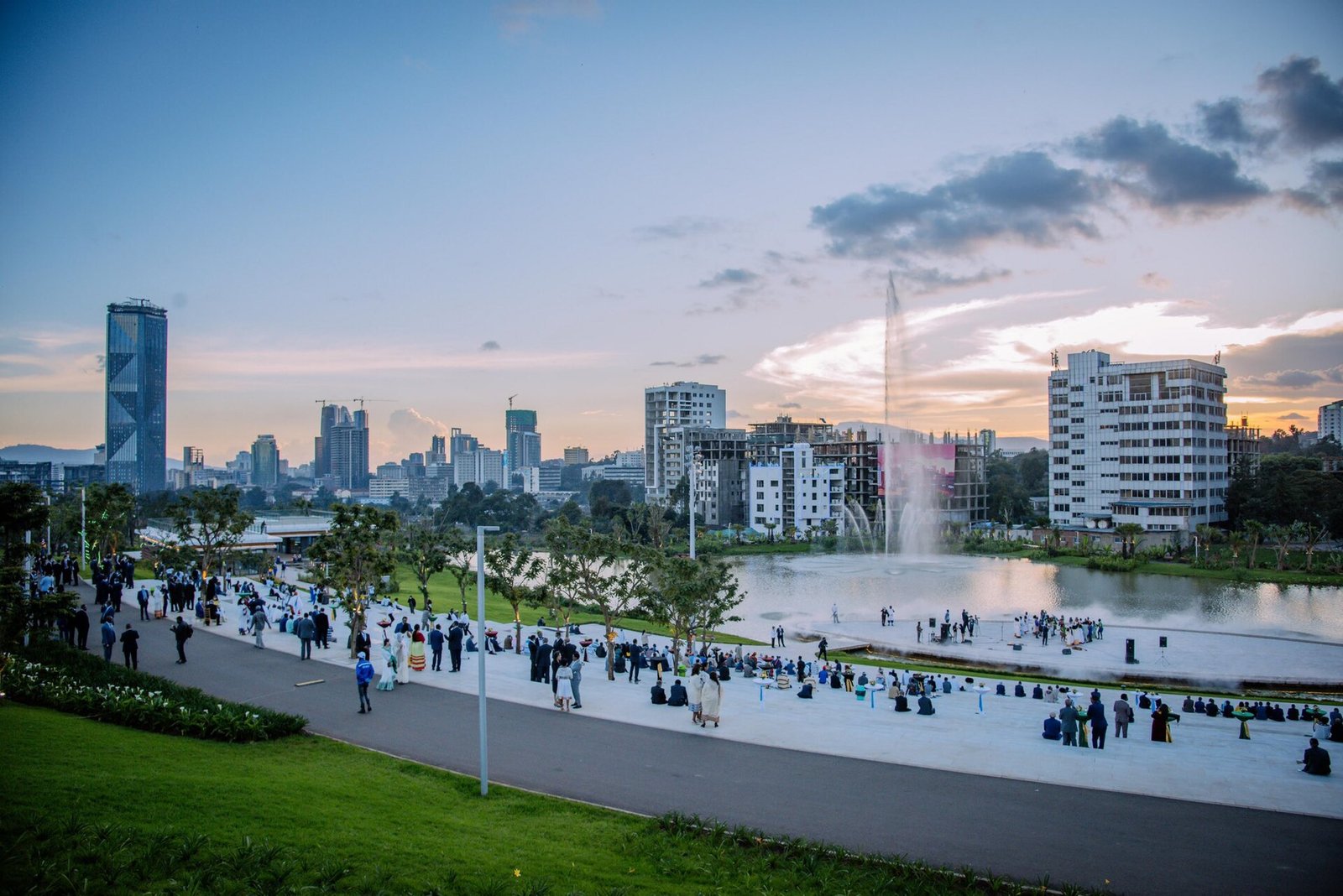
Etiopía
Foto de DaneyWiki, CC BY-SA 4.0, vía Wikimedia Commons
Resumen
Etiopía (en amárico: ኢትዮጵያ, romanizado: ītiyop’iya), oficialmente la República Democrática Federal de Etiopía (en amárico: የኢትዮጵያ ፌዴራላዊ ዴሞክራሲያዊ ሪፐብሊክ, romanizado: ye’ītiyop’iya fēdēralawī dēmokirasīyawī rīpebilīki), antiguamente conocida como Abisinia, es un país sin litoral situado en el Cuerno de África. Las estimaciones demográficas a 2021 lo sitúan como el segundo país más poblado de África, solo por detrás de Nigeria y el duodécimo a nivel mundial, así como el país sin litoral más poblado del mundo. Su capital, así como su ciudad más grande y poblada, es Adís Abeba. Limita al norte con Eritrea, al noreste con Yibuti, al este con Somalia, al sur con Kenia y al oeste con Sudán y Sudán del Sur. Etiopía, donde se introdujo tempranamente el cristianismo, es el único caso entre los países africanos que nunca ha sido colonizado, y mantuvo su independencia durante el reparto de…
Texto de Wikipedia, con licencia CC BY-SA.
Adónde ir en Etiopía


Joyas escondidas
Lugares menos conocidos que los viajeros de Wikivoyage recomiendan más allá de las grandes ciudades de Etiopía: pueblos, parques nacionales y rincones tranquilos. Las descripciones breves proceden de esas listas (CC BY-SA).

Danakil Depression
10 lugares en la lista
A salt desert with several volcanoes including the active Erta Ale and the colorful Dallol

Awash National Park
6 lugares en la lista
Awash National Park is a national park in Ethiopia. Located at the border of Oromia state and Afar state, the park covers an area of 827 km2 (319 sq mi), most of it lies at an altitude of 900 m (3,000 ft). Spanning across the southern tip of the Afar Region and the northeastern corner of the East Shewa Zone of Oromia, this park is 225 km (140 mi) east of Addis Ababa.

Yangudi Rassa National Park
3 lugares en la lista
Yangudi Rassa National Park is a national park in Ethiopia located in Afar Region.

Mago National Park
1 lugar en la lista
Mago National Park is a national park in Ethiopia located in the South Ethiopia Regional State about 782 kilometers south of Addis Ababa and north of a large 90° bend in the Omo River, the 2162 square kilometers of this park are divided by the Mago River, a tributary of the Omo, into two parts. To the west is the Tama Wildlife Reserve, with the Tama river defining the boundary between the two. To the south is the Murle Controlled Hunting Area, distinguished by Lake Dipa which stretches along the left side of the lower Omo. The park office is 115 kilometers north of Omorate and 26 kilometers southwest of Jinka. All roads to and from the park are unpaved.

Sodere
1 lugar en la lista
Spa town due to hot springs (filwoha)

Abijatta Shalla Lakes National Park
Aún no hay lugares en la lista
Abijatta-Shalla National Park is a national park in Ethiopia. It is located in the Oromia Region and the Ethiopian Highlands region, 200 kilometers south of Addis Ababa, and east of the Batu–Shashamane highway.

Bale Mountains National Park
Aún no hay lugares en la lista
Bale Mountains National Park is a national park in Ethiopia. The park encompasses an area of about 2,150 km2 (830 sq mi) in the Bale Mountains and Sanetti Plateau of the Ethiopian Highlands.

Konso
Aún no hay lugares en la lista
And other Omo Valley tribes

Lower Valley of the Omo
Aún no hay lugares en la lista
A UNESCO World Heritage Site for its hominid fossils, a tourist attraction for its tribal cultures

Nech Sar National Park
Aún no hay lugares en la lista
Nechisar National Park is a national park in Ethiopia. It is in the Great Rift Valley within the southwestern Ethiopian Highlands.
Omo National Park
Aún no hay lugares en la lista
Omo National Park is a national park in Ethiopia founded in 1980. Located in the South Ethiopia Regional State on the west bank of the Omo River, the park covers approximately 4,068 square kilometers, about 870 kilometers southwest of Addis Ababa; across the Omo is the Mago National Park and the Tama Wildlife Reserve. Although an airstrip was recently built near the park headquarters on the Mui River, this park is not easily reachable; the Lonely Planet guide Ethiopia and Eritrea describes Omo National Park as "Ethiopia's most remote park".

Simien National Park
Aún no hay lugares en la lista
Simien Mountains National Park is the largest national park in Ethiopia. Located in the North Gondar Zone of the Amhara Region, its territory covers the highest parts of the Simien Mountains and includes Ras Dashan, the highest point in Ethiopia.
Maze National Park
6 lugares en la lista
Maze National Park is a national park in the South Ethiopia Regional State of Ethiopia. It is located 460 km (290 mi) southwest of Addis Ababa and 248 km (154 mi) from Hawassa. It covers approximately 210 km2 (81 sq mi). Maze was founded in 2005 and is managed by the Ethiopian Wildlife Conservation Authority.
Gambella National Park
Aún no hay lugares en la lista
Gambella National Park, also spelled Gambela National Park, is a 5,016 km2 (1,937 sq mi) large national park in Ethiopia. It is the nation's largest national park and is located several hundred kilometers from Addis Ababa. It was established in 1974, but is not fully protected and has not been effectively managed for much of its history.
Geraille National Park
Aún no hay lugares en la lista
Geraille National Park (also Gerale National Park) is in Liben zone of Ethiopia.
Kafta Sheraro National Park
Aún no hay lugares en la lista
Kafta Humera National Park is a national park in the Tigray. Kafta Humera National Park is one of the few highly bio-diversified parks in East Africa. It was only in 2007 that it got formal recognition as a national park. It was governed by the Ethiopia Wildlife Conservation Authority.
Días festivos
Festivos nacionales en Etiopía en los próximos doce meses. Cierran oficinas, bancos y muchas tiendas, y el transporte y el alojamiento se llenan más. No se incluyen los festivos regionales ni las fiestas locales, y los festivos que siguen la luna pueden moverse un día.
- Navidad · ልደተ-ለእግዚእነ/ ገና
- Día de los Reyes Magos · ብርሐነ ጥምቀት
- First day of Ramadan · ረመዳን
- Victory at Adwa Day · የዓድዋ ድል በዓል
- Fiesta del Eid Fitr · ዒድ አል ፈጥር
- Day of Lament · የቀይ ሽብር መታሰቢያ ቀን
- Viernes Santo · ስቅለት
- Pascua · ፋሲካ
- Fiesta del Sacrificio-Aid Al Adha · ዒድ አል አድሐ
- Derg Downfall Day · ደርግ የወደቀበት ቀን
- Birthday of Muhammad (Mawlid) · መውሊድ
- Año Nuevo · እንቁጣጣሽ
- Finding of the True Cross · ብርሐነ-መስቀል
Fechas del proyecto date-holidays, basado en gran parte en Wikipedia (CC BY-SA 3.0). Los nombres aparecen en tu idioma cuando existe una traducción. Compruébalo en el lugar antes de planificar en torno a un festivo.
Viajar por Etiopía
Esta parte está en inglés, tal como está escrita en Wikivoyage.
Moverse por el país
By plane. Ethiopian Airlines is reasonably priced and has fairly comprehensive domestic services. Flights are often overbooked, so it is essential to reconfirm your tickets at least a day in advance and show up at the airport on time. If you forget to reconfirm, they may assume you aren't going to show up and give away your seats. Flights are frequently cancelled or rescheduled so allow extra time if transferring to an international flight. As of 2020, Ethiopian Airlines has a mobile app that enables you to book and pay by credit card. The app is well designed but its reliability depends on the reliability of the mobile/wifi coverage in your location. If an Ethiopian ticket office is nearby it's often easier to go there. If you have booked your international trip to Ethiopia via Ethiopian Airlines you will get a 60% discount on domestic flights. Even if you have arrived on an airline other than Ethiopian, you can still get the discounted prices by having proof of an international reservation with Ethiopian regardless of whether you have flown the flight or not. So you can get the discount by booking a refundable (eco flex) or cheap flight to a neighbouring country for the future and quoting the ticket number when booking domestic flights. You need to have proof of your international ticket or reservation as you are often asked for it.
Dinero y gastos
Money. Local currency is the Ethiopian birr, denoted by the symbol "Br" or "ብር " (ISO currency code: ETB). Wikivoyage articles use birr to denote the currency. It is one of the more stable African currencies. There are 100 santim to the birr and coins come in denominations of 1-, 5-, 10-, 25 and 50 santim and one birr. Banknotes of Ethiopia come in denominations of 1, 5, 10, 50, 100 and 200 birr. There are ATMs in most towns, even smaller ones. Dashen Bank, Commercial Bank of Ethiopia and Awash Bank are your best bet for finding an ATM that takes Visa, MasterCard and Chinese credit/debit cards. Don't expect foreign Cirrus or Plus cards to work. The ATMs are not always reliable, so try another and have a back-up plan for cash. Opportunities to use credit/debit cards (Visa and MasterCard) are increasing in Addis Ababa, but remain rare elsewhere.
Changing cash. Any commercial bank in Ethiopia can exchange cash. The rates are the same everywhere and are set by the central bank daily. There are hundreds of commercial bank branches in Addis Ababa, including in the Sheraton and Hilton hotels, and in the corner of the baggage claim hall at the airport. Most cities and towns that tourists visit will have at least one commercial bank, except for villages in the Omo valley. Many hotels will convert US dollars to birr at the front desk. Because of forgeries in circulation, banks might not accept US dollar notes printed before 2002, or torn or very worn notes.
Idioma
Amharic is the first official language and lingua franca of Ethiopia. It is a Semitic language related to Hebrew and Arabic, and if you know either one you'll recognize some cognates. In all parts of the country, everyone speaks Amharic to some extent, no matter what their first language may be. The language is written in the Ge'ez script. In big cities, many people under 40 speak some English. (English is the primary foreign language taught in schools and both the British Council and the EU have helped in providing textbooks.) In rural areas, find local school children to translate for you for a fee that could be next to nothing. (Ethiopians have a distinct way of speaking English. Because it is heavily accented, it might be a bit difficult to understand it at the beginning.
Costumbres y modales
Ethiopians are very proud of their culture, identity, and country. Avoid criticizing their cultural lifestyle, especially their brand of Christianity (Ethiopian Orthodox). Avoid all contentious religious discussion, or you may risk all good will and hospitality you could have been afforded. Rather than argue about the merits of Orthodoxy or Islam, it's best to ask friends to explain their customs, festivals and beliefs and to listen with respect. The Ethiopians' relationship with the Westerners is generally free of racial animosity. However, there is considerable suspicion and even xenophobia toward foreigners in the countryside. Ethiopians can be short-fused if they feel they are not treated as equals. It is a sign of respect for men to avoid eye contact with women. If you are a foreign man, maintaining a formal distance from women will be seen as good manners. If you meet a woman who is with a man, ask the man's permission before talking to her. Likewise, if you're a foreign woman in public with a man, don't be upset if Ethiopian men address all questions to him. They will do this not to slight you but to show respect. This will be the case on public transport and in restaurants. It is very important to remove your shoes when entering a home.
Teléfono e internet
Telephone. The country code for calling Ethiopia is 251. The city code for Addis Ababa is 011 (or 11 from outside Ethiopia).
Mobile. Unlike most countries, even within Africa, roaming in Ethiopia with your home country's carrier is very expensive and is often not covered by discounted roaming packages, and many traveler eSIMs don't even support the country at all. As such it is highly recommended to get a local SIM card while in Ethiopia. Ethiopia has two mobile phone networks - Ethio Telecom (Ethiotel) and Safaricom. Safaricom launched its network in 2022 and is rolling it across the country. Safaricom has the main cities covered but Ethiotel has the most extensive coverage in small towns and rural areas. Both networks offer 3G, 4G and 5G service with good data speeds. In general calls, SMS and mobile data, especially with a data package, offered by both carriers is extremely cheap. For example, as of 2025, a 30-day plan with unlimited data from Ethiotel costs 1300 birr (or about US$8.50 in 2025). To avoid getting ripped off, the best place to buy a SIM card is at a Ethio Telecom or Safaricom shop. Both have shops in the arrivals area of the airport in Addis Ababa.
Seguridad
There are many ongoing inter-ethnic conflicts. Borders between ethnic regions tend to be high-risk areas. In addition, many groups are in conflict with the government. Due to the general security situation, expect a heightened security presence. Be prepared for checkpoints, having your identity and travel documents with you. As anywhere, take care to respect road blocks (even if they appear unattended), remain calm and follow instructions. Communications and availability of food, water and other necessities can be disrupted. Have a contingency plan. Landmines are a threat in some regions. See also War zone safety.
De la guía de Wikivoyage, escrita por viajeros (CC BY-SA), resumida. Para las normas de entrada, visados, salud y la seguridad actual, consulta siempre las recomendaciones oficiales de tu gobierno (enlazadas arriba).