

Malaui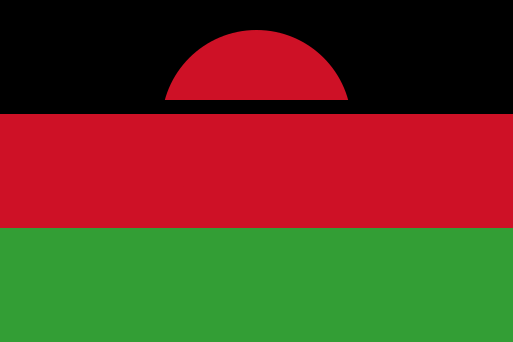
Foto de Felixfeld, CC BY-SA 3.0, vía Wikimedia Commons
Resumen
Malaui o Malawi, oficialmente la República de Malaui o República de Malawi (en inglés, Republic of Malawi; en chichewa, Dziko la Malaŵi) es un país sin salida al mar ubicado en el sureste de África, antiguamente conocido como Nyasalandia, que tiene como su capital a la ciudad de Lilongüe. Limita con Zambia al noroeste, con Tanzania al noreste y con Mozambique al sureste, sur y suroeste. El país está separado de Tanzania y Mozambique por el lago Malaui, uno de los lagos con mayor superficie del continente africano. Su topónimo proviene de los antiguos reinos Maravi, una serie de Estados formados por tribus bantúes que habitaron el área. Entre los siglos I y IV fue poblado por inmigrantes bantúes. Entre 1830 y 1860 ngoni, waYao e inmigrantes hablando suajili llegaron al país.
Texto de Wikipedia, con licencia CC BY-SA.
Adónde ir en Malaui


Joyas escondidas
Lugares menos conocidos que los viajeros de Wikivoyage recomiendan más allá de las grandes ciudades de Malaui: pueblos, parques nacionales y rincones tranquilos. Las descripciones breves proceden de esas listas (CC BY-SA).

Cape Maclear
18 lugares en la lista
Laid back fishing village on the tip of a peninsula jutting out into the southern portion of Lake Malawi. The Cape has excellent, sandy beaches and crystal-clear water perfect for swimming, and is a favourite among backpackers, boaters, and sunseekers. This area, however, is known for having a high level of schistosomiasis and visitors should be well informed.

Likoma Island
16 lugares en la lista
And Chizumulu Islands - great aquatic life and a back door to Mozambique. These islands are only reachable to tourists by private boat or the public ferry which only runs 1-2 times each week and is the sole means by which locals can ship supplies to and from the islands; Thus, if you take the ferry to or from Nkhata Bay, purchase a deck or cabin ticket unless you want to be fully immersed in the typical way of life of Malawian transporters.

Nkhata Bay
15 lugares en la lista
A rocky bay towards the north of the lake - check into one of the lodges and you could be here for a while

Zomba
15 lugares en la lista
Also called the Zomba Massif, is a mountain of the Shire Highlands in southern Malawi.

Monkey Bay
11 lugares en la lista
A popular large village as you head up the Lake Road from Mangochi toward Cape Maclear

Mount Mulanje
5 lugares en la lista
Is the highest peak south of Kilimanjaro and a favourite among climbers attempting to reach Sapitwa Peak, the tallest of Mulanje's peaks. It's within the Mulanje Mountain Forest Reserve

Liwonde National Park
4 lugares en la lista
550 km² of unspoiled forest along the shores of the Shire River. The national park is best approached from the town of Liwonde. A half-hour boat ride up the Shire will show some of the remarkable wildlife of the region, especially hippo's, elephant, and fish eagles.

Lake Malawi National Park
1 lugar en la lista
Lake Malawi National Park is a national park at the southern end of Lake Malawi in Malawi, Southeast Africa. It is the only national park in Malawi that was created with the purpose of protecting fish and aquatic habitats. Despite this being its main purpose, Lake Malawi National Park includes a fair amount of land, including a headland, the foreshore and several small rocky islands in Lake Malawi.

Mua
1 lugar en la lista
Mua is a village in the Dedza District of Malawi, close to the Dedza Plateau.

Nyika National Park
1 lugar en la lista
Malawi's biggest national park is on the 1800m high Nyika Plateau

Majete Wildlife Reserve
Aún no hay lugares en la lista
Majete Wildlife Reserve is a nature reserve in southwestern Malawi, established as a protected area in 1955. The reserve's animal populations were decimated during the late 1970s and 1980s due to poaching and other human activities. Majete has been managed by African Parks since 2003, when the nonprofit conservation organization entered into a public–private partnership with the Malawi Department of National Parks and Wildlife (DNPW). Since then, wildlife has been restored, the park has achieved Big Five game status, and tourism has increased.
Ntchisi Forest Reserve
3 lugares en la lista
Stunning rainforest in rural, untouched area
Días festivos
Festivos nacionales en Malaui en los próximos doce meses. Cierran oficinas, bancos y muchas tiendas, y el transporte y el alojamiento se llenan más. No se incluyen los festivos regionales ni las fiestas locales, y los festivos que siguen la luna pueden moverse un día.
- Navidad · Christmas Day
- Año Nuevo · New Year's Day
- John Chilembwe Day
- Martyrs' Day
- Fiesta del Eid Fitr · Eid al Fitri
- Viernes Santo · Good Friday
- Lunes de Pascua · Easter Monday
- Día del Trabajador · Labour Day
- Día del Trabajador · Labour Day
- Kamuzu Day
- Día de la Independencia · Independence Day
- Día de la Madre · Mother's Day
Fechas del proyecto date-holidays, basado en gran parte en Wikipedia (CC BY-SA 3.0). Los nombres aparecen en tu idioma cuando existe una traducción. Compruébalo en el lugar antes de planificar en torno a un festivo.
Viajar por Malaui
Esta parte está en inglés, tal como está escrita en Wikivoyage.
Moverse por el país
Compared to its neighbours, the main roads in Malawi are in surprisingly good shape and travel times between major destinations should be reasonable. The volume of traffic is low and most people drive reasonably slowly. Road travel after dark is not advisable as road markings are poor to non-existent and not all cars have headlights. While there are few vehicles travelling at night a very significant number of their drivers will be heavily intoxicated, particularly outside of Lilongwe and Blantyre. The Malawian police force have roadblocks, checkpoints and speeding checks along many of the major roadways and at the airports. By and large, they are looking for illegal activities and bribes. Expect to be stopped on occasion, particularly if you are clearly not local, and asked where you are going. Fines for traffic offences range from 2,000 MK for poor tyres or faulty lighting, to 8000 MK for speeding, to seizure of the vehicle for licensing/registration/insurance offences. Payment is expected to be made to a bursar at the roadside, and a numbered receipt from a duplicate book should be given. If a passenger in a vehicle being driven by a local the police may question the driver or other passengers in a local dialect in order to establish what can be got from you. You should not have any problems if you are polite and have the correct documentation (passport, driver's licence, permission to use the vehicle, etc.) available if they ask.
By bus. AXA Bus Malawi
Dinero y gastos
Money. The local currency is the Malawi kwacha, sometimes abbreviated "MK" (ISO international currency code: MWK). The currency is freely convertible (but impossible to get rid of outside of the country). Coins of Malawi are issued in denominations of 1, 5, 10, 20 and 50 kwacha. Banknotes of Malawi are issued in denominations of 20, 50, 100, 200, 500, 1,000, 2,000 and 5,000 kwacha. As of late 2025, foreigners need to pay all accommodation and related tourist services in hard currencies (USD, EUR, GBP). "Hard" foreign currencies (forex) will also be accepted by almost everybody, particularly for larger purchases. In order to reduce cost of living, expats living in Malawi could consider specialized FX transfer by companies focusing on global reach such as the ones found at MTC.com. The central bank devalued the kwacha by 44% in Nov 2023. Many of the prices in our Malawi articles may be out of date. All foreign currency must be declared upon arrival There is a black market for foreign currency in Lilongwe operated by the people standing outside Metro store (opposite Spar/Shoprite). Get the taxi to stop on the drive from the airport. As of Aug 2026, the black market rate was 3,900-4300 kwacha to the US dollar. You can swap Malawian kwacha to Zambian kwacha at the border, either at the banks or on the black market too. Larger foreign notes are favoured and can get much higher rates.
Idioma
The only official language of Malawi is English. There is no official declared national language of the country, but instead, there are regional languages that are used widely which are Chichewa and Chitumbuka. English is widely spoken in urban areas and by the well-educated upper class, though outside of that, a few words in Chichewa and Chitumbuka will go a long way. Chichewa and Chitumbuka are the first languages of the majority of the population, and knowing both the languages will get you by in most of Malawi though in some very remote areas, learning the local tongue might be essential. Locals always appreciate any attempts by foreigners to speak Chichewa and Chitumbuka, and learning at least a few basic greetings would do well to ingratiate yourself to the locals.
Costumbres y modales
Malawi has both patriarchal and matriarchal ethnicities and cultures. In the cities, men tend to be more respected than women, but the reverse might be true in the rural villages depending on ethnicity. Whites tend to be well-respected, a holdover from colonial times, but this is largely a Malawian's way of being courteous. Accept their hospitality. They are an exceptionally friendly people. Malawians, especially those from very rural areas where they don't see many whites, can be quite curious when they do come upon a white traveller. To a Western mindset, this might be interpreted as unnecessarily staring at you or talking about you in front of you. Be prepared to be greeted by kids yelling mzungu, mzungu! and to answer lots of questions about yourself. Even relatively mundane items like mechanical pencils can draw a crowd of onlookers. Malawians are in general extremely courteous, and a part of that courtesy is shaking hands, speaking softly, and referring to travellers and others with respect. Malawians avoid rudeness. It is common for Malawi men to hold hands when they've gathered together to chat, and this shouldn't be given a sexual interpretation when it is encountered. Culturally, women should not wear shorts or mini-skirts, especially when travelling outside the lodge or camp. A woman in shorts or a short skirt is considered to be provocative, as well as rude. Many female visitors wear wraps that are available in the stores and markets of major cities.
Teléfono e internet
GSM. The two main mobile network providers are Airtel and TNM. For 3G TNM has better coverage with Airtel only really covering the largest cities. SIM cards are available for 200 MK.
Other. Embassy of the Republic of Malawi to Belgium, the Netherlands, Luxembourg, Switzerland and France
Seguridad
Malawi has been known for years as "The Warm Heart of Africa", and Malawians are known for their friendliness and hospitality. Malawi is not known as a particularly dangerous travel destination for western tourists and expatriates. Muggings and robberies have occurred in the larger cities, most especially Lilongwe, as well as in some notorious places along the main tourist routes. It is advisable to avoid walking alone at night. If you go out for the evening, make sure you know how you're going back home. Car-jackings happen occasionally so be sure to keep windows shut and doors locked during evening and night journeys (though night driving is not advised - most cars have broken headlights and Malawians tend to walk in the middle of the road at night). Roads are less safe because many drivers are unlicensed and inexperienced and many vehicles are not inspection-ready; there is also the factor of drunk driving, especially in the evenings, so be cautious. However even half the taxi drivers you will get at night will be drunk. There are a lot of pickpockets operating in nightclubs and bars, so don't bring too much money and cameras, etc. Homosexuality is prohibited by the law, and LGBT couples should exercise discretion when travelling to Malawi. It took a presidential pardon to release a gay couple who were arrested for homosexuality and sentenced to 14 years of hard labour. Swimming in water bodies can be dangerous because of crocodiles and hippos.
De la guía de Wikivoyage, escrita por viajeros (CC BY-SA), resumida. Para las normas de entrada, visados, salud y la seguridad actual, consulta siempre las recomendaciones oficiales de tu gobierno (enlazadas arriba).