

Nueva Zelanda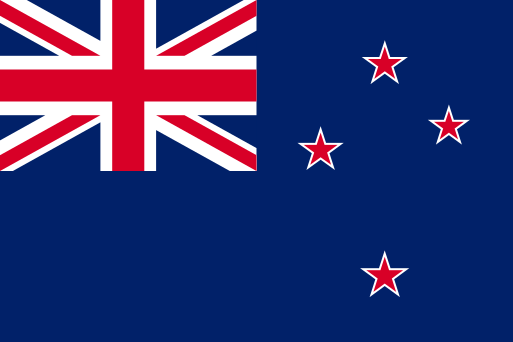
Foto de russellstreet, CC BY-SA 2.0, vía Wikimedia Commons
Resumen
Nueva Zelanda (en inglés: New Zealand; en maorí, Aotearoa, «tierra de la gran nube blanca») es un país soberano insular ubicado en Oceanía, localizado en el suroeste del océano Pacífico, cerca de Australia y constituido en una monarquía parlamentaria. Está formado por dos grandes islas: la isla Norte y la isla Sur, junto a un gran número de islas menores, destacándose entre ellas la isla Stewart y las islas Chatham. El Reino de Nueva Zelanda también incluye las islas Cook y Niue (estados autónomos en libre asociación), el archipiélago Tokelau y la dependencia antártica Ross. La capital de Nueva Zelanda es la ciudad de Wellington, situada en la isla Norte. Nueva Zelanda, notable por su aislamiento geográfico, está situada a cerca de 2000 kilómetros al sureste de Australia en el mar de Tasmania, y sus vecinos más cercanos al norte son Nueva Caledonia, Fiyi y Tonga.
Texto de Wikipedia, con licencia CC BY-SA.
Adónde ir en Nueva Zelanda


Joyas escondidas
Lugares menos conocidos que los viajeros de Wikivoyage recomiendan más allá de las grandes ciudades de Nueva Zelanda: pueblos, parques nacionales y rincones tranquilos. Las descripciones breves proceden de esas listas (CC BY-SA).

Coromandel Peninsula
54 lugares en la lista
Rugged coastline with plenty of beaches and hiking opportunities just 90 minutes from Auckland

Marlborough
49 lugares en la lista
The country's largest wine-growing region

Taupō
45 lugares en la lista
Trout fishing and adventure activities in the central North Island

Great Barrier Island
42 lugares en la lista
The largest of the Hauraki Gulf islands

Waiheke Island
39 lugares en la lista
Popular for day trips from Auckland, being just a 40-minute ferry ride

Stewart Island
32 lugares en la lista
The most southerly of New Zealand's three main islands with bush walks (including the Rakiura Track), birdwatching and kayaking

The Catlins
30 lugares en la lista
Sea lions, largest east coast native forest meets the sea

Bay of Islands
28 lugares en la lista
Pretty spot in the North Island with historical significance

Marlborough Sounds
19 lugares en la lista
Scenic drowned river valleys, a boaties' paradise

Mount Aspiring National Park
13 lugares en la lista
Contains the only peak above 3000 metres outside Aoraki / Mt Cook National Park

Waitomo
13 lugares en la lista
Limestone caves, stalactites, stalagmites and glowworms

Nelson Lakes National Park
10 lugares en la lista
Vintage boat regattas on Lake Rotoroa, easy to moderate tramping

Arthur's Pass National Park
9 lugares en la lista
A haven of Canterbury mountains.

Egmont National Park
9 lugares en la lista
A near-circular forest centred around a volcano in the Taranaki region.

Milford Sound
9 lugares en la lista
Fiordland National Park's most prominent and accessible fiord

Aoraki / Mount Cook National Park
8 lugares en la lista
Lots of hiking opportunities and New Zealand's highest mountain

Abel Tasman National Park
7 lugares en la lista
Golden sand beaches, kayaking and the Abel Tasman Coastal Track

Blueskin Bay
5 lugares en la lista
25 km north of Dunedin

Tongariro National Park
5 lugares en la lista
Three volcanoes, two skifields and one of the most popular hikes in the country

Waipoua Forest
5 lugares en la lista
Home of Tane Mahuta and Te Matua Ngahere, two of the largest kauri trees in New Zealand

Cape Reinga / Te Rerenga Wairua
4 lugares en la lista
At the northern tip of New Zealand

East Cape
4 lugares en la lista
The whole coastal region north of Gisborne

Rangitoto Island
4 lugares en la lista
Rangitoto Island is a volcanic island in the Hauraki Gulf near Auckland, New Zealand. The 5.5 km (3.4 mi) wide island is a symmetrical shield volcano cone capped by central scoria cones, reaching a height of 260 m (850 ft). Rangitoto is the youngest and largest of the approximately 50 volcanoes of the Auckland volcanic field, having erupted in two phases about 1450 CE and 1500 CE and covering an area of 2,311 ha. It is separated from the mainland of Auckland's North Shore by the Rangitoto Channel. Since World War II, it has been linked by a causeway to the much older, non-volcanic Motutapu Island.

Fiordland National Park
3 lugares en la lista
Several great hikes and Milford Sound

Vinegar Hill
3 lugares en la lista
Popular camping ground on the Rangitikei River, which for 30 years has hosted an annual gay and lesbian New Year's Eve party

Whanganui National Park
3 lugares en la lista
The Whanganui National Park is a national park located in the North Island of New Zealand. Established in 1986, it covers an area of 742 km2 bordering the Whanganui River. It incorporates areas of Crown land, former state forest and a number of former reserves. The river itself is not part of the park, but is a popular paddling route titled the Whanganui Journey, one of New Zealand's "Great Walks". The New Zealand Department of Conservation highlights Whanganui National Park as being the National Park most closely tied to human settlement.

Cape Brett
2 lugares en la lista
A 16.3-km walking track to an old lighthouse in the Bay of Islands

Pelorus Bridge
2 lugares en la lista
Forested scenic reserve and river swimming

Tiritiri Matangi Island
2 lugares en la lista
A nature reserve for native birds (some of them rare) and other native species, in the Auckland region

Whirinaki Te Pua-a-Tāne Conservation Park
2 lugares en la lista
Whirinaki Te Pua-a-Tāne Conservation Park is a publicly accessible conservation park in the North Island of New Zealand. The park is centered on the town of Minginui and part of the eastern boundary flanks Te Urewera. The Whirinaki Forest is one of the world's last prehistoric rainforests.

Ninety Mile Beach
1 lugar en la lista
Used as a road to Cape Reinga, it's actually only 58 miles long, but that's still very long

Paparoa National Park
1 lugar en la lista
Home of the Pancake Rocks

Kahurangi National Park
Aún no hay lugares en la lista
The largest land snails in the world and some of the deepest and most extensive cave systems in the southern hemisphere

White Island
Aún no hay lugares en la lista
An active island volcano that you can fly over
Días festivos
Festivos nacionales en Nueva Zelanda en los próximos doce meses. Cierran oficinas, bancos y muchas tiendas, y el transporte y el alojamiento se llenan más. No se incluyen los festivos regionales ni las fiestas locales, y los festivos que siguen la luna pueden moverse un día.
- Navidad · Christmas Day
- San Esteban · Boxing Day
- San Esteban (día sustituto) · Boxing Day (substitute day)
- Año Nuevo · New Year's Day
- Day after New Year's Day
- Day after New Year's Day (día sustituto) · Day after New Year's Day (substitute day)
- Waitangi Day
- Waitangi Day (día sustituto) · Waitangi Day (substitute day)
- Viernes Santo · Good Friday
- Lunes de Pascua · Easter Monday
- ANZAC Day
- ANZAC Day (día sustituto) · ANZAC Day (substitute day)
- King's Birthday
- Matariki
- Día del Trabajador · Labour Day
Fechas del proyecto date-holidays, basado en gran parte en Wikipedia (CC BY-SA 3.0). Los nombres aparecen en tu idioma cuando existe una traducción. Compruébalo en el lugar antes de planificar en torno a un festivo.
Viajar por Nueva Zelanda
Esta parte está en inglés, tal como está escrita en Wikivoyage.
Moverse por el país
By coach. Coaches (long-distance buses) are a relatively cheap and environmentally friendly way to get around New Zealand. Services are usually only once a day, even between major towns. Most roads in New Zealand are quite narrow and winding (when compared to the highways of the USA), and travelling a long distance in a coach can be a safe and relaxing way to travel compared with driving yourself. Booking in advance can get you great bargains on some lines. Flying Kiwi Adventures InterCity Travelpass. A pass offered by InterCity that brings together an extensive range of “hop on and off” fixed itinerary passes, based on the most popular touring routes throughout New Zealand. National passes include the Interislander ferry and a scenic boat cruise in Milford Sound. Passes are valid for 1 year. Flexi-Pass. Utilising the combined national networks of InterCity, Newmans and GreatSights, Flexi-Pass is sold in blocks of time, just like a prepaid phone card, and enables the holder to travel anywhere on the company’s network. Passes start at 15 hr, which is enough to travel from Auckland to Wellington in the North Island. Flexi-Pass hours can also be used to travel on the Interislander ferry and on Fullers GreatSights Bay of Islands Dolphin Watching cruises and tours to Cape Brett and the famous "Hole in the Rock". Passes can also be sold on to third parties and are valid for 1 year. East West Coaches. Daily transport from Westport and Greymouth to Christchurch (via Arthur's Pass) and return.
Dinero y gastos
Money. The currency used in New Zealand is the New Zealand dollar, denoted by the symbol "$" or "NZ$" (ISO code: NZD). It is divided into 100 cents. In this guide, the "$" symbol denotes New Zealand dollars unless otherwise indicated. The New Zealand dollar is free-floating, however barring a major change in the international market, exchange rates are generally stable. Payment in foreign currencies is rarely accepted, and if it is, expect the exchange rate to be poor (e.g. Australian or US dollars being accepted at 1:1). As the New Zealand dollar is one of the world's most actively traded currencies (10th most traded as of April 2016), it is widely available in banks and money changers throughout the world. Coins come in denominations of 10¢ (copper), 20¢ (small silver), 50¢ (large silver), $1 (small gold) and $2 (large gold). All the coins feature Queen Elizabeth II on the "heads" side (coins featuring King Charles III are expected to enter circulation around 2027). In 2006, New Zealand phased out the 5¢ coin and replaced the 10¢, 20¢ and 50¢ coins with smaller versions. Before the change, the 5¢, 10¢ and 20¢ coins were identical to their Australian counterparts, save for different "tails" sides, meaning it was common to see Australian coins in New Zealand circulation and vice versa. Since there is no coin smaller than 10¢, cash transactions are rounded to the nearest 10¢ (5¢ can round either way, but most businesses round down).
Idioma
English is the primary language of New Zealand, spoken by 96–98% of the population. English is a de facto official language, alongside two other de jure official languages: Māori (te reo Māori), the language of the indigenous Māori people, and New Zealand Sign Language (NZSL), the language of the deaf community. New Zealand English is most similar to Australian English, but is somewhat more conservative, retaining many British words and pronunciations that Australian English has abandoned in favour of American ones. New Zealand spelling generally follows British conventions. It also contains many local slang words, and words derived from the Māori language, and is distinct enough to justify its own version of the Oxford Dictionary. The New Zealand accent is mostly non-rhotic (i.e.
Costumbres y modales
Social behaviour. New Zealanders are generally warm and sociable, but will hold strangers at a distance. New Zealand is a country where "please" and "thank you" can be used more than once in a sentence without being out of place, and where an initial refusal of an offer is part of a polite banter. You should follow up a politely refused offer, with "Are you sure?", etc. Criticisms and compliments are often understated. If you wish to communicate with a New Zealander outside of a formal situation you are best to initiate the conversation. If you are unsure of the location of your intended destination ask a local. Your accent will trigger the local's desire to be helpful to tourists and they will normally offer to go beyond giving simple directions to help you. New Zealanders will often ask many (sometimes probing) questions about your home country or culture. This is not meant to be offensive: it reflects a genuine interest in other people and cultures and a desire to gain first-hand knowledge. If you are visiting someone's house, it is considered polite to bring a gift. It doesn't have to be fancy: some biscuits (cookies) or a cake from the local store is sufficient. Rules regarding shoes inside homes vary, but if in doubt, take them off. If staying for more than a few days at someone's house, if they are younger than 35 it is considered polite to leave a token amount of money, say $20, to 'cover the power bill', especially if you are the guest at a shared flat/apartment/house.
Teléfono e internet
Telephone. , also serving as a tourist attraction]] New Zealand has a well developed and ubiquitous telephone system. The country's legacy phone company, Spark, claimed in 2009 to have about 4,000 payphones in NZ which can be easily identified by their yellow and blue colours, but these numbers are now diminishing. All of them accept major credit cards and a variety of phonecards available from retailers. You may have to look hard for a payphone that accepts coins. The international telephone country code for New Zealand is 64. The international access code or prefix is 00. Area codes are as follows. When calling from overseas, omit the leading zero: 03 in the South Island, Stewart Island and the Chathams 04 in Greater Wellington (excluding Wairarapa) 06 in Taranaki, Whanganui, Manawatu, the Central North Island south of Mount Ruapehu, Hawke's Bay, East Coast, and Wairarapa. 07 in Waikato, Bay of Plenty and the Central North Island north of Mount Ruapehu 09 in Auckland and Northland. Local landline numbers are seven digits long.
Mobile phones. The three major mobile network operators are Spark, One NZ (formerly Vodafone NZ), and 2degrees.
Seguridad
The main emergency number in New Zealand is 111, and can be used to contact ambulance, the fire service, police, the coastguard, and rescue services. 112 works from mobile phones; 911 and 999 may work, but do not rely on them. You can call 555 from mobiles to report non-emergency traffic incidents. You can call 105 for non-emergency police, e.g. to report a theft or burglary (from overseas, you can call to reach 105), or you can report it online at 105.police.govt.nz. Deaf people can contact emergency services by fax on 0800 16 16 10, and by textphone/TTY on 0800 161 616. It is possible to send an SMS to 111, but you must register with police first. Full instructions are on the inside front cover of every telephone book. Other emergency numbers and personal crisis numbers are on pages 2 to 4 of the white pages section.
Crime and security. While difficult to compare directly, crime rates in New Zealand are generally similar to other Western countries. Theft and burglary are the most common crimes, typically opportunistic rather than targeted. Travellers should take standard precautions: keep valuables out of sight, lock vehicles, and secure accommodation – even in rural or remote areas. Violent incidents are relatively rare and most often linked to alcohol or drug use, especially in nightlife areas. Avoid rowdy bars or large groups of intoxicated people late at night, particularly in city centres or some suburban areas.
De la guía de Wikivoyage, escrita por viajeros (CC BY-SA), resumida. Para las normas de entrada, visados, salud y la seguridad actual, consulta siempre las recomendaciones oficiales de tu gobierno (enlazadas arriba).