

Filipinas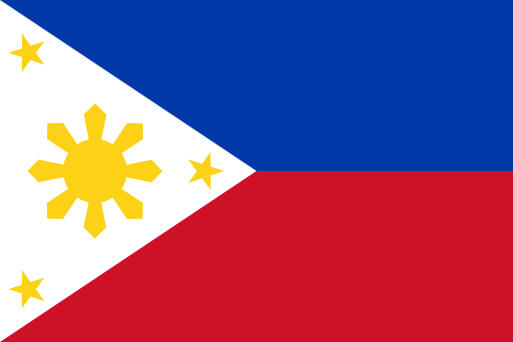
Foto de Patrick Roque, CC BY-SA 4.0, vía Wikimedia Commons
Resumen
Filipinas —oficialmente la República de Filipinas (en tagalo: Republika ng Pilipinas)— es un país insular (véase archipiélago) situado en el Sudeste Asiático, sobre el océano Pacífico. Su capital es Manila y su ciudad más poblada es la Ciudad Quezón. Al norte se encuentra separado de la isla de Taiwán por el estrecho de Luzón; al oeste se halla el mar de la China Meridional y Vietnam; al suroeste, Borneo; al sur, el mar de Célebes lo separa de otras islas de Indonesia, y al este limita con el mar de Filipinas. Su ubicación en el cinturón de fuego del Pacífico y su clima tropical lo convierten en un lugar propenso a terremotos y tifones. El país es rico en recursos naturales y se encuentra en una de las zonas con mayor biodiversidad del mundo. Está formado por 7.107 islas que se clasifican geográficamente en tres grupos: Luzón, las Bisayas y Mindanao. Filipinas tiene una…
Texto de Wikipedia, con licencia CC BY-SA.
Adónde ir en Filipinas


Joyas escondidas
Lugares menos conocidos que los viajeros de Wikivoyage recomiendan más allá de las grandes ciudades de Filipinas: pueblos, parques nacionales y rincones tranquilos. Las descripciones breves proceden de esas listas (CC BY-SA).

Baler
57 lugares en la lista
A surfer's paradise also famous for its history and rugged coastlines

Boracay
53 lugares en la lista
Is a 10-km-long island featuring white sands, one of the country's best-known resort areas.

Tagaytay
45 lugares en la lista
Cool climate, lush terrain and scenic views of Taal Lake with its volcano

Albay
44 lugares en la lista
Home of the almost perfectly-cone shaped volcano Mayon volcano

Batangas
44 lugares en la lista
Beach activities, diving sites, old Spanish churches and the scenic Taal lake and volcano

Moalboal
34 lugares en la lista
Once mainly a backpacker destination, it has good diving and has been developed to welcome a broader range of visitors

Sagada
32 lugares en la lista
Beautiful hikes, majestic caves, hanging coffins and serene mountains

Alaminos
24 lugares en la lista
Location of the "Hundred Islands". Home to a total of 123 small islands with pristine beaches

Banaue
24 lugares en la lista
Has 2,000-year-old rice terraces and called by Filipinos the eighth wonder of the world, it is a. People are fascinated at the immense work of the Igorots (mountain tribes of northern Luzon) in making this.

Pagudpud
23 lugares en la lista
White sand beaches with crystal clear waters

Mayoyao
21 lugares en la lista
Famous for its rice terraces and the penultimate World War II battle that led to Yamashita's surrender.

Panglao Island
21 lugares en la lista
In Bohol Province, a resort island with fine beaches. The rest of the province has other attractions including the Chocolate Hills and wild tarsiers (tiny primates).

Donsol
20 lugares en la lista
Is the Whale Shark Capital of the world, dive and see whale sharks.

Kiangan
20 lugares en la lista
Famous for its rice terraces and the site of General Tomoyuki Yamashita's surrender at the end of World War II

Puerto Galera
18 lugares en la lista
On Mindoro, a diving destination, and also a favorite getaway for Filipinos during Holy Week because of its white sand shorelines and its amazing flora.

Camiguin
17 lugares en la lista
Quiet island with fine beaches

Malapascua
15 lugares en la lista
Island features a beautiful white sand shoreline and coral gardens.

Paoay
12 lugares en la lista
Paoay, officially the Municipality of Paoay, is a municipality in the province of Ilocos Norte, Philippines. According to the 2024 census, it has a population of 24,204 people.

Pilar
12 lugares en la lista
The location of the Shrine of Valor (Dambana ng Kagitingan), a national shrine atop Mount Samat

Batad
11 lugares en la lista
A peaceful hamlet set amongst exhilarating views without the din of motor vehicles

Olango Island
11 lugares en la lista
In Metro Cebu - a popular destination for bird watchers, also has a large protected coral reef area

Bangui
10 lugares en la lista
Bangui, officially the Municipality of Bangui, is a municipality in the province of Ilocos Norte, Philippines. According to the 2024 census, it has a population of 15,227 people.

Subic
9 lugares en la lista
Resorts, beaches and a special economic zone

Siargao
6 lugares en la lista
Surfing destination off the northeast Pacific coast

Mabini
5 lugares en la lista
A scuba diving and snorkeling destination not far from Manila

San Juan
5 lugares en la lista
San Juan, officially the Municipality of San Juan, is a municipality in the province of Batangas, Philippines. According to the 2024 census, it has a population of 115,118 people.

Atok
4 lugares en la lista
A town known for its vegetable farms.

Taal Volcano
4 lugares en la lista
Is an active volcano with a lake in its caldera, located in another lake that is the caldera of a larger dormant volcano. It is quite scenic, and close enough to Manila to be popular as a weekend trip.

Caramoan
3 lugares en la lista
A small beach town in Camarines Sur

Sipalay
3 lugares en la lista
A quiet off-the-beaten-path area with fine beaches

Apo Island
2 lugares en la lista
A diving destination near Dumaguete; has a large, protected coral reef

Lake Sebu
2 lugares en la lista
Waterfalls, lakes and Lumad (T'boli) culture

Camotes Islands
1 lugar en la lista
An island group near Cebu

Narra
1 lugar en la lista
The Rice Granary of Palawan.

Buscalan
Aún no hay lugares en la lista
Come to get a traditional Butbut tattoo

Calaguas Islands
Aún no hay lugares en la lista
A pristine white sand beach

Corregidor Island
Aún no hay lugares en la lista
Ruins, historical shrines and World War II military installations

Mount Apo
Aún no hay lugares en la lista
The highest mountain in the Philippines, a dormant volcano

Mount Hamiguitan Range Wildlife Sanctuary
Aún no hay lugares en la lista
Mount Hamiguitan is a mountain located in the province of Davao Oriental, Philippines. It has a height of 1,620 metres (5,315 ft). The mountain and its vicinity has one of the most diverse wildlife populations in the country. Among the wildlife found in the area are Philippine eagles and several species of Nepenthes. Some of the latter, such as the Nepenthes peltata and Nepenthes micramphora, are endemic to the area. The mountain has a protected forest area of approximately 2,000 hectares. This woodland is noted for its unique pygmy forest of century-old trees in ultramafic soil, with many endangered, endemic and rare species of flora and fauna.

Mount Kitanglad Range Natural Park
Aún no hay lugares en la lista
The Kitanglad mountain range has numerous peaks: the more prominent ones are Mt. Kitanglad, Mt. Kaatuan, Mt. Maagnaw and Mt. Dulang-Dulang

Mount Pulag National Park
Aún no hay lugares en la lista
The summit views of the third highest mountain in the Philippines, and also the highest in Luzon, at, are breath-taking

Tubbataha Reefs Natural Park
Aún no hay lugares en la lista
A UNESCO World Heritage Site with exceedingly fine diving, usually reached by live-aboard dive boats operating out of Puerto Princesa
Western Batangas
30 lugares en la lista
Traditional beach destinations of the region, and home of the historic town of Taal.
Polillo Island
7 lugares en la lista
Unspoiled paradise off the Pacific coast of Quezon
Magalawa Island
Aún no hay lugares en la lista
Creamy white sand and pristine waters with abundant marine resources
Días festivos
Festivos nacionales en Filipinas en los próximos doce meses. Cierran oficinas, bancos y muchas tiendas, y el transporte y el alojamiento se llenan más. No se incluyen los festivos regionales ni las fiestas locales, y los festivos que siguen la luna pueden moverse un día.
- Bonifacio Day
- Navidad · Christmas Day
- Rizal Day
- Año Nuevo · New Year's Day
- Fiesta del Eid Fitr · End of Ramadan (Eid al-Fitr)
- Jueves Santo · Maundy Thursday
- Viernes Santo · Good Friday
- Pascua · Easter Sunday
- Day of Valor
- Día del Trabajador · Labour Day
- Fiesta del Sacrificio-Aid Al Adha · Feast of the Sacrifice (Eid al-Adha)
- Día de la Independencia · Independence Day
- National Heroes' Day
Fechas del proyecto date-holidays, basado en gran parte en Wikipedia (CC BY-SA 3.0). Los nombres aparecen en tu idioma cuando existe una traducción. Compruébalo en el lugar antes de planificar en torno a un festivo.
Viajar por Filipinas
Esta parte está en inglés, tal como está escrita en Wikivoyage.
Moverse por el país
The country's vast archipelagic nature makes travel by plane and boat very important for most visitors, especially between major cities. The country is quite large, especially when considering the area that is water, and its geography and population patterns mean that seemingly short distances, especially on land, may take more time to travel than you would expect. Do what Filipinos do, and try to "commute" or take public transportation when possible. That said, travel by car or motorcycle is still an interesting way to discover the Philippines and find places off the beaten track, if you're willing to face the rather shocking situation on Philippine roads.
Finding your way. Philippine addresses roughly follow the Western system, but often have a lot more information, and directions or landmark details (e.g. opposite the high school, near the church/police station/barangay hall) are often provided. Street names exist in cities, but they become less common as you get into the countryside, and the intersecting street is often included (e.g. Rizal Ave cor. Mabini St). Building numbers exist in more central parts of larger cities, but are uncommon elsewhere; even when building numbers are assigned, they may or may not be marked on buildings, and may be poorly known to local residents. Rural addresses may only have the barangay name, and the way to find them will be provided in parentheses.
By plane. Since the Philippines is an archipelago, the easiest way to move between islands is by plane.
Dinero y gastos
Money. The Philippine peso (or piso), ISO code: PHP, is the official currency and is the only currency used for most transactions. It is usually denoted by the symbol "₱" (prefixing prices using P without the double strike or PHP is also common, especially amongst those who type prices or amounts on their computers or phones as the "₱" symbol isn't straightforward to generate on keyboards). One peso is subdivided into 100 centavos (or sentimo), denoted with the symbol ¢ (or c). Wikivoyage uses ₱ for pesos. Coins: 1¢, 5¢, 10¢, 25¢, ₱1, ₱5, ₱10, and ₱20. There are two sets of coins in circulation: the 2018 "New Generation" series and the older 1995 "New Design" series. The 2018 coins are all nickel-plated steel; there is no new 10¢ coin, but there is a nine-sided ₱5 coin, and ₱20 coins were introduced in late 2019. Coins from 1995 are of various materials and colors. Bills: Two sets of banknotes are in circulation in the Philippines, the "New Generation" series featuring Filipino national heroes and the polymer series featuring the flora and fauna of the Philippines. They are issued in denominations of ₱20 (orange), ₱50 (red; two versions, 2010 paper version; 2024 polymer version), ₱100 (three versions; purplish blue (original) and strong mauve or violet (updated); 2024 polymer version), ₱200 (green), ₱500 (yellow; two versions; 2010 paper version; 2024 polymer version), and ₱1000 (light blue; two versions; 2010 paper version, 2022 polymer version).
Idioma
The Philippines has two official languages: English and Filipino. Both are used in education and most Filipinos speak at least some of both, though proficiency in either varies quite widely. Filipino, the national language, is a standardized version of Tagalog, the language spoken around Metro Manila and much of southern and central Luzon. There are also dialects spoken in the southern Tagalog provinces, the most notable being the Batangas dialect with the catchy interjection ala eh and its vocabulary that continues to use words considered obsolete in most Tagalog dialects. While most Filipinos speak Tagalog for inter-ethnic communication, it can be seen as an inflammatory symbol of Tagalog "imperialism"; some Visayans still resent the elevation of Tagalog as the national language.
Costumbres y modales
Filipinos are hospitable, friendly and polite, but cultural norms differ drastically from much of the West. Much of Filipino etiquette borrows from East Asian and Hispanic culture. Filipinos are in general indirect communicators, mostly motivated by hiya (hee-YUH', "shame") and delicadeza (propriety), but they tend to be more assertive and upfront than those in neighboring countries. In general, saving face is important in Filipino culture. Filipinos have a relaxed view of time, like Hispanics. Approach "Filipino time" with patience; being "fashionably late" is also not uncommon especially in social events. Buses and ferries often do not observe timetables. This does not extend to business or formal meetings. Filipinos respect their elders, and it is considered rude to challenge someone older than you has said. Use the correct pronouns or term of address when addressing an elderly person or anyone older than you. There are also honorific particles in some of the Philippine languages, such as Tagalog po and Bikol tabi; use them when talking with anyone older. On buses, jeepneys and trains, priority seats are provided for use by the elderly, as well as pregnant women and people with disabilities. It is considered honorable to help an elderly person cross a street. It is generally fine to be asked overly personal questions, which may strike brash and too direct for foreigners, but this is just a way for Filipinos to get to know someone.
Things to do. Smile and greet people as you go around.
Teléfono e internet
Phone. Nationwide emergency hotline: 911 (formerly 117) by voice or text message. These calls are automatically routed to the nearest emergency call center. Philippine Coast Guard Action Center: +63 2 527-3880 National Poison Control: +63 2 524-1078 Tourist hotline: +63 2 524-1728 and 524-1660 Directory assistance: 187 or 114 (fee applies) Civil service complaint hotline: 8888 Philippine Red Cross National Office: 143 (This is a nationwide, easy-to-remember number) or +63 2 8790-2300 (Trunkline). For specific services like ambulance, 143 is the one to remember. The international dialling prefix to make an overseas call from the Philippines is 00. Phone numbers in the Philippines have the format +63 35 539-0605. The country code for the Philippines is 63. The next one, two or three digits are the area code, and the remaining 7 digits are the "local" part of the number that can be called from within that area without dialing the area code. You must dial "0" in front of the area code from outside that area code when still within the Philippines. Most toll-free numbers cannot be called from outside the Philippines but can be dialed using the format 1800-1855-0165 domestically.
Seguridad
Since the transition to democracy, the Philippines suffers from crime, corruption, and ongoing insurgencies. While foreign governments and the media exaggerate the threats, the country is, by and large, peaceful except for some regions experiencing low-level insurgencies. Crime levels in major cities are relatively comparable to those in American cities. The Philippines has among the highest death tolls from natural disasters such as earthquakes, tropical cyclones (typhoons) and floods, as well as tropical diseases. The Philippines is quite low-income: unskilled jobs generally pay US$100-200 a month and even many good jobs are under US$500. More or less all travelers will be perceived as rich by local standards. This makes you a prime target for thieves, scammers, prostitutes and corrupt officials. Do not make it worse by displaying a Rolex, an iPhone and a Nikon or by pulling out a stack of notes when you pay a restaurant bill.
Police. The Philippine National Police (PNP) is responsible for law enforcement for the country, and their officers are easily identifiable through their dark blue uniforms. Some officers would be wearing a light blue collared shirt (with PNP insignia on the chest) or T-shirt (with PULIS printed behind); this includes those stationed at tourist locations and smaller Police Community Precincts (PCPs).
Traffic police. The PNP has a Highway Patrol Group (HPG), and many cities and municipalities have their own traffic police force that enforce traffic law at the local level.
De la guía de Wikivoyage, escrita por viajeros (CC BY-SA), resumida. Para las normas de entrada, visados, salud y la seguridad actual, consulta siempre las recomendaciones oficiales de tu gobierno (enlazadas arriba).