

Kolumbia
Kuva: Pedro Szekely from Los Angeles, USA, CC BY-SA 2.0, Wikimedia Commonsin kautta
Yleiskatsaus
Kolumbian tasavalta (esp. República de Colombia) eli Kolumbia (esp. Colombia) on valtio luoteisessa Etelä-Amerikassa. Sen rajanaapureita ovat idässä Venezuela, kaakossa Brasilia, etelässä Peru ja Ecuador ja luoteessa Panama. Kolumbia on myös Etelä-Amerikan ainoa valtio, jolla on rantaviivaa sekä Tyynellemerelle että Karibianmerelle. Se on Brasilian jälkeen asukasluvultaan Etelä-Amerikan toiseksi suurin valtio. Suuret asutuskeskukset sijaitsevat Andien tuntumassa ylänköalueella, mutta maahan kuuluu myös rannikoiden alankoja, savannia ja Amazonin sademetsää. Kolumbian luonto on pinta-alaan suhteutettuna maailman monimuotoisinta. 1970-luvulta alkaen maan oloja ovat kurjistaneet huumekauppa ja siihen liittyvä väkivalta, sekä sissiliikkeiden ja puolisotilaallisten ryhmien toiminta. Vuonna 2019 yhteensä 35,7 prosenttia maan asukkaista eli köyhyysrajan alapuolella.
Teksti: Wikipedia, lisenssi CC BY-SA.
Minne mennä: Kolumbia


Piilotetut helmet
Vähemmän tunnettuja paikkoja suurten kaupunkien ulkopuolella (Kolumbia), joita Wikivoyagen matkailijat suosittelevat: kyliä, kansallispuistoja ja rauhallisia kolkkia. Lyhyet kuvaukset ovat noista listoista (CC BY-SA).

San Agustin
22 paikkaa listalla
And Tierradentro — Archeological sites in south-western Colombia.

Tayrona National Park
17 paikkaa listalla
Some of the loveliest coastline in all of South America.

Cocuy National Park
9 paikkaa listalla
Great trekking opportunities between lagunas and snow-capped summits of the Colombian Andes

Cabo de la Vela
8 paikkaa listalla
Beautiful gold-sand beaches on the desert Guajira Peninsula

Tierradentro
7 paikkaa listalla
Famous for its underground burial chambers that are a UNESCO World Heritage site

Punta Gallinas
5 paikkaa listalla
Northern-most point of mainland South America, at the northern tip of the Guajira Peninsula

Zipaquirá
4 paikkaa listalla
A colossal church built underground in a former salt mine, with passages lined with exquisite sculptures, and a radiant cross rising over the altar of the cavernous nave.
Ciudad Perdida de Teyuna
3 paikkaa listalla
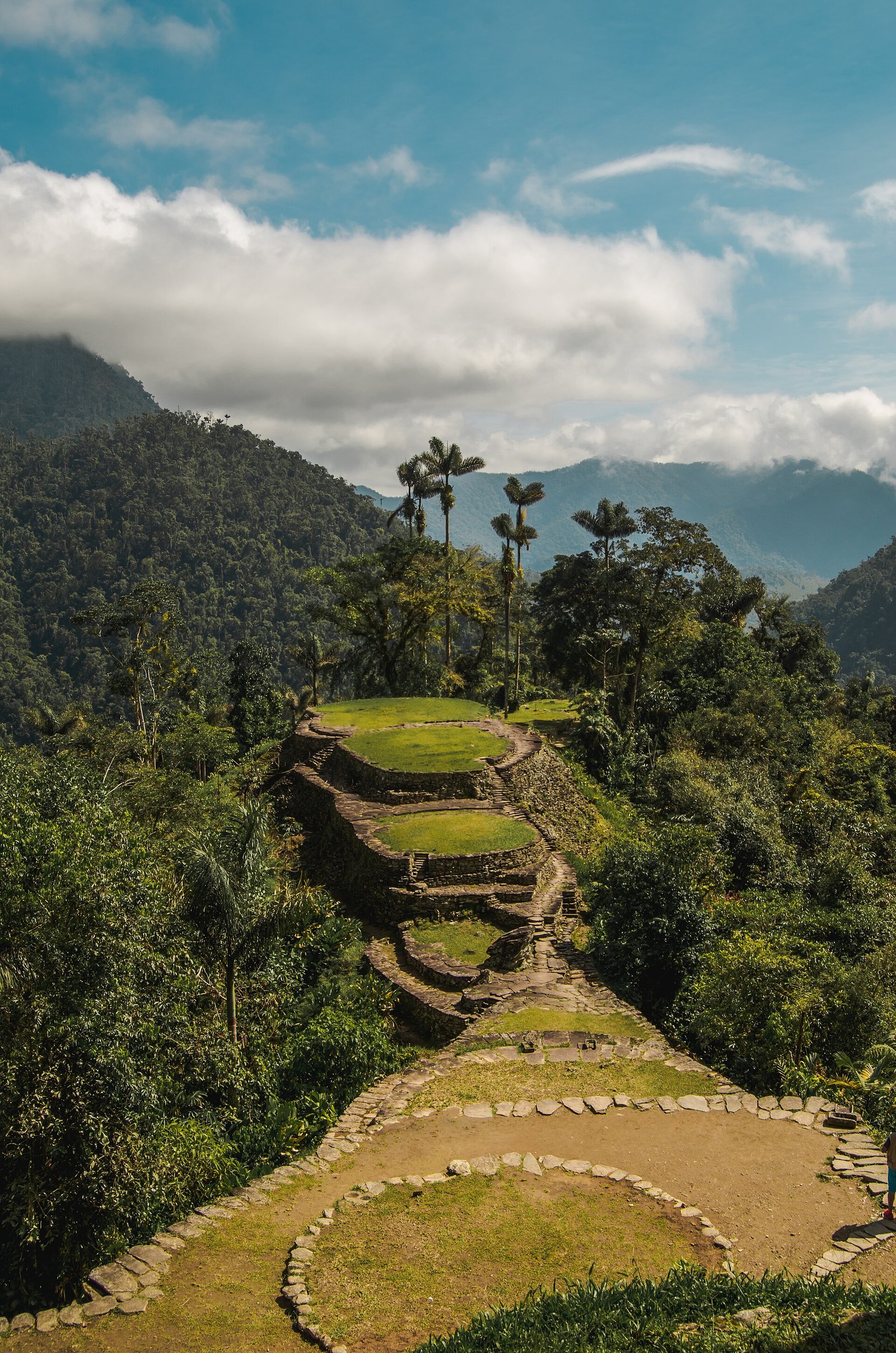
A pre-Columbian city located in the Colombian jungle close to Santa Marta. Built between the eighth and the fourteenth century by the Tayrona Indians. Nowadays only stone circular shaped terraces covered by jungle remain.

Farallones de Cali National Natural Park
1 paikka listalla
Farallones de Cali is a cluster of mountains in the West Andes of Colombia. It is located west of the city of Cali and gives rise to many of the rivers that provide water and electricity to Cali. The PNN Farallones de Cali encompasses 150,000 ha (580 sq mi) in the mountains as well as much of the Pacific slope and is an area of very high biodiversity. The average temperature ranges from 25 °C (77 °F) in the tropical foothills to 5 °C (41 °F) in the páramo. In this territory are located the district of Pichinde, Andes and Leonera, and two villages Penas Blancas and Lomas de la Cajita.

Los Nevados National Park
1 paikka listalla
Colombia's high altitude volcano park offers great trekking.

Bahia Portete National Natural Park
Ei vielä paikkoja listalla
The northernmost park on the Colombian mainland, coastal beaches and a dry arid climate due to the La Guajira desert.

Chingaza National Natural Park
Ei vielä paikkoja listalla
Huge park preserving the paramo ecosystem of highland glaciers and wet tundra

Chiribiquete National Park
Ei vielä paikkoja listalla
Chiribiquete National Natural Park is the largest national park in Colombia and the largest tropical rainforest national park in the world. It was established on 21 September 1989 and has been expanded twice, first in August 2013 and then in July 2018. The park occupies about 43,000 km2 (17,000 sq mi) and includes the Serranía de Chiribiquete mountains and the surrounding lowlands, which are covered by tropical moist forests, savannas and rivers.

Cueva de los Guacharos National Natural Park
Ei vielä paikkoja listalla
Caves in the eastern Andes of southern Colombia that are home to oilbirds

El Tuparro National Natural Park
Ei vielä paikkoja listalla
Large national park on the eastern plains, home to the Maipures Rapids

Isla Gorgona
Ei vielä paikkoja listalla
This former prison island in the Pacific Ocean is now a nature reserve open for visitors. There is abundant wildlife like monkeys, snakes, whales and sea turtles. It offers excellent diving conditions.

Isla Malpelo
Ei vielä paikkoja listalla
Malpelo is an oceanic island in the eastern Pacific Ocean, about 500 km (310 mi) west of the Colombian mainland with a military post defended by the Colombian Armed Forces. It consists of a sheer and barren rock with three high peaks, the highest being the 300 m (980 ft) Cerro de la Mona. The island is about 1.5 kilometres in length from northeast to southwest, and 640 metres across at its widest.

Isla Salamanca Parkway
Ei vielä paikkoja listalla
Colombian national parkway across a coastal barrier island, the park protects swamps of the Grande; birdwatching, beaches, nature tours

Ladrilleros
Ei vielä paikkoja listalla
Ladrilleros is a village in Buenaventura Municipality, Valle del Cauca Department in Colombia. The Juanchaco Airport serves both Ladrilleros and the nearby village of Juanchaco.

Los Katios National Park
Ei vielä paikkoja listalla
Los Katíos National Natural Park is a protected area located in northwest Colombia which covers about 720 km2 (280 sq mi). The elevation ranges between 50 and 600 m. It is a part of the Darién Gap, a densely forested area shared by Panama and Colombia, and is contiguous with the Darién National Park in Panama. The Pan-American Highway, when completed as proposed, would pass near or through Los Katíos. The park was declared a UNESCO World Heritage Site in 1994 due to the extraordinary diversity of plant and animal species represented.

Paramillo National Natural Park
Ei vielä paikkoja listalla
Tropical Andean highlands region known as the Paramillo Massif

Providencia
Ei vielä paikkoja listalla
An idyllic, remote Caribbean Island found halfway towards Jamaica. With the Western hemisphere's second largest barrier reef, beautiful Providencia Island has been designated a UNESCO Biosphere Reserve.

Puracé National Natural Park
Ei vielä paikkoja listalla
The Puracé National Natural Park is a national park located in the Andean region of Colombia, southeast of the city of Popayán in the Cordillera Central range. Its main feature is the active stratovolcano Puracé, one of Colombia's most active volcanoes. Four of the country's most important rivers originate within the area: Magdalena River, Cauca River, Japurá River and Patía River.

San Cipriano
Ei vielä paikkoja listalla
San Cipriano is a small village located at 200 metres (660 ft) above sea level on the Pacific, around the Danubio River, nearby the port of Buenaventura, Valle del Cauca Department, Colombia.

Sierra Nevada de Santa Marta National Natural Park
Ei vielä paikkoja listalla
Remote mountain wilderness important as an indigenous spiritual center and site of the Ciudad Perdida archaeological site

Tinigua National Natural Park
Ei vielä paikkoja listalla
Large and very biodiverse national park protecting biological corridors between the Andes and the Orinoco and Amazon rivers

Uramba Bahía Málaga National Natural Park
Ei vielä paikkoja listalla
Uramba Bahía Málaga National Natural Park, is one of the newest Colombian national parks and a popular ecotourism destination. It is located in and around Málaga Bay on the Colombian Pacific coast in the district of Buenaventura, Valle del Cauca, Colombia. It is an area of high biodiversity and a favorite spot for reproducing humpback whales, making this area a popular whale watching destination. Most of natural area is pristine with the exception of the areas around a few small towns like Juanchaco, Ladrilleros, and La Barra, as well as a Colombian naval base. The national park was created in 2010 and is Colombia's 56th national natural park.

Utria National Natural Park
Ei vielä paikkoja listalla
The Utría National Natural Park is a national park in the Chocó Department, Colombia. It contains diverse flora and fauna in a lush, mountainous rainforest environment with some of the highest rainfall in the world, at up to 10,000 millimetres (390 in) annually. The park also protects the coastal marine environment, and is known for visits by humpback whales, who give birth in the lagoon after which the park is named, and sea turtles who nest on the beaches. There is accommodation for visitors, and ecotourism services are provided by the local indigenous people and members of the coastal Afro-Colombian communities.
Islas del Rosario
3 paikkaa listalla
A scenic archipelago a short boat journey from Cartagena.
Amacayacu National Park
Ei vielä paikkoja listalla
Far, far from civilization in the Amazon rainforest, a huge national park explorable via boat, full of strange monkey-infested islands and pink dolphins.
Coconuco
Ei vielä paikkoja listalla
Coconuco is a dialect cluster of Colombia spoken by the Guambiano indigenous people. Though the three varieties, Guambiano, Totoró, and the long-extinct Coconuco are traditionally called languages, Adelaar & Muysken (2004) believe that they are best treated as a single language.
Las Orquídeas National Natural Park
Ei vielä paikkoja listalla
Mountainous park on the western slopes of the Cordillera Occidental branch of the Andes
Sierra de la Macarena National Natural Park
Ei vielä paikkoja listalla
Most famously home to Caño Cristales, but more generally a natural wonder in every sense, as El Meta's one jungle region, filled with rivers, waterfalls, cliffs, and hot springs.
Yleiset vapaapäivät
Kansalliset vapaapäivät seuraavien kahdentoista kuukauden aikana (Kolumbia). Toimistot, pankit ja monet kaupat sulkevat, ja liikenne ja majoitus ruuhkautuvat. Alueelliset vapaapäivät ja paikalliset juhlat eivät ole mukana, ja kuun mukaan määräytyvät juhlat voivat siirtyä päivällä.
- Immaculate Conception · La inmaculada concepción
- joulupäivä · Navidad
- uudenvuodenpäivä · Año Nuevo
- loppiainen · Día de los Reyes Magos
- Saint Joseph · San José
- Maundy Thursday · Jueves Santo
- pitkäperjantai · Viernes Santo
- pääsiäispäivä · Pascua
- vappu · Día del Trabajador
- helatorstai · La Asunción
- Corpus Christi
- Sacred Heart · Sagrado Corazón de Jesús
- Saints Peter and Paul · San Pedro y San Pablo
- Virgin of Chiquinquirá · La virgen de Chiquinquirá
- itsenäisyyspäivä · Día de la Independencia
- Battle of Boyacá · Batalla de Boyacá
- Assumption · Asunción
- Columbus Day · Día de la Raza
- pyhäinpäivä · Todos los Santos
- Independence of Cartagena · Independencia de Cartagena
Päivämäärät: date-holidays-projekti, pääosin Wikipedian pohjalta (CC BY-SA 3.0). Nimet näytetään omalla kielelläsi, jos käännös on olemassa. Tarkista paikan päällä ennen kuin suunnittelet matkaa vapaapäivän ympärille.
Matkustaminen: Kolumbia
Tämä osa on englanniksi, sellaisena kuin se on kirjoitettu Wikivoyageen.
Liikkuminen maassa
By plane. Owing in part to the absence of intercity rail and the high mountains separating many of the major cities, air travel is popular and widespread among those who can afford it and competition is fierce. Bogotá-Medellin was the busiest air route in Latin America in 2024, carrying 3.8 million passengers on a 239-km route. The most important domestic carriers in Colombia are: Avianca (main Colombian national airline) Clic (formerly Easy Fly) (regional airline around Medellín, Bogotá and Bucaramanga) Jetsmart Colombia LATAM Colombia (formerly LAN Colombia and Aires) Satena (Servicio Aéreo a Territorios Nacionales) operated by the Colombian Air Force to provide transport to remote regions of Los Llanos, Amazona & the Pacific coast from Bogotá. Wingo a 'low fare' subsidiary brand of COPA Colombia operating as a separate brand (formerly AeroRepublica). They all have well-kept fleets and regular service to major towns and cities in Colombia. The online payment process of some domestic airlines is complicated. Payments can be done at the airport or official ticket offices.
By train. There are no intercity trains in the country.
By car. Driving is on the right hand side of the road-most cars have standard transmissions. Colombia's fleet is composed mainly of cars with 4-cylinder engines that are of European and Japanese manufacture. Foreign visitors may drive if they show an international driver's license (a multilingual endorsement card issued by automobile and driver's clubs around the world).
Raha ja kustannukset
Money. The currency of Colombia is the Colombian peso, but the symbol you will encounter is $ (ISO code: COP). Wikivoyage uses the notation "COP$" for clarity. Coins of Colombia are issued in denominations of 50, 100, 200, 500 and 1,000 pesos. Banknotes of Colombia are issued in denominations of 2,000, 5,000, 10,000, 20,000, 50,000 and 100,000 pesos. Most banks and money changes will accept major world currencies such as the U.S. dollar and the euro.
ATMs. ATMs are widely available, with varying withdrawal limits (as of June 2024, unless otherwise noted): Citibank - COP$1,000,000 with extra fees Scotiabank Colpatria - COP$900,000 Bancolombia - COP$600,000 BBVA - COP$300,000 Davivienda - COP$2,700,000 (Feb 2024) The fee for withdrawing money, at the ATMs of BBVA are COP$20,150, Davivienda COP$15,000, Scotiabank/Colpatria COP$25,900. Sometimes the withdrawal receipt shows a commission, but it is not charged on your bank account. Fees of other banks are: Banco Caja Social – COP$18,000 Banco de Bogota – COP$25,800 Banco Servibanca – COP$22,500 Banco Itau – COP$18,000 Bancolombia – COP$26,900 If you are withdrawing from a non-Colombian bank, some ATMs will ask if you wish to accept the bank's exchange rate for your currency. If its exchange rate is less favorable that your own bank's conversion rate, you may reject its rate so your own bank can calculate the exchange.
Costs. If there is no price tag, ask for the price first.
Typical prices. A modest, clean (and occasionally charming) hotel is US$20-25.
Kieli
The official language of Colombia is Spanish. Some indigenous tribes in rural areas continue to speak their own languages, though almost all people from those tribes will be bilingual in their own language and Spanish. If you've recently learned Spanish, it’s a relief to know that the Bogotá dialect is clear and easy to understand. The Spanish does vary, however, from Cartagena to Bogotá to Cali. Generally the Spanish on the coasts is spoken more rapidly, and Spanish from Medellín has its own idiosyncrasies. In cities like Medellín and Cali, the dialect of Spanish is the voseo form. Meaning that instead of the second person familiar pronoun tú, vos is used instead. Though tú is also understood by everybody, vos is a more friendly voice while tú is reserved for intimate circles.
Tavat ja käytös
Colombians are acutely aware of their country's bad reputation, and tactless remarks about the history of violence might earn you a snide remark (likely regarding your country of origin) and an abrupt end to the conversation. However, Colombians eventually become willing to discuss these topics once they feel comfortable enough with someone. Colombians are more formal than most other Latin Americans. Make a point to say "please" ("Por favor" or "Hágame el favor") and "thank you" ("muchas gracias") for anything, to anyone. When addressed, the proper response is "¿Señora?" or "¿Señor?" In parts of the country (especially Boyacá) Colombians can be formal to the point of anachronism, calling strangers "Su merced" (your Mercy!) in place of usted. The one (much) more informal part of the country is along the Caribbean coast, where referring to people just as "chico" can be more the norm—but take your cues from those around you. Race is not a hot issue in Colombia, since whites, criollos, and mestizos (mixed race) blend naturally with natives and Afro-Colombians in everyday life (education, living, politics, marriage). Differences between white foreigners are not dwelled upon: expect to be called "gringo" even if you are, say, Russian. Unless context includes anger, it's not meant to be offensive. If you are black, you will probably be referred to as "negro" or "moreno," which also are not considered at all offensive.
Puhelin ja internet
Carriers. It's simple enough to get a SIM card and even an unlocked phone at the international airport in Bogotá, although there is, of course, a price hike. They're not hard to find in any city either, just ask your hotel or hostel staff where to go. Topping up is also easy, and can be done pretty much on any street corner. The carriers you'll most likely see are Claro, Tigo, and Movistar. Claro has the widest coverage in the country, if you expect to get off the beaten path. You can choose (as of Oct 2025) between: 6 days 1.4GB for COP$7,500 15 days 20GB for COP$22,000 30 days 30GB for COP$32,000 See the plans here All of them have unlimited domestic calls and texting and many have unlimited WhastApp or Facebook. For recharging in a SuperGiro or lottery shop you simply write down or show your phone number and the price of the option. You can recharge online, if it's possible with your international credit card. Virgin Mobile might be the best option if you want to have internet for a low price. It might take a bit longer to find a spot that sells the sim cards locate them here. As of Oct 2025 the plans are: 15 days 0.5GB for COP$4,500 15 days 5GB for COP$7,500 30 days 30GB for COP$22,000
Turvallisuus
Colombia has suffered from a terrible reputation as a dangerous and violent country, but the situation has improved dramatically since the 1980s and 1990s. Colombia is on the path to recovery, and Colombians are very proud of the progress they have made. These days, Colombia is generally safe to visit, with the violent crime rate being lower than that in Mexico or Brazil, as long as you avoid poorer areas of the cities at night, and do not venture off the main road into the jungle where guerrillas are likely to be hiding. The security situation varies greatly around the country. The Travel Risk Map covers Colombia and shows the current safety levels throughout the country. Most jungle regions are not safe to visit, but the area around Leticia is very safe, and the areas around Santa Marta are OK. No one should visit the Darien Gap at the border with Panama (in the north of Chocó), Putumayo or Caquetá, which are very dangerous, active conflict zones. Other departments with significant rural violence include the Atlantic departments of Chocó, Cauca, and Valle del Cauca; eastern Meta, Vichada, and Arauca in the east; and all Amazonian departments except for Amazonas. That's not to say that these departments are totally off-limits — just be sure you are either traveling with locals who know the area or sticking to cities and tourist destinations.
Landmines. Colombia is one of the most mine-affected countries in the world.
Lähde: Wikivoyagen opas, matkailijoiden kirjoittama (CC BY-SA), lyhennetty. Tarkista maahantulosäännöt, viisumit, terveys ja ajankohtainen turvallisuus aina oman hallituksesi virallisista matkustustiedotteista (linkit yllä).