

Argentine
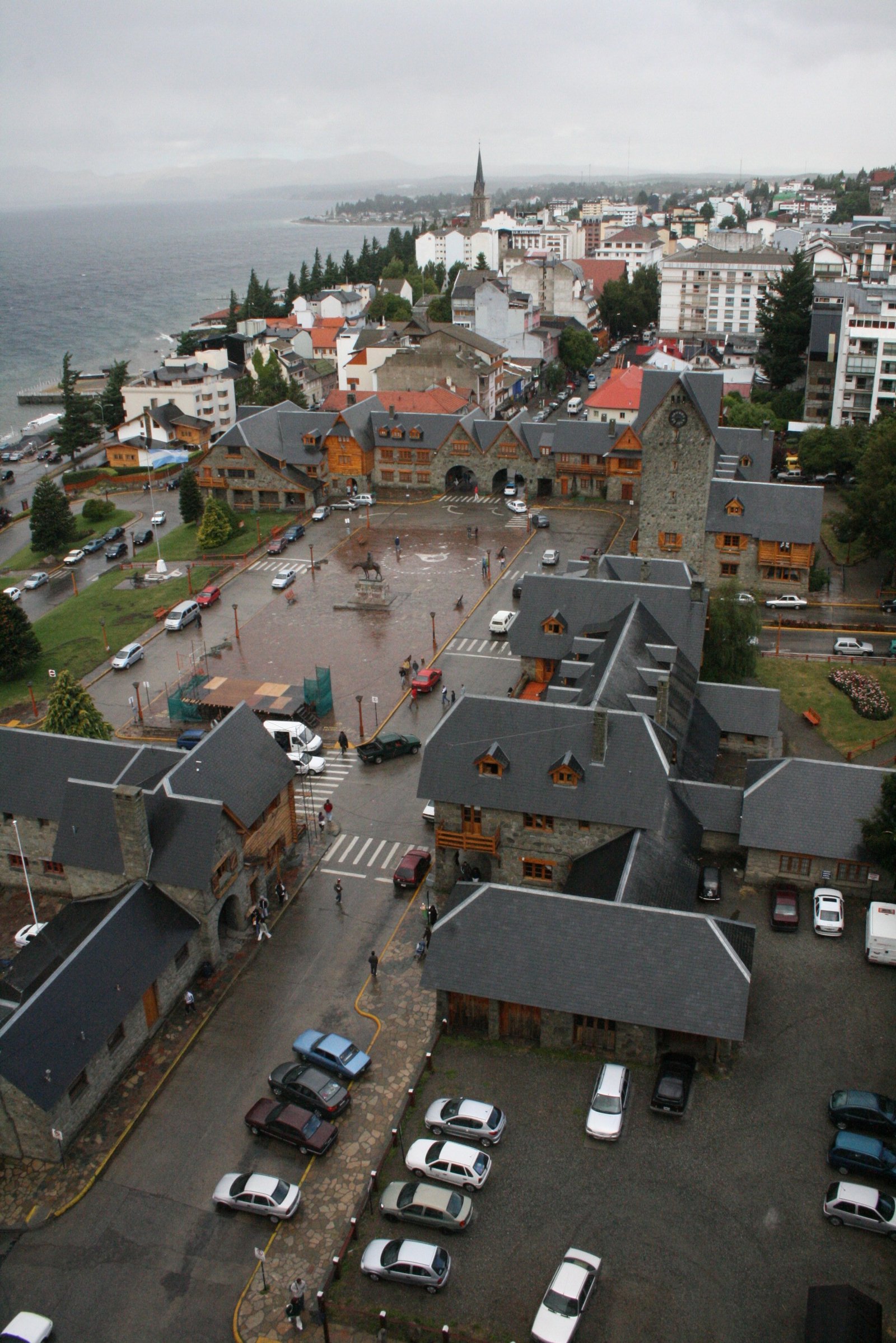
Photo de Deensel, CC BY 2.0, via Wikimedia Commons
Présentation
L'Argentine (prononcé en français : [aʁʒɑ̃tin] ; prononcé en espagnol : [aɾxenˈtina] ), en forme longue la République argentine (prononcé en espagnol : [reˈpuβlika aɾxenˈtina]), est un pays d'Amérique du Sud partageant ses frontières avec le Chili à l'ouest, la Bolivie et le Paraguay au nord, le Brésil et l'Uruguay au nord-est, et enfin l'océan Atlantique à l'est et au sud. Son territoire américain continental couvre une grande partie du Cône Sud. L'Argentine est une république fédérale ayant un régime présidentiel. Elle a pour capitale Buenos Aires et pour langue officielle de facto l'espagnol dans sa version rioplatense. La monnaie nationale est le peso. Le pays fait partie des pays dits du Cône Sud et parmi les pays d'Amérique latine, il est, avec l'Uruguay et le Chili, celui où la culture européenne est la plus affirmée.
Texte de Wikipedia, sous licence CC BY-SA.
Où aller en Argentine



Trésors cachés
Des lieux moins connus que les voyageurs de Wikivoyage recommandent au-delà des grandes villes de Argentine : villages, parcs nationaux et coins tranquilles. Les courtes descriptions viennent de ces listes (CC BY-SA).

El Calafate
33 lieux répertoriés
The main destination when visiting the Glaciers National Park; advancing to the Perito Moreno Glacier is a must when visiting Argentina

Nahuel Huapi National Park
19 lieux répertoriés
At the foothills of the Andes mountains with lakes, rivers, waterfalls, peaks, glaciers and forests

Colonia Carlos Pellegrini
9 lieux répertoriés
A nature reserve of 13,000 km2 in a large swampland region with unique wildlife, with its eco village Colonia Carlos Pellegrini right in the heart of the reserve

Catedral Alta Patagonia
8 lieux répertoriés
Large ski area with dramatic landscapes in western Argentina, near the Nahuel Huapi National Park

Chapelco
5 lieux répertoriés
Ski resort in Nuequen province

La Hoya
3 lieux répertoriés
Ski area in Chubut province

Monte Leon National Park
3 lieux répertoriés
Seaside park in Patagonia where waves crash into sheer cliffs while sea lions, penguins and aquatic birds cluster on myriad beaches, trying to avoid the hungry jaws of pumas

Los Alerces National Park
2 lieux répertoriés
A world-heritage national park with highland forests and sparkling glacial lakes

San Guillermo National Park
2 lieux répertoriés
Andean highland park and a UNESCO Biosphere Reserve established to provide habitat for vicuña and other species

Valdes Peninsula
2 lieux répertoriés
Near Puerto Madryn, an important nature reserve at the Atlantic coast (whales, sea lions, dolphins, penguins) which was listed as a World Heritage Site by UNESCO in 1999.

Cerro Castor
1 lieu répertorié
The world's southernmost ski resort, about 30 km from Ushuaia

Jaramillo Petrified Forest National Park
1 lieu répertorié
Petrified forest created 150 years ago at start of cretaceous period

Lago Puelo
1 lieu répertorié
Highland park protecting Patagonia forest and steppes with a lake formed by retreating glaciers

Río Pilcomayo National Park
1 lieu répertorié
Grassy plains and wetlands near the Pilcomayo River, protecting the humid Chaco ecosystem, a Ramsar wetland

Barreal
Aucun lieu répertorié pour l'instant
A village up against the Andes Cordillera

Campos del Tuyú National Park
Aucun lieu répertorié pour l'instant
Preserves an area of coastal plains and protects the endangered Pampas deer

Cueva de las Manos
Aucun lieu répertorié pour l'instant
A picturesque UNESCO World Heritage Site with paintings of hand over 9,000 years old

El Leoncito National Park
Aucun lieu répertorié pour l'instant
Mountainous park that is home to two astronomical observatories

El Palmar National Park
Aucun lieu répertorié pour l'instant
El Palmar National Park is one of Argentina's national parks. It is located on the center-east of the province of Entre Ríos, midway between the cities of Colón (54 km) and Concordia (60 km). It has an area of about 85 km2 and was created in 1966 for the preservation of its characteristic yatay palm trees.

Ischigualasto Provincial Park
Aucun lieu répertorié pour l'instant
UNESCO site, home of dinosaur remains and impressive geological formations

Islote Lobos National Park
Aucun lieu répertorié pour l'instant
Protected natural area along the Atlantic coast protecting six rocky promontories that are occupied by colonies of sea lions and penguins

Lanin National Park
Aucun lieu répertorié pour l'instant
A mountainous highland park that attracts mountain climbers, anglers, naturalists and outdoorsmen for the hiking and camping

Los Arrayanes National Park
Aucun lieu répertorié pour l'instant
A scenic mountainous highland park preserving a forest of flowering myrtle trees

Los Cardones National Park
Aucun lieu répertorié pour l'instant
Large highland park protecting the Argentinian Saguaro cactus

Paso de los Libres
Aucun lieu répertorié pour l'instant
Border town with Uruguaiana in Brazil.

Quebrada del Condorito National Park
Aucun lieu répertorié pour l'instant
Protects an area of mountains and plains

San Agustín de Valle Fértil
Aucun lieu répertorié pour l'instant
Known for landscapes compared to the moon, the area is famous for its relics from the Triassic period

Sierra de las Quijadas National Park
Aucun lieu répertorié pour l'instant
A rough, dry area with strange, reddish colored rock formations is protected here. The park is located in the sparsely populated northwest of the province.

Talampaya National Park
Aucun lieu répertorié pour l'instant
UNESCO site, dinosaur remains, geological formations, and petroglyphs of the Puerta del Cañón.

Tierra del Fuego National Park
Aucun lieu répertorié pour l'instant
A rugged, mountainous national park with great views of Lapataia Bay.
El Impenetrable National Park
Aucun lieu répertorié pour l'instant
The largest national park in northern Argentina protects a vast area of the Gran Chaco region
Jours fériés
Jours fériés nationaux en Argentine pour les douze prochains mois. Les bureaux, les banques et de nombreux magasins ferment, et les transports et hébergements sont plus fréquentés. Les fêtes régionales et locales ne sont pas incluses, et les fêtes qui suivent la lune peuvent bouger d'un jour.
- Day of National Sovereignty · Día de la Soberanía Nacional
- Immaculate Conception of Mary · Inmaculada Concepción de María
- Noël · Navidad
- Nouvel An · Año Nuevo
- Lundi de Carnaval · Carnaval
- Shrove Tuesday · Carnaval
- Day of Remembrance for Truth and Justice · Día Nacional de la Memoria por la Verdad y la Justicia
- Vendredi saint · Viernes Santo
- Day of the Veterans and the Fallen in the Malvinas War · Día del Veterano y de los Caídos en la Guerra de Malvinas
- Fête du travail · Día del Trabajador
- Day of the May Revolution · Día de la Revolución de Mayo
- Anniversary of the Passing to Immortality of General Manuel Belgrano · Paso a la Inmortalidad del General D. Manuel Belgrano
- Anniversary of the Passing to Immortality of General Martín Miguel de Güemes · Paso a la Inmortalidad del General Don Martín Miguel de Güemes
- Jour de l’Indépendance · Día de la Independencia
- Anniversary of the Passing to Immortality of General José de San Martín · Paso a la Inmortalidad del General José de San Martín
- Day of Respect for Cultural Diversity · Día del Respeto a la Diversidad Cultural
Dates issues du projet date-holidays, basé en grande partie sur Wikipédia (CC BY-SA 3.0). Vérifiez sur place avant d'organiser votre voyage autour d'un jour férié.
Voyager en Argentine
Cette partie est en anglais, telle qu'elle est écrite sur Wikivoyage.
Se déplacer dans le pays
Argentina is a colossal country. With a land area of, travelling from one region to another can take a lot of time. It is a government requirement that travellers produce identification when buying plane or long distance bus tickets. You are always asked for identification when buying bus tickets and many bus drivers ask again to see your passport as you are boarding. Some of the provinces have restrictions on the transport of fresh fruit and vegetables. Police will occasionally search buses and check the luggage of plane passengers when they disembark.
By bus. Argentina boasts an outstanding short and long-distance bus network however long distance buses often run late. It is not the end of the earth if your overnight bus is a few hours late but can be a problem if you join a long distance bus mid route for what should be a 3 hour trip and find that it is 4 hours late. Try to book short distance buses for shorter trips, if you must join a long distance bus mid route give yourself as much leeway as possible for connecting services. Since regional train service is limited and plane tickets are more expensive, bus travel is the most common way to travel from city to city within Argentina. It is not as cheap as it was before, with about US$4-5 for each hour of travelling (Puerto Iguazú to Buenos Aires about US$100).
By train. The history of rail transport in Argentina is one of many ups and downs.
Argent et coûts
Money. The currency exchange situation is quite complicated, much more so than in say Southeast Asia or most other countries of the world. It may drive you crazy when you visit but spare a thought for the locals who don't get a choice. Since 1969 thirteen zeroes have been dropped (a factor of ten trillion), the peso has been revalued again and again, and its name changed. On the black market, the rate for US dollars is 1,510 pesos in January 2026. Blue Dollar has current rates. The official currency of Argentina is the peso (ISO: code: ARS), denoted by the symbol "$". It is divided into 100 centavos. Coins come in denominations of 5, 10, 25, 50 centavos, 1, 2, 5 and 10 pesos. Banknotes are issued in values of 5, 10, 20, 50, 100, 200, 500, 1,000, 2,000, 10,000 and 20,000 pesos. The most common banknotes in circulation in Argentina are 1,000, 2,000, 10,000 and 20,000 pesos. Be prepared to receive small change in the form of golosinas (candies/sweets), especially in Chinese supermarkets. Because the largest banknote is 20,000 pesos (roughly US$20 as of late 2024), cash payments often involve carrying stacks of banknotes.
Inflation. In December 2023, the peso was devalued by 50% against other currencies. Any price information must be treated with a lot of caution and is probably unreliable. Most accommodations post their prices in US dollars online—prepare yourself for discussions on the corresponding price in pesos.
Banks. Banks are generally open from 10:00 to 15:00 and only on weekdays.
Langue
The official language is Spanish. Generally, most people speak Spanish using a local dialect, Castellano Rioplatense, which is subtly different from both the language of Spain and that of Central America. Most notably, the pronoun "tú" is replaced by "vos", and the you plural pronoun "vosotros" replaced with "ustedes", the latter being common throughout Latin America. People from each city pronounce words differently as well. People from Buenos Aires speak differently compared to those from Spain and other Spanish speaking countries; example: chicken in Spanish (pollo) is pronounced PO-zhO or PO-SHO by the "Porteños" (residents of Buenos Aires), with the SH sound harder than in Spanish; unlike most other Spanish speakers of South America who pronounces it PO-yo.
Coutumes et savoir-vivre
Generally speaking, Argentines are expressive and emotive conversationalists.
Communication style. Compared to other South American nations, Argentines are often seen as more direct and forthright in their communication style. Try not to be offended by the way they speak; in most cases, they rarely intend to make you feel bad or uncomfortable. Argentines tend to be very inquisitive and curious; it is common for them to ask people, even those they have just met for the first time, personal questions. If someone asks you personal questions, it is expected that you answer or share in return. Don't be put off by this; Argentines are not trying to interrogate or investigate you. Argentines interrupt others and shout while conversing. What may seem like a shouting match in public may actually be a passionate, engaging discussion. Argentines, in general, are notorious for their regular use of profanity. Don't be put off by this, as people don't intend to make you uncomfortable in any way.
Greetings. Cheek kissing is very common in Argentina, especially in bigger cities, among and between women and men. People make contact with right cheeks, and make a light "kiss sound" but not touch the cheek with their lips (only once, two kisses -right and then -left is very rare). When two women, or opposite sexes, first meet, it is not uncommon to kiss. Two men will first shake hands if they do not know each other but will probably kiss when departing, especially if they have spoken for a while.
Téléphone et internet
By phone. You can get a prepaid Movistar / Claro / Personal SIM card for a few pesos / free at phone shops, all you pay is about ARS20 (about US$5) for your initial credits. Inserting the SIM card into your unlocked mobile phone should work, although to register the SIM you might have to enter your passport (or any 9 digit) number. You then have your personal Argentinian phone number, which is very useful to keep in touch with other travellers, either by calling or by writing text messages. Calls cost around ARS1 per minute. Still, having to register the SIM card is extremely rare. Receiving calls is usually free, except for international calls, and some cross network / inter-city calls. Hence, buying a SIM card purely to keep in touch with people overseas may not be worth it. To reload you can buy small cards with secret numbers at many kiosks, but the easiest way is just to ask for "Recarga Virtual" and tell the shop assistant your Phone number and company, and the amount of pesos you want to recharge. Not related to mobile phones, there are similar cards with credits for international calls. You get them at so called locutorios, where you can also use the phone booths.
Sécurité
Because it is well known that tourists bring hard currency to Argentina to avoid the official exchange rate, tourists can be targets of crime. Exercise extra caution here, don't go to Western Union alone, be careful changing on the street, and bring a lock for your bags, take the $1-2 Uber instead of walking at night. The 500 or so dollars you may bring represents 3 months at the minimum wage, so be careful. Argentina has a relatively high traffic mortality rate, with about 20 road deaths per day, and with more than 120,000 injured people each year, including tourists. Pedestrians should exercise extreme caution. Do not jaywalk if you do not feel comfortable, and be careful crossing even when allowed. There is plenty of activity and foot traffic throughout the night. Nice areas have a very thorough police presence, perhaps one officer per 3 blocks, plus store security and auxiliary patrols. Public security in all major cities like Buenos Aires, Córdoba and Rosario is handled by the Federal Police and the National Gendarmerie or the Naval Prefecture, especially in the Puerto Madero area of Buenos Aires. As in any large city, certain particular neighborhoods in Buenos Aires and other cities are very dangerous. Some shady neighborhoods include Retiro, Villa Lugano, La Boca and Villa Riachuelo. Ask trusted locals, such as hotel desk staff or police officers, for advice. Pay attention to your environment and trust your instincts. If an area seems questionable, leave.
D'après le guide Wikivoyage, écrit par des voyageurs (CC BY-SA), raccourci. Pour les règles d'entrée, les visas, la santé et la sécurité actuelle, consultez toujours les conseils officiels aux voyageurs de votre gouvernement (lien ci-dessus).