

Botswana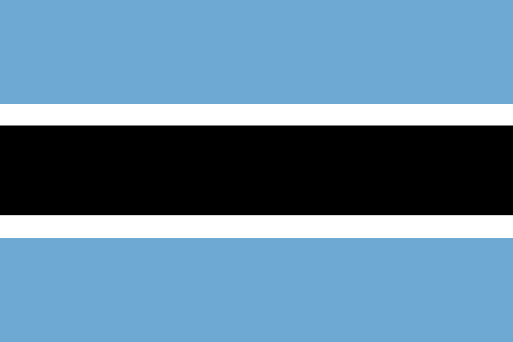
Foto di Joachim Huber from Switzerland, CC BY-SA 2.0, tramite Wikimedia Commons
Panoramica
Il Botswana (in italiano in passato anche Beciuania), ufficialmente Repubblica del Botswana (pronuncia italiana: /botˈtswana/; in tswana Lefatshe la Botswana, in inglese Republic of Botswana) è uno Stato indipendente dell'Africa meridionale. Confina con il Sudafrica a sud, con la Namibia a ovest, con lo Zambia a nord, con lo Zimbabwe a nord-est; non ha sbocchi sul mare. Ha una superficie totale di 581730 km² ed è abitato da 2 254 043 abitanti con una densità di 3,7 ab./km². Le lingue ufficiali sono l'inglese e lo tswana, lingua del popolo omonimo, che ha lo status di lingua nazionale. Con il nome di Bechuanaland fu protettorato britannico fino al 1966, anno in cui ottenne l'indipendenza.
Testo da Wikipedia, con licenza CC BY-SA.
Dove andare in Botswana


Gioielli nascosti
Luoghi meno noti che i viaggiatori di Wikivoyage consigliano oltre le grandi città di Botswana: villaggi, parchi nazionali e angoli tranquilli. Le brevi descrizioni vengono da quegli elenchi (CC BY-SA).

Kgalagadi Transfrontier Park
21 luoghi in elenco
Kgalagadi Transfrontier Park is a large wildlife reserve and conservation area in southern Africa.

Chobe National Park
3 luoghi in elenco
A great place to see wildlife with the greatest concentration of elephants in Africa, and a good point from which to move on to Victoria Falls.

Tsodilo
3 luoghi in elenco
Contains rock art that has been made for over 100,000 years, with around 4,500 rock paintings.

Central Kalahari Game Reserve
Ancora nessun luogo in elenco
The second-largest wildlife reserve in the world.

Makgadikgadi Pans National Park
Ancora nessun luogo in elenco
The Makgadikgadi Pan is a salt pan situated in the middle of the dry savanna of north-eastern Botswana, is one of the largest salt flats in the world. The pan is all that remains of the formerly enormous Lake Makgadikgadi, which once covered an area larger than Switzerland, but dried up tens of thousands of years ago. Recent studies of human mitochondrial DNA suggest that modern Homo sapiens first began to evolve in this region some 200,000 years ago, when it was a vast, exceptionally fertile area of lakes, rivers, marshes, woodlands and grasslands especially favorable for habitation by evolving hominins and other mammals.

Moremi Game Reserve
Ancora nessun luogo in elenco
Moremi Game Reserve is a protected area in Botswana. It lies on the eastern side of the Okavango Delta and was named after Chief Moremi of the BaTawana tribe. Moremi was designated as a game reserve, rather than a national park, when it was created. This designation meant that the Bushmen, known locally the BaSarwa, that had traditionally lived there were allowed to stay in the reserve.

Nxai Pan National Park
Ancora nessun luogo in elenco
Nxai Pan National Park is a national park in north-eastern Botswana, consisting of Nxai Pan, which is one of the Makgadikgadi Pan salt flats. Nxai Pan National Park lies just north of the Maun-Nata main road and adjoins Makgadikgadi Pans National Park on its northern border. The pan itself is a fossil lake bed of approximately 40 km2 in size.
Northern Tuli Game Reserve
Ancora nessun luogo in elenco
A unique corner of Africa where nature & culture combine in spectacular wildlife, stunning scenery and fascinating history.
Festività
Giorni festivi nazionali in Botswana nei prossimi dodici mesi. Uffici, banche e molti negozi chiudono, e trasporti e alloggi sono più affollati. Le feste regionali e locali non sono incluse, e le festività legate alla luna possono spostarsi di un giorno.
- Natale di Gesù · Christmas Day
- Santo Stefano · Family Day
- Capodanno · New Year's Day
- New Year's Holiday
- Venerdì santo · Good Friday
- Sabato santo · Easter Saturday
- Lunedì dell’Angelo · Easter Monday
- Festa del lavoro · Labour Day
- Ascensione · Ascension Day
- Sir Seretse Khama Day
- President’s Day
- President’s Day Holiday
- Botswana Day
Date dal progetto date-holidays, basato in gran parte su Wikipedia (CC BY-SA 3.0). I nomi sono nella tua lingua quando esiste una traduzione. Verifica sul posto prima di organizzarti intorno a una festività.
Viaggiare in Botswana
Questa parte è in inglese, come è scritta su Wikivoyage.
Spostarsi nel paese
Very few locals know street names and addresses, and you are likely to have to get directions in terms of landmarks. Botswana doesn't have a postal delivery system to addresses (just to centralised mail collection points), so even when streets are well-marked, the names may be unfamiliar to residents. Through a combination of coaches and combies (minivans) and taxies, you can get anywhere in Botswana without any trouble, though public transport is spotty away from big cities and major routes but hitchhiking is popular and very easy. However, hitchhiking should only be done in desperate circumstances, as Botswana driving is often very erratic and it can be a harrowing experience to have a stranger drive you somewhere. It is advisable to arrive at the bus station quite early, as the buses do fill up quickly, and it is not uncommon to spend several hours standing in the aisle waiting for a seat to free up (remember to bring water, as the buses are often not air conditioned).Apart from Public transport you can opt to call a private cab which can take you anywhere you want in around and around the city, phone numbers for cabs can be found anywhere around the city in pamphlets pasted on bus stops or can be found in notice boards mainly located in shopping malls.
By taxi. Taxis are the most common way to travel; the taxis can only travel on designated routes so it's best to ask first where the taxi is heading and where it makes its stops, taxis can only travel in the city it is in, i.e.
Denaro e costi
Money. Botswana's currency is the pula, denoted by the symbol "P" (ISO 4217 code: BWP). It is subdivided into 100 thebe. Pula means "rain" in Setswana (rain is very scarce in Botswana - home to much of the Kalahari Desert - and therefore valuable and a "blessing"). Thebe means "shield". Banknotes of Botswana are issued in denominations of P10, 20, 50, 100 and 200, and coins of Botswana are issued in denominations of 5t, 10t, 25t, 50t, P1, P2 and P5. The pula is one of the strongest and most stable currencies in Africa. click here to see how you can identify the banknotes and coins (from Wikipedia).
Lingua
The official languages of Botswana are English and Tswana. Tswana is the country's national language and usually serves as people's first language. You are not really pressured to learn Tswana as English is widely used in everyday business. Almost everyone you encounter will speak and understand English; it won't be that hard to converse with the locals, but it is also best to learn a bit of Tswana, just to be on the safe side. A lot of older people in rural areas might understand a bit of English but won't speak it very well.
Telefono e internet
Botswana's country code is +267 which was allocated to the country by the International Telecommunications Union in the late 1960s, Fixed line numbers in Botswana are seven digits long in a closed telephone numbering plan, with the geographical area being indicated by the first two or three digits, meaning that there are no area codes.
Calling formats. xx xxxxx or xxx xxxxx – calling within Botswana +267 xx xxxxx or +267 xxx xxxxx - calling from outside Botswana [countrycode] Areacode][Phonenumber] - if calling an international number from within Botswana. click here for an extended page on Botswana phone numbers and how to call to and from Botswana. Internet As of 2022 the government is working on installing free public WiFi in shopping malls and several government owned facilities, so you there's high chance of you stumbling upon free WiFi while shopping for stuff. Apart from free public WiFi, several shopping malls and shops have their own free WiFi dubbed WiFi Hot-spots for their customers, even though this kind of WiFi is free. You can only use it for about 15 minutes i.e. per phone, if that time expires you might need to buy a token if you still want to connect.
Sicurezza
People in Botswana are very friendly and the crime rate is low. Nevertheless, crime has been on the rise over the past several years, so always be aware of your surroundings. Basic common sense will keep you safe from the predatory wildlife in rural areas. Botswana is one of the safest countries in Africa, no civil war, less corruption, more human rights, no natural disasters e.g. earthquakes or tsunamis.
Drugs. Drug trafficking is punished by a mandatory prison sentence. This is important for you to know because if you need to take prescription drugs into Botswana, you will have to show a prescription for each medication and if undeclared, you may be subject to a fine or even worse, a prison sentence, since any type of drug smuggling is entirely frowned upon.
Dalla guida di Wikivoyage, scritta dai viaggiatori (CC BY-SA), abbreviata. Per ingresso, visti, salute e sicurezza attuale controlla sempre gli avvisi di viaggio ufficiali del tuo governo (link sopra).