

El Salvador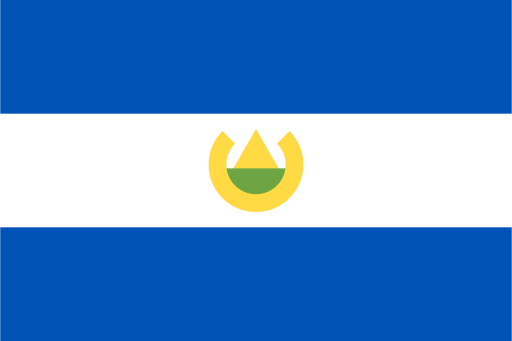
Foto van Mariordo (Mario Roberto Durán Ortiz), CC BY-SA 3.0, via Wikimedia Commons
Overzicht
El Salvador (uitspraak /el salva/dor/), officieel de Republiek El Salvador (Spaans: República de El Salvador), is een land in Centraal-Amerika. Het grenst aan Guatemala, Honduras en de Stille Oceaan. De hoofdstad is San Salvador (uitspraak /san salva/dor/).
Tekst van Wikipedia, onder licentie CC BY-SA.
Waar naartoe in El Salvador


Verborgen parels
Minder bekende plekken die reizigers op Wikivoyage aanraden buiten de grote steden van El Salvador: dorpen, nationale parken en rustige hoekjes. De korte beschrijvingen komen uit die lijsten (CC BY-SA).

San Miguel
15 plekken vermeld
Beaches - Playa Las Flores, Playa El Esteron, Intipuca Beach and El Cuco

Morazán
13 plekken vermeld
For its beautiful mountains and its cultural and historical interests.

El Cuco
8 plekken vermeld
Including Playa El Esteron, Intipuca Beach and Playa Las Flores

El Pital
4 plekken vermeld
And its rural life.

Joya de Ceren
1 plek vermeld
Mayan village covered by volcanic lava flow, a

Cihuatán
Nog geen plekken vermeld
Large Mayan archaeological site

El Boqueron National Park
Nog geen plekken vermeld
Site of San Salvador Volcano

El Imposible National Park
Nog geen plekken vermeld
El Imposible National Park is a tropical forest and a national park in El Salvador. It was established on 1 January 1989 and covers an area of 38.20 square kilometres. It literally means "The Impossible National Park" in English. It has an altitude of between 250 and 1,425 metres. El Imposible was named for the perilous gorge which used to claim the lives of farmers and pack mules transporting coffee to the Pacific port. El Imposible sits in the Apaneca Ilamatepec Mountain Range between 300m and 1450m above sea level, and includes eight rivers which feed the watershed for Barra de Santiago and the mangrove forests along the coast.

Los Volcanes National Park
Nog geen plekken vermeld
Parque Nacional Los Volcanes, also known as Cerro Verde National Park, is a large national park in El Salvador.

Montecristo National Park
Nog geen plekken vermeld
Montecristo National Park is a large national park centered on the Montecristo cloud forest in Mesoamerica. Montecristo National Park is located in the north-western tip of El Salvador, a country in Central America known for its wildlife diversity.

Tazumal
Nog geen plekken vermeld
Mayan archaeological site
Feestdagen
Landelijke vrije dagen in El Salvador in de komende twaalf maanden. Kantoren, banken en veel winkels sluiten, en vervoer en overnachtingen worden drukker. Regionale feestdagen en lokale feesten staan er niet bij, en feestdagen die de maan volgen kunnen een dag verschuiven.
- Kerstmis · Navidad
- Witte Donderdag · Jueves Santo
- Goede Vrijdag · Viernes Santo
- Dag voor Pasen · Sabado Santo
- Dag van de Arbeid · Día del Trabajador
- Celebración del Divino Salvador del Mundo
- Onafhankelijkheidsdag · Día de la Independencia
- Allerzielen · Día de los Difuntos
Data van het project date-holidays, grotendeels gebaseerd op Wikipedia (CC BY-SA 3.0). Namen staan in je eigen taal waar een vertaling bestaat. Controleer het ter plaatse voordat je je reis eromheen plant.
Reizen in El Salvador
Dit deel staat in het Engels, zoals het op Wikivoyage is geschreven.
Reizen door het land
]]
By train. All rail transport in El Salvador was suspended in October 2002. In 2006 a pilot scheme for reviving the rail network commenced and in 2007 a service between San Salvador and Apopa was restarted with two return trips each morning and evening aimed at commuter traffic. Whilst this will be of little use to travellers, it may be a sign of a future reopening of more of the extensive rail network.
By bus. Numerous buses traverse the highways of the country. Domestic bus services are typically very cheap (not more than $2-3 for even the longest rides) and difficult to understand except they are consistently numbered. Single and double digit numbers designate local, in-town routes while buses numbered in the triple digits travel between cities and towns. The buses themselves are often very well painted and adorned with all kinds of posters and trinkets, ranging from the religious to pop-culture. As chaotic as it may seem they do run consistently and frequently. Longer bus rides may include a stop in some town where plenty of mujeres, and sometimes their children, too, will board hawking mangos, nuts, water, and even sometimes fried chicken in a box. There is no central agency that coordinates bus routes and schedules except to see HorarioDeBuses.com to get an idea as to which bus to take get there and from where. The site also includes a map showing where the bus stations are at. It is best to just ask the cobrador or anyone at the bus station where the bus is going and when.
Geld en kosten
Money. El Salvador's official currencies are the U.S. dollar, denoted by the symbol "$" (ISO currency code: USD) and Bitcoin. Carry only $1, $5, $10 or $20 bills. Most stores, supermarkets and department stores won't accept $50 or $100 bills. If you need to exchange to lower denominations, you can go to any bank. ($1 coins issued in El Salvador cannot be used in the United States.) If you have money from other Central American countries on you the banks of those countries are usually your best bet, as they almost always exchange their own currency for dollars at pretty decent rates. You can also get dollars in many ATMs in countries such as Costa Rica and Nicaragua. Large bills ($50 & $100) are almost unspendable. Get change wherever you can – gas stations are always a good bet. A good idea is to visit a bank and ask for small bills and nothing larger than a $20. Banco Hipotecario offers free ATM withdrawals using Visa.
Bitcoin. Bitcoin has been accepted as a legal tender in El Salvador since September 2021. Most Salvadorans use the Chivo Wallet (Salvadoran: cool) created by the government. Bitcoin ATMs ("cajeros") are available across the country, and especially at the airport. Most Bitcoin ATMs are provided by Chivo. You can see the map of Chivo ATMs on the official website. Foreigners will not be able to install the Chivo app, but we can pay to Chivo users if they show us the Lightning or Bitcoin QR. In practice, as of August 2022, Bitcoin's adoption is not widespread.
Taal
Spanish is the official language, though many people also speak English. In some small towns in the west, about 500 elders speak Pipil, also called Nahuat or Nawat and related to the Nahuatl language of Mexico.
Gewoonten en omgangsvormen
Salvadorans are known for their great hospitality. They are among the nicest people in the world. They are friendly, industrious people always willing to help anyone. That is what has earned El Salvador the nickname of "the country with a smile". When speaking with people you don't know, it is customary to address them in a formal manner, using señor, señora and/or usted.
Telefoon en internet
The international country code for El Salvador is 503.
Veiligheid
]] El Salvador underwent a profound transformation in public safety. Historically burdened by a civil war in the 1980s and subsequent decades of dominance by transnational street gangs (such as MS-13 and Barrio 18), the country is now widely regarded as one of the safest in Latin America. This change was spearheaded by the administration of President Nayib Bukele through an ongoing state of emergency (Régimen de Excepción), which grants broad powers to law enforcement, suspends certain constitutional guarantees related to detention procedures, and has resulted in the incarceration of tens of thousands of suspected gang members. Consequently, homicide rates plummeted from historical highs of over 100 per 100,000 to fractions of that, making violent crime against tourists exceedingly rare compared to neighboring nations. Despite this dramatic improvement in security, standard travel precautions remain essential: Common Sense and Ostentation: Avoid displaying expensive jewelry, high-end cameras, or luxury watches in public areas or unpoliced zones, much like you would anywhere else in the world. Law Enforcement Interactions: Armed police and military presence is ubiquitous. Keeping a digital copy or a clear photocopy of your passport alongside a secondary ID (such as a driver's license) is recommended when walking around. Carrying your original passport in a secure under-clothing money belt is a reliable alternative if you prefer to have it on hand.
Uit de Wikivoyage-gids, geschreven door reizigers (CC BY-SA), ingekort. Kijk voor inreisregels, visa, gezondheid en de actuele veiligheid altijd in het officiële reisadvies van je overheid (zie de links hierboven).