

Irak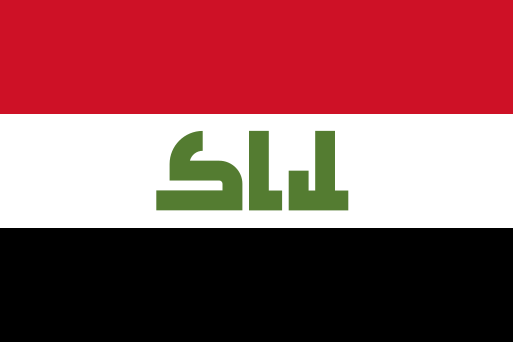
Foto van Diyar Muhammed, CC BY-SA 4.0, via Wikimedia Commons
Overzicht
Irak (Arabisch: العراق al-ʿIrāq, Koerdisch: Komara Êraqê), officieel de Republiek Irak, is een land in het Midden-Oosten. Het ligt voor een groot deel in en rond het stroomgebied van de rivieren de Eufraat en de Tigris, het gebied dat vanouds bekendstaat als Mesopotamië. Het zuidoosten van Irak ligt aan de Perzische Golf, verder grenst het land met de klok mee aan Koeweit, Saoedi-Arabië, Jordanië, Syrië, Turkije en Iran. Irak behoort tot de Arabische Liga. De hoofdstad is Bagdad. Wat betreft de naam van het land wordt wel beweerd dat deze in de loop der eeuwen van de naam van de stad Uruk in Sumer zou zijn afgeleid.
Tekst van Wikipedia, onder licentie CC BY-SA.
Waar naartoe in Irak


Verborgen parels
Minder bekende plekken die reizigers op Wikivoyage aanraden buiten de grote steden van Irak: dorpen, nationale parken en rustige hoekjes. De korte beschrijvingen komen uit die lijsten (CC BY-SA).

Alqosh
3 plekken vermeld
A tranquil, 2500-year-old Christian village.

Amedi
2 plekken vermeld
A 4000 year old town perched on the peak of a mountain, rumoured home of Biblical Magi, and confirmed home to Assyrian ruins.

Ctesiphon
2 plekken vermeld
The ancient capital of the Parthian and Sassanid Empires left us with magnificent, towering ruins, most notably of the magnificent Arch of Ctesiphon; just across the Tigris is the archaeological site of the ancient Hellenistic city of Seleucia.

Lalish
1 plek vermeld
Home to the holiest temple of the Yazidis
Gundik
1 plek vermeld
Site of ancient cave paintings.
Reizen in Irak
Dit deel staat in het Engels, zoals het op Wikivoyage is geschreven.
Reizen door het land
Due to the autonomous nature of Iraqi Kurdistan, travelling between Iraqi Kurdistan and the rest of Iraq will involve border inspections as if you were travelling internationally. In Kurdistan, public transport is rare although regular buses do link Zakho and Dohuk and cost about USD2. There are plans of a public bus network in Erbil, which is estimated to be launched after 2020. From Dohuk, shared taxis leave all day for Erbil and other cities. The road from Dohuk to Erbil goes south near Mosul, but does not leave Kurdish territory and is thus safe, although perhaps too close for comfort. Shared taxis might be the safest way to travel in Iraqi Kurdistan, as the drivers are not interested in leaving the province either. Shared taxis also may be your only method of traveling around outside Iraqi Kurdistan. If you are a foreigner, expect to be stopped at most checkpoints. Be ready to tip or pay more than the agreed upon amount for the inconvenience. The checkpoints really start to ramp up north of Tikrit. The road from Mosul to Kirkuk passes by Iraqi Kurdistan. Have your Iraqi visa ready.
By car. Driving at night may be a safer alternative to daytime driving, but a few rules to follow: Avoid city centres. Although most Iraqis are asleep by midnight, the few that are awake are almost certainly up to no good. Watch for the military. If you are out late at night and effectively trying to blend in with the locals, you could be mistaken for a hostile or troublemaker.
Geld en kosten
Money. Iraqi currency is the Iraqi dinar, denoted by the symbol "د.ع" (ISO code: IQD). Banknotes are issued in denominations of 1,000, 5,000, 10,000, 25,000 and 50,000 dinars. Coins, and banknotes in denominations of 250- and 500-dinars are rarely used. While the dinar is the official currency, you will also be able to spend euros (€) and US dollars (USD) in many places. Most people do not like to make change for large denomination banknotes. Any defects in the bills (creases, ink stamps from banks, tears, etc.) will raise suspicion that you are a counterfeiter. Don't bring old bills with you, either. Carry mostly small bills in the form of Iraqi dinars for daily spending cash. Some shopkeepers do not accept U.S. dollars, but most people will still pay large hotel bills using US dollars or euro due to the volume of notes required to pay with dinars. The conversion rate fluctuates from day to day and from town to town. Learn the security features of the dinar and US dollar notes; do not accept pre-2004 "Saddam dinar" notes. The former Iraqi government was known to be making passable US$20, US$10, and US$5 bills, and these counterfeiters are apparently still in business.
Taal
The two official languages of Iraq are Arabic and Kurdish. The local vernacular is Mesopotamian Arabic, otherwise known as Iraqi Arabic. It has extensive borrowings from languages such as Aramaic, Akkadian, Persian, Turkish, Kurdish, and Hindi. Modern Standard Arabic is rarely spoken in everyday conversations, but two thirds of Iraqis are knowledgeable in it, so if you wish to improve your Arabic skills, you shouldn't have any problems. You're not expected to know the local dialect, but if you make an attempt to learn a few words of the local vernacular, you will impress the locals! Iraqi Kurdistan is one region where little to no Arabic is spoken. Kurdish is the mother tongue of the Kurds. Two varieties of Kurdish are spoken in Iraq: Kurmanji and Sorani.
Gewoonten en omgangsvormen
Iraqis are generally humble, hospitable and down-to earth.
General etiquette. Iraqis are indirect communicators. They are tempered by the need to save face and they will avoid saying anything that could be construed as critical, judgmental, or offensive. Sincerity and genuineness are highly valued in Iraq. Don't say something if you don't mean it. Don't say "next time" if there isn't going to be a "next time". Iraqis are personable and often talk about themselves. Iraqi society values transparency. Never beckon an Iraqi person directly, even if you think they have done something wrong. Being beckoned directly is considered to be very rude. Never show the soles of your feet to others. This may be considered very disrespectful by most Iraqis, unless you are in the company of friends. When in the company of friends, it's still best to excuse yourself before putting your feet up in the air with the soles of your feet in the direction of any person. Don't spit in public or in the direction of others. It is extremely rude. Don't talk someone down for having poor English skills. Making condescending statements such as "You speak very good English" is extremely rude.
Things to avoid. Politics: Politics is a highly sensitive issue in Iraq. Most Iraqis express frustration towards the government and Iraqi politics are quite complex. Be careful when discussing Saddam Hussein's regime: it may bring up bad memories for some people. This is especially true in Iraqi Kurdistan.
Veiligheid
Although things are gradually getting better, the political and security situation remain very unstable. If you decide to go, strongly consider hiring a local guide. Many highways have road blocks set up by not only the Iraqi government, but also by various local militias, who will inspect your documents and question the purpose of your visit.
Emergency services. Due to years of warfare and destruction, emergency services are unreliable and inadequate.
Corruption. Iraq is one of the most corrupt countries in the world. Brutality and corruption are rampant in Iraq's police force; such is the extent of corruption in the police force that it's common for officers to bribe political figures so that they can climb up the work ladder. Foreigners may attract the attention of corrupt police officers. In the event you come face to face with a corrupt official, just be firm and polite. As upsetting as it may sound, try not to lose control of your emotions when dealing with an ill-behaved, corrupt official; rude behaviour will be responded to with rude behaviour.
Legal issues. The legal system in Iraq is slow, highly corrupt, and inefficient. Due process is hard to come by. Property and land disputes are common and they're very difficult to resolve through proper channels. Your embassy will most likely not want to get involved.
Violence. ]] Iraq is beset with numerous problems that may make travelling risky and difficult. The security situation, once perilous in just about any area of the country, has greatly improved in the early 2020s.
Uit de Wikivoyage-gids, geschreven door reizigers (CC BY-SA), ingekort. Kijk voor inreisregels, visa, gezondheid en de actuele veiligheid altijd in het officiële reisadvies van je overheid (zie de links hierboven).