

Samoa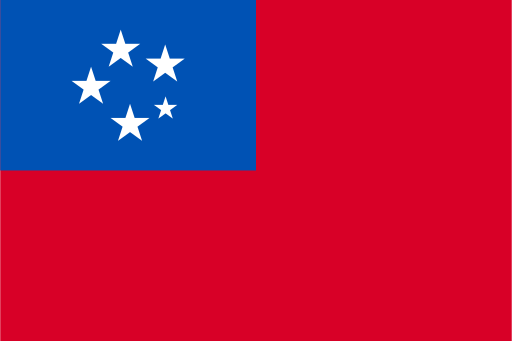
Foto av Stephen Glauser, CC BY-SA 2.0, via Wikimedia Commons
Oversikt
Samoa er en stat bestående av en øygruppe i den sørlige delen av Stillehavet. Staten består av de to øyene Savai'i og Upolu og mange småøyer. Hovedstaden er Apia. Samoa har 187 400 innbyggere (2013). Viktige importvarer er industrivarer, mat, maskiner, forbruksvarer og transportutstyr. Viktige eksportvarer er kokosnøttkrem, sigaretter og drikkevarer. Viktige handelspartnere er Fiji, USA, Australia, Japan og New Zealand.
Tekst fra Wikipedia, lisens CC BY-SA.
Hvor du bør dra i Samoa


Å reise i Samoa
Denne delen er på engelsk, slik den er skrevet på Wikivoyage.
Å komme seg rundt i landet
By taxi. Generally your best bet. They are cheap and plentiful. The Samoa Tourism Authority, to be found in front of the Government office complex on Beach Road, Apia, has a price list for Apia. Do agree on a price in advance; if they think you look rich they may try to overcharge you. You can get one for a whole day for about the same price as a rental car.
By car. Traffic in Samoa drives on the left. Samoa changed from driving on the right-hand side of the road in 2009. Since then there has been an avalanche of cheap, reconditioned cars from Japan and traffic jams, previously unknown, are now common in the capital, Apia. Even on the roads outside the capital traffic tends to move slowly, due to the cautious and inexperienced drivers and to the numerous speed bumps. As international driving licences are not accepted you need to obtain a temporary local licence. These are easy to get from the Samoa Tourism Authority (STA) office at the airport or in Apia, the Land Transport Authority (LTA) in Apia or direct from a number of car rental firms. The cost is WST$21 and it is valid for one month. Details on car rental firms are provided on the pages on Upolu and Savaii.
By scooter. As per cars above, international driving licences are not accepted you need to obtain a temporary local licence. These are easy to get from the Samoa Tourism Authority (STA) office at the airport or in Apia, the Land Transport Authority (LTA) in Apia or direct from a number of car rental firms.
Penger og kostnader
Money. The currency is the Samoan tālā, denoted as "WS$, "T", "ST" or "SAT" (ISO currency code: WST). 1 tālā consists of 100 sene. Coins come in denominations of 10-, 20 and 50 sene, 1 and 2 tālā. Banknotes come in denominations of 5-, 10-, 20-, 50 and 100 tālā. There is also a 60 tālā banknote, but it is worth more as a collector's piece than as circulating currency. Local laws make it illegal to carry out business in a foreign currency. Changing money is relatively easy.
Shopping. Business hours are from 09:00 to 17:00 on Mondays to Fridays, and on Saturday mornings. Some supermarkets are beginning to open on Sundays as well. If you are feeling hungry at night, then bakers' shops open late to sell fresh-baked bread. Samoa is relatively inexpensive for western visitors. Haggling is not customary and is in fact considered rude. Tipping is not practiced or expected in Samoa. Apia Public Market Apia Flea Market Farmer Joe's
Språk
The official languages are Samoan and English. Samoan is the native language of most of the population. English is widely understood and spoken in the capital Apia as well as many tourist resorts. However, it is less commonly understood in the villages, so learning a few words of Samoan will help you get by and allow you to build a rapport with the locals.
Skikker og høflighet
Samoa is very religious, with most of the population following the Anglican denomination. This means that Sunday is generally respected as a holy day and most shops and businesses are closed. You should not walk through villages on Sundays. Many villages have a prayer curfew in place at sundown. This normally lasts around half an hour. You should be careful to avoid walking through villages at this time to avoid causing offence. Samoan culture is governed by strict protocols and etiquette. Although allowances are made for foreigners, it is wise to avoid revealing clothing and to comply with village rules which are enforced by the village matai (chiefs), although Apia is quite relaxed in these traditions. Women going topless is taboo, and they should only wear swimwear at the beach. Shorts should be knee length. Shirts should be worn when not at the beach. A lavalava (sarong) is nearly always acceptable attire. Other simple things, such as removing shoes before entering a house (or, for that matter, budget accommodation), should be observed. The main island of Upolu is known as the "modern" island, where most northern coast villages are quite relaxed with the old strict traditions, whilst Savai'i is the more traditional island, but has become more relaxed. But nude bathing is definitely taboo.
Telefon og internett
Samoa has an adequate telephone system with international calling. Some villages have public phones that require a pre-paid phone card. Samoa.ws, ipasifika.net and Lesamoa are the Internet service providers. There are several public Internet access points in Apia, where fast, reliable access can be had for around WS$12 (US$4) per hour. There are a couple of internet cafes on Savaii. If planning to stay in remote parts of Upolu or Savaii and you cannot survive without your daily internet fix then check in advance with the hotel to make sure it has wifi. Most don't. The CSL cafe across the road from McDonald's in Apia has a fast internet connection for around WS$5 per 30 min. You can also buy credit there (WS$15 for 1 h / WS$70 for 10 h) to use your laptop at wifi lavaspots at various locations around town and even on Savaii. The lavaspot connection and download speed is very good. Some hotels sell the same WiFi credit at higher prices than at CSL.
Sikkerhet
Samoa is a generally safe destination. Crime rates are low and people are very helpful and friendly. Items do, sometimes, get stolen. With sensible precautions, however, the threat of this happening should be minimal. Free roaming dogs can be a safety problem in the capital Apia. The Government of Samoa (GoS) passed the Canine Control Act in 2013 as an initial step toward addressing dog management. Most dogs won't see you as a threat, and will ignore you, if you ignore them. Pretending to pick up a rock will usually scare them away.
Fra Wikivoyage-guiden, skrevet av reisende (CC BY-SA), forkortet. For innreiseregler, visum, helse og dagens sikkerhetssituasjon: sjekk alltid myndighetenes offisielle reiseråd (lenket ovenfor).