

Tanzania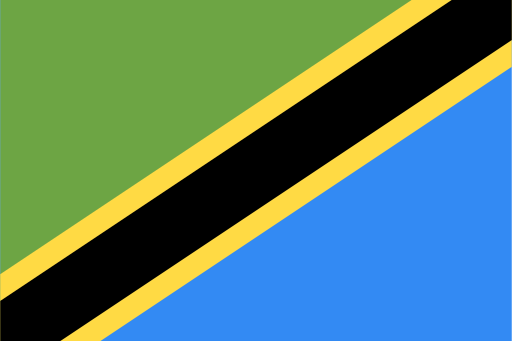
Foto av Mangapwani, CC BY-SA 4.0, via Wikimedia Commons
Oversikt
Den forente republikken Tanzania er et land på østkysten av Afrika. Det grenser til Kenya og Uganda i nord, Rwanda, Burundi og Den demokratiske republikken Kongo i vest og Zambia, Malawi og Mosambik i sør. I øst ligger Indiahavet. Landet har vært medlem av Samveldet siden det fikk uavhengighet i 1961. I 1964 ble Tanganyika forent med Zanzibar og dannet den forente republikken av Tanganyika og Zanzibar, senere omdøpt til dagens navn. Tanzanias hovedstad ble offisielt flyttet fra Dar-es-Salaam til Dodoma i 1996, men mange av styresmaktens kontorer ligger fortsatt i den gamle hovedstaden.
Tekst fra Wikipedia, lisens CC BY-SA.
Hvor du bør dra i Tanzania


Skjulte perler
Mindre kjente steder som reisende på Wikivoyage anbefaler utenfor de store byene i Tanzania: landsbyer, nasjonalparker og rolige hjørner. De korte beskrivelsene kommer fra disse listene (CC BY-SA).

Mafia Island
19 steder oppført
Mafia Island or Chole Shamba is an island of the Mafia Archipelago located in Mafia District in the southern Pwani Region of Tanzania across the Mafia Channel. The island is the third largest in Tanzanian ocean territory, but is not administratively included within the semi-autonomous region of Zanzibar, which has been politically separate since 1890. Mafia Island forms the largest part of Mafia District, one of the six administrative districts in the Pwani Region. As the Mafia Archipelago's main island, it is sometimes called Chole Shamba, meaning Chole farmlands in Swahili. This is in opposition to the historic settlement of Chole Mjini on Chole Island inside Mafia Bay. The island's population is over 65,000. The economy is based on fishing, subsistence agriculture and the market in Kilindoni.

Lake Natron
9 steder oppført
Lake Natron is a highly alkaline salt lake located in north Ngorongoro District of Arusha Region in Tanzania with its far northern end crossing into Kajiado County and Narok County in Kenya. It is in the Gregory Rift, which is the eastern branch of the East African Rift. The lake is within the Lake Natron Basin, a Ramsar Site wetland of international significance.

Pemba Island
1 sted oppført
Pemba Island is a Tanzanian island forming part of the Zanzibar Archipelago, lying within the Swahili Coast in the Indian Ocean.

Selous Game Reserve
1 sted oppført
The Selous Game Reserve, now renamed as Nyerere National Park (in-part), is a protected nature reserve and wilderness area in southern Tanzania, East Africa. It covers a total area of 50,000 km2 (19,000 sq mi), with additional buffer zones, as well. It was designated a UNESCO World Heritage Site in 1982, owing to its high levels of biodiversity and vast, undisturbed natural landscapes, such as the grasslands and the miombo woodlands habitat. Among the numerous species within the park are some of the continent's largest and most iconic, such as the bush elephant, black rhinoceros, hippopotamus, lion, leopard, spotted hyena, painted dog, Cape buffalo, Masai giraffe, plains zebra, white-bearded gnu and the giant Nile crocodile.

Arusha National Park
Ingen steder oppført ennå
Includes Mount Meru, a 4,562 m active stratovolcano

Lake Manyara National Park
Ingen steder oppført ennå
Lake Manyara National Park is a national park in Tanzania located between Lake Manyara and the Great Rift Valley in the Arusha and Manyara Regions. It is administered by the Tanzania National Parks Authority, and covers an area of 325 km2 (125 sq mi) including about 230 km2 (89 sq mi) lake surface. More than 350 bird species have been observed on the lake.

Mikumi National Park
Ingen steder oppført ennå
Mikumi National Park is a national park in Tanzania located near the city of Morogoro, with an area of 3,230 km2 (1,250 sq mi) that was established in 1964. It is the fourth largest in the country.

Ruaha National Park
Ingen steder oppført ennå
Ruaha National Park is a national park in Tanzania. In 2008, the Usangu Game Reserve and other important wetlands were added to the park, increasing its size to about 20,226 km2 (7,809 sq mi). The park is about 130 km (81 mi) west of Iringa. The park is a part of the 45,000 km2 (17,000 sq mi) Rungwa-Kizigo-Muhesi ecosystem, which includes the Rungwa Game Reserve, the Kizigo and Muhesi Game Reserves, and the Mbomipa Wildlife Management Area.

Tarangire National Park
Ingen steder oppført ennå
Tarangire National Park is a national park in Tanzania's Manyara Region. The name of the park originates from the Tarangire River that crosses the park. The Tarangire River is the primary source of fresh water for wild animals in the Tarangire Ecosystem during the annual dry season. The Tarangire Ecosystem is defined by the long-distance migration of wildebeest and zebras. During the dry season thousands of animals concentrate in Tarangire National Park from the surrounding wet-season dispersal and calving areas.

Udzungwa Mountains National Park
Ingen steder oppført ennå
The Udzungwa Mountains National Park is a national park in Tanzania's Kilolo District of Iringa Region and Kilombero District of Morogoro Region. It has a size of 1,990 km2 (770 sq mi). The habitats contained within the national park include tropical rainforest, mountain forest, miombo woodland, grassland and steppe. There is a vertical height range of 250–2,576 metres, which incorporates the Udzungwa Mountains part of the Eastern Arc Mountains. There are more than 400 bird species, 2,500 plant species and 6 primate species. It has the second largest biodiversity of a national park in Africa.
Mahale Mountains
Ingen steder oppført ennå
Mahale Mountains National Park is a national park of Tanzania. The park is located on the eastern shore of Lake Tanganyika in Uvinza District of Kigoma Region. It is named after the Mahale Mountains that are within its borders. It is one of only two protected areas for the Eastern chimpanzee in the country, and it harbours the largest known chimpanzee population. It also a place where chimpanzees and lions co-exist. Another unusual feature of the park is that it is one of the very few in Africa that must be experienced by foot. There are no roads or other infrastructure within the park boundaries, and the only way in and out of the park is via boat on the lake.
Helligdager
Nasjonale fridager i Tanzania de neste tolv månedene. Kontorer, banker og mange butikker stenger, og transport og overnatting blir travlere. Regionale helligdager og lokale festivaler er ikke med, og helligdager som følger månen kan flytte seg en dag.
- Independence Day
- Første juledag · Christmas Day
- Første juledag · Christmas Day
- Første nyttårsdag · New Year's Day
- Zanzibar Revolution Day
- End of Ramadan (Eid al-Fitr)
- Langfredag · Good Friday
- Andre påskedag · Easter Monday
- Karume Day
- Union Day
- Arbeidernes dag · Labour Day
- Feast of the Sacrifice (Eid al-Adha)
- Saba Saba Day
- Nane Nane Day
- Maulid Day
- Nyerere Day
Datoer fra prosjektet date-holidays, i stor grad basert på Wikipedia (CC BY-SA 3.0). Navnene vises på ditt språk der det finnes en oversettelse. Sjekk lokalt før du planlegger rundt en helligdag.
Å reise i Tanzania
Denne delen er på engelsk, slik den er skrevet på Wikivoyage.
Å komme seg rundt i landet
By bus and mini-bus. ]] The bus is the most common way to travel around in Tanzania. Most buses have a simple design, and the roads are poor, although 1st class air-con buses are available on the Dar-Moshi-Arusha route (Dar Express - ticket office on Libya Street downtown or office no. 45 at Ubungo). Nearly all buses go in and out of Dar es Salaam. The main bus station in Dar (where all buses go), Ubungo, is 8 km west of the city center. A number of the better "intercity buses" provide you with complimentary drinks and biscuits. In Dar, minibuses called Dala-Dalas can be taken cheaply to most places within the city. The fare is written on the front next to the door - it's usually TSh 250 for adults (2011) except for longer distances. The route of the bus is also stenciled on the front and sides of the bus, e.g. 'Posta-Mwenge' and there's a colour coding system. Posta (outside the central post office on Azikiwe/Maktaba Street) is the main downtown daladala hub. Others are Kariakoo, Mwenge, Buguruni, and Ubungo. Hop on the daladala, take a seat if there is one, and pay the conductor ('konda') when he shakes his pile of coins at you in a meaningful way. The konda shouts the names of the stops - if you don't know where you are, or don't know the name of your destination stop, it'll be hard to know where to get off.
By train. Tanzania Railways Corporation has a route between Dar es Salaam and Morogo. Tickets can be bought online.
Penger og kostnader
Money. The currency of Tanzania is known as the Tanzanian shilling, denoted by the symbol "TSh" or by "/=" or "/-" following the number (ISO code:TZS). There are five denominations of notes and four of coins in circulation in Tanzania: Notes: 10,000 (red), 5,000 (violet), 2,000 (brown), 1,000 (blue) and 500 (green; now changed to coins) shillings. Coins: 500, 200, 100 and 50 shillings. Notes and coins vary in size and colour. In descending size order, TSh 10,000 is the largest note, and 500 is the smallest. Tanzanian currency exchangers usually have a different exchange rate for different US$ denominations, larger and newer bills having a better exchange rate than older and smaller bills. The difference in exchange rate between $1/$5 bills and $50/$100 bills may exceed ten percent. Older US$100 notes are no longer accepted in Tanzania, and any note older than 2003 will most likely be refused everywhere. Also, it's best to avoid attempting to exchange notes with pen marks or any writing on them. If you withdraw a large amount of money, in the range of US$400, you'll have to carry over 40 notes around! The TSh 10,000 and 5000 notes can be difficult to break when shopping in small shops, a.k.a. dukas. In Tanzania, it's usually the customer's responsibility to provide exact change. But if they do agree to provide change, you could be left with several 1000 and 500 notes of very poor quality.
Shopping. ]] There are many markets in tourist cities that sell standard "African" goods.
Språk
Swahili and English are the official languages of Tanzania. Swahili however is the dominant language of society, with English largely limited to commerce and higher education. Over 100 different languages are also spoken by individual ethnic groups, though Swahili is almost universally spoken across the country. Time of day This is where a little knowledge of Kiswahili can cause some inconveniences. Tanzanians don't function on the same time as Westerners. This doesn't mean Africa time, which is the notion that appointments are flexible and people can arrive when they please. For Tanzanians, it's illogical that the day would start in the middle of the night. Since sunrise and sunset happen pretty much at the same time all year round, 6AM and 6PM, the day starts at 6AM which is 0 hours.
Skikker og høflighet
In general, tourists should wear modest or conservative attire, especially in Zanzibar, which is a conservative Muslim society. Western women should not wear clothing that reveals too much skin. 'Kangas', brightly-colored wrap-around cloth, are affordable, available throughout the country, and can serve as a discreet covering. The Masai people, with their colorful clothing, are tempting targets for any tourist with a camera. However, they expect to be paid for it, and you should always ask before taking pictures. It is common practice among Swahili-speakers to use 'shikamoo' (pronounced 'she ka moe' and literally meaning, 'I hold your feet') when greeting elders or superiors. The usual response from an elder will be 'marahaba'. In Zanzibar, the equivalent of 'shikamoo' is 'chei chei'. The traveler will get along very well when using these verbal expressions of respect. In addition, a title after the 'shikamoo' is also a useful indicator that you are not just a dumb tourist -- 'shikamoo bwana' for the gents, and, when addressing a female elder, 'shikamoo mama'. Tanzanians will also comment if you are doing any work while they are not, with the phrase "pole na kazi". It literally means "I'm sorry you have to work". A simple "asante", or "thanks", will suffice in reply. Many Tanzanian sellers are persistent and, ordinarily, a simple head shake, accompanied by "asante sana", should settle it. However, as a last resort, a firm "hapana", meaning "no", will do the trick.
Telefon og internett
Keeping in touch while traveling in Tanzania is rarely a problem. You can get decent mobile phone reception even in some national parks.
Telephone calls. The "Tanzania Telecommunications Company Ltd" (TTCL) is the state owned telecom, operating all pay phones and landlines in Tanzania. As it is the case with most developing countries, telephone fixed-lines are not affordable for many ordinary people. However, the mobile network has blossomed throughout Africa in the past years, and this is equally true of Tanzania. With many used mobile phones for sale and the very low cost of getting a SIM card, this is the popular choice of most Tanzanians. For many, a mobile phone is the first large purchase when they get a job. The major mobile service providers operate all over the country, even in some of the most remote areas, although service interruptions are common. If you find a taxi driver or tour guide that you like, ask for their mobile number. This is often the best way to reach them.
Internet. With the advent of Internet-equipped cell phones, internet cafés are dying out throughout Tanzania. They used to be easy to find in major urban areas, like Dar es Salaam and Arusha, and may persist.
Sikkerhet
Theft. As in many impoverished countries, caution should always be exercised, particularly in tourist areas, such as Arusha, Stone Town (Zanzibar), and Dar es Salaam. Violent crime against foreigners is not uncommon, particularly against those walking alone at night, which is not recommended. Pickpocketing and con artists are also common. Pickpockets work crowded markets, like Kariakoo, and bus stations. Don't be fooled by small children who are often forced into a life of crime by older kids or parents -- never carry anything of value in your pockets and don't let expensive camera equipment dangle from your neck. Don't leave bags unattended or even out of your sight when on the beach. See specific area or city articles for details. In general, avoid isolated areas, especially after dark. Travelling in large groups is safer. If there are many people or security guards around (e.g. city center areas) you should be relatively safe. The safest way to travel is by taxi with a driver you know, especially when it's dark out (late night or early morning). Although it's uncommon, taxi drivers have been known to rob tourists. Get the number for a taxi you trust, from your hotel or a local. Buses have infrequently been stopped by robbers on long-distance (often overnight) routes. If you have to travel a long distance by bus, it might be better to break it into multiple day-only trips, or to travel by plane or train.
Fra Wikivoyage-guiden, skrevet av reisende (CC BY-SA), forkortet. For innreiseregler, visum, helse og dagens sikkerhetssituasjon: sjekk alltid myndighetenes offisielle reiseråd (lenket ovenfor).