

Taiwan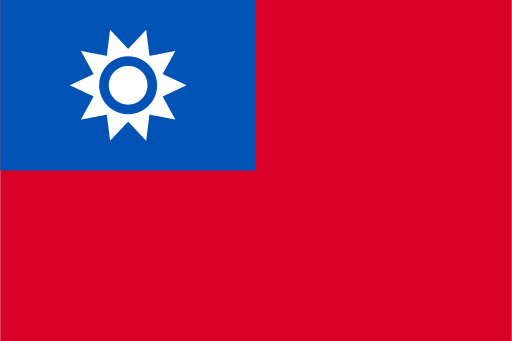
Foto av xiangyang17, CC BY-SA 2.0, via Wikimedia Commons
Översikt
Taiwan, officiellt Republiken Kina (中華民國; 中华民国; Zhōnghuá Mínguó), är ett land som omfattar ön Taiwan i Stilla havet och några mindre öar, bland andra Pescadorerna, Kinmen och Matsuöarna. Taiwan gör anspråk på det kinesiska fastlandet som sedan år 1949 hävdas av Folkrepubliken Kina. År 1945–1971 företrädde Taiwan även fastlands-Kina i FN:s generalförsamling och FN:s säkerhetsråd. Den moderna statsbildningen har sitt ursprung i republiken Kina, som grundades 1912 på det kinesiska fastlandet då det flertusenåriga dynastiska kinesiska kejsardömet (då under ledning av Qingdynastin) störtades av det nationalistiska partiet Kuomintang under ledning av Sun Yat-sen.
Text från Wikipedia, licens CC BY-SA.
Vart ska man åka i Taiwan


Helgdagar
Nationella lediga dagar i Taiwan de kommande tolv månaderna. Kontor, banker och många butiker stänger, och transporter och boenden blir fullare. Regionala helgdagar och lokala fester ingår inte, och helgdagar som följer månen kan flyttas en dag.
- nyårsdagen · 中華民國開國紀念日 / 元旦
- Chinese New Year's Eve · 農曆除夕
- Chinese New Year · 農曆年初一
- The second day of the Chinese New Year · 農曆年初二
- The third day of the Chinese New Year · 農曆年初三
- The forth day of the Chinese New Year · 農曆年初四
- Chinese New Year Holiday · 农历新年假期
- Peace Memorial Day · 228和平紀念日
- Peace Memorial Day (substitute day) · 228和平紀念日 (更换日)
- Children's Day · 兒童節
- Children's Day (substitute day) · 兒童節 (更换日)
- Tomb Sweeping Day · 淸明節
- Dragon Boat Festival · 端午節
- Mid-Autumn Festival · 中秋節
- National Day / Double Tenth Day · 國慶日 / 雙十節
- National Day / Double Tenth Day (substitute day) · 國慶日 / 雙十節 (更换日)
Datum från projektet date-holidays, till stor del baserat på Wikipedia (CC BY-SA 3.0). Namnen visas på ditt språk där det finns en översättning. Kontrollera på plats innan du planerar runt en helgdag.
Att resa i Taiwan
Den här delen är på engelska, så som den skrivits på Wikivoyage.
Att ta sig runt i landet
IC Cards. Taipei's EasyCard ( Yōuyóukǎ) and Kaohsiung's iPass () are the main public transportation smart and electronic payment cards, and replace the need to buy separate tickets for most national, regional and city buses, metro (MRT), as well as train services (TRA) all over Taiwan, and they can be used at retail establishments that display the respective sign, like convenient stores (7Eleven, Family Mart), parking lots and some restaurants and shops. Though originally accepted only in their respective cities, the two cards can now be used interchangeably at most (but not all) locations. Besides saving you the hassle of having proper change ready for your ticket, it mostly always gives discount on the chosen journeys. For instance, the price for any train (TRA) is calculated based on the price of a local train and a 10% discount. Thus, you can even take the faster trains with it (but not THSR) like the Tzu-Chiang limited express. The only disadvantage is that you will not have a reserved seat, which however is not an issue except on Saturday morning/noon and Sunday afternoon. The EasyCard also provides discounts on Taipei's public transportation network, and likewise with the iPass on Kaohsiung's network. The EasyCard can be bought at the airport, in any of stations of Taipei MRT and most convenient stores. As of 2025 the price was NT$500, consisting of a non-refundable fee of NT$100 and NT$400 in electronic cash.
By train. Taiwan's train system is excellent, with stops in all major cities.
Pengar och kostnader
Money. The currency of Taiwan is the New Taiwan dollar, denoted by the symbol "NT$" ( or, ISO code: NTD, but also referred to as TWD). The NT dollar is known locally as yuán ( or more formally ) when written in Chinese or colloquially in Mandarin as the kuài (). One unit is known colloquially as the kho () in the Taiwanese dialect. One dollar is divided into 100 cents, known as a (fēn) in Chinese. 10 cents is formally known as a (jiǎo), and colloquially as a (máo) in Chinese. Any $ sign you see in Taiwan or this article refers to NTD unless it includes other initials (e.g. US$ for U.S. dollars). Banknotes come in denominations of NT$100, NT$200, NT$500, NT$1,000 and NT$2,000, while coins come in denominations of NT$½, NT$1, NT$5, NT$10, NT$20 and NT$50. The NT$½ coin is rarely seen or accepted because of its low value, and the price of raw materials used to make the coin is more than the face value of the coin. The NT$20 coin, the NT$200 banknote, and the NT$2,000 banknote are not as common as others. The 20, 200, and 2000 are legal currencies that should be accepted, but stores that are unfamiliar with them sometimes do not accept them. Taiwanese currency is fully convertible. However, to prevent money laundering, travelers can only take cash up to a maximum of NT$100,000, 20,000 RMB, and (currencies calculated independently) US$10,000 into or out of the island.
ATMs. Taiwan has abundant ATMs to withdraw cash from using the Plus or Cirrus systems.
Språk
Taiwan's official languages are four varieties of Chinese — Mandarin, Taiwanese (a dialect of Minnan), Hakka, and Matsu dialect — as well as the indigenous Austronesian languages. All announcements in public transportation on the main island are made in Mandarin, English, Taiwanese and Hakka. In Matsu Islands, announcements are made in Mandarin and the local Matsu dialect. Mandarin is the lingua franca, but Taiwanese is the mother tongue of about 70% of the population (although fluency in Taiwanese is declining among the younger generation).
Seder och bruk
The Taiwanese are generally a warm and polite people, having been strongly influenced by Confucianism. As Taiwanese culture places a strong emphasis on respect for elders, elderly visitors will find most Taiwanese to be very helpful and accommodating. Naming customs and modes of address are generally the same as in mainland China. See the Respect section of that article for details.
Culture. Taiwan shares several cultural taboos/guidelines with other East Asian nations: When giving and receiving business cards, always do it using both hands and with a slight bow of the head. Giving or receiving a business card with only one hand is very disrespectful. Some Taiwanese are superstitious about anything connected with dying – unlucky things should never be mentioned. The number 4 (four, pronounced 'si') sounds like the word for death in Mandarin. Do not write people's names in red. This again has connotations of death. When writing someone's English name, this is not a problem, but avoid writing Chinese names in red. Do not whistle or ring a bell at night. This is an "invitation to ghosts". Do not point at cemeteries or graves. This is disrespectful to the dead. Unlike in some other parts of East Asia, bowing to greet people has fallen out of custom as handshakes and waves have become more common. There are numerous taboos dictating that certain objects shouldn't be given to others, often because the word for that object sounds like another unfortunate word: Clocks.
Telefon och internet
Wifi. Wifi is almost everywhere in large cities and widely available in rural areas. iTaiwan is Taiwan's free, convenient and widespread WiFi, and an answer to today's mobile-dependent population. It is available in almost all public places in Taiwan, such as stations (railways, MRT, and HSR), post offices, and public libraries. You don't need to register to access iTaiwan. Large chain stores and restaurants, on the other hand, use other Wifi services such as.1.Free Wi-Fi that require clicking an advertisement to get online. Other free Wi-Fi services are also available, but they might have problematic security. In addition, most in-house eateries, shopping malls, and restaurants have free Wi-Fi for customers, especially restaurants that take orders from mobile phones by scanning a QR code.
SIM cards. If you want an Internet connection to your smartphone, you can purchase a prepaid 4G unlimited data sim card from Chunghwa Telecom, Taiwan Mobile, or Far EasTone at a cost of NT$300 for 3 days, or NT$500 for 7 days (other periods are available as well). Just walk into any official shop to apply (also at all international airports).
Säkerhet
Crime. Taiwan is very safe for tourists, even for women walking down the street alone at night. This is not to say, however, that there is no crime, and you should always take the usual precautions. In crowded areas such as night markets or festivals, for example, pickpockets are a known problem, but violent crime and muggings are very rare. In addition, it is also very unusual to see drunks on the street, day or night. Like anywhere else in the world, women should be cautious when taking taxis alone late at night. Although they are generally safe, it's a good idea to arrange to have a friend call you when you get home and to be seen making the arrangements for this by the cab driver. It also helps if a friend sees you being picked up as taxis have visible license numbers. Police departments in most jurisdictions have a Foreign Affairs Police unit staffed by English-speaking officers. When reporting a major crime, it is advisable to contact the Foreign Affairs unit in addition to officers at the local precinct. Police stations are marked with a red light above the door and display a sign with the word "Police" clearly printed in English. For more information see the National Police Agency website. Foreign victims of a major crime in Taiwan are also advised to report the matter to their government's representative office in Taipei. Also, remember that you call 110 for police in Taiwan, and 119 for fire department or medical help.
Från Wikivoyages guide, skriven av resenärer (CC BY-SA), förkortad. För inreseregler, visum, hälsa och aktuell säkerhet: läs alltid din regerings officiella reseråd (länkade ovan).