

Chile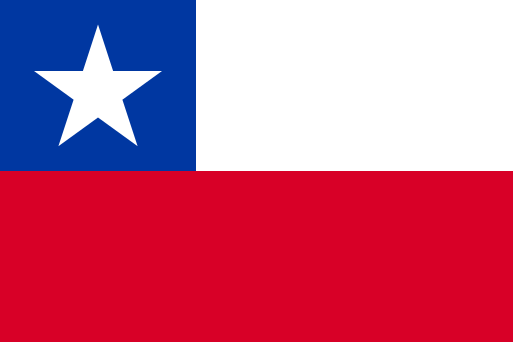
Foto von Natalia Reyes Escobar, CC BY-SA 4.0, über Wikimedia Commons
Überblick
Chile (deutsche Aussprache [ˈtʃiːlə] oder [ˈçiːle]; spanisch [ˈt͜ʃiˑle]; ), amtlich República de Chile (deutsch Republik Chile), ist ein Staat im Südwesten Südamerikas, der den westlichen Rand des Südkegels (Cono Sur) des Kontinents bildet. Chile erstreckt sich in Nord-Süd-Richtung zwischen den Breitengraden 17° 30′ S und 56° 0′ S. Somit beträgt die Nord-Süd-Ausdehnung rund 4200 Kilometer. In west-östlicher Richtung liegt Chile zwischen dem 76. und dem 64. westlichen Längengrad und besitzt eine Ausdehnung von durchschnittlich weniger als 200 Kilometern. Wegen dieser – durch seine Lage am Westhang der Andenkordillere bedingten – ungewöhnlichen Form wird Chile schon seit seiner Entdeckung häufig „das langgestreckte Land“ genannt.
Text aus Wikipedia, Lizenz CC BY-SA.
Wohin in Chile


Geheimtipps
Weniger bekannte Orte abseits der großen Städte von Chile, die Reisende auf Wikivoyage empfehlen: Dörfer, Nationalparks und ruhige Ecken. Die Kurzbeschreibungen stammen aus diesen Listen (CC BY-SA).

Chiloé Island
16 Orte eingetragen
The largest island of the country.

Torres del Paine National Park
14 Orte eingetragen
The mountains, lakes and glaciers, including the Towers of Paine.

Queulat National Park
9 Orte eingetragen
Known for a "hanging glacier".

Bernardo O'Higgins National Park
7 Orte eingetragen
The largest protected area in the country cover the fjords and canals of the west and most of the southern ice field

Lauca National Park
7 Orte eingetragen
The Lago Chungará, one of the world's highest lakes, overseen by the mighty Volcán Parinacota.

Alberto de Agostini National Park
6 Orte eingetragen
One of Chilean Patagonia's most off-the-beaten-path destinations

Cochamó Valley
6 Orte eingetragen
A beautiful valley known for its granite domes and old-growth forests, attracting serious hikers with trails ranging from easy to challenging.

Villarrica
6 Orte eingetragen
Surrounded by lakes and volcanoes.

Pelluhue
5 Orte eingetragen
Are popular coastal resort towns

Valle Nevado
5 Orte eingetragen
Ski resort

Nevados de Chillan
4 Orte eingetragen
Ski resort on a group of volcanoes southeast of Chillán

Pali-Aike National Park
4 Orte eingetragen
Home to one of the oldest settlements on the Magellan.

Farellones
3 Orte eingetragen
A small mountain village near the ski resorts of La Parva, El Colorado, and Valle Nevado

Monte Verde
3 Orte eingetragen
Archaeological site

Patagonia National Park
3 Orte eingetragen
One of the newer national parks in the region, only designated in 2018.

Algarrobo
2 Orte eingetragen
The home to the largest swimming pool in the world at the San Alfonso del Mar resort

Cabo de Hornos National Park
2 Orte eingetragen
The world's southernmost national park home to Cape Horn

Portillo
2 Orte eingetragen
A ski area close to the Argentine border

Chiloé National Park
1 Ort eingetragen
A national park with zones of dunes, Valdivian temperate rain forests, swamps, and peat bogs.

El Colorado
1 Ort eingetragen
Ski area

Isla Mocha
1 Ort eingetragen
An island 40 km off the coast, which is noted for numerous historic shipwrecks.

Radal Siete Tazas National Park
1 Ort eingetragen
An extraordinary bucolic paradise of waterfalls and lakes

Altos de Lircay National Reserve
Noch keine Orte eingetragen
A 121-km² reserve in the Andean mountain skirts with hiking, horseback riding, and connecting with nature

Huilo-Huilo Biological Reserve
Noch keine Orte eingetragen
A private nature reserve with unique lodgings

Laguna San Rafael National Park
Noch keine Orte eingetragen
Includes the San Rafael Glacier, accessible only by boat or plane

Llullaillaco National Park
Noch keine Orte eingetragen
Home to Llullaillaco Volcano.
Parque Tantauco
Noch keine Orte eingetragen
On Chiloé Island
Northern Chile
57 Orte eingetragen
A wine and pisco producing area, also known for its astronomical observatories.
Feiertage
Landesweite Feiertage in Chile in den nächsten zwölf Monaten. Büros, Banken und viele Geschäfte schließen, Verkehr und Unterkünfte sind voller. Regionale Feiertage und lokale Feste sind nicht enthalten, und Feiertage nach dem Mondkalender können sich um einen Tag verschieben.
- Mariä Empfängnis · La inmaculada concepción
- Weihnachten · Navidad
- Neujahr · Año Nuevo
- Karfreitag · Viernes Santo
- Ostersonntag · Pascua
- Tag der Arbeit · Día del Trabajador
- Navy Day · Día de las Glorias Navales
- Indigenous People's Day · Día de los Pueblos Indígenas
- Peter und Paul · San Pedro y San Pablo
- Our Lady of Mount Carmel · Virgen del Carmen
- Mariä Himmelfahrt · Asunción
- National holiday · Feriado Adicional Fiestas Patrias
- National holiday · Fiestas Patrias
- Army Day · Día de las Glorias del Ejército
- Columbus Day · Encuentro de Dos Mundos
- Reformationstag · Día Nacional de las Iglesias Evangélicas y Protestantes
- Allerheiligen · Todos los Santos
Daten aus dem Projekt date-holidays, größtenteils nach Wikipedia (CC BY-SA 3.0). Die Namen stehen in deiner Sprache, wo es eine Übersetzung gibt. Prüfe vor Ort, bevor du deine Reise danach planst.
Unterwegs in Chile
Dieser Teil ist auf Englisch, so wie er auf Wikivoyage steht.
Unterwegs im Land
By plane. Chile has a rather good airport infrastructure. The main hub for flights in Chile is the Arturo Merino Benitez International Airport () in Santiago, from where several airlines serve even the remotest corners of the country. These airlines are the three Chilean airlines: LATAM Airlines, Sky Airline and JetSmart. Although LATAM is by far the largest company, Sky and JetSmart offer good services to the main cities. Use the Chilean page of the airlines because they charge in pesos, which is a lot cheaper than the English version with U.S. dollars. Subscribing to the airlines' notifications is also recommended as many of the promotions come in the form of a code. You can find cheap prices four months before the flight and especially if you fly between Tuesday and Thursday or on Saturday. Low-cost airlines do not allow free carry-ons except a small bag. Almost all flights start or finish in Santiago, so many routes between other cities are subject to time-consuming layovers in Santiago Airport. An exception is the so-called "Rutas Smart" by JetSmart which avoid Santiago; most of them are from Antofagasta, Calama, La Serena or Concepción. The only airline flying to Easter Island is LATAM Airlines from Santiago. Other remote locations are served by regional airlines. In the Extreme South, Aerovías DAP offers daily routes (in summer) from Punta Arenas to Porvenir in Tierra del Fuego and Puerto Williams.
Geld und Kosten
Money. Chile's currency is the Chilean peso (ISO code: CLP), denoted by the symbol "$". Wikivoyage uses the notation "pesos" for clarity. Other currencies are not widely accepted, but most cities have exchange bureaux with reasonable rates for euros and US dollars. The rates should be published on widely visible boards. Coins of Chile are issued in denominations of 10 (golden circle), 50 (yellow decagon), 100 (yellow ring with silver center) and 500 pesos (silver ring with yellow center). Banknotes of Chile are issued in denominations of 1,000, 2,000, 5,000, 10,000 and 20,000 pesos. The current issues of the banknotes of Chile consist of the lower three denominations produced entirely in polymer, while the two large denominations are produced entirely on paper. The colloquial term luca is used for 1,000 pesos, so for instance "tres lucas" is 3,000 pesos. The 5-pesos and 1-peso coins were discontinued in 2017. Most prices are in multiples of 10 or even 100, but if you end up needing to pay an amount that isn't and your amount ends in 5 or less, your amount will be rounded up to the lower multiple of 10, in the opposite case your amount will be rounded up to the higher multiple of 10 (example: 1,664→1,660 pesos; 1,666→1,670 pesos). This rule only applies when you pay by cash.
Credit cards. Credit and debit cards are widely accepted in most of the independent commerce of major cities and in all chain stores, no matter where they are.
Sprache
, is a Unesco World Heritage Site.]] Spanish is the official language in the country and is spoken everywhere. Chileans use a distinct dialect called Castellano de Chile with a variety of differences in pronunciation, grammar, vocabulary and slang usage. Spanish-speaking foreigners won't have problems understanding it and will only think it sounds funny, but non-native speakers often struggle to understand it, even with years of practice. For example, Chileans tend to drop the "S" sound at the ends of their words. Instead they replace that sound with an "H" sound (i.e. the word "tres" is pronounced "tréh"). On the other hand, standard Spanish is not the first dialect of choice, but people would generally be fairly fluent.
Sitten und Umgangsformen
Although the Roman Catholic Church has historically played a major role in Chilean society, Chile has become increasingly secular since the mid-20th century. For example, divorce was legalized in the mid-2000s, the Catholic church was separated from the state in the mid-1920s, and an increasing number of Chileans identify as irreligious. When visiting sites of religious importance, you should always act and dress respectfully. As is the case everywhere, proselytizing, or anything hinting at it, is neither welcomed nor appreciated. Chilean politics are highly polarising and emotive; there have been a lot of protests against the Chilean government since 2019 and a lot of ordinary Chileans tend to express feelings of anger and frustration with the government. As is the case anywhere, stay neutral and listen carefully if and when people discuss politics, even if you happen to know a thing or two about Chile's politics. The Pinochet military regime, which ruled the country from 1973 to 1990, is very much an open wound in Chile's national consciousness and discussions about it should be approached with absolute respect and caution. The regime tortured, imprisoned, executed, and mistreated thousands of Chileans, and many others had to flee the country for their safety.
Telefon und Internet
Phone. Public phones on streets are very likely to be tampered or vandalized, so it's better to use a phone inside a business or a station. Prepaid cards for mobile phones and landlines are sold at most newspaper kiosks, supermarkets, gas stations, pharmacies and phone dealers. Mobile GSM networks are ubiquitous in all major cities and most of the territory of central and southern Chile. A basic prepaid cellular phone usually costs about 15,000 pesos, most frequently charged with 10,000 pesos worth of prepaid minutes. No ID is required to buy a prepaid phone. GSM SIM cards from ENTEL, Movistar or Claro are usually available for 5,000 pesos, but without credit, so you'll need to buy some prepaid minutes to be able to call. Money can be charged into a cellphone from almost any ATM using a credit or debit card and from some pharmacies (Ahumada, Cruz Verde and Salco Brand) on the counter and in cash. Also, one can charge money directly into the phone by using a credit card through an automated service operator, with directions in Spanish or English. Chilean phone numbering scheme is simple.
Sicherheit
is a prime place for astronomical observations.]] Chile usually ranks as one of the safest countries on the continent. In the early 2020s though, gun violence and car hijacking have increased. Cartels from Mexico, Venezuela and Colombia have established themselves in the country. The police were not prepared for this and it has worried a lot of locals and caused resentment against foreigners, especially Venezuelans. Pickpocketing and muggings occur, so it's better to go out in a group. Most thieves tend to target people walking alone. Be cautious at night, take a taxi, and avoid seedy neighbourhoods like Bellavista. If robbed, do as you are told and if you don't speak Spanish, avoid eye contact and give them your valuables. Do not show expensive-looking jewelry or watches, laptops or the newest mobile phones, even during the day. Stay alert and be especially careful in all crowded areas in Santiago, Viña del mar, Valparaíso and Antofagasta. It is recommended to wear your backpack at the front of your body in crowded areas or use a fannypack. For tourists or other "beginners" lacking experience in over-the-counter transactions with hard Chilean currency, you can reduce the chance of your wallet getting stolen by following some advice: Separate coins and bills.
Aus dem Wikivoyage-Reiseführer, geschrieben von Reisenden (CC BY-SA), gekürzt. Für Einreise, Visa, Gesundheit und die aktuelle Sicherheitslage gelten immer die offiziellen Reisehinweise deiner Regierung (oben verlinkt).