

Austria
Photo by Andrzej Otrębski, CC BY-SA 4.0, via Wikimedia Commons
Overview
Austria, formally the Republic of Austria, is a landlocked country in Central Europe, lying in the Eastern Alps. It is a federation of nine states, of which the capital Vienna is the most populous city and state. Austria is bordered by Germany to the northwest, the Czech Republic to the north, Slovakia to the northeast, Hungary to the east, Slovenia and Italy to the south, and Switzerland and Liechtenstein to the west. The country occupies an area of 83,879 km2 (32,386 sq mi) and has a population of about 9.2 million.
Text from Wikipedia, licensed CC BY-SA.
Where to go in Austria
Vienna
Austria
Innsbruck
Austria
Linz
Austria
Seefeld in Tirol
Austria
Bad Ischl
Austria
Salzburg
Austria
St. Wolfgang im Salzkammergut
Austria
Graz
Austria
Achen Lake
Austria
Bregenz
Austria
Krimml Waterfalls
Austria
Villach
Austria
Lech
Austria
Eisriesenwelt
Austria
Klagenfurt
Austria
Melk
Austria
Eisenstadt
Austria
Grossglockner High Alpine Road
Austria
Hallstatt
Austria
Alpbach
Austria
Dürnstein
Austria
Bad Gastein
Austria
Kitzbühel
Austria
Fugging
Austria
Hidden gems
Lesser-known places that travellers on Wikivoyage recommend beyond the main cities of Austria: villages, national parks and quiet corners. The short descriptions come from those lists (CC BY-SA).

Wachau
35 places listed
Inscribed on the UNESCO World Heritage List in 2000 with the towns Melk, Spitz, Dürnstein and Krems
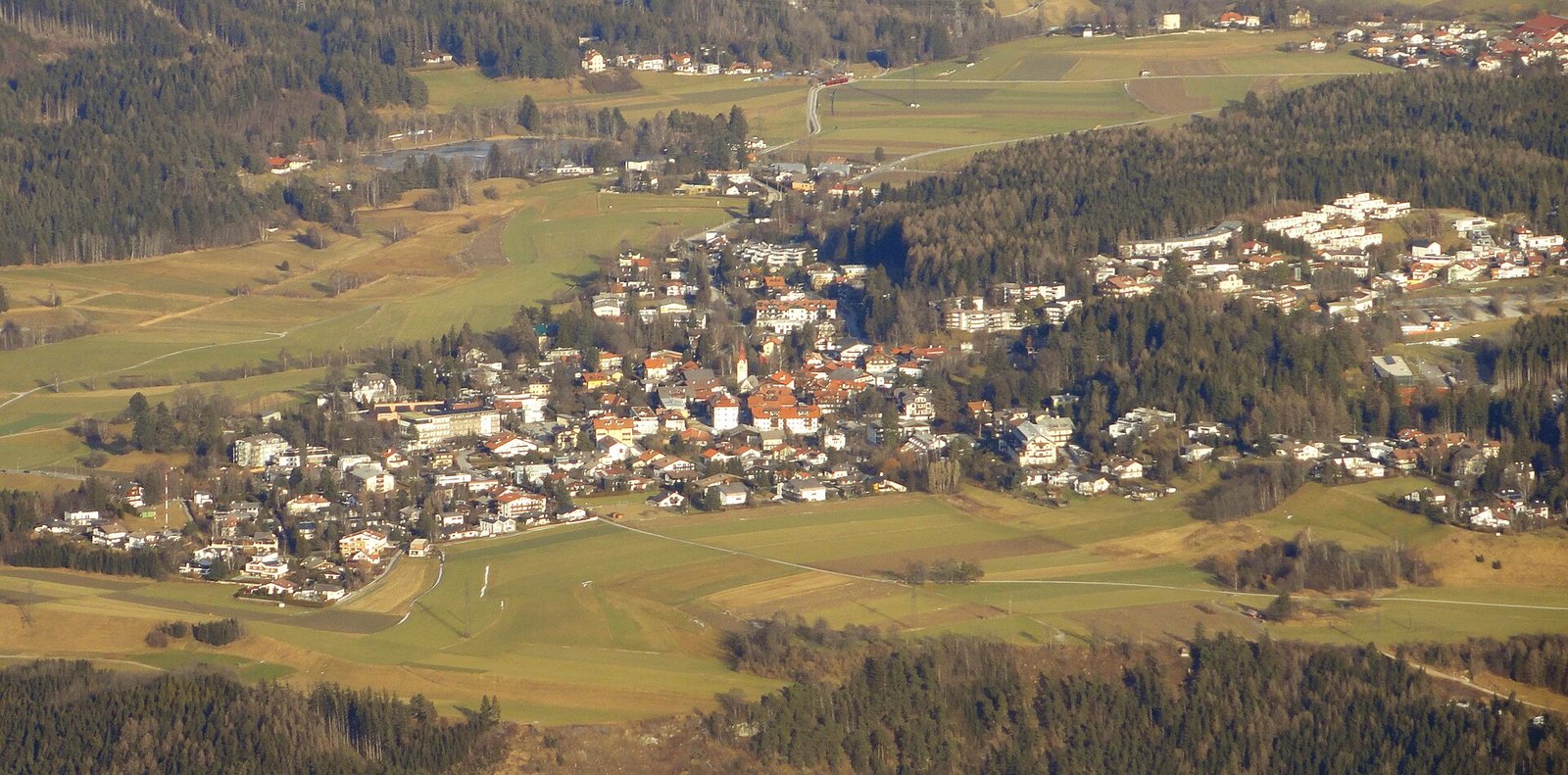
Igls
32 places listed
A popular ski resort in the shadow of the Patscherkofel mountain near Innsbruck

Semmering
19 places listed
Home to the world's oldest mountain railway.

Zell am See
11 places listed
One of the most important alpine tourist towns in Austria

Wörthersee
8 places listed
One of Austria's warmest lakes

Kaprun
5 places listed
Part of the Europa Sport Region

Salzkammergut
5 places listed
A stunning cultural landscape among mountains and lakes

Hohe Tauern National Park
4 places listed
This is Austria's oldest and biggest national park. It spreads out over the three Austrian provinces of Tirol, Carinthia, and Salzburg. The mountainous terrain supports a wide variety of wildlife, and scenic lakes and waterfalls.

Karwendel Nature Park
4 places listed
Famous for their wild and untouched landscape with craggy peaks, meadows, fenlands, and expansive pine forests

Pinswang
4 places listed
One of the most ancient settlements of the North Tyrolean Ausserfern, on the border with Bavaria and a short walk or drive to the famous castles of King Ludwig

Spielberg
4 places listed
With the Red Bull Ring race track

Nassfeld
2 places listed
Excellent for skiing, close to the Italian border

Stubaier Gletscher
2 places listed
A glacier and a ski resort

Dachstein
1 place listed
The Dachstein Mountains are a mountain range in the Northern Limestone Alps.

Kaunertal
No places listed yet
Well-kept cross-country tracks, a slalom downhill course and a fun-park
Thermenland
2 places listed
The great spas of Styria, an easy daytrip from Graz or Vienna
Public holidays
National days off in Austria in the next twelve months. Offices, banks and many shops close, and transport and stays get busier. Regional holidays and local festivals are not included, and holidays that follow the moon can move by a day.
- Immaculate Conception · Mariä Empfängnis
- Christmas Day · Christtag
- Boxing Day · Stefanitag
- New Year's Day · Neujahr
- Epiphany · Heilige Drei Könige
- Easter Monday · Ostermontag
- Staatsfeiertag
- Ascension Day · Christi Himmelfahrt
- Whit Monday · Pfingstmontag
- Corpus Christi · Fronleichnam
- Assumption · Mariä Himmelfahrt
- National Holiday · Nationalfeiertag
- All Saints' Day · Allerheiligen
Dates from the date-holidays project, based largely on Wikipedia (CC BY-SA 3.0). Check locally before you plan around a holiday.
Travelling in Austria
Getting around the country
By train and bus. Trains are the best and most common form of mass transport in Austria. Comfortable and moderately priced trains connect major cities and many towns; buses serve less significant towns and lakes. The two forms of transport are integrated and designed to complement each other, and intercity coaches exist but don't provide anywhere near the level of intercity rail service. Between Vienna, Linz, and Salzburg trains run every 30 minutes or even more frequently. Trains between Vienna, Graz, Innsbruck and Bregenz operate at least hourly. The 2½-hour train ride to Graz takes you along one of the world's oldest mountain railways (Semmeringbahn). 14 tunnels and 16 viaducts were built to cross the Alps. ÖBB-operated trains, especially trains between Vienna and Graz and ICE trains to Linz and between Salzburg and Carinthia, may use coaches owned by other countries' national operators, just check the train number. Railjet (RJ or RJX) trains to Vienna Airport are split at Vienna Main Station (Wien Hauptbahnhof), with only one half of the train going to the airport and the other half going to Budapest. Be careful to board the correct part of the train! Austrian trains are operated mostly by state-owned company ÖBB. The Raaberbahn (GySEV) provides some trains across the Austrian-Hungarian border and there are some short private railways with tourist trains which supplement rather than compete with the ÖBB. The only competitor to ÖBB is WestBahn.
Money and costs
Money. Austria is a cash-oriented society, and while acceptance of credit/debit cards is on the rise, many shops are still cash only. The best rates for changing money are offered by banks. Some banks will only exchange money for their account holders, and they usually add an exchange fee ranging from €3 to €6, or more when changing large amounts. Withdrawing money from the ubiquitous ATMs is also a viable option, especially if large amounts of cash are needed. The Austrian schilling was replaced by the euro in 2002. If you have any from previous trips, they can be exchanged at the Austrian Central Bank (ÖNB) indefinitely.
Prices. The prices are comparable with Western European countries, they are very similar to Germany and a little bit more than in Italy. The general sales tax of 20% is included in prices but lower sales taxes applies to certain services and mainly food. A can of Coke in a supermarket will cost you about, a mid-range meal. Prices in tourist areas (Tyrol, Vienna, Salzburg, Zell am See) can be higher than the averages. B&B accommodation and traditional restaurants in towns and rural areas are comparatively cheap.
Shops. ]] Shops are generally open from 08:00 to 19:00 on weekdays, 08:00 to 18:00 on Saturdays (noon in rural areas) and closed on Sundays. On Sundays only gas station shops (expensive), shops in railway stations and restaurants are open. Some smaller shops also may be closed between 12:00 and 15:00 on weekdays.
ATMs. ATMs in Austria are called Bankomat.
Language
The national official language of Austria is German which, in its national standard variety, known as Austrian (Standard) German (Österreichisches (Hoch)deutsch) is generally identical to the German used in Germany, with some significant vocabulary differences, mostly the names of food and things around the home, and a rather distinct accent. Most Austriacisms are loanwords from Austro-Bavarian, even though languages of the neighbouring countries have influenced as well. Other languages have some official status in different localities (e.g., Slovenian in Carinthia, Burgenland Croatian and Hungarian in Burgenland). Some examples for different vocabulary in Austrian German: {| class="wikitable" style="text-align:center;"! Austria! Germany!
Customs and manners
Austrians take formalities and etiquette seriously and good manners (Gutes Benehmen) can take you a long way in a social situation. When entering and leaving public places Austrians always say hello (Grüß Gott as formal greeting and a normal Hallo as a semi-formal greeting) and goodbye (Auf Wiedersehen). When entering a small shop, one should say "Grüß Gott" to the shop keeper when entering and "Wiedersehen" when leaving (the "Auf" can be left off). Phone calls are usually answered by telling your name, and finished with Auf Wiederhren. If you want to greet people in an informal way, use Servus. This greeting is used among friends and also in the countryside (for example, when meeting people at hiking). Servus is also used to say good bye and is common not only in Austria but also in Hungary, Slovenia, Slovakia and southern Germany. Although standard German greetings such as "Tschüss" or "Hi" are used in cities, most Austrians prefer to be greeted with Austrian greetings. Do not raise your voice, lose your temper, or shout in public; in Austria this is highly frowned upon. When being introduced to someone, always shake them by the hand, keep the other hand out of your pocket, say your name and make eye contact. Failure to make eye contact, even if out of shyness, is considered condescending. Some Austrians have a custom of kissing the cheeks twice when friends meet, except for Vorarlberg, where people kiss each other three times as in Switzerland and Liechtenstein.
Phones and internet
Calling Austria. The international code for Austria is +43.
Phones. Phone boxes are getting rare. Phone boxes usually operate with prepaid cards which can be obtained from postal offices and kiosks (German:Trafik). Phone numbers have an area code followed by the phone number itself. Toll-free numbers are denoted by 0800, service lines priced like local calls are setting off with 0810 whereas numbers starting with 0900, 0901, 0930 or 0931 are expensive service lines charging up to per minute. 05 is "shared cost" (usually a bit more expensive than landline/mobile), beware of the exception 05133 though which is the Austrian federal police prefix. 0720 is VOIP/virtual - usually billed at landline rates regardless of location.
Cell phones. Austria has good GSM and 3G (UMTS) network coverage of nearly 100%. Be aware that some remote areas (especially mountainous areas) do not have network coverage, though this rather the exception than the rule. Even the Vienna underground lines do have coverage. Austria has three network operators: A1, Magenta and Drei. Also, there is a big number of providers, which will operate in one of these three networks. The cheapest (discounted) providers are HoT, spusu, bob and yesss.
Staying safe
Austria is one of the safest countries in the world. According to the OECD Factbook of 2006, levels of robbery, assault, and car crime are among the lowest in the developed world, and a study by Mercer ranks Vienna as the 6th safest city in the world out of 215 cities. Violent crimes are extremely rare and should not concern the average tourist. Small towns and uninhabited areas such as forests are very safe at any time of the day. Like everywhere else in Europe, Austria has also seen a rise in violent crime and sex crime since 2015, but crime is still low in comparison to other western European countries. In Vienna, for example, there are some problems with gangs of young migrants in working-class neighbourhoods, which have also been widely discussed in public and in the media. Although you are safe anywhere at any time, follow standard safety precautions and use common sense when walking alone at night in quiet areas of large cities such as Vienna, Linz or Graz: Be careful and keep a distance to shady people. Beware also of pickpockets in crowded places. Like everywhere in Europe they are becoming increasingly professional. Bicycle theft is rampant in bigger cities, but virtually absent in smaller towns. Always lock your bike to an immobile object. There is a federal police and in some few towns there is a municipality police. If you have a problem, the federal police (just Polizei) is your place to go. They are working very professional and will help you in any cases.
From the Wikivoyage guide, written by travellers (CC BY-SA), shortened. For entry rules, visas, health and current safety, always check your government's official travel advice (linked above).