

Croatia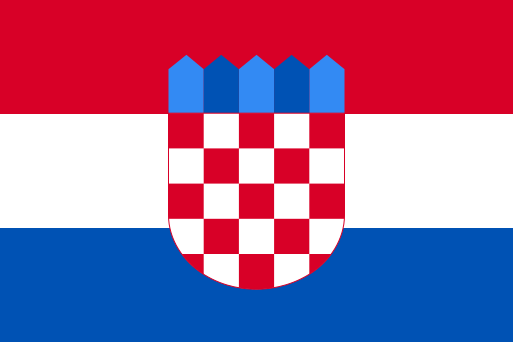
Photo by Bracodbk, CC BY-SA 3.0, via Wikimedia Commons
Overview
Croatia, officially the Republic of Croatia, is a country in Central and Southeastern Europe, on the coast of the Adriatic Sea. It borders Slovenia to the northwest, Hungary to the northeast, Serbia to the east, Bosnia and Herzegovina and Montenegro to the southeast, and shares a maritime border with Italy to the west. The Croatian archipelago contains over 1,000 islands and islets, the largest overseas territory on the Adriatic Sea. Its capital, largest city and main cultural and economic centre is Zagreb. Major urban centers include Split, Rijeka, and Osijek. The country is composed of twenty counties spanning 56,594 square kilometres within four administrative regions. Croatia has a population of nearly 3.9 million as of 2026.
Text from Wikipedia, licensed CC BY-SA.
Where to go in Croatia

Zagreb
Croatia
Dubrovnik
Croatia
Lokrum
Croatia
Vrboska
Croatia
Nin
Croatia
Brela
Croatia
Split
Croatia
Rastoke
Croatia
Primošten
Croatia
Novigrad
Croatia
Rijeka
Croatia
Skradin
Croatia
Zadar
Croatia
Grožnjan
Croatia
Mljet National Park
Croatia
Lastovo
Croatia
Pula
Croatia
Hvar
Croatia
Osijek
Croatia
Trakošćan Castle
Croatia
Hum
Croatia
Paklenica
Croatia
Makarska
Croatia
Karlovac
Croatia
Plitvice Lakes National Park
Croatia
Šibenik
Croatia
Trogir
Croatia
Dubrovnik-Neretva
Croatia
Bol
CroatiaMljet
Croatia
Poreč
Croatia
Brač
Croatia
Varaždin
Croatia
Cavtat
Croatia
Opatija
Croatia
Rab
Croatia
Rovinj
Croatia
Vis
Croatia
Krk
Croatia
Motovun
Croatia
Ston
Croatia
Omiš
Croatia
Samobor
Croatia
Lošinj
Croatia
Senj
Croatia
Hidden gems
Lesser-known places that travellers on Wikivoyage recommend beyond the main cities of Croatia: villages, national parks and quiet corners. The short descriptions come from those lists (CC BY-SA).

Krka National Park
16 places listed
Is a river valley near Šibenik.

Ugljan
16 places listed
The closest of the Zadar Archipelago islands to the mainland, and sometimes called the "Olive Island" for the centuries-old olive groves that cover its hills.

Korčula
15 places listed
Has an attractive old town and string of little villages.

Kornati National Park
7 places listed
The Kornati archipelago of Croatia, also known as the Stomorski islands, is located in the northern part of Dalmatia, south from Zadar and west from Šibenik, in the Šibenik-Knin County. With 35 kilometres length and 89 islands, some large, some small, in a sea area of about 320 square kilometres (124 sq mi), the Kornati are the densest archipelago in the Mediterranean Sea. From northwest to southeast, and from northeast to southwest they stretch for 13 km. The name of the archipelago is the plural form of the name of the largest island, called Kornat.

Murter
7 places listed
Murter is an island in the Croatian part of the Adriatic Sea.

Dugi Otok
5 places listed
Dugi Otok is part of Croatia and the seventh largest island in the Adriatic Sea. It is located off the Dalmatian coast, west of Zadar. It is the largest and westernmost of the Zadarian Islands, and derives its name from its distinctive shape: it is 44.5 km long by 4.8 km wide, with an area of 114 square kilometres (44 sq mi). Its elevation reaches 300 m; and many of its higher portions contain stands of Maritime Pine.

Telašćica Nature Park
5 places listed
Telašćica is a bay in the southeastern part of the island of Dugi Otok, Croatia, in the Adriatic Sea. It is a designated nature park, full of wildlife and marine creatures.

Vrsar
3 places listed
A popular summer destination with large campsites, private accommodation units and a modern marina

Cres
2 places listed
Large and well-developed. Nearby Krk is nowadays connected to the mainland.

Medulin
1 place listed
Famous for its camping sites and coastline.

Brijuni
No places listed yet
Two islands are accessible to the public and are part of a national park

Pašman
No places listed yet
Pašman is an Adriatic island off the coast of northern Dalmatia in Croatia with an area of 60.11 km2, located to the south of Zadar, surrounded by the islands of Ugljan to the northwest, Iž to the west, and Dugi Otok and Žut to the southwest. The island is inhabited by 2,845 people, according to the 2011 census.
Public holidays
National days off in Croatia in the next twelve months. Offices, banks and many shops close, and transport and stays get busier. Regional holidays and local festivals are not included, and holidays that follow the moon can move by a day.
- Christmas Day · Božić
- Boxing Day · Svetog Stjepana
- New Year's Day · Nova godina
- Epiphany · Bogojavljenje, Sveta tri kralja
- Easter Sunday · Uskrs
- Easter Monday · Uskršnji ponedjeljak
- Labour Day · Praznik rada
- Corpus Christi · Tijelovo
- National Day · Dan državnosti
- Anti-Fascist Struggle Day · Dan antifašističke borbe
- Victory and Homeland Thanksgiving Day and the Day of Croatian defenders · Dan pobjede i domovinske zahvalnosti i Dan hrvatskih branitelja
- Assumption · Velika Gospa
- All Saints' Day · Svi sveti
- Remembrance Day · Dan sjećanja na žrtve Domovinskog rata i Dan sjećanja na žrtvu Vukovara i Škabrnje
Dates from the date-holidays project, based largely on Wikipedia (CC BY-SA 3.0). Check locally before you plan around a holiday.
Travelling in Croatia
Getting around the country
By plane. National airline company Croatia Airlines connects major cities in Croatia to each other and foreign destinations. Due to the comparatively short distances and relatively high hassle of air travel–especially when you travel with luggage – domestic air travel is used mostly for getting to end points – e.g., Zagreb to Dubrovnik (see map) and vice-versa. Another popular flight (available in the summer months only) is between Split and Osijek, saving a long trip back through Croatia, or alternatively through the middle of Bosnia.
By train. Train travel is definitely improving in Croatia, with money being spent on updating the aging infrastructure and vehicles. Trains are clean and mostly on time. Croatia's rail network connects all major Croatian cities, except Dubrovnik. If you want to visit Dubrovnik, you will have to travel by train to Split, and then go on the bus for Dubrovnik. Trains to Pula are actually connected via Slovenia due to historical accident, though there are designated connecting buses from Rijeka. Rail is still the cheapest connection between inland and coast, though not the most frequent. 160 km/h "tilting trains" that connect Zagreb with Split and other major cities in Croatia such as Rijeka and Osijek provide more comfort and fast journeys between cities (Zagreb-Split is 5.5 hr, Osijek is 3 hr, when other trains take around 4.5 hr). If you make a reservation early enough you can get a substantial discount, or if you are a holder of an ISIC card.
Money and costs
Money. Prices are around 10% to 20% lower than most other EU countries. Tourist destinations and articles are much more expensive. Value added tax (PDV) is 25% with reduced rates for certain items, as of 2024. Credit/debit cards are virtually everywhere accepted but there is no American Express acceptance in Croatia.
Kuna. Croatia's former currency, the kuna, denoted by the symbol "kn" (ISO code: HRK) was retired on 1 January 2023. Any amount of kuna you have left can be converted to euros for a fixed rate of 7.53450 kuna per euro. Exchanging them at banks is however not free of charge; Croatia's national central bank will exchange kuna banknotes free of charge until further notice, and coins until December 2025. Most shops have their price quoted in both euro and kuna for familiarization purposes, but it is not required, and it is no longer possible to pay using the latter.
ATMs. ATMs (in Croatian bankomat) are readily available throughout Croatia. They will accept various European bank cards, credit cards (Diners Club, Eurocard/MasterCard, Visa, American Express, etc.) and debit cards (Cirrus, Maestro, Visa electron, etc.) Read the labels and notices on the machine before using. Check charges before completing transaction - It is advisable to use a bank ATM and not Euronet or similar due to high fees.
Tipping. Discrete service charges are not included in the bill, so voluntary tipping is customary.
Language
The main language is Croatian, a Slavic language similar to Serbian and Bosnian, all of which were called Serbo-Croatian until the breakup of Yugoslavia. Most younger Croats who grew up after the fall of Yugoslavia can speak English proficiently (especially in urban areas), but German and Italian are also very popular (largely because of historical reasons). People who grew up in Yugoslavia rarely speak English, although they may be able to converse in German or Italian. Some people might also speak French or Russian. Many older people can speak Russian as it was taught as one of the foreign languages in some schools during the socialist era, but this has been almost completely supplanted by English after the Cold War.
Customs and manners
Croatia gained independence from Yugoslavia in 1991, and the 1990s were marked by ethnic conflict and the bloody and brutal war in Croatia is still a painful subject, but generally there should be no problem if you approach that topic with respect. Croatia has seen a heap of invaders through history; Greek, Roman, Ottoman, Austro-Hungarian, Yugoslav, etc. Proudly independent today, calling Croatia Yugoslavia or calling Croats Yugoslav, would almost be considered an insult. Also don’t call the Croatian language Serbo-Croatian, as you could easily come across a person sensitive about the issue. Locals tend to be way more forgiving overall with Western than with ex-USSR and especially ex-Yugoslav tourists. Due to its history as part of Yugoslavia, there is still some mistrust towards Serbia and also Russia. While individual Serbian and Russian visitors are unlikely to encounter any problems, try to avoid being overly enthusiastic about either country, as it can quickly arouse negative sentiments among locals. Extremely rarely cars with Serbian registration are vandalized (in Zagreb, the border regions and on the coast mostly), this incidents are primarily caused by drunk youth and are more "in the moment" than planned. Visitors should avoid describing Croatia as a Balkan country, as Croats prefer to think of their country as Mediterranean and Central European, and some will take offence at the word "Balkan".
Phones and internet
Telephone. Croatia uses the GSM 900/1800 system for mobile phones. There are three providers, Hrvatski Telekom (formerly T-Mobile; also operates the Bonbon prepaid brand), A1 (formerly Vipnet; also operates the Tomato prepaid brand) and Telemach. Over 98% of the country's area is covered, including most islands. Since 2006 UMTS (3G) is available as well, and as of 2013 also HSDPA and LTE. 5G has also been available since 2022 with A1, Telemach, and Hrvatski Telekom deploying 5G networks in the country. If you have an unlocked phone, you can buy a prepaid SIM card. There have been promotions in which SIM cards were given away for free with newspapers, and sometimes even literally handed out on the street. GSM phones bundled with Hrvatski Telekom or A1 prepaid SIM cards can be found in post offices, grocery stores and kiosks at varying prices. SIM cards do not need to be registered with an ID but some ISPs offer incentives to do so. An alternative to using a mobile phone is calling cards which can be found in postal offices and kiosks, there are two providers, Dencall and Hitme. You can buy cards from.
Staying safe
Croatia is extremely safe by international standards in most crime categories. In case of an emergency, dial 112 for fire brigade, police, ambulance or mountain rescue. Police can search anyone at any time in public spaces and while they should have a reason there is in reality no recourse against it. Everyone is required to carry an ID or passport. Corruption exists but is exceedingly rare compared to other countries in the region. Attempts to bribe police will get you arrested. It is not uncommon that older Police officers outside Zagreb, even in Rijeka, Pula & Split, do not speak any English. Generally it is not advisable to carry knives even though it is not illegal. With an explanation (fishing, food, camping....) and not intoxicated this is usually not a problem. During summer make sure you use sunscreen with adequate SPF to protect yourself from sunburn. There are no ozone holes over Croatia but it's fairly easy to burn in the sun. If this happens make sure you get out of the sun, drink plenty of fluids and rehydrate your skin. The locals will often advise covering the burnt spot with cold yogurt bought from the supermarket. Since the wars ended in 1995, landmines remain buried in Croatian soil. If you plan to hike consult locals before you go. The suspected areas are marked with mine warning signs. Although mines are still a problem for Croatia, it is highly unlikely you will spot any minefields in Croatia today.
From the Wikivoyage guide, written by travellers (CC BY-SA), shortened. For entry rules, visas, health and current safety, always check your government's official travel advice (linked above).