

Fiji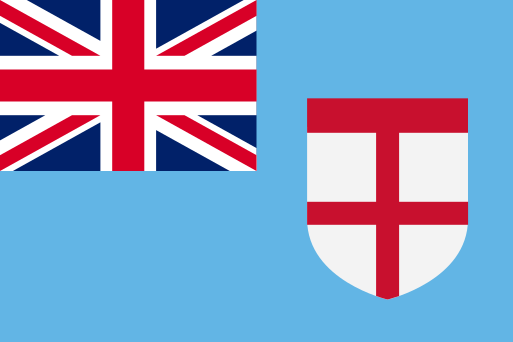
Photo by Виктор Пинчук, CC BY-SA 4.0, via Wikimedia Commons
Overview
Fiji, officially the Republic of Fiji, is an archipelagic country in Melanesia, part of Oceania in the South Pacific Ocean. It lies about 1,100 nautical miles north-northeast of New Zealand. Fiji consists of an archipelago of more than 330 islands—of which about 110 are permanently inhabited—and more than 500 islets, amounting to a total land area of about 18,300 square kilometres (7,100 sq mi). The most outlying island group is Ono-i-Lau. About 87% of the total population live on the two major islands, Viti Levu and Vanua Levu. About three-quarters of Fijians live on Viti Levu's coasts, either in the capital city of Suva, or in smaller urban centres such as Nadi or Lautoka. The interior of Viti Levu is sparsely inhabited because of its terrain.
Text from Wikipedia, licensed CC BY-SA.
Where to go in Fiji


Hidden gems
Lesser-known places that travellers on Wikivoyage recommend beyond the main cities of Fiji: villages, national parks and quiet corners. The short descriptions come from those lists (CC BY-SA).

Ovalau
9 places listed
Sixth largest island, part of the Lomaiviti group

Coral Coast
6 places listed
Coral Coast is the stretch of coastline between Sigatoka and Suva, on the island of Viti Levu, in Fiji.

Nananu-i-Ra
No places listed yet
Off the northern coast of Viti Levu

Nausori Highlands
No places listed yet
The Nausori Highlands are located in the interior of Fiji's main island Viti Levu. One of the most picturesque villages is Navala, although there are many other small villages too. The Nausori Highlands are a great place to learn about Fijian culture. The dryzone mountain rainforest contributes to its national significance as outlined in Fiji's Biodiversity Strategy and Action Plan.
Public holidays
National days off in Fiji in the next twelve months. Offices, banks and many shops close, and transport and stays get busier. Regional holidays and local festivals are not included, and holidays that follow the moon can move by a day.
- Christmas Day
- Boxing Day
- New Year's Day
- Good Friday
- Easter Saturday
- Easter Monday
- Birthday of Muhammad (Mawlid)
- Constitution Day
- Fiji Day
- Fiji Day (substitute day)
Dates from the date-holidays project, based largely on Wikipedia (CC BY-SA 3.0). Check locally before you plan around a holiday.
Travelling in Fiji
Getting around the country
Fiji has a variety of public transport options, including buses, share taxis, and private taxis. Rates are very cheap: $1-2 (Fiji dollars) from Colo-i-Suva to Suva bus station by bus, $17 from Nadi bus station to Suva by share-taxi (share-taxis are usually white mini-vans that congregate and set-off when they reach their capacity of 6-8), or approximately $80 from Suva airport to Sigatoka by private taxi. On the main road circling Viti Levu buses run every half hour and taxis are a substantial proportion of traffic, while on western Taveuni buses make only a few runs per day and very little traffic is present. If the taxi has a meter, ask the driver to switch it on - the ride will be lot cheaper than with the negotiated price. The rate from resorts on Nadi beach to Nadi downtown is $8 per passenger, and $12 to the airport -- you should be able to negotiate this price reasonably easily. While there is rarely much traffic, most vehicles run on diesel and pollution on major roadways can be severe. A national speed limit of 80 km/h is usually observed; village speed limits are all but entirely ignored, but drivers slow down for several speed humps distributed within each village. Seat belts are advised on taxis but are rarely evident and apparently never used. Road travel tends to be more dangerous than many people are used to, and many embassies advise their citizens to avoid pretty much any form of road travel. Pot holes, washouts and dilapidated bridges are commonplace.
Money and costs
Money. In Fiji the currency is the Fijian dollar, denoted by the symbol "F$" or "$" (ISO currency code: FJD). Wikivoyage articles will use $ to denote the currency. Bills include: $2, $5, $10, $20, $50 and $100. You may also encounter a $7 Fijian note, although you're better off keeping that rather than spending it as it is quite rare. Coins include: 5 cents, 10 cents, 20 cents, 50 cents, $1, and a $2 coin. In some areas, the Australian dollar is also accepted, but unlike some other Pacific Island countries, AUD is not the preferred method of payment.
Tipping. In Fiji, tipping is virtually non-existent. This includes no tipping to taxis, hotels, bellpersons, restaurants, etc. However, at most all-inclusive resorts and amongst the scuba diving operations, they have a "Christmas Box" where you can donate money that is shared equally amongst all the staff at Christmas time.
Concerns. Expect to pay prices similar to those of Australia in tourist regions. Be aware when going to local markets, often some of the stall holders family will be outside on the lookout for travellers, and will escort the travellers inside using the guise of "getting the best bargains". Once inside they, and their relatives who own the stall, can become quite aggressive if the traveller does not buy their products. Be firm, tell them that you will report them to the authorities if they do not leave you alone. They will quickly change their tone and back down.
Language
Fiji has three official languages, namely English, Fijian and Hindi. Fijian is the first language of the native Melanesian population, while a local variant of Hindi is mainly spoken by those of Indian descent. English is the lingua franca and medium of instruction in Fijian schools, and is widely spoken across Fiji. Residents of some remote islands may not be fluent in English, so learning some Fijian phrases will come in handy when travelling to those areas. Even in major cities, it is always polite to greet people with bula (meaning "hello" or "life" in Fijian) as it shows appreciation of the local culture.
Customs and manners
Religion. Fiji, like many Pacific Island states, has a strong Christian moral society; having been colonised and converted to Protestantism by missionaries during the 19th century. Do not be surprised if shops and other businesses are closed on Sunday. The Sabbath starts at 6PM the day before, and some businesses celebrate the Sabbath on a Saturday instead of a Sunday. Many Indians are Hindu or Muslim.
Dress. Dress modestly and appropriately. While Fiji is a tropical country, beach-wear should be confined to the beach. Take your cues from the locals as to what they consider appropriate dress for the occasion. When visiting towns and villages, you should be sure to cover your shoulders and wear shorts or sulus (sarongs) that cover your knees (both genders). This is especially true for visiting a church, although locals will often lend you a sulu for a church visit. There is no nudist/naturist or topless bathing in Fiji.
Phones and internet
There are two mobile phone companies operating on the island (Vodafone, Digicel) as well as an MVNO (Inkk) which resells Vodafone's network. Tourists are invited to use prepaid sim chips which can be found free or cheap in the mobile operator kiosks in the Nadi airport. You can top-up the balance online with a credit card, or by visiting a retail store that advertises top ups. The phone number is required to top up and is provided when signing up for the sim chip so please make a note of it. Buying a SIM chip gives access to cheap data packages for easy internet access using your phone as a hot-spot. It is generally cheaper than resort Wi-Fi, and speed is reasonable with the connections in the tourist areas (1-8Mbps with an objective 2.5Mbps average based on use in Nadi). You can request a data-only sim to get access to cheaper data packages. Some plans offer free social media data. Be sure to ask the sales agent about promotions. Both networks use 900Mhz for GSM and a mix of 800/1800/2100Mhz for 3G/4G. Vodafone offers a battery powered portable wifi device for $59 branded as "Pocket WiFi".
Staying safe
Crime. Most crime takes place in the outer suburbs of Suva and Nadi, away from the resort areas. The best advice is to stick to hotel grounds after dark, and to use extreme caution in Suva, Nadi and other urbanised areas after nightfall. Travellers have been victims of violent crime, particularly in Suva. Travellers have reported the regularity of petty robberies, muggings, and also home-invasions/rape, etc. You will notice the predominance of bars on most peoples' homes. Economic and ethnic strife has led to a low-level hum of violent crime. Some resorts and hotels have more extensive security measures than others which should be taken into account. Muggings are often carried out by large groups of men so being in a group won't necessarily be a deterrent. Police forces sometimes have difficulties responding to crime, potentially for reasons as mundane as being unable to pay for petrol. Fijian culture encourages sharing and sometimes small things like shoes will be "borrowed". Often by speaking with the village chief it can be arranged to get things returned.
Political unrest. Fiji has been subject to occasional political unrest and upheaval, including five coups d'état since 1987, with the most recent occurring in 2009. These upheavals have damaged the Fijian economy, including its tourism sector, and have led to relative international isolation.
LGBT travellers. Although Fiji is a religious country, Fijians are generally quite tolerant of LGBT people.
From the Wikivoyage guide, written by travellers (CC BY-SA), shortened. For entry rules, visas, health and current safety, always check your government's official travel advice (linked above).