

Greece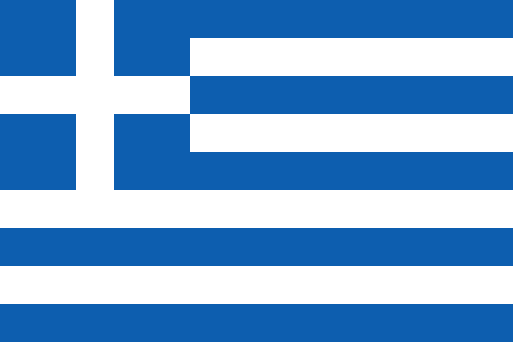
Photo by George E. Koronaios, CC BY-SA 4.0, via Wikimedia Commons
Overview
Greece, officially the Hellenic Republic, is a country located mostly on the Balkan peninsula of Southeastern Europe, with thousands of islands extending geographically to Asia Minor. It has a population of around 10 million. With nine regions and up to 227 inhabited islands, it has the longest coastline on the Mediterranean. The Ionian Sea is west of the mainland, Albania northwest, and North Macedonia and Bulgaria north. Turkey is east both by land and the Aegean Sea. The capital, Athens, is the largest Greek city, followed by Thessaloniki and Patras.
Text from Wikipedia, licensed CC BY-SA.
Where to go in Greece

Athens
Greece
Kavala
Greece
Santorini
Greece
Mykonos
Greece
Thessaloniki
Greece
Volos
Greece
Zakynthos
Greece
Corfu
Greece
Oia
Greece
Naxos
Greece
Rhodes
Greece
Heraklion
Greece
Nafplio
Greece
Milos
Greece
Samothrace
Greece
Ioannina
Greece
Patras
Greece
Kos
Greece
Kefalonia
Greece
Kalambaka
Greece
Paros
Greece
Preveza
Greece
Chania
Greece
Piraeus
Greece
Delphi
Greece
Lefkada
Greece
Mystras
Greece
Hydra
Greece
Parga
Greece
Folegandros
Greece
Kastoria
Greece
Meteora
Greece
Olympia
Greece
Chersonissos
Greece
Monemvasia
Greece
Ithaca
Greece
Mount Athos
Greece
Symi
Greece
Hidden gems
Lesser-known places that travellers on Wikivoyage recommend beyond the main cities of Greece: villages, national parks and quiet corners. The short descriptions come from those lists (CC BY-SA).

Thasos
51 places listed
The most beautiful island in Northern Greece

Pangaion Hills
39 places listed
Mountainous area with picturesque mountain villages, a multitude of old famous monasteries and impressive vegetation

Nestos
26 places listed
Unique landscape and wild life

Philippi
19 places listed
This is the most important archaeological site in northern Greece, and it is a World Heritage Site. This is particularly because of the Apostle Paul, who founded the first church here and performed the first baptism on European soil. The extensive complex is situated in beautiful countryside. Ancient plays are performed in the theatre every summer.

Maroneia
17 places listed
One of the wealthiest cities of Ancient Greece,

Olympos National Park
17 places listed
The highest mountain of Greece, major trekking destination

Loutra Ypatis
16 places listed
The village is famous for its hot springs and boasts several hotels.

Aridea
11 places listed
A rural village between the Pozar thermal baths (5 km) and the Voras ski resort (40 km).

Lasithi Plateau
11 places listed
A large fertile plateau in the centre of Lassithi Prefecture at an altitude of 840 meters (2,760 ft). Once, as many as 10,000 white-sailed windmills operated on the plateau, but these have largely been replaced by diesel and electric irrigation pumps. Numerous old stone windmills (some ruins, some beautifully restored) still stand along the passes above the plateau.

Vergina
11 places listed
The ancient Aigai, the first capital of Macedonia and the place where Alexander the Great was proclaimed king, short after Philip's assassination in 336 BC.

Chalkidiki
9 places listed
No.1 tourist destination in Northern Grecce

Galatas
9 places listed
Seat of the municipality of Troizinia-Methana.

Agria
8 places listed
Small town on Pelion.

Pella
7 places listed
Ancient Pella was the birthplace of Alexander the Great. The modern municipality Pella includes the large town Giannitsa.

Zagori
7 places listed
Impressive landscape with high mountains, dense barely inhabited forests and impressive gorges and the wild beauty of the Zagoria mountain villages

Mount Pelion
6 places listed
A mountainous peninsula with trails, beaches and 24 villages built with traditional Pelian architecture

Agia Roumeli
5 places listed
A breathtaking gorge on the southern part of Chania Prefecture open for the 5- to 7-hour moderately strenuous hike from 1 May until mid-October.

Palaio Faliro
5 places listed
A seaside area redeveloped for the 2004 Summer Olympics.

Plastira Lake
3 places listed
A reservoir that is a popular tourist resort in Greece, as the formed landscape is unique
Vistonida
14 places listed
Lake and site of Anastasiopolis a Byzantine archaeological site
Vari-Voula-Vouliagmeni
8 places listed
Municipality which is part of Athens' urban area.
Public holidays
National days off in Greece in the next twelve months. Offices, banks and many shops close, and transport and stays get busier. Regional holidays and local festivals are not included, and holidays that follow the moon can move by a day.
- Christmas Day · Χριστούγεννα
- Boxing Day · Δεύτερη μέρα των Χριστουγέννων
- New Year's Day · Πρωτοχρονιά
- Epiphany · Θεοφάνεια
- Ash Sunday · Καθαρά Δευτέρα
- Annunciation, Anniversary of 1821 Revolution · Ευαγγελισμός, Εθνική Εορτή
- Good Friday · Μεγάλη Παρασκευή
- Labour Day · Εργατική Πρωτομαγιά
- Easter Sunday · Πάσχα
- Easter Monday · Δευτέρα του Πάσχα
- Pentecost · Πεντηκοστή
- Whit Monday · Αγίου Πνεύματος
- Assumption · Κοίμηση της Θεοτόκου
- National Holiday · Επέτειος του Όχι
Dates from the date-holidays project, based largely on Wikipedia (CC BY-SA 3.0). Check locally before you plan around a holiday.
Travelling in Greece
Getting around the country
A frequently asked question of travellers in Greece is whether they should rent a car. The primary advantage of having a car is that you can cover a lot more ground per day if you're travelling in rural areas or on the larger islands: you can get almost anywhere in Greece by bus, but some isolated villages may only have one or two buses per day, and having your own car means you don't have to wait in the summer heat for the bus to come. Almost all archaeological sites are accessible by bus, but at some of the more remote, less famous, sites, the bus may drop you off up to a mile away from the site, while with a car you can almost always get right to the site via at least a rough road. On the other hand, going car-free in Greece is not only possible, but offers significant advantages, while driving involves a number of disadvantages. Though many people find driving in Greece easy and even pleasant, others are concerned by the high accident rate (one of the highest in Europe), the national reputation for risky driving, and the presence of many twisty mountainous roads, sometimes hugging the side of a cliff. Gas is as expensive as anywhere. (For more on driving conditions in Greece see below.) Driving in Athens and other big cities can be a frustrating, and sometimes hair-raising, experience, and finding parking can be very difficult.
By bus. Intercity buses are a very popular option for domestic travel.
Money and costs
Money. The euro replaced the drachma in January 2002. In the Greek language, however, its name is pronounced something like EFF-ro. Euro cents are called sent in Cyprus but not in Greece, where they are called lepta (singular lepto).
ATMs. ATMs are present almost everywhere, with MasterCard/Cirrus and Visa/Plus being the most widely accepted cards. Many ATM machines may not accept 5-digit pin numbers; ATM card-users with 5-digit pins are advised to change their pin to 4 digits before leaving home. ATMs usually charge €2.50–3 in addition to what your bank demands. This is added to the withdrawn amount and invoiced to your bank, but not dispensed. Thus, the larger the amount withdrawn, the less the fee percentage-wise.
Cards. You may get better exchange rates by using credit cards or debit cards directly, instead of exchanging cash. MasterCard, Visa, Maestro and Eurocard are widely accepted across the country in retail stores, hotels, and travel/transportation agencies (including ferry, airline, and car rental agencies), but are not accepted in some restaurants. Local souvenir shops usually require a minimum purchase before allowing you to use your card and may not accept it for special sales or deeply discounted items.
Money exchange. Common particularly in larger cities and in any touristed area. In addition to hard currency, they also accept traveller's cheques. There are also automated currency exchange machines in some areas of the country, particularly in Athens airport.
Language
Greek is the official national language and is the native tongue of the vast majority of the population, although the English speaking visitor will encounter no significant language problem. English is the most widely studied and understood foreign language in Greece, followed by French, Italian, and German. Basic knowledge of English can be expected from almost all in the tourism industry and public transport services. Learning a few Greek terms, such as "hello" and "thank you" will be warmly received. The Latin and Cyrillic alphabets were derived from the Greek alphabet and about half of Greek letters look like their Latin counterparts, and most Greek letters resemble their Cyrillic counterparts. With a bit of study it's not too hard to decipher written names.
Customs and manners
Greeks rate politeness with a person's behaviour and not their words. Furthermore, there is an air of informality; everybody is treated like a cousin. They use their hands to gesture a lot. Have fun with this. Sometimes over-emphasizing politeness in spoken language will only make the person dealing with you think you are pretentious. It's nice to learn basic words like "thank you" (Ευχαριστώ: ef-khah-rees-TOH) or "please" (Παρακαλώ: pah-rah-kah-LOH). Greeks generally consider it proper etiquette to let the stranger make the first move. You may find that on entering a cafe or passing a group on the street you feel that you're being ignored, but if you take the initiative by saying hello first, you're likely to find that people suddenly turn friendly. In the countryside it is not uncommon that total strangers will greet you, greet them back in kind. Greeks like to smalltalk, and when they get carried away smalltalking, they might even forget what they were doing to begin with, ending up drinking raki with you. Greeks are often incorrectly stereotyped as "lazy". In actuality, Greeks take leisure very seriously. Don't take perceived laziness or rudeness harshly. Keep in mind that Greeks have a strong work ethic. Dress codes for churches sometimes include covered shoulders for women and knees covered for both sexes, but generally they don't mind about your clothes as long as they are not very provocative.
Social etiquette and breaches. Respect for elders is very important in Greece.
Phones and internet
Mobile internet. There are no Internet roaming charges for EU citizens, so you can surf the Internet in Greece as normal with your local sim card. For Non-EU citizens, you can either buy a Greek sim card or use a virtual sim cards where you can buy the GB you want as credit at home and then surf the internet anywhere in Greece until the credit is used up. This is easier than buying a Greek sim card. There are at least three mobile carriers, Cosmote, Wind and Vodafone all of which require by law presenting some form of identification in order to activate your prepaid plan. Choose whichever has better reception in your area; GSM 900, GSM 1800 and UMTS 2100 bands are supported. Data usage is cheap. Ask the mobile carrier for more information. Mobile phone carriers support data roaming with 2G, 3G, 4G and LTE technologies.
Calling. The cheapest way to call someone abroad – and this is really cheap – is to use a pre-paid calling card and call from a land line anywhere (also from your hotel room). Pre-paid calling cards are sold in many shops and kiosks. The calling card is not much more than a phone number and a pin code, which you dial prior to dialling the usual phone number.
Staying safe
Crime and theft. Violent crime and theft rates are low; public disorder is rare, and public drunkenness is generally frowned upon. Visitors should rest assured that this is a safe and friendly destination, but it is always advisable for foreign tourists to exercise basic precautionary measures just as they would at home. There has been a spike in theft (or at least a perceived one), which some locals will not hesitate to blame on the influx of immigrants. The places where the visitor is most likely to encounter crime and theft are overcrowded and popular with tourists. This includes the metro in Athens and tourist resorts thronged with younger foreigners. The more notorious of such places include Faliraki in Rhodes (calmed down since a new tough mayor was elected), Kavos in Corfu, Malia on Crete, and Ios (though this last is said to have quieted down a bit.) Most visitors to these places return home safely, but there have been increasing reports from them of theft, public indecency, sexual assault, and alcohol-fueled violence; both the perpetrators and victims are usually young foreigners, though sometimes locals are involved. Authorities have stepped up the police presence in such areas to crack down on these activities. Still, visitors to these places would do well to avoid anything that looks like trouble, especially late at night, and to remember that their own overindulgence in alcohol increases their chance of attracting trouble themselves.
From the Wikivoyage guide, written by travellers (CC BY-SA), shortened. For entry rules, visas, health and current safety, always check your government's official travel advice (linked above).