

Honduras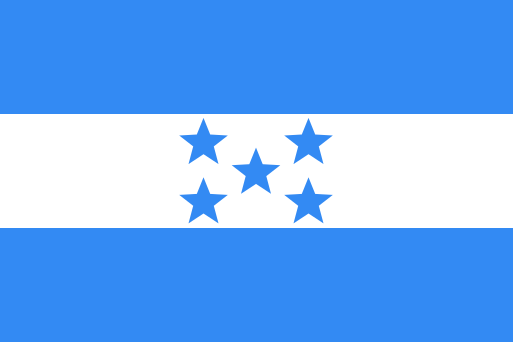
Photo by Adalberto Hernandez Vega from Copan Ruinas, Honduras, CC BY 2.0, via Wikimedia Commons
Overview
Honduras, officially the Republic of Honduras, is a country in Central America. It is bordered to the west by Guatemala, to the southwest by El Salvador, to the southeast by Nicaragua, to the south by the Pacific Ocean at the Gulf of Fonseca, and to the north by the Gulf of Honduras, a large inlet of the Caribbean Sea. Its capital and largest city is Tegucigalpa.
Text from Wikipedia, licensed CC BY-SA.
Where to go in Honduras


Hidden gems
Lesser-known places that travellers on Wikivoyage recommend beyond the main cities of Honduras: villages, national parks and quiet corners. The short descriptions come from those lists (CC BY-SA).

Bay Islands
24 places listed
Utila, Roatán, Guanaja, and the Hog Islands are a natural Caribbean paradise very popular for snorkeling and diving.

Río Plátano Biosphere Reserve
14 places listed
The largest tropical rainforest in Central America.

Isla del Tigre
8 places listed
A tranquil island just off the coast of Honduras provides a convenient stopover for those traveling between El Amatillo and Nicaragua.

Cerro Azul Meámbar National Park
1 place listed
Mountainous cloud forests and rain forests in the highlands near Lake Yojoa

Lake Yojoa
1 place listed
The biggest lake in Honduras which is famous for its fried fish. Nearby are two national parks that hold pristine rainforest and cloud forest as well as Honduras's first microbrewery.

Cusuco National Park
No places listed yet
One of Honduras' most exotic destinations, Leaving from San Pedro Sula by a 4x4 trail into the dense cloud forest.

Jeannette Kawas National Park
No places listed yet
Remote coastal park with pristine wetlands

Montaña de Comayagua National Park
No places listed yet
Densely forested mountainous terrain with three peaks within its boundaries

Montaña Santa Bárbara National Park
No places listed yet
Cloud forests on the sides of the second highest peak in Honduras, a remote area where visitors can find solitude

Ocotepeque
No places listed yet
Ocotepeque is a municipality in the Honduran department of Ocotepeque. The town of Nueva Ocotepeque is the municipal seat and the capital of the department. Ocotepeque means: Pine Mountain.

Pico Bonito National Park
No places listed yet
Pico Bonito National Park is a national park in Honduras. It was established on January 1, 1987 and covers an area of 564.30 km2 (217.88 sq mi). It has an altitude ranging between 60 and 2,480 meters.

Punta Izopo National Park
No places listed yet
Coastal wetland with beaches, mangrove swamps, tropical rainforests and rivers

Sierra de Agalta National Park
No places listed yet
Densely forested mountain range with a cloud forest, waterfalls, and caves
Cerro Azul de Copán National Park
No places listed yet
An environmentally vulnerable cloud forest reserve known for its hiking and mountaineering opportunities
Congolón, Piedra Parada and Coyocutena National Park
No places listed yet
Densely forested mountains including the Cerro Congolón, historically important as the site where Cacique Lempira, an indigenous leader, was killed by attacking Spanish conquistadors in 1537
Montaña de Yoro National Park
No places listed yet
Highland mountain park with a mysterious lagoon and miles of hiking trails
Patuca National Park
No places listed yet
Dense rainforest jungles along the Rio Patuca, Honduras's longest river
Pico Pijol National Park
No places listed yet
Pico Pijol National Park is a national park in Honduras. It was established on 1 January 1987 and covers an area of 122.1 square kilometres. It has an altitude of between 1,800 and 2,282 metres.
Public holidays
National days off in Honduras in the next twelve months. Offices, banks and many shops close, and transport and stays get busier. Regional holidays and local festivals are not included, and holidays that follow the moon can move by a day.
- Christmas Day · Navidad
- New Year's Day · Año Nuevo
- Maundy Thursday · Jueves Santo
- Good Friday · Viernes Santo
- Día de las Américas
- Labour Day · Día del Trabajador
- Independence Day · Día de la Independencia
- Soldier's Day · Día del Soldado
- Columbus Day · Día de la Raza
- Armed forces Day · Día de las Fuerzas Armadas
Dates from the date-holidays project, based largely on Wikipedia (CC BY-SA 3.0). Check locally before you plan around a holiday.
Travelling in Honduras
Getting around the country
By train. Railroads in Honduras have been built in the northern lowlands (Valle de Sula) since the 1880s by two competing banana growers. They never extended to the capital Tegucigalpa or to the Pacific coast and never linked to other countries. There are three segments operated under the management of Ferrocarril Nacional de Honduras (FNH): San Pedro Sula - Barracoa: occasional passenger trains around San Pedro Sula, for example during carneval and other holidays. City rail in La Ceiba (3 km, passenger transport between downtown and a western suburb, Col. Sitramacsa) Line between La Unión and Salado Barra in Atlantida. This is a funky train that you use to enter Cuero y Salado Wildlife Refuge. Parque Nacional Cuero y Salado.
By car. Small roads are often in poor condition and can be dangerous to drive on. During the rainy season, the condition of roads deteriorates considerably. It is best to avoid driving at night. Driving on rural roads can be risky at all times; carjackings and violent attacks are possible. When driving, doors should be kept locked and windows closed. If one party to a road accident is seriously injured, the police have the right to arrest the other party, regardless of whether or not they caused the accident. In such situations, it is a good idea to take down the details of the other party. In the event of an accident, always wait for the police to arrive before moving vehicles.
By boat. There is regular boat service from La Ceiba to the bay islands of Roatan and Utila.
Money and costs
Money. The national currency of Honduras is the lempira (L) (ISO code HNL), but, like almost everywhere in Central America, the U.S. dollar acts as a second currency and nearly every business accepts both. The U.S. dollar is the main currency on the Bay Islands because of the frequency of cruises and the many American visitors. It is wise to carry small bills (under US$20). Bills with tears or defects such as writing or stamping on them will likely not be accepted. Coins of Honduras are issued in denominations of 5, 10, 20 and 50 centavos. Banknotes of Honduras are issued in denominations of 1, 2, 5, 10, 20, 50, 100, 200 and 500 lempiras. ATMs can be found in most cities. Some ATMs dispense both U.S. dollars and lempiras and nearly all can be used in English. Be sure to bring cash to the Bay Islands because they do not have very many ATMs. Nearly all banks exchange money just make sure to bring your passport for identification purposes. Lempiras can be hard to exchange outside of Honduras, so be prepared to exchange all Lempira before leaving the country. The exchange rates by the numerous money changers walking around at the border are not competitive with banks, but are usually only 5-10% below value.
Malls. There is always plenty to do while vacationing in Honduras. In San Pedro Sula, things that revolve around shopping include visiting the City Mall and Metroplaza Mall. Also, in the capital, Tegucigalpa, there are several modern shopping centers.
Language
Spanish is the primary language spoken. English is hardly spoken outside of the biggest towns or Bay Islands. In some areas such as Utila, Spanish and English have hybridized in the context of low educational attainment to produce a pidgin tongue that can at times be indecipherable even to native speakers of both languages. Native languages (Lenca, Miskitu, Garifuna, among others) are spoken in various parts of the country, but a Spanish speaker should never be hard to find. Keep an eye out for "missionary speakers," that is, English or Spanish speaking Hondurans who retain the strong linguistic accents of the nations of their childhood teachers despite no personal links to such countries themselves (e.g. Irish-English overtones are prominent in Utila).
Customs and manners
Despite violence and widespread poverty, Honduran citizens are friendly people who appreciate a respectful manner and are welcoming to tourists. As with any other country, use caution when choosing what groups to approach and spend time with, as you will most likely not know the local customs of the area, but most of the time Hondurans will be friendly and more than happy to help you. Also, there are several aid organizations and missions in Honduras. If one happens to run into aid workers during their travels it is good to be respectful of their work even if one does not agree with that group's message. Respect should always be demonstrated in Honduras to the poor, as there is a high poverty rate. Also, in many areas of Honduras women are treated with less respect, so as a tourist it is important to demonstrate equal respect to both men and women to show that you are friendly and do not intend to insult any group but simply enjoy the culture.
Phones and internet
The country code for Honduras is +504.
Mobile (3G/GPRS) internet access. If you have an internet capable mobile phone, you just need a local SIM card (roughly L25) and can start enjoying the prepaid access plans, which generally come in lots of an hour, a day, or a week and have a specific maximum usage. Here is a table for the settings and activation options for various providers, including approximate costs. {| class="wikitable" |+ Honduras prepaid internet mobile providers! Provider!! Configuration details!! Activation instructions!! Costs |-! TIGO | APN: internet.tigo.hn | Send Sms to 0101 text:DIA (day), SEMANA (week) or MES (Month) | Day-L40, Week-L200, Month-L500 |-! Claro | APN: web.megatel.hn | send sms to 5050 text: "MOVIL 15" for 15 days, 800mb | L100 |-! Digicel | | | |}
Staying safe
Use common sense at all times and be aware of your surroundings. Foreigners are sometimes robbed on the streets of Tegucigalpa and San Pedro Sula at night by thieves who stake out areas in front of tourist hotels, and even in daylight if one happens to be in the wrong part of the city. When taking a taxi in Tegucigalpa check for radio dispatched walkie talkies as people have been robbed at gun or knife point. Violent crime is common enough in San Pedro Sula with robberies and even gang violence. San Pedro Sula, in fact, has the highest murder rate of any city in Honduras, though mainly among rival gangs seeking to control the various illicit trades. Violent crime and robbery is also very common in Tegucigalpa, the capital city, as well as other smaller towns throughout Honduras. Honduras has one of the highest per capita homicide rates in the world, with 42 homicides for every 100,000 inhabitants in 2017. Murder is a common day to day issue in all of Honduras, especially for LGBT people, a problem which has put increased strain on private aid organizations and missions in the country, and has even forced the U.S. Peace Corps to withdraw all personnel due to safety reasons. While the murder rate has fallen from its 2012 peak, crime rates remain high. The U.S. Department of State advises travelers to reconsider travel to the country due to crime, and not travel to Gracias a Dios Department due to crime (Dec 2019).
From the Wikivoyage guide, written by travellers (CC BY-SA), shortened. For entry rules, visas, health and current safety, always check your government's official travel advice (linked above).