

Lesotho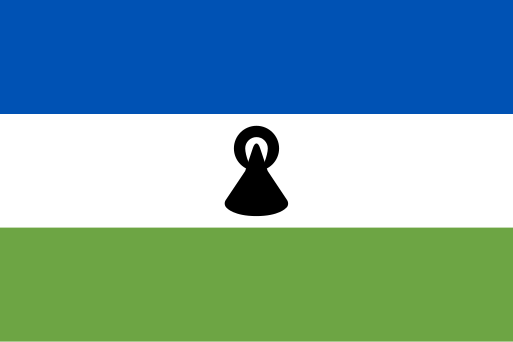
Photo by Lschefa, CC BY-SA 4.0, via Wikimedia Commons
Overview
Lesotho, officially the Kingdom of Lesotho, is a landlocked country in Southern Africa. Surrounded by South Africa, it is the largest of the three sovereign enclaves. Lesotho is located in the Maloti Mountains, with the highest peak in southern Africa. It has an area of over 30,000 km2 (11,600 mi2), with a population of about 2.3 million. Its capital and largest city is Maseru.
Text from Wikipedia, licensed CC BY-SA.
Where to go in Lesotho


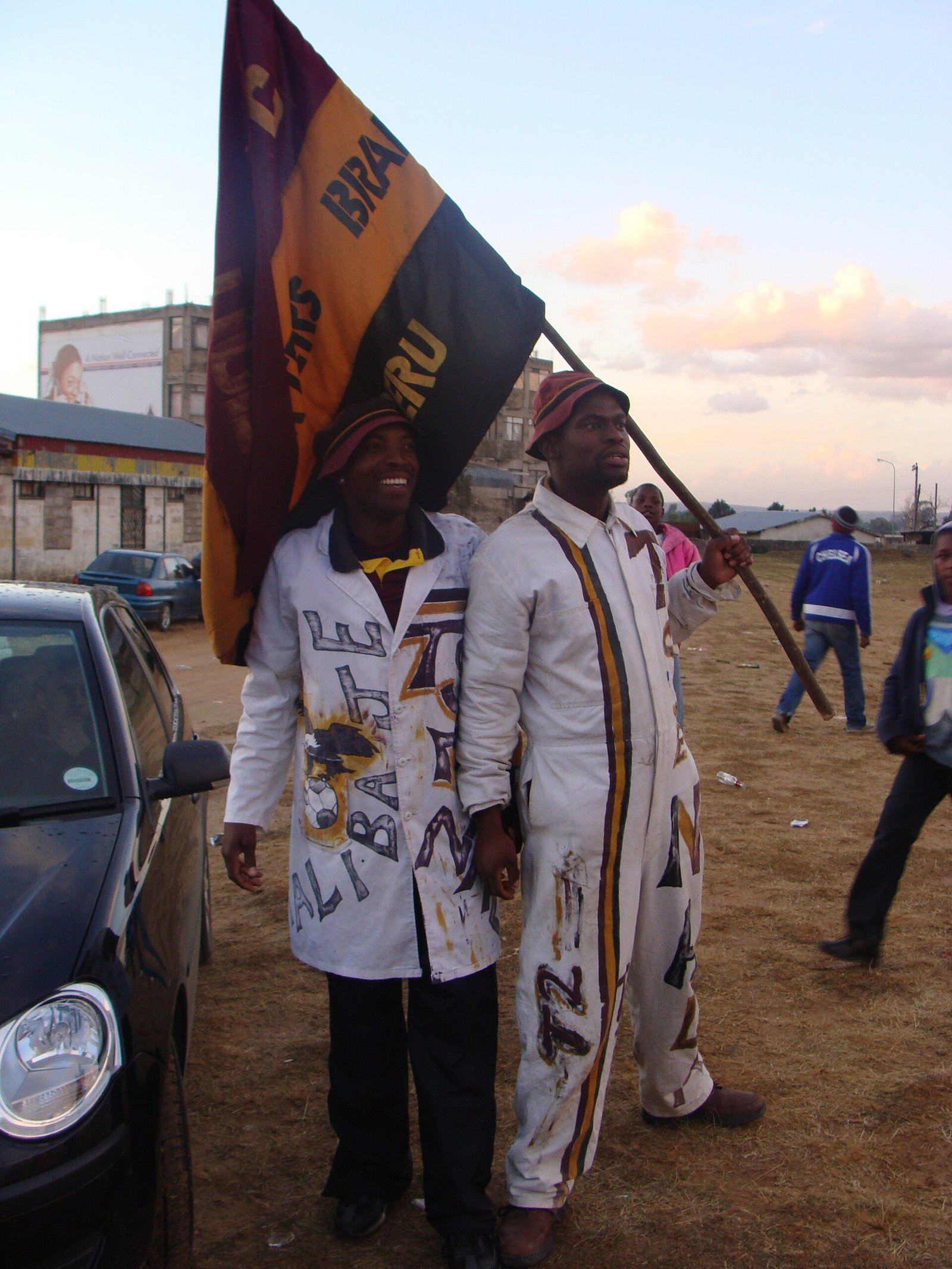
Hidden gems
Lesser-known places that travellers on Wikivoyage recommend beyond the main cities of Lesotho: villages, national parks and quiet corners. The short descriptions come from those lists (CC BY-SA).

Mafeteng
6 places listed
Mafeteng is a city in Lesotho, and the Camptown of the district of Mafeteng. It is located about 76 kilometres south of the country's capital, Maseru and has a population of approximately 61,000. The South African border town to Mafeteng is Wepener.

Maloti Drakensberg Park
5 places listed
The Maloti-Drakensberg Park is a World Heritage Site, established on 11 June 2001 by linking the Sehlabathebe National Park in the Kingdom of Lesotho and the uKhahlamba Drakensberg Park in KwaZulu-Natal, South Africa. The highest peak is Thaba Ntlenyana rising to 3,482 metres.

Morija
2 places listed
Museum, dinosaur footprints

Oxbow
2 places listed
Ski and mountain resort for skiing in winter (June - September) and mountain adventure sport in summer (October - April). One of the few places in Africa to go skiing.

Ts'ehlanyane National Park
2 places listed
Sub-alpine national park at the foot of the Holomo Pass. Home to one of the few remaining Che-Che (old wood) forests, with hiking trails and pristine rock pools and rivers

Thaba Bosiu
1 place listed
The mountain stronghold where King Moeshoeshoe the Great established the Kingdom of Lesotho

Sehlabathebe National Park
No places listed yet
Remote mountain reserve great for hiking with rare wildlife, impressive waterfalls, and ancient rock paintings and stone shelters
Khatse
1 place listed
Pony-trekking and the impressive Katse Dam
Semonkong
1 place listed
Maletsunyane Falls, one of the highest single drop waterfalls in the world
Public holidays
National days off in Lesotho in the next twelve months. Offices, banks and many shops close, and transport and stays get busier. Regional holidays and local festivals are not included, and holidays that follow the moon can move by a day.
- Christmas Day
- Boxing Day
- New Year's Day
- Moshoeshoe Day
- Good Friday
- Easter Monday
- Workers' Day
- Ascension Day
- Africa Day/ Heroes' Day
- King Letsie III's Birthday
- Independence Day
Dates from the date-holidays project, based largely on Wikipedia (CC BY-SA 3.0). Check locally before you plan around a holiday.
Travelling in Lesotho
Getting around the country
By regular taxi. Regular taxis (you phone, they pick you up) and 4+1s have a yellow stripe down the side and squeeze in 4 passengers. Always check the cost of a taxi before you get in.
By minibus taxi. As with most of Africa the minibus 'taxi' (aka combi or Toyota Hiace) is the transport of the people. Ensure you are clear on where the minibus is going (there should be a sign in the front windscreen), you'll be asked for money after a minute or two, with money then passed down the minibus. Try to get the front seat by the driver for more leg room. Prices are fixed by the government. There is a risk of overcharging foreigners so ask the other passengers if you’re unsure of the price. Be warned, Minibus taxis are so cheap because they squeeze in so many people. Don't be surprised to see children sitting on laps four or five high, or to be told to have large amounts of luggage on your lap or wedged in around you. The Minibus taxis tend to be poorly maintained and are not insured. However, very few accidents involving taxis occur. Intercity travel by taxi will cost no more than M50 (maloti) for a single way ticket, and inner city minibus taxi rides will cost you around M2.50 (4+1s will cost you M20 for the whole car, no matter how many are with you, provided it's within a city.) Always check the cost of a taxi before you get in.
Finding a taxi. Upon arrival in one of the main towns, you will notice that all the minibuses are hooting their horns, which is to signal that they have space for more passengers.
Money and costs
Money. Lesotho's currency is the loti (plural maloti), denoted by the symbol "L" (for one loti) "M" (for more than one loti) (ISO code: LSL). It is fixed at a 1:1 ratio with the South African rand (ZAR), as are the Namibian dollar, the Swazi emalilangeni and the Botswana pula. South African currency is accepted everywhere and so there is no need to change money. However you will get maloti in change (unless you ask), which is very difficult to unload in South Africa and pretty well impossible elsewhere. Coins of Lesotho come in denominations of 10, 20 and 50 lisente, 1, 2 and 5 maloti. Banknotes of Lesotho are issued in denominations of 10, 20, 50, 100 and 200 maloti. There are ATMs at banks in most towns, although you will not find them elsewhere. Most banks will change travellers cheques for you, but it can be a very, very lengthy process if they are in any other currency apart from South African rand.
Shopping. There are several Western-style supermarkets in Maseru, which are good for stocking up on supplies in before heading elsewhere in the country. If you're after locally made goods and crafts, your best bet is to give Maseru a miss, and head to Teyateyaneng (TY) or Hlotse, where the markets are far better and cheaper. You can buy traditional Basotho hats (Mokorotlo), sticks (molamo), rugs and various other curiosities. In particular, the Basotho blanket is a hallmark of Basotho culture.
Language
The official languages are Sesotho and English. Most people in the larger towns or tourist attractions speak English to a reasonable standard and a few words of Afrikaans; however, outside these areas, these languages will not be understood.
Customs and manners
Try to learn a few Sesotho words before travelling to Lesotho. The locals appreciate a foreigner who has made the effort to learn their language. Always refer to an elder person, or a person of higher social standing as "Ntate" (male) or " 'Me " (female). Dumela (pronounced due-mela) is hello. So you would say Dumela Ntate or Dumela 'Me. Kea leboha (sounds like kia-lebh-oha) — thank you U phela joang (O-phela-joang) — how are you Respond with either hantle (well) or Ke phela hantle (I am well) Sala hantle (as it is written) is "stay well" if they are staying and you are going. Equivalent to goodbye. Tsamaea hantle is "go well" if they are going and you are staying Always respond to people: It is very offensive to ignore someone who greets you. As a foreigner, locals will be keen to say hello and ask you what you're up to in their country. Never get angry at anyone; in the Basotho culture, people never show frustration towards others, and if you do, then you can easily offend someone. You will almost certainly get frustrated when dealing with Lesotho officialdom, always keep your cool no matter how much buffoonery you are subjected to. To show respect when giving and receiving items, use both hands. Also show a respect for food: don't throw it around, or eat whilst walking. Overall, Basotho people are humble and down to earth.
Phones and internet
In Maseru, there are several internet cafes, although fairly cheap (usually LSL0.20-0.50 per min) they are pretty slow at best. The mobile phone network is OK in the towns, but fair out in the countryside. The only British mobile phone network that has a roaming agreement is Vodafone. There are two mobile operators in Lesotho, Vodacom and Econet Telecom Lesoth. Vodacom has the widest coverage outside the towns, but is the (more) oversubscribed, and hence the less reliable. You can buy a Vodacom or Ezicel Buddie pay as you go sim card for under M50 in Maseru: worthwhile if you are staying for a while. Mobile phones are available for hire in Maseru. Lesotho uses GSM900. The networks are good, and both have 4G options. If you have a South African Vodacom SIM Card, you can use it in Lesotho only on the Vodacom network. Be sure to enable roaming.
Staying safe
It is risky to walk in Maseru alone at night. During the day, at least the main roads of Maseru are safe to walk alone. As with pretty much everywhere else in the world, you may find friendly chats with locals turn in to veiled requests for money — stick to your principles and only give to registered charities. At night time, it is the norm to drive through red lights. This is more just to hasten your journey (the police won't care), and a precaution against carjackings.
From the Wikivoyage guide, written by travellers (CC BY-SA), shortened. For entry rules, visas, health and current safety, always check your government's official travel advice (linked above).