

Nauru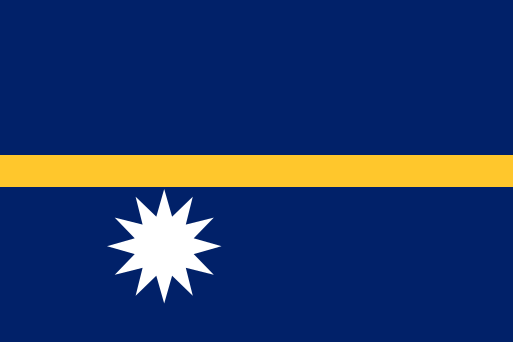
Photo by d-online, CC BY-SA 2.0, via Wikimedia Commons
Overview
Nauru, officially the Republic of Naoero, is an island country and microstate in the South Pacific Ocean. It lies within the Micronesia subregion of Oceania, with its nearest neighbour being Banaba about 300 kilometres (190 mi) to the east. Yaren is its de facto capital.
Text from Wikipedia, licensed CC BY-SA.
Where to go in Nauru
Travelling in Nauru
Getting around the country
Every year, there are on average 200 tourists in Nauru, so it has the honour of being the least touristed country in the world. Crowds aren't a problem at all. There's hardly any public transportation, so your best bet to get around would be in a rented vehicle; car, scooter or bike. Other alternatives are by foot (not very pleasant in the tropical heat and humidity) or hitchhiking, which is quite common on the island.
By public transport. There is a community or island bus which travels around the island every hour or so during the day. It costs 50 cents per trip around the island. Also, locals sometimes cling to the cars of the goods train between Aiwo and the inland mining area.
By car. Nauru is so small that it takes less than one hour to drive right around it. The 19-km Island Ring Road circles the island and is paved — however this is not the case for most of the inland roads. The airport taxiway cuts across three of the twenty kilometres of road. The only traffic lights on the island are used to stop the traffic and allow the plane to cross the road to the terminal! This is a favourite souvenir snapshot taken by visitors. Traffic drives on the left, and drivers should be on increased lookout for animals and pedestrians while driving on the beltway. Cars or bicycles can sometimes be rented from Capelle and Partners, the largest local supermarket. Otherwise you can ask at your hotel or just ask a local. Foreigners need an international driver's licence to drive on Nauru.
Money and costs
Money. Nauru uses the Australian dollar, denoted by the symbol "$" (ISO code: AUD) as its national currency. Cash transactions are the norm; credit and debit cards are rarely accepted. There are no exchange offices in Nauru and the single bank office, Bank of Nauru is usually closed. The island's ATM can be found at the Capelle & Partner store. You should probably still bring enough Australian dollars in cash for your stay. Bargaining or tipping are not done on Nauru. Capelle & Partner
Language
The official languages are Nauruan, a distinct Pacific Island language, as well as English. However, just about half of the island's population is fluent in Nauruan, and English is widely understood, spoken, and used for most government and commercial purposes. A phrasebook of Dorerin Naoero can be found at Nauruan phrasebook.
Customs and manners
Nauru is a predominantly Christian country, and Christian values and rules of conduct apply. It is illegal to import pornographic material, and the government also blocks access to Internet porn. Open displays of affection between same-sex partners may offend some in Nauru. The trafficking of drugs and narcotics of any kind will be punished severely. The one place on the island that you may not take photographs is the Australian processing centre for asylum seekers.
Phones and internet
Post. There are a couple of post offices on the island from where you can send post.
Telephone. There are public phones and a mobile phone network. You may need to buy a SIM card from the local operator Digicel if your home operator doesn't have a roaming contract with Nauru.
Internet. CenpacNet inc. is the only Internet provider, and it also owns the national domain.nr. It operates the only Internet café on Nauru: Cenpac's internet café Other than that, hotels offer computers to get online.
Staying safe
Nauru is a peaceful island and all kinds of crime are very rare. In emergency situations you can call either the emergency number (117 or 118) or go to the police station, which is near the airport. While earthquakes are not a risk on Nauru itself, it can potentially be struck by tsunamis resulting from earthquakes along the Ring of Fire, which surrounds the Pacific Ocean. There are no records of a cyclone ever hitting Nauru, and right at the Equator they are rare. Nevertheless, if you visit during the height of the wet season, be prepared for heavy rain and thunderstorms. There are wild dogs roaming all around Nauru. They are dangerous, and locals have been warned not to walk along dark roads at night.
Swimming and surfing. Nauru is surrounded by a shallow reef with cut-outs through the reef providing access for boats and harbours, and there can be strong currents across the shallow water, moving boats in the harbours, and dangerous marine animals on the reef floor. Ask for advice before venturing into the water. It is recommended to wear a sarong or shorts over swimsuits.
From the Wikivoyage guide, written by travellers (CC BY-SA), shortened. For entry rules, visas, health and current safety, always check your government's official travel advice (linked above).