

Panama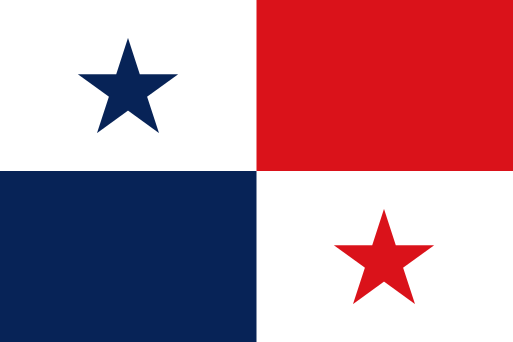
Photo by Dronepicr, CC BY 3.0, via Wikimedia Commons
Overview
Panama, officially the Republic of Panama, is a country located at the southern end of Central America in North America, bordering South America. It is bordered by Costa Rica to the west, Colombia to the southeast, the Caribbean Sea to the north, and the Pacific Ocean to the south. Its capital and largest city is Panama City, whose metropolitan area is home to nearly half of the country's over 4 million inhabitants.
Text from Wikipedia, licensed CC BY-SA.
Where to go in Panama


Hidden gems
Lesser-known places that travellers on Wikivoyage recommend beyond the main cities of Panama: villages, national parks and quiet corners. The short descriptions come from those lists (CC BY-SA).

Bocas del Toro
25 places listed
A nature filled island

Pedasi
16 places listed
Idyllic small island with a nature refuge, hiking trails, and camping

El Valle
10 places listed
Charming little town nestled in the second biggest inhabited volcanic caldera in the world.

Bastimentos
3 places listed
A beautiful island with secluded surf beaches and a small walking only village

Taboga
2 places listed
Popular with those looking for a close getaway from Panama City, with beaches, history, and trails.

Isla Carenero
1 place listed
A small island with a beach and some accommodation opposite Boca town

Pearl Islands
1 place listed
Panamanian Pacific archipelago with crystal-clear waters and tranquil beaches.

Boca Brava
No places listed yet
Right across from Boca Chica, with resorts and beaches.

Coiba National Marine Park
No places listed yet
Frequently referred to as the Galapagos of Central America for its abundance of rare species in both the water and on land. Here you can scuba and snorkel and see some of the most rare pelagic species of marine life in the world.

Darién National Park
No places listed yet
Darién National Park is a World Heritage Site in Panama. It is about 325 kilometers (202 mi) from Panama City, is the most extensive of all national parks of Panama, and is one of the most important World Heritage Sites in Central America.

Gulf of Chiriquí National Marine Park
No places listed yet
In the Gulf of Chiriqui, is dotted with dozens of small islands and islets, including Boca Brava, Isla Palenque, and Islas Secas. The area has some of the best sport fishing and whale watching in the region, and several resorts and boutique hotels have opened in the area since the mid-2000s.

Isla Bastimentos National Marine Park
No places listed yet
Stands out for its natural beauty, Caribbean beaches, tropical forests, mangroves, and rich terrestrial and marine biodiversity

La Amistad International Park
No places listed yet
Is Panama's second largest park, covering over 850 square miles (207,000 hectares). It is a bi-national park, as an additional 193,929 hectares stretch to the Costa Rica side. Amistad is the Spanish word for friendship and it was create to promote friendship between the two countries.

Las Lajas
No places listed yet
Remote, magnificent beach, luxuriant vegetation, beginners surfing.

San Blas Islands
No places listed yet
An autonomous territory managed by the Guna people, with hundreds of islands that preserve their culture and pristine landscapes.

Santa Fe
No places listed yet
Small town north of Santiago close to the Santa Fe National Park and many waterfalls and hikes.

Santa Fe National Park
No places listed yet
Large highland park with pristine wilderness and few visitors and no tourism infrastructure

Soberanía National Park
No places listed yet
Soberanía National Park is a national park in Panama near the banks of the Panama Canal in the provinces of Panamá and Colón, some 25 kilometres (16 mi) from Panama City. The Chagres River runs through the park. Established as a national park in 1980, the park covers 55,000 acres (220 km2).

Volcan Baru National Park
No places listed yet
In size, and Panama's highest peak at is here.
Volcan
4 places listed
Farm town north of David, not as developed as Boquete. The first European immigrants to arrive in Panama, in the early 1900s, thought that Volcan resembled their alpine setting back home, and many settled here. Great for the western trial to the volcano, starting from Paso Ancho just north of Volcán.
Isla Palenque
1 place listed
A resort and nature reserve. Connected to Boca Brava by a sand bridge.
Islas Paridas
1 place listed
Jungle trails, mangroves, pristine beaches, bird-watching, whale watching, closest to the Hannibal Bank.
Chagres National Park
No places listed yet
Largest protected rainforest in Central America, pristine jungle, rivers, and the quiet waters of Lake Alajuela
Islas Ladrones
No places listed yet
Great for diving and snorkelling.
Islas Secas
No places listed yet
Resort and diving.
Omar Torrijos "El Cope" National Park
No places listed yet
A destination for ecotourism, birdwatching, and hiking along scenic trails
Public holidays
National days off in Panama in the next twelve months. Offices, banks and many shops close, and transport and stays get busier. Regional holidays and local festivals are not included, and holidays that follow the moon can move by a day.
- Independence Day · Día de la Independencia
- Mother's Day · Día de la Madre
- National Mourning Day · Día de Duelo Nacional
- National Mourning Day (substitute day) · Día de Duelo Nacional (día sustituto)
- Christmas Day · Navidad
- New Year's Day · Año Nuevo
- Martyrs' Day · Día de los Mártires Caídos en la Gesta Patriótica
- Shrove Tuesday · Carnaval
- Good Friday · Viernes Santo
- Labour Day · Día del Trabajador
- Separation Day (from Columbia) · Día de la Separación (de Colombia)
- Colón Day · Día de Colón
- Primer Grito de Independencia
Dates from the date-holidays project, based largely on Wikipedia (CC BY-SA 3.0). Check locally before you plan around a holiday.
Travelling in Panama
Getting around the country
By bus. There are two kinds of buses in Panama: the ones you find on the highway, and "city buses" (Metrobuses, which replaced the Diablos Rojos (Red Devils). The highway buses are constantly making journeys from terminals in Panama city to different destinations along the Pan American Highway, and back to the terminal. They're pretty frequent, and the buses will pick you up or drop you off at any point along their route, and most of them are air conditioned. The roughly linear shape of the country makes it ideal for a bus system, so ideal in fact that you don't really need to rent a car to get around most areas. Take a bus to the intersection on the Pan American highway that you want. You can get on a bus any place on the Pan American highway going towards Panama City, but all trips originating from within the city require a ticket. The Grand Terminal in the city is large and modern, and will remind you of an American shopping mall or airport (it actually is a shopping mall, Albrook Mall, too). Schedules for all Panama are listed here. The highway buses are very cheap, count on a fare of about US$1 per hour traveled, sometimes less. One exception is fares from Tocumen airport, for which both buses and taxis charge through the roof (by Panamanian standards), simply because they can. If you want to get on a bus, stand by the side of the road, hold out your arm and make obvious pointing motions toward the ground.
Money and costs
Money. Panama has used the US dollar ("$") as its only currency since 1904 although Panamanians often refer to it as balboa. 1 balboa consists of 100 centesimos. Panama has its own circulation coins, made by the United States Mint and the Royal Canadian Mint, in the same weights, sizes and metallic compositions as US coinage, but with Panamanian stampings. The Panamanian coinage is completely interchangeable with standard US coinage in Panama. You may get a handful of change back with a conquistador on the quarter and an Indian on one of your pennies, but Lincoln on the other penny and Roosevelt on the dime. Panama also still mints half dollars. You may hear these half dollars called pesos, but don't think you've accidentally ended up in Mexico. Coins in Panama come in denominations of 1 and 5 centesimos,,, and 1 balboa. These correspond to U.S. coins of equal value (1 cent (penny), 5 cents (nickel), 10 cents (dime), 25 cents (quarter dollar), 50 cents (half dollar) and 1 dollar (dollar coin)). Many businesses do not accept US$50 or US$100 bills at all. Most of those that do will ask for your passport and store your data/serial numbers of your notes in a special book. The reason for this is that many US$50 and US$100 bills have been counterfeited. If you run short on change in the United States, Panamanian coins work in parking meters, payphones, vending machines, etc.
Language
By far the most commonly spoken language in Panama is Spanish. A small minority on the Caribbean Coast speaks an English derived Creole which is not all that dissimilar from Jamaican Patois. Even smaller minorities speak indigenous languages, but you'd have to deliberately search them out to hear, let alone have a use for those languages. If you have a firm grasp of Spanish, you should have no problems getting around.
Spanish dialect. If you cross the border from Costa Rica into Panama, you will notice a large change in the dialect. True to its Caribbean orientation, Panamanian Spanish sounds much closer to Puerto Rican than Costa Rican or Nicaraguan Spanish. For students of Mexican or European Spanish, it may take a little getting used to.
Customs and manners
Panama is a diverse country, with a mix of cultures, ethnicities, and lifestyles that coexist in relative harmony. Although race is generally not a determining factor in daily life, it’s useful to understand certain customs and expressions to avoid misunderstandings. In general, Panamanians are direct in their speech. In the capital, people may come across as abrupt or impatient due to the fast-paced environment, but this shouldn’t be interpreted as rudeness. In the interior of the country, interactions are usually more relaxed, friendly, and hospitable toward both locals and foreigners. Respect for Indigenous cultures is highly valued. If you see someone wearing traditional clothing, do not point at them or take photos without their permission. Each Indigenous territory has its own style, reflecting its identity. When speaking about these communities, avoid using the term “Indian,” which can be offensive. It is more appropriate to refer to them as Indigenous peoples or by their specific names: Guna, Emberá, Ngäbe, among others. In everyday language, it’s common to hear words like moreno or chombo to refer to people of African descent. While such terms may not be offensive in informal local contexts, their use by foreigners could be misunderstood, so it’s better to avoid them. Similarly, the word chino is popularly used to refer to shop or mini-market owners, regardless of their actual ethnic background. Another sensitive topic is the 1989 U.S.
Phones and internet
WhatsApp is the most widely used app for calls and messaging, popular among both locals and visitors. Telegram is also used, though to a lesser extent. These apps allow users to communicate for free, as long as both parties have the app installed. Panama has a well-developed telecommunications infrastructure, thanks to its strategic location where several undersea fiber-optic cables intersect. International call rates vary depending on the carrier and destination, so using VoIP apps like Viber is recommended to make phone calls back home for cheap. Useful Information: Country code: +507 Mobile numbers have 8 digits and begin with 6 Landline numbers have 7 digits and do not use regional prefixes
Staying safe
Most of Panama is very safe. People in rural areas are generally extremely friendly and very helpful. If you want to visit Latin America, but are paranoid about security, Panama might be a good place to cut your teeth. One exception is the border region between Panama and Colombia, which is considered extraordinarily dangerous due to Colombian rebel groups and drug traffickers. Most of the city of Colon is considered dangerous, and some neighborhoods in Panama City are a bit sketchy, in particular El Chorrillo, Curundu and El Marañón, poor and crime-ridden areas. The old colonial quarter, Casco Viejo (also called San Felipe) has a lingering bad reputation among travelers and some Panamanians, but is gentrifying rapidly. During the daytime, San Felipe is perfectly safe for foreigners. At night, the main streets and plazas, as well as the district of bars and restaurants toward the point, are also safe, but visitors should exercise caution as they move north along Avenida Central towards Chorillo.
From the Wikivoyage guide, written by travellers (CC BY-SA), shortened. For entry rules, visas, health and current safety, always check your government's official travel advice (linked above).