

Seychelles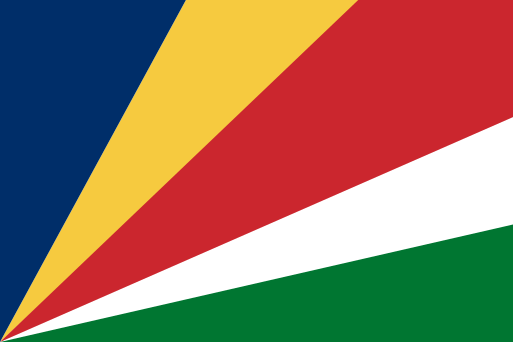
Photo by patano, CC BY-SA 3.0, via Wikimedia Commons
Overview
Seychelles, officially the Republic of Seychelles, is an archipelagic country consisting of 115 islands in the Indian Ocean. Its capital and largest city, Victoria, is 1,500 kilometres east of mainland Africa. Nearby island countries and territories include the Maldives, Comoros, Madagascar, Mauritius, and the French overseas departments of Mayotte and Réunion to the south; and the Chagos Archipelago to the east. Seychelles is the smallest country in Africa as well as the least populated sovereign African country, with an estimated population of 100,600 in 2022.
Text from Wikipedia, licensed CC BY-SA.
Where to go in Seychelles


Hidden gems
Lesser-known places that travellers on Wikivoyage recommend beyond the main cities of Seychelles: villages, national parks and quiet corners. The short descriptions come from those lists (CC BY-SA).

Public holidays
National days off in Seychelles in the next twelve months. Offices, banks and many shops close, and transport and stays get busier. Regional holidays and local festivals are not included, and holidays that follow the moon can move by a day.
- Immaculate Conception
- Christmas Day
- New Year's Day
- Good Friday
- Easter Saturday
- Easter Sunday
- Easter Monday
- Labour Day
- Corpus Christi
- National Holiday
- Independence Day
- Assumption
- All Saints' Day
Dates from the date-holidays project, based largely on Wikipedia (CC BY-SA 3.0). Check locally before you plan around a holiday.
Travelling in Seychelles
Getting around the country
By plane. Air Seychelles operates multiple daily flights between Mahe and Praslin. Over two dozen flights vary in frequency from 15-minute to 2-hour intervals, depending on time of day. Air Seychelles also operates once daily or several times per week between Mahe and the islands of Bird, Denis, Fregate, Desroches and Alphonse. Assumption Island and Coetivy can be reached by air charter.
By helicopter. Zil Air provides charter helicopter flights to/from most of the inner and outer Seychelles Islands. It is the only scenic flight operator in the Seychelles. Scenic flights can be booked to cover the main islands of Mahé, Praslin, La Digue and the surrounding smaller islands of (among others) Cousine, Félicité, Grande Seour, Curieuse and Bird Island.
By boat. Cat Cocos operates catamaran ferries that provide several daily crossings between Mahe and Praslin and a daily crossing extension to La Digue. The sailing normally takes one hour. Non-residents should budget between SCR1,300 and SCR1,820 per person (February 2021) for a one way ticket from Mahe to Praslin. Tickets can be purchased from the Cat Cocos office, opposite the pier, on the same day before travel subject to availability. Similarly, Inter Island Ferry operate a route between Praslin and La Digue with 8 daily departures taking 15 min to cross. Tickets cost around €15 for an adult single (July 2013). The schedule usually allows for onward connections to Mahe with Cat Cocos at Praslin harbour.
By car. Driving in Seychelles is on the left side of the road.
Money and costs
Money. The islands' currency is the Seychellois rupee, denoted by the symbol "SR" or "SRe" (ISO code: SCR). ATMs usually have the best conversion rates; however, airports and banks also exchange money. Coins of the Seychelles are issued in denominations of 1, 5, 10 and 25 cents, 1, 5 and 10 rupees. Banknotes of the Seychelles are issued in denominations of 10, 25, 50, 100 and 500 rupees. There is no longer a black market in currency.
Shopping. The best place for shopping is Victoria, the capital, and more specifically the market at the city centre, Seychelles Buy and Sell. There are also a few outlets on the island, Praslin, but few shopping areas on the other islands. Larger hotels have boutiques but shopping in Seychelles is not one of the major attractions. While visiting, be sure to buy the classic and traditional Seychelles souvenir, the coco-de-mer, or the 'nut of the sea,' a nut from trees native to the islands in the Seychelles - but this requires an export licence. Other locally made souvenirs, although not as unique, can be purchased like sea shell and pearl jewellery, textiles and straw hats, in addition to needlework and crochet, paintings by local artists and woodwork.
Tipping. Most service providers already include a service charge of 5–10%. Tipping is not obligatory in the Seychelles; however, any extra change is greatly appreciated.
Language
Languages spoken in the Seychelles are Seychellois Creole, English and French. You'll be able to get around just fine with just a little French. A couple of basic polite words will go a long way to get a smile from the friendly and helpful locals.
Customs and manners
The environment is a treasured aspect of Seychelles and there are more than 1,000 recorded species of fish around the islands and Aldabra, just one of the islands, is home to the largest population of giant tortoises in the world. Do the effort of respecting it and leaving it clean for visitors to come.
Phones and internet
The Seychelles Tourism board is a great point of reference and they will be able to answer any and all questions you might have. Their website is www.seychelles.travel
Staying safe
Try to avoid any dark lanes, and always be careful not to leave your bag unattended. Swimming alone on isolated beaches is not advisable. If you sail, avoid bringing valuables; if you have no choice, become adept at finding great hiding places. There is some sketchy activity along a shady secondary road behind Beau Vallon beach (left from the Boathouse restaurant) on Mahé, but locals mostly seem content to admire their flashy cars and mostly ignore passers-by. There are tourist police stationed at every beach on Mahé and are easily recognizable by their blue or white golf shirts, with a tourist police badge sewn on. They are very friendly and more than willing to help keep a good eye, even though you may not see them. They are honest and freely offer advice. Potential thieves are obvious (mostly due to lurking and just stand out from the locals) and tend to hide just off the beach or across the narrow streets near more out of the way beaches. Jail terms are stiff and are strictly enforced since the island makes lots of money from tourism.
From the Wikivoyage guide, written by travellers (CC BY-SA), shortened. For entry rules, visas, health and current safety, always check your government's official travel advice (linked above).