

Tuvalu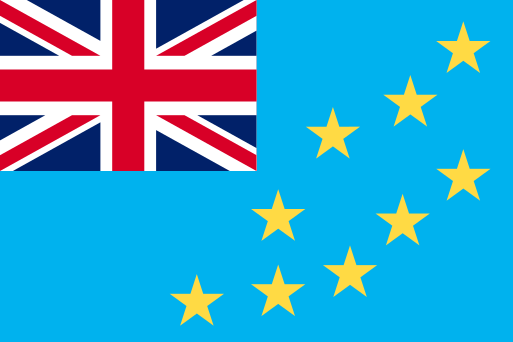
Photo by NASA, Public domain, via Wikimedia Commons
Overview
Tuvalu is an archipelagic country in the Polynesian sub-region of Oceania in the Pacific Ocean, about midway between Hawaii and Australia. It lies east-northeast of the Santa Cruz Islands, northeast of Vanuatu, southeast of Nauru, south of Kiribati, west of Tokelau, northwest of Samoa and Wallis and Futuna, and north of Fiji.
Text from Wikipedia, licensed CC BY-SA.
Where to go in Tuvalu

Travelling in Tuvalu
Getting around the country
Getting around Tuvalu is simple but requires a relaxed, flexible mindset. Most movement happens on Funafuti, where the main islet, Fongafale, is long and narrow, making it easy to explore by motorbike, bicycle, or on foot. Scooters and bikes are widely rented by guesthouses, and the single main road runs the length of the islet, passing villages, shops, and the airport runway. Traffic is light, and distances are short, so getting around feels easy and informal. Travel between the outer islands is done by boat, as there are no domestic flights. Government‑run ferries and cargo vessels make scheduled trips several times a week, though timetables can shift depending on weather and operational needs. Journeys can take several hours to more than a day, depending on the destination. While basic, these inter‑island boats are an essential part of Tuvaluan life and offer a memorable way to experience the country’s seafaring culture. On the outer islands, transport is minimal and wonderfully simple. Most people walk or cycle along sandy paths shaded by coconut palms, and distances between villages are short. With no crowds, no rush, and no complex transport networks, getting around Tuvalu is as much about embracing the slow pace of island life as it is about reaching your destination.
Money and costs
Money. The currency of Tuvalu is the Australian dollar (ISO code: AUD), and the currency symbol is $. Tuvalu has also issued its own coins which are different from the Australian coins and can only be used on Tuvalu. The most common one is the Tuvalu 50-cent coin. The Tuvaluan dollar has a fixed A$1:T$1 rate. However, even within Tuvalu, the Australian dollar is mostly used. Costs vary, but the costs in Tuvalu are fairly cheap, and much cheaper than most other Pacific countries, with the exception of Kiribati. There is a handicraft centre and a philatelic bureau on Funafuti. There are some ATMs in Funafuti, but they're working unstable due to a poor Internet connection in Tuvalu - this is also a reason why a very few credit card terminals which may be found in the country are still unpopular. Since it's not a good idea to rely on cards, be ready to pay for everything with cash, and you should have it on your person before arriving. It's possible to exchange currencies, but it's very unfavorable for visitors.
Language
Tuvalu has two official languages: Tuvaluan and English. Tuvaluan, a Polynesian language closely related to Samoan and Tokelauan, is spoken in everyday life across all the islands. Each island has its own slight variations in accent and vocabulary, but the language is mutually understandable everywhere. English is used in government, education, and formal communication, though it’s less common in casual conversation, especially on the outer islands. Most locals are friendly and patient with visitors, and even a few simple Tuvaluan phrases go a long way. Greetings such as talofa (hello) and fakafetai (thank you) are warmly appreciated. Because communities are small and close‑knit, communication tends to be polite, respectful, and rooted in a strong sense of hospitality.
Phones and internet
Tuvalu uses the Australia/New Zealand electrical plug with 240 volts and 50 Hz. The international dialing code is: +688 Local numbers in Tuvalu have 5 digits, with the first 2 representing the islands as follows: Funafuti: 20, 21 Nanumaga: 27 Nanumea: 26 Niulakita: 22 Niutao: 28 Nui: 23 Nukufetau: 24 Nukulaelae: 25 Vaitupu: 29 There is available a GSM network in 900 MHz, provided by Tuvalu Telecom, with ID: 553-01.
Staying safe
A siren signals when to leave the runway for an approaching plane. Violent crime is rare, and usually involves alcohol and family disputes. In fact, Tuvalu is believed to be a country with one of the lowest crime rates in the world. In 2025, there were only two inmates in the nation's only prison. Male homosexuality is illegal in Tuvalu, though the law is rarely enforced.
From the Wikivoyage guide, written by travellers (CC BY-SA), shortened. For entry rules, visas, health and current safety, always check your government's official travel advice (linked above).