
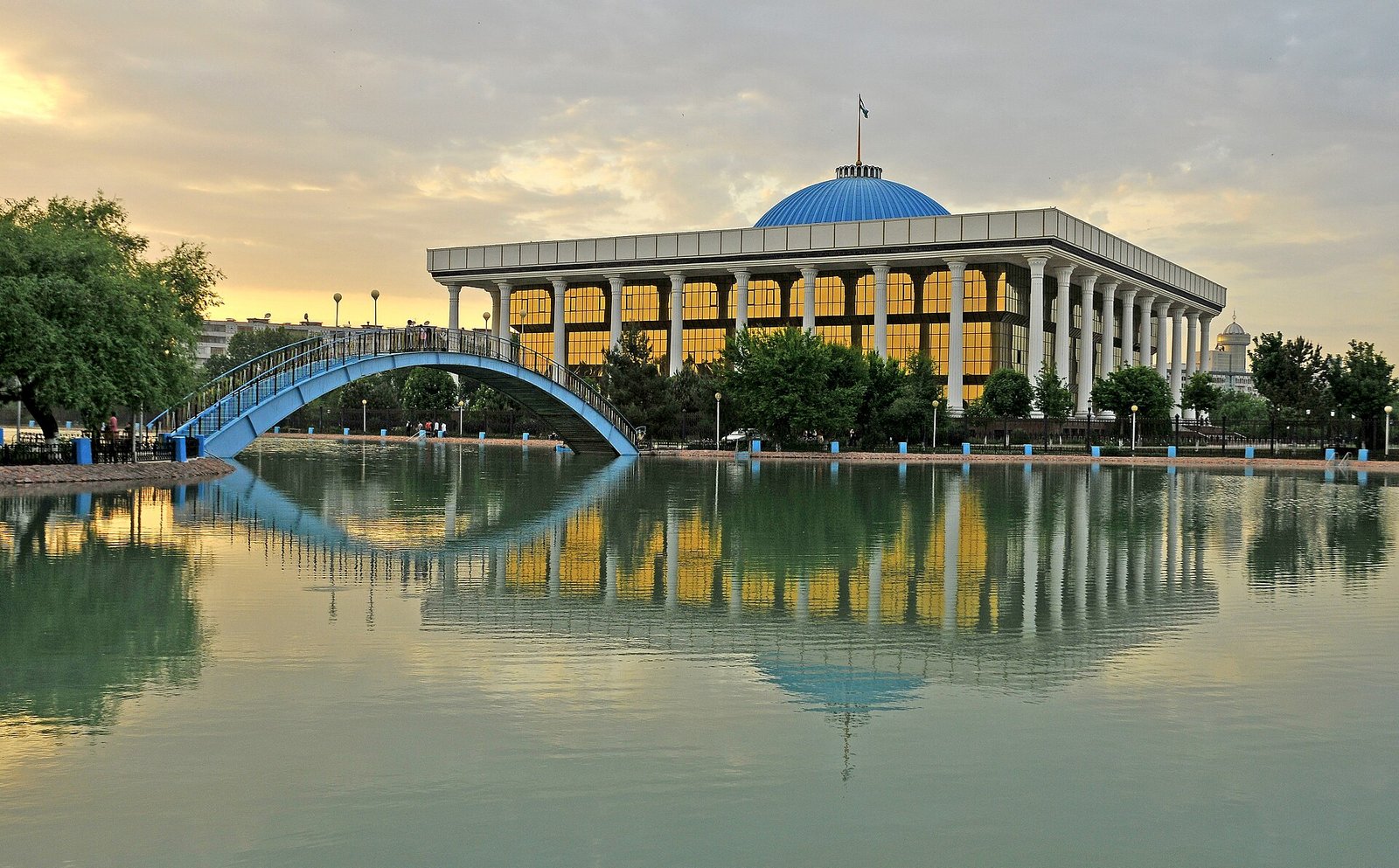
Uzbekistan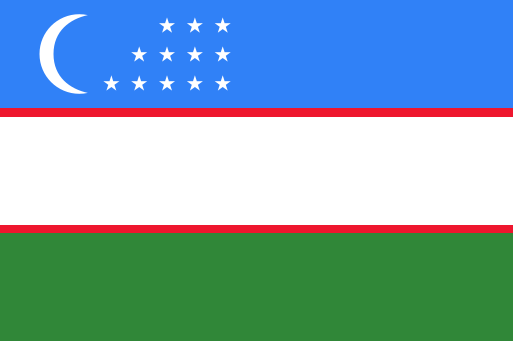
Photo by LBM1948, CC BY-SA 4.0, via Wikimedia Commons
Overview
Uzbekistan, officially the Republic of Uzbekistan, is a sovereign, doubly landlocked country located in Central Asia. It is bordered by Kazakhstan to the north, Kyrgyzstan to the northeast, Tajikistan to the southeast, Afghanistan to the south, and Turkmenistan to the south-west. It is one of only two doubly landlocked countries in the world, the other being Liechtenstein. The country has a population of more than 39 million, making it the most populous country in Central Asia. Uzbekistan is a member of the Organisation of Turkic States. Uzbek, spoken by the Uzbek people who form more than 89% of the population, is the official language of the country. Russian and Tajik are significant minority languages, with Russian serving as a lingua franca. Tajik is primarily spoken by Tajiks living in the southern parts of the country, such as Samarkand and Bukhara.
Text from Wikipedia, licensed CC BY-SA.
Where to go in Uzbekistan


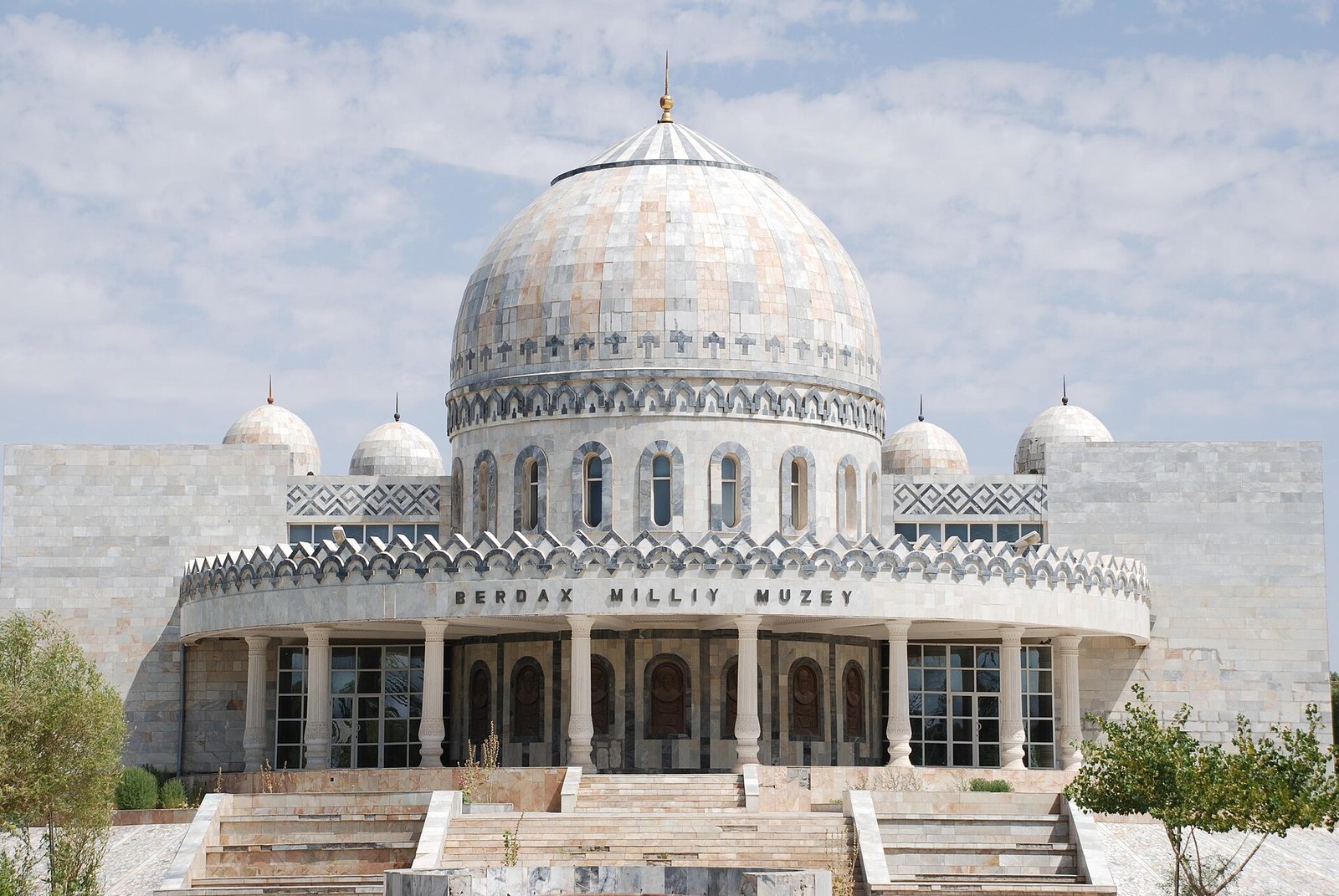

Hidden gems
Lesser-known places that travellers on Wikivoyage recommend beyond the main cities of Uzbekistan: villages, national parks and quiet corners. The short descriptions come from those lists (CC BY-SA).

Public holidays
National days off in Uzbekistan in the next twelve months. Offices, banks and many shops close, and transport and stays get busier. Regional holidays and local festivals are not included, and holidays that follow the moon can move by a day.
- Constitution Day · Konstitutsiya kuni
- New Year's Day · Yangi yil bayrami
- International Women's Day · Xalqaro xotin-qizlar kuni
- Eid al-Fitr · Roʻza hayiti
- Nowruz · Navroʻz bayrami
- Nowruz (substitute day) · Navroʻz bayrami (koʻchirilgan kun)
- Day of Memory and Honour · Xotira va qadrlash kuni
- Day of Memory and Honour (substitute day) · Xotira va qadrlash kuni (koʻchirilgan kun)
- Eid al-Adha · Qurbon hayiti
- Eid al-Adha (substitute day) · Qurbon hayiti (koʻchirilgan kun)
- Independence Day · Mustaqillik kuni
- Teachers and Mentors Day · Oʻqituvchi va murabbiylar kuni
Dates from the date-holidays project, based largely on Wikipedia (CC BY-SA 3.0). Check locally before you plan around a holiday.
Travelling in Uzbekistan
Getting around the country
Maps. If you prefer a paper map, look in your home country for one made by Reise Know-How or Gizi Map. Yandex Maps ans 2GIS are superior to Google Maps in this part of the world (for navigation only. For reviews about restaurants and hotels - Google Maps seem much more reliable). OpenStreetMap (with various apps) is also better than Google Maps here.
By train. The most comfortable way to travel between the major tourist cities in Uzbekistan is by train. The main line Tashkent - Samarkand - Bukhara is served once a day in each direction by two express trains named "Afrosiob" and "Sharq": The Afrosiob is a Talgo-250-type train that takes 2.5 hours for Tashkent to Samarkand and it even meets most definitions of high speed rail at top speed. Afrosiob is Central Asia's only high-speed rail service. The "Sharq" takes less than 7 hours for the 600-km-journey Tashkent - Bukhara (with intermediate stop in Samarkand). A daily overnight train to and from Tashkent to Kungrad offers the possibility to travel during the night and so a day is not lost travelling. Comfortable sleeping carriages allow a good sleep. You can look up the timetable and book tickets online using the Uzbekistan Railways website. You should try to book tickets in advance (at least 2 weeks ahead). If no tickets are available - you should regularly check the website for new available tickets (cancellations by other people etc) - especially during the 48 hour period prior to departure.
Money and costs
Money. The currency of the country is the Uzbekistani so‘m, denoted in Cyrillic as "сўм" (ISO code: UZS). There is no longer a need for black market currency exchange. The official rate is the same as the real rate. Coins in Uzbekistan are issued in denominations of 50-, 100-, 200-, 500 and 1,000 so‘m (silver ring with yellowish gold center), but are rarely if ever used as they are so worthless. Banknotes in Uzbekistan are issued in denominations of 1,000-, 2,000-, 5,000-, 10,000-, 20,000-, 50,000-, 100,000 and 200,000 so‘m. The "thousand" is sometimes omitted. You can be sure that a price of "8" or "200" means respectively 8k or 200k 1,000 so‘m notes are no longer made and not very common, but remain legal tender alongside its equivalent coins. Expect prices to be rounded up to the next 2,000 if you don't have the exact amount. This is trivial since 1,000 som = US$0.08 at last check. As of March 2026, at the exchange counter, you will get 200,000 so‘m notes. ATMs will generally give 50,000 and 100,000 so‘m notes. However, it is somewhat hard to use 50,000 or larger to pay for small things, so try to break them into small denominations when you get a chance. The US dollar used to be the foreign currency of choice, but nowadays the euro is also accepted everywhere although at a worse rate. It is illegal to exchange money outside official currency exchange offices, which are found only in banks and some expensive international hotels.
Language
The official state language of Uzbekistan is Uzbek, a Turkic language. The majority of citizens (over 85%) are ethnic Uzbeks and speak it as their native language, although due to its history as part of the Soviet Union, many (especially in Tashkent) also speak Russian, which is still a mandatory second language in all schools, and is the de facto second official language and used for interethnic communication. Local Russian has been strongly influenced by Uzbek, and many Uzbek speakers often use Russian words and terms in their everyday conversations (especially in cities), although there are very few Russian words and terms in the official register (for example in television, mass media, books and newspapers).
Customs and manners
In Uzbekistan, and in Central Asia in general, elderly people are greatly respected. Always treat the elderly with great respect and be deferent to them in all situations. Also be polite with females. Traditionally it is not welcomed to flirt openly with women. If you are a male and there is an option to address a male with the question instead of female, choose it. But likewise use caution if seeking out a same-sex conversation on a romantic level, as LGBT rights aren't a thing in Uzbekistan but rather still criminalized. This might strike you as a quirk, but it really is not: bread is sacred in Uzbekistan. Do not waste it, and if you do: do not do so visibly. Don't worry, you are not obliged to eat all the bread you get served in the restaurant, but if you are carelessly throwing away a half a loaf in the street you will get some mean looks. Either way, Uzbek bread is among the best in the world, so you'll probably enjoy it until the last crumb.
Phones and internet
Mobile connection works in most parts of Uzbekistan and the services are cheap. The mobile service providers are Beeline, Mobiuz, Ucell, UzTelecom (a.k.a. UzMobile). Also Perfectum, which mostly uses CDMA technology, useless for visitors as of March 2026. In Tashkent only, they have 5G. Global or third party eSIMs essentially all use the Beeline network only (as of March 2026, despite some claiming additional ones), which is fine in cities but not as great coverage elsewhere. In the Tashkent airport arrivals area (before customs), there are kiosks for several networks - Beeline, Mobiuz, Ucell, UzTelecom - where you can get a SIM or eSIM. Generally, a foreigner can get a SIM card after showing his passport. For activating the cell phone connection a person has to be registered. Some vendors are not aware of the law and refuse to sell to foreigners. (In the airport this would not be a problem.) If you plan to travel around to the countryside, the Ucell network has the best coverage according to locals (2024). You can get the SIM, with 24 Gb, calls and some SMS for 40k per month in the official shop at the center of Tashkent.
Staying safe
Uzbekistan is generally safe for visitors. Normal precautions should be taken, as one would in virtually any country. Don't walk alone in dimly-lit areas of cities at night. Refrain from displaying large amounts of cash in public. To dissuade pickpockets, particularly in the bazaars, men should keep wallets in a front pocket and women should keep purses in front of them with a strap around an arm. Avoid wearing flashy or valuable jewellery which can easily be snatched. Many governments warn against visiting the areas of Uzbekistan bordering Afghanistan for all but essential travel. Caution should be exercised in areas of the Ferghana Valley bordering Tajikistan and Kyrgyzstan, as there have been a number of security incidents in this region. Some border areas are mined and travellers should cross only at authorized border crossing points. Be wary of street scams. One of the most common involves a stranger coming up to the victim and saying they have found cash lying on the street. They will then try to enlist you in a complicated scheme that will result in you "splitting" the cash - of course only after you have put up some of your own. The entire scenario is ludicrous, but apparently enough foreigners fall for it that it continues. If someone comes up to you with the "found cash" routine, tell them straight away that you are not interested (in whatever language you choose) and walk away. As tourism has increased in Uzbekistan, so has the art of shortchanging said tourists.
From the Wikivoyage guide, written by travellers (CC BY-SA), shortened. For entry rules, visas, health and current safety, always check your government's official travel advice (linked above).