

Macedonia del Norte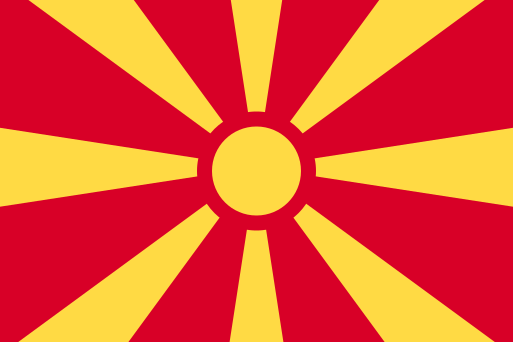
Foto de kallerna, CC BY-SA 4.0, vía Wikimedia Commons
Resumen
Macedonia del Norte (en macedonio: Северна Македонија, romanización Séverna Makedóniya), denominada oficialmente como República de Macedonia del Norte (en macedonio: Република Северна Македонија, romanización Repúblika Séverna Makedóniya) o común e informalmente llamada solamente como Macedonia (debido a que antes se llamó así), es un país sin litoral situado en el sureste de Europa, en la península de los Balcanes. Limita al norte con Serbia y Kosovo, al este con Bulgaria, al sur con Grecia y al oeste con Albania. Alberga a casi dos millones de personas, siendo su capital y ciudad más poblada Skopie, Skopje o Escopia.
Texto de Wikipedia, con licencia CC BY-SA.
Adónde ir en Macedonia del Norte
Skopje
Macedonia del Norte
Bitola
Macedonia del Norte
Markovi Kuli
Macedonia del Norte
Struga
Macedonia del Norte
Tetovo
Macedonia del Norte
Ohrid
Macedonia del Norte
Strumica
Macedonia del Norte
Kruševo
Macedonia del Norte
Monastery of Saint Naum
Macedonia del Norte
Kratovo
Macedonia del Norte
Prilep
Macedonia del Norte
Štip
Macedonia del Norte
Kumanovo
Macedonia del Norte
Berovo
Macedonia del Norte
Popova Šapka
Macedonia del NorteDojran
Macedonia del Norte
Matka Canyon
Macedonia del Norte
Resen
Macedonia del Norte
Gevgelija
Macedonia del Norte
Veles
Macedonia del Norte
Kavadarci
Macedonia del Norte
Kičevo
Macedonia del Norte
Debar
Macedonia del Norte
Gostivar
Macedonia del Norte
Zrze Monastery
Macedonia del Norte
Smolare Falls
Macedonia del Norte
Saint Jovan Bigorski Monastery
Macedonia del Norte
Negotino
Macedonia del Norte
Galičnik
Macedonia del Norte
Treskavec Monastery
Macedonia del Norte
Demir Kapija
Macedonia del Norte
Kolešino Falls
Macedonia del Norte
Lesnovo Monastery
Macedonia del Norte
Joyas escondidas
Lugares menos conocidos que los viajeros de Wikivoyage recomiendan más allá de las grandes ciudades de Macedonia del Norte: pueblos, parques nacionales y rincones tranquilos. Las descripciones breves proceden de esas listas (CC BY-SA).

Mavrovo National Park
41 lugares en la lista
The largest of North Macedonia's national parks. It is home to the country's highest peak Golem Korab, the World Heritage Site Dlaboka Reka Beech Forest, as well as several picturesque villages and monasteries.

Pelister National Park
19 lugares en la lista
Separates Bitola from Prespa. It covers the Baba Mountain area and features two glacial lakes known as "Mountain Eyes" that feed multiple rivers.

Vevčani
17 lugares en la lista
Historic mountain village known for its natural springs, its 1,400-year-old annual carnival and its attempts at autonomy

Čaška
12 lugares en la lista
Rural municipality including the Azot historical region, famous for its 6000-year-old Globular Flute

Mariovo
12 lugares en la lista
A unique, though depopulated, region of southern Macedonia

Staro Nagoričane
12 lugares en la lista
A prehistoric observatory, medieval churches, massive rocks, and important memorials

Stobi
6 lugares en la lista
An ancient city that is now one of the largest archaeological sites in the country.

Bosilovo
4 lugares en la lista
Bosilovo is a municipality in the southeast of North Macedonia. The village of Bosilovo is the municipal seat. Bosilovo Municipality is one of the ten municipalities that compose the Southeastern Statistical Region.

Galičica National Park
2 lugares en la lista
Consists of the mountainous land between Lake Ohrid and Lake Prespa.

Brajčino
1 lugar en la lista
Picturesque village in the mountains of Western North Macedonia, just off the eastern shore of Lake Prespa.
Prespa
40 lugares en la lista
Contains most of the Great Prespa Lake, shared by neighbouring countries. Galičica to the west and Pelister to the east complement the scenery provided by the lake.
Novo Selo
10 lugares en la lista
Home to Macedonia's two best-known waterfalls, including its tallest
Debarca
6 lugares en la lista
Debarca is a municipality in the Southwestern Statistical Region of North Macedonia. The village of Belčišta is the municipal seat. It is the municipality in which Ohrid "St. Paul the Apostle" Airport is located, the second of two international airports in the county.
Días festivos
Festivos nacionales en Macedonia del Norte en los próximos doce meses. Cierran oficinas, bancos y muchas tiendas, y el transporte y el alojamiento se llenan más. No se incluyen los festivos regionales ni las fiestas locales, y los festivos que siguen la luna pueden moverse un día.
- Saint Clement of Ohrid Day · Св. Климент Охридски
- Año Nuevo · Нова Година
- Orthodox Christmas · Прв ден Божик
- Fiesta del Eid Fitr · Рамазан Бајрам
- Día del Trabajador · Ден на трудот
- Orthodox Easter · Прв ден Велигден
- Orthodox Easter Monday · Втор ден Велигден
- Saints Cyril and Methodius Day · Св. Кирил и Методиј
- Day of the Republic · Ден на Републиката
- Día de la Independencia · Ден на независноста
- Revolution Day · Ден на востанието
- Day of the Macedonian Revolutionary Struggle · Ден на македонската револуционерна борба
Fechas del proyecto date-holidays, basado en gran parte en Wikipedia (CC BY-SA 3.0). Los nombres aparecen en tu idioma cuando existe una traducción. Compruébalo en el lugar antes de planificar en torno a un festivo.
Viajar por Macedonia del Norte
Esta parte está en inglés, tal como está escrita en Wikivoyage.
Moverse por el país
By car. In this mountainous developing country, the roads are often narrow and not very well maintained, with warning signs for the quite frequent sharp turns rarely provided, and the safety barriers between your tires and high cliffs often rusty or sometimes completely absent. In the north, there is a short network of motorways with separated directions and a posted speed limit of 120 km/h, linking Skopje with Tetovo and Gostivar in the west, and with the Alexander the Great Airport and Kumanovo in the east, but the surface quality is hardly better than the rest of the roads. The toll collection on the motorways depends on a system of toll stations (PEAGE) every 20 km or so (typically after leaving and on approaching major towns, which means you will pay twice for the route, say, between Skopje and Tetovo, two neighbouring cities), where all through traffic comes to a complete halt (as opposed to only those leaving and entering the motorway) and pay according to the type of the vehicle (for motorcycles and cars, which is often 20 or 30 denar). Always make sure your tires are good enough. Especially in spring and autumn, weather in the mountains (Ohrid, Bitola) can differ significantly from the weather in the area you're coming from. All directional signs in the country show the town names in Macedonian Cyrillic and their Roman transliterations, sometimes accompanied by a second local language, which is often Albanian. Renting a car is cheap.
Dinero y gastos
Money. The official currency of North Macedonia is the denar (plural denari), denoted by the abbreviation "ден" (den) (international code: MKD). This travel guide uses just denar, e.g. 100 denar. Many Macedonians quote prices in euro (€). The new denar replaced the old denar in 1993 at a rate of 100:1. Coins of North Macedonia are issued in denominations of 1, 2, 5, 10 and 50 denar. Banknotes of North Macedonia are issued in denominations of 10, 50, 100, 200, 500, 1,000 and 2,000 denar.
ATMs. Most cities and towns have ATMs. Fees depend on your issuing bank, but on top of that ATMs usually charge 200–300 denar. Komercijalna banka had no such charges in 2025, but in 2026 at least one ATM in Ohrid charged a fee. The internet recommends "Universal Capital Bank" (UCB) and "Ziraat Bank" as free alternatives, but check beforehand.
Money exchange. There are also plenty of banks and exchange booths where you can easily exchange money. While banks often offer slightly better rates, you need to register with your passport which may take up to 10 minutes. Changing money in the exchange offices, on the other hand, is fairly straight forward, painless and quick. Do not change money on the street. Many places will also accept euro.
Cashless payment. The use of credit cards, debit cards and other cashless payments (wireless) is well established.
Shopping. North Macedonia is full of markets and bazaars well worth a visit. The bazaars of Skopje, Tetovo, Ohrid and Bitola are the largest selling anything from dried peppers to fake designer sunglasses.
Idioma
Macedonian is the official and national language, and is spoken in various dialects across each corner of the country. Macedonian is a Slavic language, and so speakers of closely-related Bulgarian and Serbo-Croatian should have no problem getting by. Albanian is co-official at the national level, and is widely used in the north and west of the country. Turkish, Serbo-Croatian, Romani (Gypsy), and Aromanian are spoken by smaller ethnic minorities. Šuto Orizari (better known as Shutka), a northern district of Skopje, is the only place in the world where Romani is an official language.
Costumbres y modales
It is advisable to simply refer to the country as "Macedonia". The "north" part of the name, added in 2019 to resolve a naming dispute with Greece, has not made it into everyday use among Macedonians and may never do so. Many, in fact, consider it offensive. Macedonia is directly transliterated from the Cyrillic as Makedonija, and is pronounced roughly how it would appear to an English speaker: "mahk-eh-DOHN-ee-yah". Touchy topics are Macedonian-Bulgarian, Macedonian-Albanian, and Macedonian-Greek relations. Most Macedonians can hold strong political opinions regarding their neighbours and won't shy away from expressing their views in most cases. Politics often finds its way into conversation over a cup of coffee. To keep from upsetting your hosts or new-found friends, avoid topics such as the 2001 war against the NLA, Macedonia's partition during the Balkan wars and North Macedonia's pending membership into the European Union. Don't worry about talking about the Communist period or about Josip Tito. There is a significant Albanian minority here, but some ethnic Macedonians are supportive of Serbia's position on the Kosovo issue. Ask as many questions as you'd like (within reason), but don't make any statements. Roughly one in four people you see on the street are likely to be Albanian, with far higher percentages in the west, and tensions are at times high between the Macedonian and Albanian communities.
Teléfono e internet
Domestic phones. Domestic telephone service is available in all inhabited towns, via VoIP only. In fact, North Macedonia was the first country in Europe to go fully VoIP, back in 2014. There is an affordable fixed phone service (wireless and easy to install) from the mobile operator ONE, available prepaid (without a monthly fee, 12 months availability without recharge, recharging for only 500 denar/€8) and postpaid.
Mobile. Mobile phones are widely spread and the coverage is excellent. There are four mobile networks (T-mobile A1 [http://www.one.mk/en/, LycaMobile and MTel [https://mtel.mk/, all providing 5G service. You may need to show your ID card or passport when buying a SIM card. For tourists data packages with sufficient GB (e.g. 100GB) are available dirt cheap. Many mobile providers in the Balkans provide free roaming across Balkan countries. So, in case you are planning to cross the border, ask on how to use the local SIM card in other Balkan countries. For instance, a One.al SIM card from Albania works flawlessly in North Macedonia and Kosovo with a regular Albanian package.
Internet. Internet access is widely available throughout the country. Almost all hotels provide internet access, either free or paid.
Seguridad
North Macedonia is a safe country. Driving is not ill-advised, but it's recommended for foreigners to try to use taxis and public transport wherever possible. As in all countries, keep an eye out for pickpockets and all valuables safe. Hotels and most private accommodation will offer a safe to store valuables and cash in. Most people are very friendly and hospitable.
De la guía de Wikivoyage, escrita por viajeros (CC BY-SA), resumida. Para las normas de entrada, visados, salud y la seguridad actual, consulta siempre las recomendaciones oficiales de tu gobierno (enlazadas arriba).