

Serbia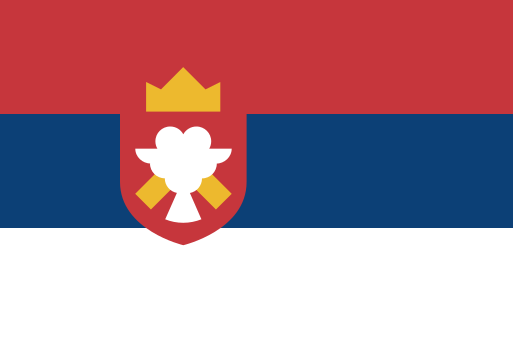
Foto de ZlatanJovanovic, CC BY 3.0, vía Wikimedia Commons
Resumen
Serbia (en serbio: ), oficialmente República de Serbia, es un país soberano, constituido en Estado social y democrático de derecho y cuya forma de gobierno es la república parlamentaria. Situado en la península balcánica, en el sureste de Europa, sin litoral, según su Constitución, limita con Hungría al norte; con Rumania y Bulgaria al este; con Macedonia del Norte y Albania al sur; y con Bosnia y Herzegovina, Croacia y Montenegro al oeste. Su capital y ciudad más poblada es Belgrado. Serbia formó un reino medieval que evolucionó hasta convertirse en un imperio que alcanzó su máxima extensión en el siglo XIV. En el siglo XV, el territorio serbio fue conquistado por el Imperio otomano, al que perteneció hasta el siglo XIX, cuando Serbia recuperó su independencia y expandió su territorio.
Texto de Wikipedia, con licencia CC BY-SA.
Adónde ir en Serbia

Petrovaradin Fortress
SerbiaBelgrade
Serbia
Novi Sad
Serbia
Kladovo
Serbia
Vrnjačka Banja
Serbia
Kragujevac
Serbia
Smederevo Fortress
Serbia
Subotica
Serbia
Vršac
Serbia
Niš
Serbia
Žiča
Serbia
Sremska Mitrovica
Serbia
Golubac Fortress
Serbia
Kraljevo
Serbia
Küstendorf
Serbia
Požarevac
Serbia
Topola
Serbia
Fruška Gora
Serbia
Novi Pazar
Serbia
Sirogojno
Serbia
Manasija
Serbia
Resava Cave
Serbia
Sombor
Serbia
Studenica Monastery
Serbia
Uvac Special Nature Reserve
Serbia
Čačak
Serbia
Kikinda
Serbia
Lepenski Vir
Serbia
Bač
Serbia
Gamzigrad
Serbia
Sopoćani
Serbia
Užice
Serbia
Đerdap National Park
Serbia
Sremski Karlovci
Serbia
Đavolja Varoš
Serbia
Gradac Monastery
Serbia
Zrenjanin
Serbia
Šargan Eight
Serbia
Joyas escondidas
Lugares menos conocidos que los viajeros de Wikivoyage recomiendan más allá de las grandes ciudades de Serbia: pueblos, parques nacionales y rincones tranquilos. Las descripciones breves proceden de esas listas (CC BY-SA).

Palić
24 lugares en la lista
The lovely lake area in the north with baroque parks, the monuments of art nouveau architecture and a long tradition in catering made it fashionable summer resort. Palić is the host of a film festival, World Ethno Music Festival, and various sporting events.

Zlatibor
13 lugares en la lista
A very famous mountainous tourist site and ski-resort in the southwest. Zlatibor is near the town of Užice, en route to Montenegro. Zlatibor is situated at an altitude of 1000 m, summers are sunny, fresh air, cold winters, beautiful landscapes, meadows, pastures, valleys, ethnic villages, sports facilities, etc. There you have special medical and famous Rehabilitation Institute.

Mokra Gora
5 lugares en la lista
Nice village with access to Šarganska osmica heritage railway and nearby traditional Drvengrad village.

Tara National Park
5 lugares en la lista
Covers a large part of Tara Mountain in western Serbia (near Zlatibor). Tara Mountain is part of Dinaric Alps and stands at 1,000-1,500 m above sea level. The mountain's slopes are clad in dense forests with numerous high-altitude clearings and meadows, steep cliffs, deep ravines carved by the nearby Drina River and many karst, or limestone caves. The mountain is a popular tourist centre. Tara Mountain has a nice Zaovine Lake, at an altitude of 800 m.

Sokobanja
4 lugares en la lista
The road to Sokobanja detaches on 200-th kilometre of the motorway Belgrade - Athens. Sokobanja is situated in basin between the mountains Rtanj (1,560 m) and Ozren (1,117 m), 400 m above the sea level. Sokobanja is a famous spa and tourist place in Serbia for its moderate continental climate and immense surfaces of woods, fresh air and a lot of thermo-mineral sources. They all make Sokobanja an exceptional place in Serbia.

Kopaonik National Park
1 lugar en la lista
And the ski-resort in the Kopaonik Mountain in southern Serbia. Kopaonik is the major ski resort of Serbia, with total of 23 ski lifts. A national park spread over 118.1 km² (45.6 sq mi). Kopaonik has a rich historical heritage. Sports and recreation are key factors to the tourism of Kopaonik. There are various other activities as well. Other features which attract tourists are a luxurious hotel, and entertainment. Kopaonik has many cafes, bars and night clubs.
Días festivos
Festivos nacionales en Serbia en los próximos doce meses. Cierran oficinas, bancos y muchas tiendas, y el transporte y el alojamiento se llenan más. No se incluyen los festivos regionales ni las fiestas locales, y los festivos que siguen la luna pueden moverse un día.
- Año Nuevo · Нова година
- Año Nuevo · Нова година
- Orthodox Christmas · Божић
- Statehood Day · Дан државности Србије
- Statehood Day · Дан државности Србије
- Orthodox Good Friday · Велики петак
- Día del Trabajador · Празник рада
- Orthodox Easter · Васкрс
- Orthodox Easter Monday · Васкрсни понедељак
- Día del Trabajador · Празник рада
- Armistice Day · Дан примирја
Fechas del proyecto date-holidays, basado en gran parte en Wikipedia (CC BY-SA 3.0). Los nombres aparecen en tu idioma cuando existe una traducción. Compruébalo en el lugar antes de planificar en torno a un festivo.
Viajar por Serbia
Esta parte está en inglés, tal como está escrita en Wikivoyage.
Moverse por el país
Public transportation is generally not in very good shape outside of Belgrade. Trams and newer buses are exclusive to the capital, while intercity transport and transport within other smaller cities and towns uses older buses or more expensive minibuses. The coverage, however, is still pretty good in other towns as well. The quality of public transport within Belgrade itself is good and has vastly improved lately as most of the bus fleet was replaced by brand new gas powered buses. The capital itself has around 120 public transport lines which can get you anywhere within the city you might want to go. A majority of these lines are bus lines, but some are trolleybus, tram and minibus lines. Minibuses are way more expensive (~€2 per ride) than regular public transport as they are owned by private companies. For more info check Belgrade.
By bus. The most common and convenient way of getting around Serbia is by bus. See also Bus travel in the former Yugoslavia. Flixbus is the main operator on long distance routes. Polazak is a portal for planning bus travel within Serbia: bus lines include Ozlem, Jugoprevoz Kruševac, Litas, Niš Ekspres, Dunav Prevoz, Severtrans, Lasta, Best Komerc, Božur and Kavim Jedinstvo.
By train. Trains in Serbia are considerably slower than most of Western/Central Europe, but they can be a quite scenic way of seeing the country.
Train types. There are several train types in regular passenger service, but the type of the train rarely influences the actual journey time, or train speed.
Dinero y gastos
Money. The currency in Serbia is the dinar (denoted by РСД or динар, pl. dinari/динари). The ISO currency code is RSD. Coins of Serbia are minted in denominations of 1, 2, 5, 10, and 20 dinars, and banknotes are printed in denominations of 10, 20, 50, 100, 200, 500, 1,000, 2,000, and 5,000 dinars. The banknotes tend to be more common than the coins, so be prepared to carry around a large number of banknotes in varying conditions. Serbian taxis, street vendors, and small restaurants will rarely have change for larger denominations (especially 5,000 dinara notes). Travelers would be wise to spend these at department stores or large grocery stores to keep an adequate supply of small notes on hand. Money can be exchanged at official exchange offices, locally called menjačnica, often carrying the emblem of the National Bank of Serbia outside the building. The rates here are usually better than those of the banks. It is much easier to convert euros or other major currencies. There are many ATMs, which accept foreign bank and credit cards without a glitch. Visa, Visa Electron, MasterCard and Maestro are widely accepted. However, American Express and Diners Club cards are rarely accepted. Likewise, traveller's cheques are not a well known form of payment in Serbia and cashing them in could present a challenge. The dinar is not widely convertible outside of Serbia; re-convert your remaining dinars to euros or other major currencies before leaving the country.
Idioma
The official language is Serbian, which is similar to Croatian and Bosnian, and mutually intelligible with them to a very high degree. Before the era of nationalist linguistic policies and the breakup of the former Yugoslavia, all of these dialects were known as Serbo-Croatian. Today, people in the former Yugoslavia no longer use this general term for what remains essentially a common language. Serbian is written using both the Cyrillic and Latin alphabets; the Cyrillic alphabet, which is considered more traditional, is the official script and used in most formal situations, but the Latin alphabet is used in most informal situations and is more common in daily life.
Costumbres y modales
Serbs are a very friendly, polite and hospitable people, especially in the southern parts of the country. When you are invited into a Serbian home, make sure to bring them a gift if you are coming for the first time. Anything is fine from flowers to chocolate or something representative from your country. When you arrive at a rural house, take off your shoes unless the owner explicitly tells you to keep them on. When inside the house, don't ask for anything, for they will surely offer it. If you are thirsty it is polite to ask for a glass of water. The host probably forgot to offer you a drink and will do so. In a bus or a tram it is considered polite to offer an elderly person or a pregnant woman a place to sit. Because many Serbs feel frustrated by the 1990s Yugoslavian Wars or the NATO bombing of Yugoslavia, it is best to avoid discussion of them. If someone brings the topic up, try to avoid giving any strong opinions until you can assess your acquaintance's views. Do not voice support for Kosovo's independence. The U.S.'s vocal support of Kosovar independence and the 1999 air strikes caused some ill will directed towards the West, particularly towards the U.S. (though this is rarely extrapolated to individual American tourists). However, if you share the views of most Serbs, some may be willing to discuss the subject, and many will be happy speaking to a Westerner who shares their views.
Teléfono e internet
Serbia is quite well connected, and coverage is very good, even in rural areas. There are three GSM/UMTS/4G LTE mobile phone networks in Serbia: the state telecom provider mts, and the privately-owned Yettel and A1, all of them offering similar quality of service. Prepaid SIM cards usually cost RSD 200-300 although a new law has introduced mandatory registration for all prepaid SIM cards, and as such, foreigners might face difficulties purchasing them outside of official phone stores. Avoid purchasing prepaid SIMs at regular markets and kiosks. Bring a form of valid ID with you, ideally a passport. 5G service is expected to begin by the end of 2025. For legacy phones, A1 will phase out 3G service by June 2025. Other providers have announced no such similar plans as of April 2025. In some stores you can buy a simple mobile phone packaged with a prepaid SIM card for RSD 2000–3000. Serbia has bilateral agreements with Bosnia and Herzegovina, Montenegro, Kosovo, North Macedonia and Albania, similar to the European Union's "Roam like at Home" system, eliminating roaming charges between the nations.
Seguridad
Serbia is generally a safe place to visit. The locals are incredibly polite and helpful in case you require any assistance. (If you need any help finding/reaching a place, it's best to ask a younger person for help, as they are more likely to speak English.) However, you should always be aware of pickpockets, mainly in crowded tourist places and on public transportation. Street robberies, assaults or murders are highly unusual, even in dark or remote parts of a city/town. One should always watch out for drivers, who can be very rude to pedestrians or cyclists. There is also widespread intolerance towards LGBTQ people, even in the most cosmopolitan capital, Belgrade; one should avoid public displays of affection, as such actions are almost always met with glares, verbal and/or physical violence. Emergency phone numbers are: 192 - police; 193 - fire dept. and 194 - ambulance. Save these as contacts on your phone. Other international emergency numbers, such as 112 or 911 will route but only to the nearest police service and as such should be avoided for other emergencies. Edit your phone or smartwatch's "Emergency SOS" function accordingly. There are plans to integrate Serbia's emergency services into the EU's 112 system, but no progress has been made as of April 2025. Following the Yugoslav wars of the 1990s, reports of UXOs (unexploded ordnance) have occurred outside the major cities.
De la guía de Wikivoyage, escrita por viajeros (CC BY-SA), resumida. Para las normas de entrada, visados, salud y la seguridad actual, consulta siempre las recomendaciones oficiales de tu gobierno (enlazadas arriba).