

Afghanistan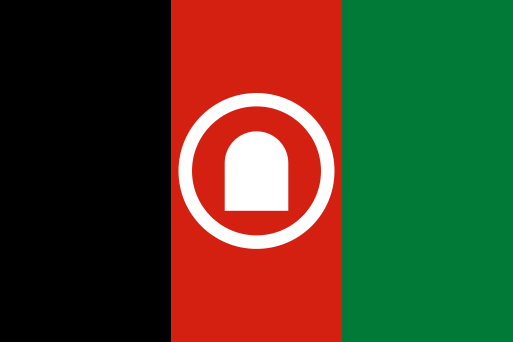
Foto av Weaveravel, CC BY-SA 4.0, via Wikimedia Commons
Översikt
Afghanistan är ett land i södra Centralasien. Landet räknas ibland som en del av Sydasien eller Mellanöstern. Landet är bergigt och saknar kust. Det gränsar till Pakistan i söder och öster, Iran i väst, Turkmenistan, Uzbekistan och Tadzjikistan i norr, och Kina allra längst i öster. En stor del av Afghanistans 652 000 kvadratkilometer stora yta täcks av bergskedjan Hindukush vid den västra änden av Himalaya. I norr finns slättland som delvis är mycket bördigt. Ett relativt låglänt område i sydväst utgörs till stor del av öken och saltträsk. Kabul är huvudstad och största stad. Statistiken om landet är mycket bristfällig och man vet inte hur många invånare det finns, enligt landguiden uppskattades befolkningen 2021 till 39,8 miljoner Cirka 70 procent av befolkningen är under 25 år. Etniskt sett består befolkningen framför allt av etniska pashtuner, tadzjiker, hazarer och uzbeker.
Text från Wikipedia, licens CC BY-SA.
Vart ska man åka i Afghanistan


Dolda pärlor
Mindre kända platser som resenärer på Wikivoyage rekommenderar utanför de stora städerna i Afghanistan: byar, nationalparker och lugna hörn. De korta beskrivningarna kommer från de listorna (CC BY-SA).

Ai-Khanoum
3 platser listade
A monumental Hellenistic city at the strategic confluence of the Oxus river and the Kokcha river, destroyed by the nomadic Yuezhi around 145 BC

Salang Pass
1 plats listad
A high mountain pass and tunnel linking Kabul to the north

Sultan Eshkashim
1 plats listad
Market town at the border of Ishkashim village, Tajikistan

Band-e Amir National Park
Inga platser listade än
5 stunningly turquoise lakes in a remote and beautiful setting not far from Bamiyan

Panjshir Valley
Inga platser listade än
A beautiful trekking area leading to the famous Anjuman Pass

Shamali Plain
Inga platser listade än
A green plain north of Kabul that produced a lot of the food for central Afghanistan. From Kabul it extends north through Charikar, Parwan province to Jabal os Saraj. The Taliban destroyed the irrigation systems and it is just beginning to recover.

Wakhan Corridor
Inga platser listade än
One of Afghanistan's most isolated areas, with soaring mountains and unique culture
Att resa i Afghanistan
Den här delen är på engelska, så som den skrivits på Wikivoyage.
Att ta sig runt i landet
in 2011]] To visit different places and objects in the country you need to buy permits. These are both for your security (checked at police checkpoints, need to register them in local tourist bureaus) and to support the country. In Kabul these permits are issued by Afghan Tour (Abdullhaq crossroad,
By plane. Flag carrier Ariana Afghan Airlines and Kam Air both operate flights between Kabul, Herat, Mazar-I-Sharif and Kandahar.
By car. The nation's vital transit corridors include the Kabul to Mazar-i-Sharif Highway, which crosses the Hindu Kush mountain range via the Salang Tunnel, and the Kabul to Kandahar Highway, connecting the capital to the south. However, high-quality paved roads remain rare across the country. Over 90% of Afghanistan's roads consist of local dirt or gravel tracks that are highly vulnerable to seasonal weather, rapidly deteriorating into mud during periods of rain or mountain snowmelt. Furthermore, the Salang Tunnel and major highways frequently undergo extensive government rehabilitation, triggering strict temporary closures and traffic restrictions that significantly affect transit times.
By hired vehicle. Urban mobility and vehicle hire services have shifted under new regulations, though traditional practices persist. The traditional fleet of yellow taxis is transitioning out, as the current government mandates that all official commercial taxis adopt a uniform blue and white color scheme.
Pengar och kostnader
Money. The Afghani (AFN) is the currency of Afghanistan, denoted by the symbol "Afs" or "؋" (ISO code: AFN). The current version of the afghani was introduced in 2002, with 1 afghani equal to 1,000 of the previous afghanis. Banknotes of Afghanistan are issued in denominations of 1-, 2,-, 5-, 10-, 20-, 50-, 100-, 500 and 1,000 afghanis. Local financial regulations strictly prohibit the use of foreign currencies like US dollars or Pakistani rupees for domestic transactions, requiring all daily retail purchases to be settled exclusively in local afghanis
Carpets. Afghanistan's most famous products are carpets and there are some fine deals to be had, though good haggling is absolutely required to get them. High-value traditional carpets, textiles, and furs require an official export permit or proof of purchase clearance from the Ministry of Information and Culture. There are carpets described as "Afghan", but also at least two other carpet-weaving traditions. The Baluchi tribes in the south and west weave fine rugs, and the Turkoman tribes in the north do as well; both groups are also found in neighbouring countries. Afghan rugs are generally made in city workshops, mainly for the export trade. They are often large; 3 x 4 metres (10 x 12 feet) is common. Most are quite coarsely woven to keep costs down, but others have a fairly fine weave. If you need a big rug for the living room at a moderate price, these are likely to be your best choice.
Språk
The official languages of Afghanistan are Dari (an Afghan dialect of Persian), which serves as the country's lingua franca, and Pashto, spoken by the largest and most influential ethnic group, the Pashtuns. According to the CIA World Factbook, 78% of Afghans speak Dari, and 50% speak Pashto. Many Afghans are bilingual in those two languages. You're more likely to find a Pashto speaker in areas close to the border with Pakistan than anywhere else. There are also some speakers of Urdu along that border and of Persian along the border with Iran. As Afghanistan is a diverse, multi-ethnic country, hundreds of languages are spoken throughout. Some of the most commonly spoken minority languages include Uzbek, Turkmen, Pashayi, Baloch, and Nuristani.
Seder och bruk
]] Despite all that they have been through since 1979, Afghans in general are welcoming and hospitable to foreign visitors. Hospitality is a cornerstone of Afghan culture, and it is very likely that you'll be treated as a celebrity by the locals. With the regime change in 2021, a large proportion of the population, especially women, are very afraid of what will be in the future. Those who worked for the government, for foreign organisations, for human rights or for the media, or held any high profile positions may be afraid for their lives. Tread extremely lightly.
Basic etiquette. If invited to an Afghan home, expect to be offered the best of everything there is. You will often be showered with tea, sweets, snacks, and gifts when entering someone's home. Don't refuse any of these as it can leave a bad impression on your hosts. You'll often be encouraged by your hosts to take second helpings ad infinitum. If so, take it as a form of respect as it may leave a good impression on your hosts. Cleaning your plate will invite more to be served, while leaving too much may be a sign you didn't care for it. Aim for leaving just a little, announcing you're full, and heavily praising the food. Honor and shame, otherwise known as "saving face" in other countries, are very important in Afghan culture. No matter how genuine your intentions may be, avoid criticising people in the open and do not make someone feel uncomfortable with your questioning.
Telefon och internet
Fixed line service is available in major cities (digital in Kabul) and mobile phones in most cities. SIM cards are available and international calls to Europe/US typically cost less than USD0.5/minute. Outside of major cities your options are limited to a satellite phone. An Afghanistan number should is of the form +93 30 539-0605 where "93" is the country code for Afghanistan, the next two digits are the area code and the remaining 7 digits are the "local" part of the subscriber number that can be called from within that particular area code using abbreviated dialing. You need to dial "0" in front of the geographic area code (of 20, 30, 40, 50 or 60 for fixed lines) from outside that particular area code (but when still within Afghanistan).
Mobile phones. Mobile numbers in Afghanistan must always be dialled with all digits (10 digits, including a "0" prefixing the "70n" within Afghanistan), no matter where they are being called from. The 70n is a mobile prefix, not an "area code" as such, and the third digit (the n part) denotes the original mobile network assigned. An example mobile number looks like +93 700-202-496. Roshan The most reliable service in the Kabul area.
Säkerhet
Afghanistan is a volatile and dangerous country. Non-essential travel is strongly discouraged. Banditry is somewhat of an ancient tradition in many parts of the country, including in the northern areas. Foreigners may be targets for kidnapping. The Islamic State in Khorasan Province (IS-KP) is an anti-Taliban and Islamic extremist militant group that has an active presence in the country. It has strongly anti-Western and anti-Chinese views far exceeding those of the Taliban, and often targets hotels and other areas frequented by foreigners, though Taliban security operations have greatly reduced the frequency of these attacks in the mid-2020s. Landmines and other UXO (unexploded ordnance) remain a problem across the country, so plan to stick to well-worn paths, avoid areas marked with red-and-white-painted rocks, and do not touch or move any suspicious-looking item. Hundreds of people are injured or killed every year. Insects and snakes are also something to be careful of, and the mountainous country has many vicious tiny creatures such as scorpions, spiders, centipedes, and bees. In some areas, altitude sickness is a significant risk. Earthquakes are common. Summers are hot and winters cold. Traveling around the country becomes difficult in winter as snow blocks roads; avalanches are a risk factor. Any homosexual activity is punishable by an assortment of harsh punishments, including death. LGBT travelers should exercise tremendous discretion.
Från Wikivoyages guide, skriven av resenärer (CC BY-SA), förkortad. För inreseregler, visum, hälsa och aktuell säkerhet: läs alltid din regerings officiella reseråd (länkade ovan).