

Bolivia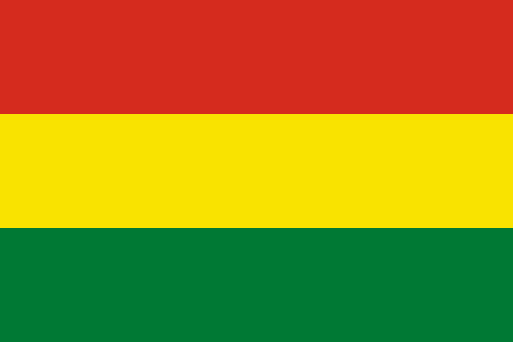
Photo by Albert Backer, CC BY-SA 3.0, via Wikimedia Commons
Overview
Bolivia, officially the Plurinational State of Bolivia, is a landlocked country located in central South America. Its geography primarily consists of an Andean region to the west and tropical lowlands to the east and north. The country has a diverse environment, including the vast Amazonian plain, the Gran Chaco, temperate valleys, the high-altitude Altiplano plateau, snow-capped peaks, and mountains, encompassing a wide range of climates and biomes across its regions and cities. It includes part of the Pantanal, the largest tropical wetland in the world, along its eastern border. Bolivia is bordered by Brazil to the north and east, Paraguay to the southeast, Argentina to the south, Chile to the southwest, and Peru to the west.
Text from Wikipedia, licensed CC BY-SA.
Where to go in Bolivia


Hidden gems
Lesser-known places that travellers on Wikivoyage recommend beyond the main cities of Bolivia: villages, national parks and quiet corners. The short descriptions come from those lists (CC BY-SA).

Sajama National Park
16 places listed
Beautiful Andean landscapes and Bolivia's highest mountain, Nevada Sajama

Torotoro National Park
6 places listed
Popular with travellers that head to Cochabamba for its dinosaur foot prints and remnants, large cave that you can climb into, and vast hiking opportunities.

Huayna Potosí
3 places listed
A popular commercial hiking destination from La Paz. Though, with 6,080 m still 500 m short of Bolivia's highest mountain Nevada Sajama, which can also be climbed.

Isla del Sol
2 places listed
In the south part of Lake Titicaca. A remote island in the middle of the lake. Astonishing landscapes and very old ruins from Inca period make this location a good place to find peace.

Madidi National Park
2 places listed
A few miles north of Apolo, is one of the world's most extensive biodiversity reserves. Its humid tropical climate has spawned one of Bolivia’s richest woodlands.

Noel Kempff Mercado National Park
1 place listed
Impossibly remote and even more impossibly beautiful Amazonian park, home to the stunning Cataratas Arcoiris waterfall

Chacaltaya
No places listed yet
Chacaltaya is a mountain in the Cordillera Real, one of the mountain ranges of the Cordillera Oriental, itself a range of the Bolivian Andes. Its elevation is 5,395 meters (17,700 ft). Chacaltaya's glacier — which was as old as 18,000 years — had an area of 0.22 km2 (0.085 sq mi) in 1940, which had been reduced to 0.01 km2 (0.0039 sq mi) in 2007 and was completely gone by 2009. Half of the meltdown, as measured by volume, took place before 1980. The final meltdown after 1980, due to missing precipitation and the warm phase of El Niño, resulted in the glacier's disappearance in 2009. The glacier was located about 30 kilometers (19 mi) from La Paz, near Huayna Potosí mountain.
Public holidays
National days off in Bolivia in the next twelve months. Offices, banks and many shops close, and transport and stays get busier. Regional holidays and local festivals are not included, and holidays that follow the moon can move by a day.
- Christmas Day · Navidad
- New Year's Day · Año Nuevo
- Plurinational State Foundation Day · Día de la Creación del Estado Plurinacional de Bolivia
- Shrove Monday · Lunes de Carnaval
- Shrove Tuesday · Martes de Carnaval
- Good Friday · Viernes Santo
- Labour Day · Día del Trabajador
- Corpus Christi
- Andean Amazonian Chaqueño New Year · Año Nuevo Andino Amazónico Chaqueño
- Independence Day · Día de la Independencia
- All Souls' Day · Todos Santos
Dates from the date-holidays project, based largely on Wikipedia (CC BY-SA 3.0). Check locally before you plan around a holiday.
Travelling in Bolivia
Getting around the country
By bus. Bus transportation in Bolivia is a nice cheap way to get to see the beautiful scenery while traveling to your destination. Unfortunately the buses often travel solely at night. Keep in mind that roads are occasionally blocked due to protests, often for several days. So ask several companies at the terminal if you hear about blockades, unless you are willing to spend a few days sleeping on the bus. Bus travel is usually pretty cheap. Estimate that it will cost you about US$1 for every hour of travel (it's easier to find travel times online than actual price quotes). Prices do change based on supply and demand. Buses generally do not need to be booked ahead, especially for common distances served by many companies. There are great bargains in it for you the shorter you book ahead. Just arriving at the station one hour before the buses leave can often give you a 30-40% discount over bookings several days before. However, as always, shop around and do not go with the first vendor that intercepts you when you arrive at the bus terminal. Hawkers are constantly crying out destinations in the bigger bus stations cajoling potential riders to take their bus line. If you need to buy a ticket in advance, a good website is: Tickets Bolivia.
By plane. Flying within Bolivia is quick and fairly economical. BoA connects most major cities. Amaszonas Boliviana de Aviación - BoA – the national airline of Bolivia. Provides economical travel between the main cities of Bolivia.
Money and costs
Money. The national currency is the Boliviano (ISO code: BOB), denoted Bs. (with dot). Bills come in denominations of Bs. 200, 100, 50, 20, and 10; coins are in Bs. 5, 2, and 1, and 50, 20, and sometimes 10 centavos (1/10 of a Boliviano). Bills larger than Bs. 50 can be hard to break with smaller stores or vendors, other electronic stores or such dealing with larger amounts will be able to change them for you.
Money exchange. Cash is king in Bolivia and U.S. dollars or euros in cash will get you the best value. Bolivianos can be exchanged for U.S. dollars, euros and most South American currencies at Casa De Cambio agencies or street vendors. However, it can be difficult to change money other than euros and US dollars for a good rate. Expect to negotiate for a favorable exchange rate, as most vendors will try to make money off tourists. As of January 2026, the unofficial exchange rate for US dollars is Bs. 9.65 per dollar depending on what notes you have. See Bolivian Blue for current rates. Often the cambios will display the official rate, but once asked, they will give you the unofficial rate. Nevertheless, street agencies have very competitive U.S. dollar (and even euro) exchange rates with a fee often less than 1% included in the rate. Make sure you check the rates before exchanging money and if you're not happy, simply go to the next one. Do not use banks to change money as they will give you the official exchange rate and you will lose a lot of value. Otherwise U.S.
Language
Bolivia has 37 official languages, of which Spanish (often called Castellano), Quechua, and Aymara are the main ones. Bolivian Spanish is very relatively easy to understand, since they speak relatively slowly and do not swallow syllables, you will feel the differences especially if you arrive to the country from Argentina or Chile, where the people there speak fast and difficult to understand if you are not native speaker. English speakers (even at a very basic level) are very rare and you will have to use Spanish on a daily basis to get by, even in the big city centers. French and Portuguese are very much non-existent in Bolivia.
Customs and manners
Bolivians, like their counterparts on the continent, have a casual view of time. For example, you can expect your Bolivian counterparts to be a few minutes late for an appointment. This is completely normal. That said, you should be on time for business appointments. Impatience is perceived poorly in Bolivian culture. Bolivians try to do things in a carefully planned manner. Raising your voice, losing your temper, or constantly following up with people is only going to make you look bad and insensitive. Show respect and deference to authority figures and those older than you. If you come across someone who is older than you, give up your seat on public transportation for them. If you're waiting for a taxi, allow someone older to take your spot. If someone in a position of authority requests you to do something, do it. It's also customary to address elders with titles like Señor (sir) or Señora (madam). Do not use the word "indio" in Bolivia to describe indigenous people. It is considered offensive. The term they use is "campesino" (which translates to peasant) or "indígena". A "cholo" is a campesino who moved to the city, and though originally derogatory, has become more of a symbol of indigenous power. Nevertheless, some locals still use the word cholo as a derogatory term. It's customary to greet strangers and passersby wherever you go, even on the streets. A simple buenos días would do.
Phones and internet
Phone. Bolivia has three cellphone companies, Entel, Tigo, and Viva. All three have outlets on practically every block in major cities. If you are staying for a while, consider buying SIM cards for your cellphones. They are quite cheap and you get good network coverage in all main cities and towns. Entel sells good-priced international call possibilities for their SIMs, i.e. you can buy 10 mins for Bs. 20 (to be used in one day, disconnects automatically after expiration). You will need to register the SIM card at a local office of the telecom. You will need a photocopy of your passport and the mobile phone that you will use. While traditional payphones still exist, you can also make local calls for Bs. 1 from cellular phones at kiosks.
Internet. Internet cafés are becoming less prevalent with the spread of smart phones making internet access more accessible. However, most larger cities are dotted with Internet/Cyber Cafés, weirdly enough in 2018. General rates are around Bs. 1.50-2.50 per hour. Many cafés have free WiFi for customers, although the speed can vary depending on the number of users connected.
Staying safe
Apply common sense and take precautions that apply elsewhere. All tourists should be careful when selecting a travel guide and never accept medication from unverifiable sources. Female tourists should be cautious when travelling alone. At night try to use radio taxis, as fake cabs are common and robbery and even rape does occur. It is a good idea to register with the consulate of your country of residence upon entry into the country. And it is also helpful learn at least basic Spanish to keep yourself a little safe. When taking an interdepartmental bus (say from La Paz to Cochabamba), do not accept snacks or drinks from nearby passengers. Even though most likely they may just want to be nice, there have been instances that passengers being drugged and robbed during nighttime trips. Say "no, gracias". Always remain cautious and suspicious when approached by someone or get befriended by a stranger in the street. Bolivians are very closed towards foreigners. Even when you do business with them, e.g. buying something, they will rather prefer not to do so. Ask yourself, why would anyone even start a conversation with a tourist when their general mood is often far from friendly and open. There must be something wrong if it is not the owner of your hostel or another Westerner. You are better off to immediately walk away from such a situation, saying Lo siento. There are certainly better ways to find friends in Bolivia.
From the Wikivoyage guide, written by travellers (CC BY-SA), shortened. For entry rules, visas, health and current safety, always check your government's official travel advice (linked above).