

Peru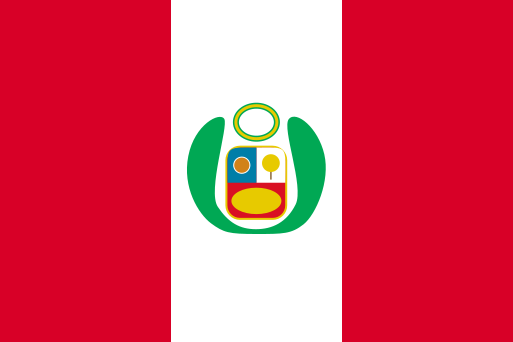
Photo by Ministerio de Defensa del Perú, CC BY 2.0, via Wikimedia Commons
Overview
Peru, officially the Republic of Peru, is a country in western South America. It is bordered to the north by Ecuador and Colombia, to the east by Brazil, to the southeast by Bolivia, to the south by Chile, and to the south and west by the Pacific Ocean. Peru is a megadiverse country, with habitats ranging from the arid plains of the Pacific coastal region in the west, to the peaks of the Andes mountains extending from the north to the southeast of the country, to the tropical Amazon basin rainforest in the east with the Amazon River. Peru has a population of over 32 million, and its capital and largest city is Lima. At 1,285,216 km2 (496,225 sq mi), Peru is the 19th largest country in the world, and the third largest in South America.
Text from Wikipedia, licensed CC BY-SA.
Where to go in Peru


Hidden gems
Lesser-known places that travellers on Wikivoyage recommend beyond the main cities of Peru: villages, national parks and quiet corners. The short descriptions come from those lists (CC BY-SA).

Chavín de Huántar
25 places listed
UNESCO World Heritage Site from the pre-Incan Chavin culture of around 900 BC

Huanchaco
23 places listed
Surfing and fishing village just north of Trujillo

Choquequirao
21 places listed
A large Inca ruin accessible only by a strenuous two-day trek

Nazca
10 places listed
World-famous for its geometrical figures and giant drawings in the desert sand

Colca Canyon
9 places listed
One of the world's deepest canyons, it offers a vibrant indigenous culture

Máncora
9 places listed
Small beach town with the best beaches and great surf, turns into a real party town on weekends and holidays

Paracas
6 places listed
A popular nature reserve on the Southern Coast

Huascarán National Park
4 places listed
High mountain park in Cordillera Blanca range

Maras
2 places listed
Terraced co-centric circles that were used for developing better agricultural crops by Incas. Amphitheater shaped terraces. It probably served as an agricultural laboratory and seed cultivation site.

Uros Islands
2 places listed
Floating islands made of reed that are believed to have been built by the Uros people to flee oppression by other peoples

Caral
1 place listed
A just outside Barranca

Huacachina
1 place listed
An oasis town in the middle of sand dunes.

Isla Amantani
1 place listed
A peaceful island

Vinicunca
1 place listed
Impressive red-colored mountains that has stayed relatively off the beaten path until the 21st century

Ballestas Islands
No places listed yet
Home to various fauna like the guanay guano bird, the blue-footed booby, the tendril, the Humboldt penguin, fur seals and sea lions

Cerros de Amotape National Park
No places listed yet
Protected natural area with dry forests, tropical forests and endangered species such as the Tumbes crocodile.

Cotahuasi Canyon
No places listed yet
More than twice as deep as the Grand Canyon

Gocta
No places listed yet
A waterfall near Chachapoyas with a main drop, readily accessible via a short hike

Isla Taquile
No places listed yet
The "island of the knitting men" is a popular destination for tours from Puno

Kuelap
No places listed yet
An impressive walled city built by the Chachapoyas culture and expanded by the Incas; the main access is via a stunning cable car ride

Manú National Park
No places listed yet
One of the most diverse areas in Peru

Rio Abiseo National Park
No places listed yet
Mixed World Heritage site located in Huicungo District, Mariscal Cáceres province. In south of the region.

Sillustani
No places listed yet
A pre-Inca cemetery on the shores of Lake Umayo; its tombs are built above ground in tower-like structures called chullpas.
Public holidays
National days off in Peru in the next twelve months. Offices, banks and many shops close, and transport and stays get busier. Regional holidays and local festivals are not included, and holidays that follow the moon can move by a day.
- Immaculate Conception · La inmaculada concepción
- Battle of Ayacucho · Batalla de Ayacucho
- Christmas Day · Navidad
- New Year's Day · Año Nuevo
- Maundy Thursday · Jueves Santo
- Good Friday · Viernes Santo
- Easter Sunday · Pascua
- Labour Day · Día del Trabajador
- Battle of Arica and Flag Day · Batalla de Arica y Día de la Bandera
- Saints Peter and Paul · San Pedro y San Pablo
- Peruvian Air Force Day · Día de la Fuerza Aérea del Perú
- Independence Day · Día de la Independencia
- Independence Day · Día de la Independencia
- Battle of Junín · Batalla de Junín
- Santa Rosa de Lima · Día de Santa Rosa de Lima
- Battle of Angamos · Combate de Angamos
- All Saints' Day · Todos los Santos
Dates from the date-holidays project, based largely on Wikipedia (CC BY-SA 3.0). Check locally before you plan around a holiday.
Travelling in Peru
Getting around the country
Times and distances. Almost all major tourist destinations outside Lima are between one and one and a half hours by plane from the capital. Flying is the most convenient way for getting around Peru. For example, from Lima to Zorritos in Tumbes (beautiful beach with modern resorts), the bus travel time is 21 hours. Yurimaguas-Iquitos (water): 2½ days Quito-Lima (bus): 27 hours Lima-Cuzco (bus): 21 hours Lima-Cuzco (plane): 1½ hours
In cities and around. ]] Inside the cities, there is usually no problem getting around on city buses or taxis. Buses cost S/0.70-1.50 (soles) inside a city, taxis S/7-8 in Lima, normally less in other cities. "Taxi" does not necessarily mean a car; the term also refers to bicycles, motor rickshaws, and motor bikes for hire. Taxis are divided between "formal" taxis, painted and marked as such and have a sticker with SOAT, and informal ones, that are just cars with a windshield sticker that says "Taxi". The last ones are better left to the locals, especially if you don't speak Spanish. Apart from the more upscale radio taxi (also the more expensive ones), the fare is not fixed or metered, but it is negotiated with the driver before getting into the vehicle. Ask at your hotel or hostal about the rate you may expect to pay to ride to a specific location to have a point of reference. Tipping is not practiced in taxis. "Micros" (from microbús), "combis" and "coasters" they have bus stops but might also stop in the middle of the road.
Money and costs
Money. The currency of Peru is the sol (ISO code: PEN), symbolised as S/. It is one of the more stable currencies in South America. Coins are available in denominations of 1, 5, 10, 20 and 50 centimos, 1, 2 and 5 sols. 5 and 1 centimo coins are not normally accepted outside of big supermarkets or banks, so avoid them (or bring them home for a collection or to give to friends). Banknotes are available in denominations of 10, 20, 50, 100 and 200 soles; 200 soles notes are uncommon and, just like large bills in many countries, will not always be accepted.
ATMs. ATMs are available in most cities and larger towns, upmarket hotels, and tourist areas. With a Cirrus or Maestro sign on it, you can withdraw cash easily. The exchange rate is the same as credit cards. The per-transaction withdrawal limits are generally low and withdrawal fees are high (Feb 2018): Scotiabank: limit S/400, fee S/20 Globalnet ATMs: limit S/400, fee S/19 BBVA: limit S/400, fee S/18 Banco de la Nacion: limit S/400 BanBif: limit S/700, fee S/18 Banco de Crédito del Perú (BCP): limit S/700, fee S/13.50, but you can only do this once per calendar month with each foreign card If your bank is part of the Global ATM Alliance, Scotiabank is the local partner for fee-free withdrawals. As of 2024, Banco de la Nacion (whose ATMs are labelled MultiRed) appears to be the only one that does not charge a fee for a withdrawal. Most other ATMs belong to the GlobalNet network, and charge high fees.
Language
in traditional dress]] The official language of Peru is Spanish, as in most South American countries. It's worth getting familiar with some basic Spanish words, as you'll need them to make your way around outside the main tourist centres. Although English is spoken by an increasing number of young people in Lima and to a limited extent in the most popular tourist spots, you'll find English far less commonly understood than you might expect in a country where tourism is such a big industry. Especially when you're making your own way around, learning some Quechua or Aymara may open doors, as indigenous people will highly appreciate your effort. Quecha is the language of the Incas and the first language for many indigenous in the countryside of the Sierra.
Customs and manners
Don't use the word indio, even though it's Spanish. For natives, it's very much like the English n-word, since it was used by Spanish conquerors. The politically correct way of speaking is el indígena or la indígena — although, like the n-word, very close people inside a circle of friends can get away with it. Another word to be careful with is cholo, chola, or cholita, meaning indígena. This may be used affectionately among indigenous people (it's a very common appellation for a child, for instance), but it's offensive coming from an outsider. The n-word is used, but in a funny/playful way, so If you hear it in the street, don't be offended right away. Even if you have about 20 No Drugs t-shirts at home, accept that people — especially from the countryside — chew coca leaves. See it as a part of the culture with social and ritual components. Keep in mind that coca leaves have much lower concentration of cocaine than cocaine used by drug addicts, and are legal in Peru. You can try them to experience the culture. If you don't like to chew them, try a mate de hojas de coca (also quite effective against altitude sickness). However, coca leaves and its derivative products are considered drugs in other countries, so you should never bring them across the border. Moreover, the use of coca leaf tea may lead to testing positive on drug tests within the next few weeks: see our article on Coca for more information.
Phones and internet
In all but the smallest towns and villages, one can find public telephones for national and international calls. Most are in bars or stores. Some of them accept coins, but watch out for stuck coins or dodgy-looking coin receivers as these might make you lose your money. Don't worry if your 1 Nuevo Sol coins don't get through at first, just keep trying and it will eventually work. Many public phones can be expensive, and an attractive alternative is a Locutorio, or "call-center". Typical rates include S/0.2 per minute for calls in the country, and S/0.5 per minute for most international calls. You also can buy phone cards with a 12-digit secret number on it. Using a phone card, first dial 147. When done so, you will be told how much your card is still valid and be asked (in Spanish, of course) for your secret number. After having typed it, you are asked for the phone number you want to connect to. Type it in. Then you get told how much time you can talk. After that, the connection is tried. For international calls, it is often a good idea to go to an Internet café that offers Internet-based phone calls. You find them in the cities.
Tourist offices. iperú
Staying safe
Dial 911 for all emergency services, but dialing the old 105 can also connect you with the police. In Lima and some of the larger cities there is a sort of local police called "Serenazgo": you may ask for help but they have no tourist oriented services. Be aware of your surroundings and try to avoid unlit or unpopulated areas, especially at night. There is a lot of petty crime that can turn violent. Avoid groups of male youngsters since there are many small gangs trying to rob passers-by. If you witness a robbery be very careful before intervening, since robbers may be armed and are quite prone to shooting if they feel threatened. Armed robberies of tourists are fairly common. A dirty old backpack with valuable contents is safer than a new one with old clothes in it. It's often good not to look too rich. Some travelers don't use wallets, but keep the bills and coins directly in their pocket. Let's say some little bills on the left side and the rest on the right side. Thus, the pickpocket's job gets much harder. Don't walk around with debit or credit cards in your pocket. Leave them in a safe place when you do not immediately need them, because tourists have been kidnapped and forced to take out money each day for a period of a few days. If you want to take large amounts of cash out with you, a neck wallet is always a good idea - you can hide it under your shirt. Watch out for false bills. Every bank has posters that explain what to check for when getting higher valued bills.
From the Wikivoyage guide, written by travellers (CC BY-SA), shortened. For entry rules, visas, health and current safety, always check your government's official travel advice (linked above).