

Ecuador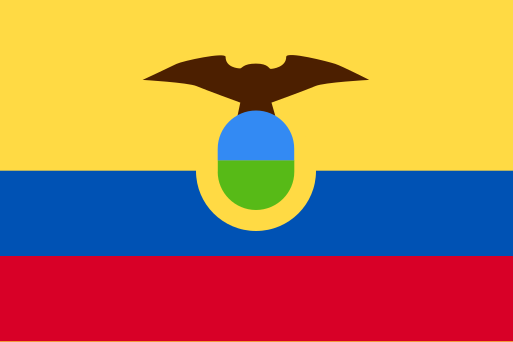
Photo by Asamblea Nacional del Ecuador, CC BY-SA 2.0, via Wikimedia Commons
Overview
Ecuador, officially the Republic of Ecuador, is a country in northwestern South America, bordered by Colombia on the north, Peru on the east and south, and the Pacific Ocean on the west. It also includes the Galápagos Province which contains the Galápagos Islands in the Pacific, about 1,000 kilometers west of the mainland. The country's capital is Quito, and the largest city is Guayaquil.
Text from Wikipedia, licensed CC BY-SA.
Where to go in Ecuador


Hidden gems
Lesser-known places that travellers on Wikivoyage recommend beyond the main cities of Ecuador: villages, national parks and quiet corners. The short descriptions come from those lists (CC BY-SA).

Esmeraldas
24 places listed
A lesser visited city to the north of some of the most popular beaches in Ecuador.

Montañita
23 places listed
World-famous surfing beach and beach hangout.

Mindo
19 places listed
Excellent bird watching in a cloud forest setting.

Puerto López
16 places listed
Beautiful small ocean side city, access point for Machalilla National Park, and Isla de la Plata "Poor Man's Galapagos".
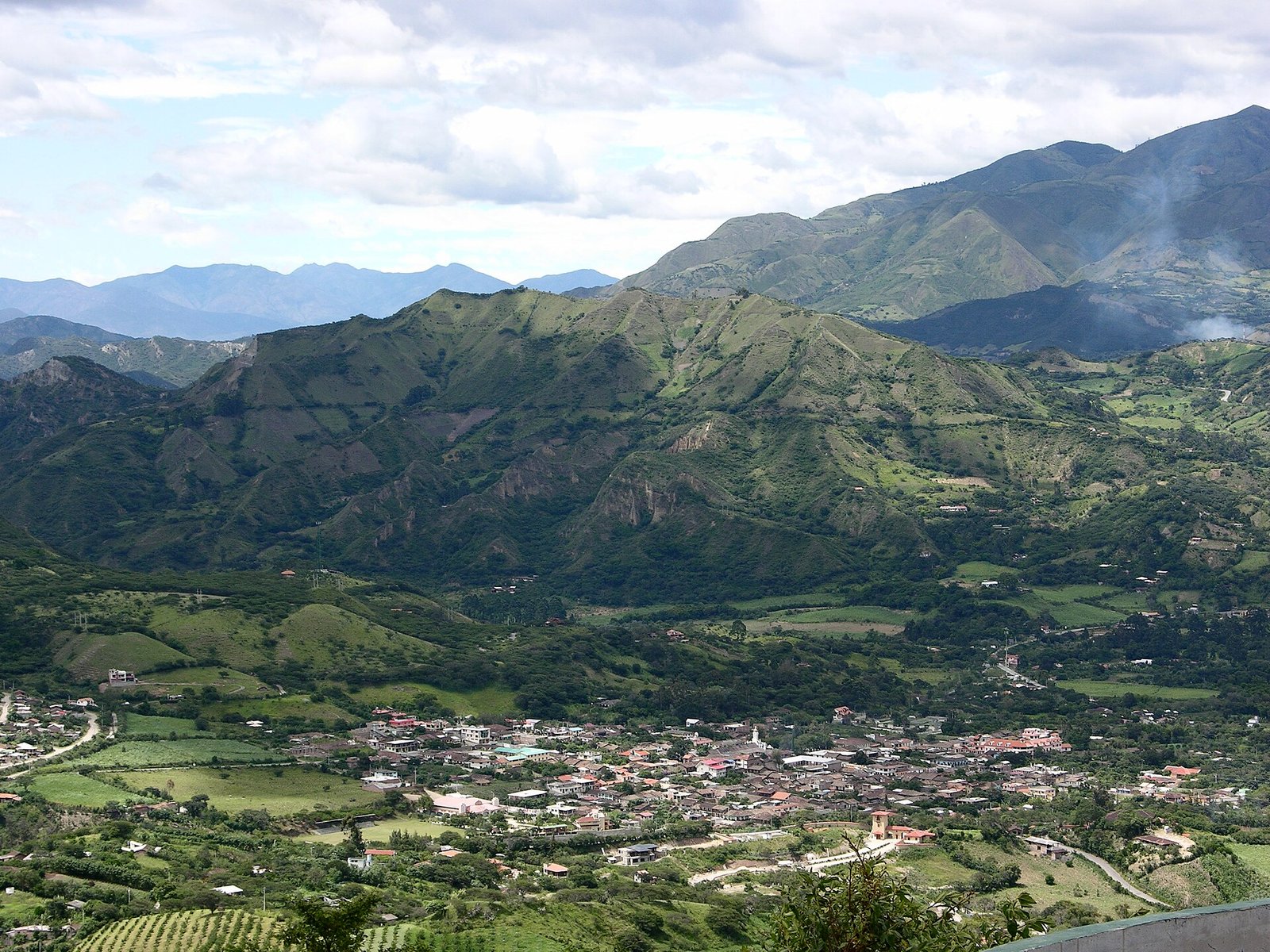
Vilcabamba
15 places listed
Popular for expats living and retiring, and famous for its legendary older inhabitants whom claim to have some of the longest lifespans in the world.

Canoa
14 places listed
Small beach town.

Baeza
9 places listed
Gateway to the northern Oriente and up-and-coming mountain town -- still has sleepy small-town feel.

Cuyabeno Wildlife Reserve
7 places listed
The Cuyabeno Wildlife Reserve is the second largest reserve of the National System of Protected Areas (SNAP) of Ecuador which includes 59 state owned areas plus an additional dozen of privately owned areas. It is located in the Putumayo Canton in the Sucumbíos Province and in the Aguarico Canton in the Orellana Province. It was decreed on 26 July 1979 as part of the creation of the national protected areas system based on the recommendations of the FAO report on the "National Strategy on the Conservation of Outstanding Wild Areas of Ecuador"., in which about 30 of the Andean and coastal areas to be protected were based on the explorations of Alan Putney and his team, while 9 areas in the Amazon region on the explorations of Dr. Daan Vreugdenhil. Originally it included only the watershed of the Cuyabeno River of about 150,000 hectares.

Laguna Quilotoa
6 places listed
Quilotoa is a water-filled crater lake and the most western volcano in the Ecuadorian Andes. The 3-kilometre-wide (2 mi) caldera was formed by the collapse of this dacite volcano following a catastrophic VEI-6 eruption about 800 years ago, which produced pyroclastic flows and lahars that reached the Pacific Ocean, and spread an airborne deposit of volcanic ash throughout the northern Andes. This last eruption followed a dormancy period of 14,000 years and is known as the 1280 Plinian eruption. The fourth eruptive phase was phreatomagmatic, indicating that a crater lake was already present at that time. The caldera has since accumulated a 250-metre-deep (820 ft) crater lake, which has a greenish color as a result of dissolved minerals. Fumaroles are found on the lake floor, and hot springs occur on the eastern flank of the volcano.

Salinas
6 places listed
Beautiful beach and boardwalk, swamped with Guayaquileños during holidays.

Tena
6 places listed
Amazon rain forest town famous for some of the best white water rafting and kayaking in Latin America.

Cayambe Coca National Park
5 places listed
Draws mountaineering visitors to several mountain peaks, including the third highest peak in Ecuador, and nature lovers to look for the diverse animal and plant species throughout the park

Yasuni National Park
3 places listed
Yasuní National Park is a protected area comprising roughly 10,000 km2 (3,900 sq mi) between the Napo and Curaray Rivers in Pastaza and Orellana Provinces within Amazonian Ecuador. The national park lies within the Napo moist forests ecoregion and is primarily rain forest. The park is about 250 km (160 mi) from Quito and was designated a UNESCO Biosphere Reserve along with the adjacent Waorani Ethnic Reserve in 1989. It is within the ancestral territory of the Huaorani indigenous people. Yasuní is also home to two uncontacted indigenous tribes, the Tagaeri and the Taromenane. Many indigenous people use the riverways within the park as a main mode of travel. Several waterways in the area are tributaries that lead into the Amazon River, including blackwater rivers high in tannins boasting vastly different floral composition than the main riverways.

Guamote
1 place listed
A cosy and authentic Andean village though easy accessible.

El Cajas National Park
No places listed yet
Highland park with mountainous terrain, abundant lakes and diverse wildlife

Laguna Cuicocha
No places listed yet
Cuicocha is a 3 km (1.9 mi) wide caldera and crater lake at the foot of Cotacachi Volcano in the Cordillera Occidental of the Ecuadorian Andes.

Limoncocha
No places listed yet
Limoncocha National Biological Reserve is a nature reserve is located 229 miles from Quito, Ecuador. The reserve includes over 11,000 acres (44 km2) of land in the Shushufindi Canton, Sucumbíos Province.

Llanganates National Park
No places listed yet
Mountainous park that's rumored to hold a lost treasure worth a king's ransom

Machalilla National Park
No places listed yet
Coastal reserve that includes small offshore islands

Puyo
No places listed yet
Amazon rain forest town frequently destination of downhill bicycle rides from Baños.

Sangay National Park
No places listed yet
Sangay National Park is a national park located in the Morona-Santiago, Chimborazo, Tungurahua, Cañar, and Azuay provinces of Ecuador. The park contains two active volcanoes, one extinct volcano El Altar. Protecting a range of elevations from 900 to 5,319 meters above sea level, Sangay National Park contains a wide variety of habitats, including glaciers, volcanic landscapes, tropical rainforests, cloud forests, wetlands, grasslands, and one of the largest regions of páramo in Ecuador. 327 lakes feed into a vast wetland system covering 31.5 square kilometers (12.2 mi2).

Sumaco Napo-Galeras National Park
No places listed yet
Sumaco Napo-Galeras National Park is a protected area in Ecuador situated in the Napo Province, Orellana Province and Sucumbíos Province. The highest point of the park is the Sumaco volcano that peaks at 3,732 m; the lowest altitude is 600 m.

Yacuri National Park
No places listed yet
Yacurí National Park is a 431-square-kilometre (166 mi2) National Park in Ecuador located on the border between the provinces Loja and Zamora Chinchipe. It is part of a larger Protected Forest of 733 km2 (283 mi2). It was founded in 2009. The headwaters for both the Chinchipe-Mayo (east) and Catamayo-Chira (west) water basins are in the park.
Guaranda
10 places listed
A small Andean city famous for its Carnaval celebrations.
Podocarpus National Park
No places listed yet
Podocarpus National Park is a national park located in the provinces of Zamora Chinchipe and Loja, in the south-east of Ecuador. It was created in 1982.
Pululahua Geobotanical Reserve
No places listed yet
Reserva Geobotánica Pululahua is a protected area around Pululahua Volcano in the north of Quito Canton, Pichincha Province, Ecuador. It is 17 km north of Quito, in the northwestern part of the Pomasqui Valley. The most notable feature of this site is "el cráter de Pululahua", which is one of only two volcanic craters in the world inhabited by humans. Often, this reserve is shrouded in a thick layer of clouds or fog. The land here is extremely fertile because it is volcanic (igneous) soil and, as mentioned earlier, is used to cultivate crops.
Public holidays
National days off in Ecuador in the next twelve months. Offices, banks and many shops close, and transport and stays get busier. Regional holidays and local festivals are not included, and holidays that follow the moon can move by a day.
- Christmas Day · Navidad
- New Year's Day · Año Nuevo
- Carnival · Carnaval
- Shrove Tuesday · Carnaval
- Maundy Thursday · Jueves Santo
- Good Friday · Viernes Santo
- Labour Day · Día del Trabajador
- The Battle of Pichincha · Batalla del Pichincha
- Declaration of Independence of Quito · Día del Primer Grito de Independencia de Quito
- Independence of Guayaquil · Independencia de Guayaquil
- All Souls' Day · Día de los Difuntos
- Independence of Cuenca · Independencia de Cuenca
Dates from the date-holidays project, based largely on Wikipedia (CC BY-SA 3.0). Check locally before you plan around a holiday.
Travelling in Ecuador
Getting around the country
By bus. Intercity buses travel to almost everywhere in Ecuador. Many cities have a central bus terminal, known as a terminal terrestre, where it is possible to buy tickets from the various bus lines that serve the city. Long-distance buses typically cost US$1-2 per hour, depending on the distance and the type of service; groups may be able to negotiate discounts. Buses are frequent along major routes, and are also used for transporting cargo/packages. Reservations or advance purchases usually aren't needed except during peak periods such as holidays. The bathroom on the bus, if any, is usually reserved for women. However, it is permissible for men to request that the bus make a stop so that they might relieve themselves. The bus rides themselves are often quite beautiful, through mountain views in the clouds. These altitude changes cause many of the same ear pressure problems which are associated with an airplane ride. The bus driver will stop along the way to board additional passengers, and load/unload cargo. Buses will also board vendors selling affordable drinks and snacks at stops, which is helpful on long hauls. Many buses arrive at their destination with passengers standing in the aisle. There are a few first class buses, called "Ejecutivo", which cost a little more than the regular buses. They are generally more comfortable and safer.
Money and costs
Money. Ecuador adopted the United States dollar ("$", ISO currency code: USD) as its currency in 1999. Other types of currency are not readily accepted. Ecuador has its own coins. These are exactly the same size and weight as American coins, and both are accepted. U.S. dollar coins are widely used, and preferred to $1 bills. American bills are used for higher values, Ecuador does not print any itself. Coins in Ecuador are issued in denominations of 1, 5, 10, 25 and 50 centavos. Ecuadorian centavo coins are equal to U.S. coins in value (1 centavo (penny), 5 centavos (nickel), 10 centavos (dime), 25 centavos (quarter dollar) and 50 centavos (half dollar)). Many merchants examine large bills ($10 and above) carefully to make sure they aren't counterfeit. Frequently, businesses will not accept $50 bills or $100 bills at all. One must usually go to a bank in order to break $100 bills. Outside of tourist areas and Quito, many merchants do not keep large amounts of money on hand, so getting change for bills large and small may be difficult. This is especially true on cheaper buses. Take lots of one and five dollar bills with you; you will also want to bring the newest possible bills. Worn bills are often regarded with suspicion, and it is not uncommon for a merchant to ask you to pay with another bill if the one you handed them appears old or worn.
Banking. Credit and debit cards are accepted at many places that cater to tourists as well as at some upscale shops.
Language
Spanish is the official language. Amerindian languages (especially Quechua) are generally spoken in the more rural, mountainous villages. English is widely spoken in hotels, restaurants and other businesses that cater to high-end travellers. Ecuadorians are friendly and generally tolerant of foreigners who attempt to speak Spanish but make mistakes.
Customs and manners
The common greetings are "buenos días", "buenas tardes" or "buenas noches", (Good morning, Good afternoon, and Good evening, respectively). It is usually complemented by a handshake, between men, and by a kiss on the cheek between women or between a man and a woman. "Hola" is the most common greeting between friends and acquaintances. As in most Latin American countries, it's considered normal and polite to stand quite close to the other person while talking. If you speak Spanish with Ecuadorians, take note of the difference between the two forms for the pronoun "you": the informal "tú" and the formal "usted". It's customary to address older people and people with whom you're not familiar with "usted". Ecuadorans are generally forgiving of non-native speakers, but use "usted" when in doubt. Among many other cultural idiosyncrasies, in the Sierra regions it is considered impolite to use a downward-facing palm as a reference for the height of a person. Instead, the hand is held on its side, and the measurement taken from the lower edge to the floor. Gesturing with the palm down is appropriate for animals only. When motioning for someone to "come here", it is impolite to motion your hand with the palm facing up. Instead, use a downward swipe of the hand with the palm facing down. Acceptable clothing varies by region of the country. In the mountainous Sierra region, including Quito, clothes are usually warmer because of the weather.
Phones and internet
Internet. Internet cafés can be found nearly everywhere in the major cities and in many of the smaller ones, though you may also encounter a gaming café. Cost is from $1 to $2 per hour in the large cities, and the better places have high-speed access. In some cafes, restaurants, and hotels you can find free Wi-Fi access, most of them protected by passwords; in most cases, you just have to ask for the password.
Telephone. For most visitors, the easiest place to make phone calls is an Internet cafe, most of which provide VOIP service at reasonable rates. You can call the United States for about $0.10 per minute and Europe for a bit more. Avoid making a phone call through an operator; the cost for an international call can be $3 or more per minute. For calls within Ecuador, it is possible to use a telephone cabin. This is an entire storefront filled with telephones. Generally, you are assigned a booth by the proprietor, you make your call, then you pay as you leave. Calls within Ecuador are more expensive than domestic calls in most countries, but not unreasonable, except for calls to cell phones, which generate most of their revenue by charging the caller.
Staying safe
Tourists should use common sense to ensure their safety. Avoid problems by not flashing large amounts of money, not visiting areas near the Colombian border, staying away from civil disturbances and not using side streets in big cities at night. Probably the biggest threat in most places is simple thievery: belongings should not be left unguarded on the beach, for example, and pickpockets can be found in some of the more crowded areas, especially the Trolébus (Metro) in Quito, in bus terminals and on the buses themselves. Buses allow peddlers to board briefly and attempt to sell their wares; however, they are often thieves themselves, so keep a close eye out for them. Hotel personnel are generally good sources of information about places that should be avoided. You can always ask tourist police officers, police officers or in tourist information centers for the dangerous regions. Ecuador offers great opportunities for hiking and climbing; unfortunately, some travelers have been attacked and robbed in remote sections of well known climbs and several rapes have also been reported, so female hikers and climbers need to be extremely careful. Travelers are urged to avoid solo hikes and to go in a large group for safety reasons.
From the Wikivoyage guide, written by travellers (CC BY-SA), shortened. For entry rules, visas, health and current safety, always check your government's official travel advice (linked above).