

South Sudan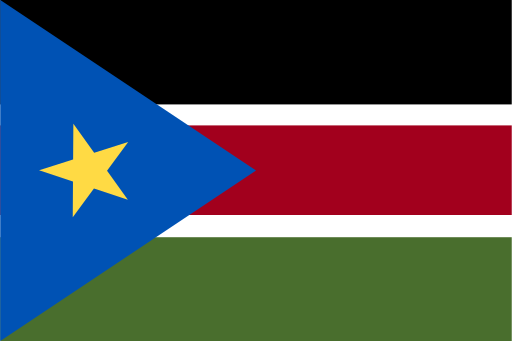
Photo by Jens Klinzing, CC BY-SA 3.0, via Wikimedia Commons
Overview
South Sudan, officially the Republic of South Sudan, is a landlocked country in East Africa. It is bordered by Sudan to the north, Ethiopia to the east, Kenya to the southeast, Uganda to the south, the Democratic Republic of the Congo to the southwest, and the Central African Republic to the west. South Sudan's diverse landscape includes vast plains and plateaus, dry and tropical savannahs, inland floodplains, and forested mountains. The Nile River system is the defining physical feature of the country, running south to north across its center, which is dominated by a large swamp known as the Sudd. South Sudan has an estimated population of just over 12.7 million in 2024. Juba is the capital and largest city.
Text from Wikipedia, licensed CC BY-SA.
Where to go in South Sudan


Hidden gems
Lesser-known places that travellers on Wikivoyage recommend beyond the main cities of South Sudan: villages, national parks and quiet corners. The short descriptions come from those lists (CC BY-SA).
Nimule National Park
1 place listed
A national park along the White Nile
Bandingilo National Park
No places listed yet
The Boma-Bandingilo National Park, sometimes spelled Badingilo, is a national park located in South Sudan's Equatoria region. The park covered the erstwhile states of Central Equatoria and Eastern Equatoria. It was established in 1992. Situated in a wooded area near the White Nile river, it is over 10,000 square kilometres (3,900 sq mi) in size. It also contains large marshlands stretching up into Jonglei state.
Boma National Park
No places listed yet
Boma National Park is a protected area in eastern South Sudan near the Ethiopian border. It was established in 1977 and covers 22,800 km2 (8,800 sq mi) of grasslands and floodplains.
Public holidays
National days off in South Sudan in the next twelve months. Offices, banks and many shops close, and transport and stays get busier. Regional holidays and local festivals are not included, and holidays that follow the moon can move by a day.
- Christmas Day
- Republic Day
- New Year's Eve
- New Year's Day
- Peace Agreement Day
- International Women's Day
- End of Ramadan (Eid al-Fitr)
- SPLA Day
- Feast of the Sacrifice (Eid al-Adha)
- Independence Day
- Martyrs Day
Dates from the date-holidays project, based largely on Wikipedia (CC BY-SA 3.0). Check locally before you plan around a holiday.
Travelling in South Sudan
Getting around the country
.|320px]]
By car. Roads are unpaved, and during the rainy season from July to October and November, they often become impassable. Infrastructure is non-existent,
Money and costs
Money. The currency of the country is the South Sudanese pound (ISO currency code: SSP). The official rate or "bank exchange rate" (above) is what you would see on sites like Oanda and mataf.net. You can exchange your money by paying in US dollars at supermarkets like Juba Mall, Lily's, and Phoenicia. They will ask you if you want your change to be in USD or SSP. There are also money changers that line some streets with stacks of SSPs but be wary of them. As of Jan 2026, the black market rate for US dollars is SSP 5,800. Coins in South Sudan come in denominations of 10-, 20 and 50 piasters, 1 and 2 South Sudanese pounds. Banknotes in South Sudan come in denominations of 5-, 10 and 25 piasters, 1-, 5-, 10-, 20-, 25-, 50-, 100-, 500 and 1,000 South Sudanese pounds. You can withdraw money with a Visa or MasterCard credit/debit card in any of the Ecobank or Equity bank ATMs in South Sudan.
Souvenirs. Maasai Market. The Maasai Market is a souvenir place but the items sold here are souvenirs from Kenya and Uganda, not from Juba. Shea butter. You can buy unprocessed shea butter from the market.
Language
English and Arabic (Juba Arabic) are the official languages of South Sudan, although Dinka is the most widely spoken language. Jur Modo, Nuer, Chollo/Shilluk, and Zande languages are also spoken there.
Phones and internet
Telephone country code for South Sudan is +211, previous to 2011 it used the Sudan country code +249 so some numbers printed may need to be corrected. Local numbers are a 7 digit number preceded by a 2 digit provider code, those starting with a 1 are fixed line those with 9 mobile. Roaming with foreign phones/SIM cards does not usually work in South Sudan. For mobile communications, you will need to purchase a SIM card from one of the local networks (Zain or MTN). Bring an unlocked phone.
Staying safe
Although the level of violence has subsided since the establishment of the country and the end of the civil war, South Sudan remains dangerous for travel as ceasefire violations and boundary disputes have continued. Guns are freely and readily available to the populace, and it is not uncommon to hear gunshots being fired in broad daylight. Travel near the Sudan or Central African Republic borders is extremely dangerous. Western governments continue to advise against all travel to South Sudan and the adjacent regions in Sudan. Violent crime remains problematic; unexploded ordnance from years of civil war also poses hazards to civilians.
Photography. South Sudan has very strict photography laws. For any kind of photography, you are required to obtain a photography permit from the Ministry of Interior. Be very mindful of what you take pictures of, and do not take photos randomly; foreign tourists have been arrested and physically assaulted by South Sudanese law enforcement for simply taking photographs. To err on the side of safety, keep the following in mind: Never take a photograph of a South Sudanese person without their explicit permission. Never take photographs of government buildings, vehicles, military personnel, or law enforcement personnel. Never take photographs of airports, bridges, or gas stations.
Authorities. South Sudan is one of the most unstable, lawless, and corrupt countries in the world. Many scholars regard South Sudan as a kleptocracy.
From the Wikivoyage guide, written by travellers (CC BY-SA), shortened. For entry rules, visas, health and current safety, always check your government's official travel advice (linked above).