

Uganda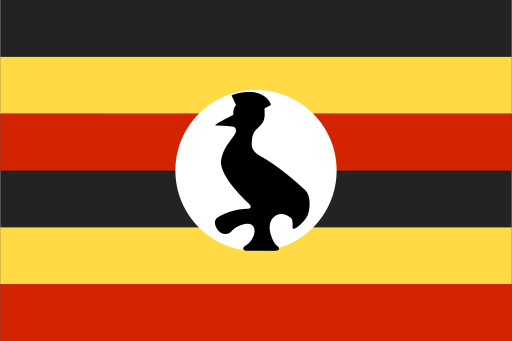
Photo by kousek_cz, CC BY 3.0, via Wikimedia Commons
Overview
Uganda, officially the Republic of Uganda, is a landlocked country in East Africa. It is bordered to the east by Kenya, to the north by South Sudan, to the west by the Democratic Republic of the Congo, to the south-west by Rwanda, and to the south by Tanzania. The southern part includes a substantial portion of Lake Victoria, shared with Kenya and Tanzania. Uganda is in the African Great Lakes region, lies within the Nile basin, and has a varied equatorial climate. As of 2024, it had a population of 45.9 million, of whom 1.8 million live in the capital and largest city, Kampala.
Text from Wikipedia, licensed CC BY-SA.
Where to go in Uganda

Hidden gems
Lesser-known places that travellers on Wikivoyage recommend beyond the main cities of Uganda: villages, national parks and quiet corners. The short descriptions come from those lists (CC BY-SA).

Northern Uganda
26 places listed
A former game reserve that has been turned into farmland, but with a wildlife management programme to manage the wild life that still passes through the area.

Mgahinga Gorilla National Park
14 places listed
A bit off the beaten track, this park is home to the beautiful Virunga Mountains as well as to its own gorilla troop and a range of other wildlife

Pian Upe Wildlife Reserve
5 places listed
The Pian Upe Wildlife Reserve is a conservation area in the Karamoja subregion of northeastern Uganda. It is the second largest conservation protected area in Uganda.

Murchison Falls National Park
4 places listed
Along the river Nile, this excellent park offers great wildlife and bird watching and is home to the striking and powerful Murchison Falls.

Nyero Rock Paintings
4 places listed
The Nyero rock paintings are located in eastern Uganda in Kumi District, 8 km (5.0 mi) west of Kumi town, about 250 km (155.3 mi) from the capital city Kampala. The Nyero rock paintings are among the most important rock art in Uganda.

Kidepo Valley National Park
3 places listed
Located in the extreme NE corner of Uganda on the South Sudan border. Incredible wildlife here that comes right up to the Apoka Lodge. Elephants, zebras, Nile buffaloes, kobs often visit the lodge.

Lake Bunyonyi
3 places listed
Is probably one of the deepest lakes in Africa. Its twenty nine islands offer a variety of accommodation including backpackers and swimming is popular due to the small numbers of bilharzia parasites and absence of hippos and crocodiles. The lake is 25 km (15.5 mi) long and 7 km (4.3 mi) wide and lies at an altitude of 1,950 m (6,437 ft).

Ssese Islands
3 places listed
Is a beautiful stretch of islands on Victoria Lake with isolated beaches and a bit of jungle. Jungle walks you could easily manage on your own, spending half a day.

Bwindi Impenetrable National Park
2 places listed
With half of the world's population of mountain gorillas, this is the main place to see them

Queen Elizabeth National Park
1 place listed
Has several parts to it, but the main section between Lake Edward and Lake George is a more concentrated version of East African parks as far as animals are concerned, although with less splendid vistas unless the mist-shrouded Ruwenzori Mountains are visible. The Ugandan kob is an endemic antelope (and is on the coat of arms along with the crested crane, including on currency). Worth considering is a drive among volcanic crater lakes on the south edge of the Ruwenzori Range. Kazinga Channel has the greatest concentration of Hippos in Africa in this park and the park is home to the famous tree climbing lions.

Kibale Forest National Park
No places listed yet
Near the town of Fort Portal is famed for chimpanzee tracking and is highly recommended. Twitchers will know that some of the best birding in central Africa is here too. The Kasese Crater Lakes are in the area.

Lake Mburo National Park
No places listed yet
Lake Mburo National Park is a national park located in Nyabushozi County, Kiruhura District in Uganda.

Rwenzori Mountains National Park
No places listed yet
Is a mountain range in south-west Uganda bordering the Democratic Republic of the Congo. It is 120 km (75 mi) long and 48 km (30 mi) wide with its highest peak at Mt Stanley (5109 m/16,761 ft). The range was first described in the 2nd century by ancient Greek astronomer Ptolemy as the "Mountains of the moon", and first ascended in 1896 by Italian explorers. By the end of 2006, its ice cap has retreated from 6.4 km² (2.5 sq mi) a century ago, to less than 1.28 km² (0.5 sq mi). In the Rwenzori Mountains near Fort Portal you find Mitandi. The place represents a unique opportunity to explore the mountains and get to know the culture of the local Bakonzo mountain people.
Ajai Game Reserve
No places listed yet
Fairly small reserve on the east bank of the Albert Nile
Public holidays
National days off in Uganda in the next twelve months. Offices, banks and many shops close, and transport and stays get busier. Regional holidays and local festivals are not included, and holidays that follow the moon can move by a day.
- Christmas Day
- Boxing Day
- New Year's Day
- Liberation Day
- Archbishop Janan Luwum Day
- International Women's Day
- End of Ramadan (Eid al-Fitr)
- Good Friday
- Easter Sunday
- Easter Monday
- Labour Day
- Feast of the Sacrifice (Eid al-Adha)
- Martyr's Day
- National Heroes Day
- Independence Day
Dates from the date-holidays project, based largely on Wikipedia (CC BY-SA 3.0). Check locally before you plan around a holiday.
Travelling in Uganda
Getting around the country
By boda-boda. In Kampala and some other towns, the boda-boda is a good way to get from place to place. These are small mopeds, motorcycles, bicycles or scooters with cushions on the back and are cheap transport as used by locals. If using a boda-boda, be extremely careful as they are frequently involved in accidents; however, in spite of this, they are a fun and fast way to get around. If you advise the driver that you want him to drive slower and safer, he may actually listen to you. Make sure you agree on the price before you get on the bike. They will try to charge more claiming it was further than thought. Some may get aggressive, say you will call the police and they will calm down. Always be polite and non aggressive. Make sure you tell them to drive slowly. Many foreigners and locals are injured and killed on Boda Bodas in Uganda.
By bus. Uganda has a decent bus system. There are two classes of buses. The "taxis" (also called "takisi") are actually minibuses or commuter vans, which run fixed routes (see below). There are also real buses which run less frequently, usually leaving Kampala early in the morning. There are many companies most of which leave from the same general area. For example, Postbus has safe, comfortable and reliable buses going to most towns in Uganda. They depart from Kampala General post office from 07:00/08:00. The buses fill up, so if you get on mid-trip, you'll be spending some time standing or sitting in the aisle before somebody gets off and you can get a seat.
Money and costs
Money. The national currency is the Ugandan shilling, sometimes written as "USh" or "Shs" (ISO code: UGX). You'll also see this notation: 5,000/-. There are banknotes in denominations of USh1000-, 2000-, 5000-, 10,000-, 20,000 and 50,000 and coins in denominations of USh50-, 100-, 200 and 500 (10, 5, and 1-, 5 and 10 shillings coins but are rarely used). Do not accept banknotes from the 1987 series of notes: they are not valid, and you cannot exchange them at banks. Some bigger hotels and restaurants accept US dollars as payment, and safaris and rafting activities are often priced in USD. These activities can be paid in Ugandan shillings, but a poor exchange rate is often offered. Also, there is often an extra fee (typically around 5%) on the use of credit cards. This means that it can be useful to bring USD to cover these activities. The obvious trade-off is that you must carry a large amount of USD.
ATMs. ATMs accept debit and credit cards throughout the country. Mastercard and Visa card branded cards are accepted by most ATMs. DTB, Stanbic, Ecobank, Equity Bank, Kenya Commercial Bank, GT Bank, UBA, I&M Bank ATMs are the best ones to use. Different ATMs allow for different maximum withdrawals of USh 400,000-2,000,000, though the usual amount is USh 1000,000. There are many ATMs at Entebbe Airport; given that it is impossible to buy Ugandan shillings outside of Uganda and in countries bordering Uganda, withdrawing shillings from the airport ATMs is the easiest option.
Language
English is widely spoken as the lingua franca, though to varying degrees of fluency. British English is used by the most educated, but Ugandan English often takes on a life of its own. Dozens of African languages are spoken in Uganda, the most common being Luganda, which is almost universally understood in Kampala. Swahili may come in handy in places, especially the North and East. Although many Ugandans do not speak Swahili at all, it is a common trade language that has become another lingua franca in the East African region. A few words or stock phrases in the various dialects are very easy to learn and most locals will be delighted to help you learn the highly ritualised greeting, and, in turn, every person that you greet in this way will be delighted to meet you.
Customs and manners
]] Uganda has a fairly conservative Christian/Muslim-based society. It is generally not considered acceptable for women to wear skimpy clothing or to overtly display their sexuality. The only exception is in certain night life situations in Kampala. Most Ugandans go to church/mosque regularly and consider religion an important part of a moral society. Never criticise religion or speak about religion from a secular or agnostic point of view, as it might result in puzzled, confused stares or looks. You will not be taken seriously if you wear shorts outside the obvious tourist destinations and most Ugandan adults would never wear shorts except if playing sport. Use a pair of light trousers to blend in better. Most women wear skirts in rural areas, but trousers are acceptable in cities and larger towns. In central Kampala, women can dress pretty much like in any big western city. Women dressing smartly in tight sleeveless tops, tight jeans, or dresses or skirts that do not cover the knees is a very common sight there. As a foreigner you do not need to avoid dressing up, although for safety reasons it is wise to avoid wearing expensive jewellery or similar accessories. A handshake is the most common form of greeting. If your hands are wet or dirty you may offer your wrist instead of your hand. Don't be surprised if you see two men holding hands. This is not a sign of homosexuality, which is forbidden by law, but rather of friendship.
Phones and internet
Mobile phone network coverage is available in most parts of the country (over 80%), but geography can cause trouble in the mountainous regions. SIM cards are cheaply available everywhere in 'starter packs' but need to be registered before use. Internet cafes can be readily found in Kampala and Jinja and In all towns with more than about 20,000 people you'll find internet cafes running off of either VSATs or mobile phones. The Internet connection bandwidth is very low and can be frustrating for those who are used to a high speed internet connection. Mobile broadband (4G, 3G, HSDPA, HSPA, HSPA+ [21mbps]) is available in most places. Africell and Airtel has mobile broadband available in larger places. In the more rural areas, a slower (EDGE) connection might be available. If a mobile broadband connection is desirable on a computer, a good option could be to bring a phone that can set up a Wi-Fi network providing internet access, or one that allows USB tethering. USB broadband modems are also available. but might be more expensive but also need to be registered before use. Other networks include MTN, UTL Uganda Telecom and Vodafone Uganda.
Staying safe
Uganda has been home to some of the more gruesome atrocities in modern African history since its independence in 1962, particularly under the heinous dictator Idi Amin, but in the years since 1987 things have consistently improved. Today, Uganda is stable after 30 years of stereotypically 'strong man' rule by Yoweri Museveni. Kampala has changed into a major centre of East African trade. In the 2010s, female tourists have been victims of attacks and sexual assaults, and are advised never to walk alone at night. Travel north to Murchison Falls National Park and Ajai Game Reserve is safe. Overlanders from Tanzania and Kenya regularly make the trip routing through Jinja. As in any urban area, Kampala can be dodgy. One is well advised to remain in tourist areas, but sensibly garbed visitors not dangling the latest cameras, flashy jewellery or bulging bags are not likely to draw unwanted attention to themselves. Some jihadist groups have threatened the country due to its counter-jihad activities in Amisom (the UN force in Somalia). However, any non-blacks walking in the street stand out and are likely to be stared at openly, which may cause discomfort to those unaccustomed to travelling in Africa. Individuals of East Asian appearance will be assumed to be Chinese, and often will be subjected to "ni hao" or imitations of Chinese languages (e.g. "Ching chong").
LGBTQ+ travellers. Uganda is among the most dangerous destinations for gay and lesbian travellers.
From the Wikivoyage guide, written by travellers (CC BY-SA), shortened. For entry rules, visas, health and current safety, always check your government's official travel advice (linked above).