

Sri Lanka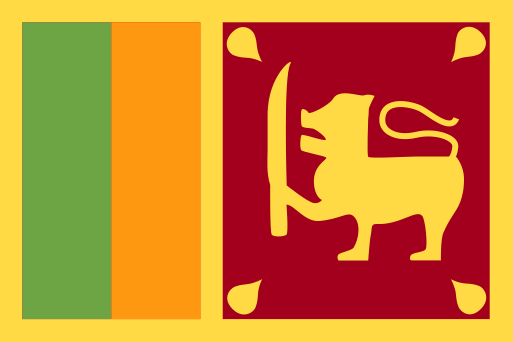
Photo by Gihanud2001, CC0, via Wikimedia Commons
Overview
Sri Lanka, officially the Democratic Socialist Republic of Sri Lanka, formerly known as Ceylon, is an island country in South Asia. It is located in the Indian Ocean, southwest of the Bay of Bengal, and is separated from India by the Gulf of Mannar and the Palk Strait. Sri Lanka shares a maritime border with the Maldives to the southwest and India to the northwest, and lies across the Bay of Bengal from Bangladesh and Myanmar to the northeast and the Andaman and Nicobar Islands of India to the east. Its executive and judicial capital is Colombo, which is also its largest city and the political, financial and cultural centre of the country; neighboring Sri Jayawardenepura Kotte is the legislative capital. Sri Lanka's population is 22 million. About 74% of the population are Sinhalese, who speak the Sinhala language, and about 15% are Tamils who speak the Tamil language.
Text from Wikipedia, licensed CC BY-SA.
Where to go in Sri Lanka


Hidden gems
Lesser-known places that travellers on Wikivoyage recommend beyond the main cities of Sri Lanka: villages, national parks and quiet corners. The short descriptions come from those lists (CC BY-SA).

Unawatuna
21 places listed
Beach resort on the south coast very close to Galle

Arugam Bay
17 places listed
Southeast-coast beach town with several top surfing spots

Delft Island
17 places listed
The westernmost of the islands near Jaffna, known for its wild horses, colonial ruins, and serene isolation.

Hikkaduwa
12 places listed
A beach town famous for snorkelling and surfing

Bentota
10 places listed
A destination for watersports

Dambulla
10 places listed
A cave temple included in the UNESCO world heritage list

Mirissa
10 places listed
Beach village and party hotspot on the south coast close to Matara with two good surfing spots

Kumana National Park
5 places listed
In the extreme south of the province next to Yala National Park, famed for birdwatching

Nilaveli
5 places listed
Town with a long sandy beach just north of Trincomalee

Ambalangoda
4 places listed
Famous for traditional wood mask manufacturing

Sinharaja Forest Reserve
1 place listed
Largest rainforest in Sri Lanka, also a. Extremely diverse fauna and flora. It is home to almost all the endemic species of birds in Sri Lanka. Open at 06:00 onwards.

Horton Plains
No places listed yet
A cloud forest in the central highlands with many endangered fauna and flora and endless hikes

Kaudulla National Park
No places listed yet
Lesser-known place to see elephants in about 20 km away from Minneriya

Knuckles Mountain Range
No places listed yet
Ideal for trekking.

Minneriya National Park
No places listed yet
Main destination to see elephants

Udawalawe National Park
No places listed yet
Famous for its large wild elephant population, making an excellent destination for safari-style tours

Yala National Park
No places listed yet
Wildlife safari in Hambantota. Yala national park is a very large animal sanctuary. There are a wide range of animals that roam around the park, including the rare Sri Lankan Leopard. If you are lucky enough, you would be able to spot them near a watering hole.
Public holidays
National days off in Sri Lanka in the next twelve months. Offices, banks and many shops close, and transport and stays get busier. Regional holidays and local festivals are not included, and holidays that follow the moon can move by a day.
- Il Full Moon Poya Day · ඉල් පුර පසළොස්වක පෝය දිනය
- Unduvap Full Moon Poya Day · උඳුවප් පුර පසළොස්වක පෝය දිනය
- Christmas Day · නත්තල් දිනය
- New Year's Day · නව වසර
- Duruthu Full Moon Poya Day · දුරුතු පුර පසළොස්වක පෝය දිනය
- Tamil Thai Pongal Day · දෙමළ තෛ පොංගල් දිනය
- Navam Full Moon Poya Day · නවම් පුර පසළොස්වක පෝය දිනය
- National Day · ජාතික දිනය
- Mahasivarathri Day · මහා ශිවරාත්රී දිනය
- Madin Full Moon Poya Day · මැදින් පුර පසළොස්වක පෝය දිනය
- Id-Ul-Fitr (Ramazan Festival Day) · ඊදුල් ෆිතර් (රාමසාන් උත්සව දිනය)
- Good Friday · මහ සිකුරාදා
- Bak Full Moon Poya Day · බක් පුර පසළොස්වක පෝය දිනය
- Day before Sinhala and Tamil New Year · සිංහල හා දෙමළ අලුත් අවුරුදු පූර්ව දිනය
- Sinhala and Tamil New Year · සිංහල හා දෙමළ අලුත් අවුරුද්ද
- Labour Day and Vesak Full Moon Poya Day · කම්කරු දිනය සහ වෙසක් පුර පසළොස්වක පෝය දිනය
- Day following Vesak Full Moon Poya Day · වෙසක් පෝය දිනට පසු දිනය
- Id-Ul-Alha (Hadji Festival Day) · ඊදුල් අල්හා (හජ්ජි උත්සව දිනය)
- Adhi Poson Full Moon Poya Day · අධි පොසොන් පුර පසළොස්වක පෝය දිනය
- Poson Full Moon Poya Day · පොසොන් පුර පසළොස්වක පෝය දිනය
- Esala Full Moon Poya Day · ඇසළ පුර පසළොස්වක පෝය දිනය
- Milad-Un-Nabi (Holy Prophet's Birthday) · මිලාද්-උන්-නබි (නබි නායකතුමාගේ උපන් දිනය)
- Nikini Full Moon Poya Day · නිකිණි පුර පසළොස්වක පෝය දිනය
- Binara Full Moon Poya Day · බිනර පුර පසළොස්වක පෝය දිනය
- Vap Full Moon Poya Day · වප් පුර පසළොස්වක පෝය දිනය
- Deepavali Festival Day · දීපවාලි උත්සව දිනය
Dates from the date-holidays project, based largely on Wikipedia (CC BY-SA 3.0). Check locally before you plan around a holiday.
Travelling in Sri Lanka
Getting around the country
Sri Lanka has a strong public transport network linking nearly all tourist destinations, making independent travel very easy. Roads can be terrifying due to local driving traditions — see. Together with occasional massive crowds (especially on holidays), often lacking luggage space, buses may not seem like the most appealing way of travel for some. Yet, they offer great opportunities for interaction with locals, are cheap, plentiful and have different price points (express/local, public/private). Harassment of women travelling alone was frequent in the past, but Sri Lanka seems to have grown up since then.
By bus. Bus travel in Sri Lanka is cheap. For those on a budget, buses are everywhere, although their safety and ease of use are questionable. As a foreigner you may be overcharged — simply ask for a ticket to your destination to get the correct fare, or ask a local beforehand. After a few days you will get a feel for the correct prices. As a guideline, the price for a normal local bus should be about Rs 5–10/km, the farther the cheaper (5 km ~ Rs 50, and 40 km ~ Rs 200), everything way beyond that is an indication of you getting overcharged. Buses run late, especially in cities, with services ending around 22:00. Google Maps displays incomplete information regarding bus routes and timetables on listings for bus stops. The best bus timetable information on Google Maps appears at bus depots; roadside stops typically have no routes indicated.
Money and costs
Money. The currency is the Sri Lankan rupee, denoted by the symbol "රු" or "Rs" (ISO code: LKR). There are coins in denominations of 1 (old version is big and silver, new version is a much smaller with a little change in design), 2 (silver), 5 (gold and silver), 10, (silver) and 20 rupees (seven-sided and silver). Banknotes of Sri Lanka are issued in denominations of 20, 50, 100, 500, 1,000, 2,000 and 5,000 rupees. Coins that are more than a few years old are typically in quite bad condition. Banknotes that are ripped, defaced or written on are not accepted in stores, nor are wet or balled up bank notes. Be alert when accepting change; the slightest tear or stain might mean that the notes are worthless. Sri Lankan bank notes have telltale anti-forgery markings that travellers should familiarise themselves with. These include a watermark on the left hand side, raised threads of the left and right edges of the note, and a shiny hologram strip down the middle of the note.
ATMs. ATMs are common in the cities and suburbs, especially at bank branches, less so in the countryside. You can withdraw using debit cards too (Cirrus, Maestro, Visa Electron, etc.) where the logos are displayed. Not every ATM accepts international cards, but many do. Most ATMs will dispense up to Rs 100,000 at once. Only Peoples Bank and Bank of Ceylon (BOC) seem to charge no fee for withdrawals.
Credit cards and banking services. Be careful of using credit cards, as fraud is on the rise in Sri Lanka.
Language
Sinhala, spoken by the majority Sinhalese, and Tamil, spoken by the minority Tamils, are Sri Lanka's two official languages. English is commonly used in most cities, especially Colombo, Kandy and Galle, and by government and tourism officials – signage is also almost always trilingual. But while most of the people in Colombo can speak English, don't expect everyone, everywhere, to speak it fluently. In tourist areas you will have no problem with English. Most people in rural villages, however, cannot speak any English, beyond a few simple words. Sinhala language The greeting in Sinhala is āyubōvan. It means "May you live longer"; 'Thank you' is sthūthiyi and "how are you" is kohomədə. Tamil language: The greeting in Tamil is vanakkam; 'Thank you' is nandri.
Customs and manners
There are several customs that, especially for Western travellers, will take a bit of getting used to. It is customary to remove shoes and wear respectful attire (i.e., no miniskirts, tank tops, short pants) when visiting temples. It is also the custom to remove shoes before entering a home, though this is not as strictly followed as in places such as Japan. Never touch or pat Buddhist monks, including younger monks and children who practice at a temple. Do not display tattoos that depict the Buddha. They can be regarded as highly insulting in Sri Lanka, even if acceptable in other Buddhist regions. Arrest and deportation are realistic scenarios, although this last happened in 2014. Do not turn your back to a Buddha statue while within a reasonable distance. This includes posing for photos, where you should not make arm or body contact with the statue. It is advisable to photograph a Buddha statue with all persons facing towards it (as observing it), rather than posing alongside. Public nudity is illegal in Sri Lanka – nude or topless sunbathing and skinny dipping should be avoided, except in the private beach resorts which allow it. Although much latitude is given to tourists, it is more polite to use your right hand when handing money and small objects, etc. Of course you can use both hands for something big or heavy. Be respectful to monks/elderly/disabled. There's no particular etiquette, but do what you'd normally do like giving them a seat on a crowded bus.
Phones and internet
Phone. The country code for Sri Lanka is 94. Remove the intercity prefix (0) before the area code when dialling internationally into the country (i.e., 0112 688 688 becomes +94 112 688 688) when dialling from abroad. The two next numbers after 94 represents the area code, they are different for every district for more information see Telephone numbers in Sri Lanka.
Mobile and data. As of 2025, there are the following network providers: Dialog, Airtel, Mobitel and Hutch. 4G coverage on the island is good, sometimes slightly depending on the provider. People say Dialog is the best, and indeed Mobitel seems sometimes lacking proper connection. As of 2025, packages (at the airport) including data go for around €9 including 50-60GB for 30 days, with unlimited social media, calls and messages. Airtel has an offer of Rs 1,188 for 12GB data for 30 days, and unlimited social media and calls. Airtel and Mobitel offer 15GB data for only Rs 1,000. Mobitel has a 1GB/day incl. calls and messages and unlimited social media for Rs 1,390 per 29 days.
Internet. Most restaurants and guest houses have free WiFi.
Staying safe
Crime. Violent crime is not usually any more serious a problem for tourists in Sri Lanka than it is anywhere. There has been an increase in violent crimes involving tourists in the 2020s, but it is still very rare. Exercise the same care and attention as you would at home. Locals will greet foreigners with a smile and are generally helpful. It is recommended to avoid going alone after dark. Pickpocketing on public transport is uncommon, but take standard precautions.
Flooding. Many areas of interest to tourists will be near rivers, many of which are prone to flooding in the wet season. If travelling in a flood-prone area, you can use Rivernet to keep an eye on local river and dam ("tank") levels.
Road safety. Unfortunately, Sri Lanka's road fatality rate is among the worst in Asia. On average eight people die each day in road accidents. Most accidents happen when overtaking, driving recklessly, or speeding. Bus drivers are known for their especially aggressive and dangerous driving, due to their time constraints, with blind overtaking being very common. If you rent a tuktuk or motorbike, drive carefully and always leave enough space. When walking along the street, watch for traffic from both directions. Always look both ways when crossing the street. It is best to face oncoming traffic when walking along the roadway.
War and terrorism. Sri Lanka's lengthy and bloody civil war ended in 2009, when the government forces finally defeated the Tamil Tigers, committing war crimes against civilians in the process.
From the Wikivoyage guide, written by travellers (CC BY-SA), shortened. For entry rules, visas, health and current safety, always check your government's official travel advice (linked above).