

India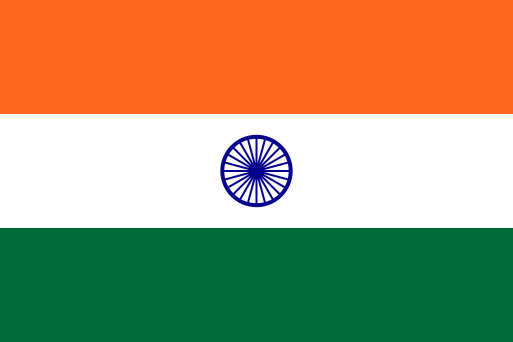
Photo by Marcin Białek, CC BY-SA 4.0, via Wikimedia Commons
Overview
India, officially the Republic of India, is a country in South Asia. It is the world's seventh-largest country by area and its most populous. Bounded by the Indian Ocean on the south, the Arabian Sea on the southwest, and the Bay of Bengal on the southeast, it shares land borders with Pakistan to the west, China, Nepal, and Bhutan to the north, and Bangladesh and Myanmar to the east. In the Indian Ocean, India is near Sri Lanka and the Maldives.
Text from Wikipedia, licensed CC BY-SA.
Where to go in India


Hidden gems
Lesser-known places that travellers on Wikivoyage recommend beyond the main cities of India: villages, national parks and quiet corners. The short descriptions come from those lists (CC BY-SA).

Kevadia
50 places listed
Gujarat — a small town best known for the Statue of Unity, the tallest statue in the world

Kodaikanal
48 places listed
And Ooty, hill-stations and the honeymoon destination of the 1970s

Havelock Island
34 places listed
For the beaches and the snorkelling

Kutch
34 places listed
Gujarat — largest district of India, Harappan city of Dholavira, a wild ass sanctuary also host of Kutch Mahotsav

Ghangaria
28 places listed
Uttarakhand — a park valley of wild flowers designated a UNESCO World Heritage Site

Parasnath Hills
24 places listed
Shikharji, also known as Sammet or Sammed Shikharji, is one of the holiest pilgrimage sites for Jains, in Giridih district, Jharkhand. It is located on Parasnath hill, the highest mountain in the state of Jharkhand. It is the most important Jain Tirtha, for it is believed to be the place where twenty of the twenty-four Jain tirthankaras along with many other monks attained moksha. It is one of the seven principal pilgrimage destinations along with Girnar, Pawapuri, Champapuri, Dilwara, Palitana, and Ashtapad Kailash.

Gorumara National Park
21 places listed
Rolling grasslands and forest is rich with herbivores such as the Indian rhinoceros and elephants birds, reptiles and amphibians

Sundarbans National Park
19 places listed
West Bengal — the largest mangrove forest in the world, where you might even spot a Bengal tiger

Mount Abu
18 places listed
Rajasthan — spreading out onto a plateau, this park is rich in varieties of plants and animals. A single unique variety of orchid can also be seen in this park

Chilika Lake
17 places listed
The second-largest lake in India, and a migratory bird hotspot. Also home to sea turtles and dolphins.

Gour
17 places listed
And (পাণ্ডুয়া Pāṇḍuyā) — former capitals of Bengal under the Sultans

Nubra Valley
17 places listed
If you thought Leh was impressive, head to Nubra Valley, Diskit, Hundar and Turkut, one of the greenest part of the cold desert region of Ladakh, and the only place in India where Bactrian Camels are found. Memories of the old trade routes connecting India with Central Asia.

Sagar Island
15 places listed
A Hindu pilgrimage site with unspoilt beaches

Araku Valley
13 places listed
Offers scenic beauty of the hills and greenery, interspersed with streams and rivulets

Konark
13 places listed
Sun Temple, a unique example of Kalingan architecture, which is a UNESCO World Heritage site

Kanha National Park
12 places listed
Madhya Pradesh — beautiful and well-managed park containing a good number of wildlife species

Majuli
12 places listed
Once considered the largest river island, it is home to Vishnav monasteries known as Satara

Ajodhya Hill and Forest Reserve Area
11 places listed
A low-lying hill in the western Rarh region

Gulmarg
9 places listed
Jammu and Kashmir — a hill station with lush green meadows and snow during winter.

Buxa Tiger Reserve
7 places listed
A forested area in Buxa and Jayanti Hills is a habitat for tigers, Asian elephants and other mammals plus a variety of birds, amphibians and reptiles

Jaldapara National Park
6 places listed
A national park with wildlife including one-horned rhinos

Pangong Lake
5 places listed
A very popular 64 km long soda lake of picturesque colours situated between India and China.

Trishna Wildlife Sanctuary
5 places listed
Known for its population of gaur (Indian bison), extensive grasslands, perennial streams and unusual diversity of primates.

Viswema
5 places listed
A Naga village outside of Kohima

Zanskar
5 places listed
One of the remotest areas in Ladakh, only accessible through high passes.

Simlipal National Park
4 places listed
A massive wild life sanctuary in Northern Odisha. Home to tigers and elephants

Nalanda
3 places listed
Site of the historic Nalanda mahavihara (lit. great monastery), the oldest residential university in the world until its destruction around 1200 CE.

Bhongir
2 places listed
A town with the impressive and fascinating Bhongir Fort located atop a rocky outcrop

Dudhsagar Falls
2 places listed
Goa — one of India's highest waterfalls

Gir Forest National Park
2 places listed
Gujarat — a very important and supported habitat for the last remaining population of wild Asiatic lions

Hemis National Park
2 places listed
A national park and haven for snow leopards and the numerous other rare and endangered species. With an area of over, it is by far India's largest national park, at elevations of 3,000–6,000 m. It is also one of the entry/exit point into Markha Valley, popular with experienced hikers and trekkers.

Horsley Hills
2 places listed
A hill station and summer residence of British governors

Mudumalai National Park
2 places listed
Offers a variety of flora and fauna, plus the opportunity to go on an elephant safari

Nameri National Park
2 places listed
One of the most scenic national park of Assam, Nameri comes as a delight for the nature loving and bird watching traveler. The bird-life is particularly superb. Also, chances of spotting a Tiger is very high.

Nanda Devi National Park
2 places listed
A, famous for its outstanding natural beauty, endangered animals and endemic alpine flowers

Rajaji National Park
2 places listed
National Park and Tiger Reserve

Ranthambhore National Park
2 places listed
Rajasthan — one of the best places in India to see tigers in the wild

Singalila National Park
2 places listed
A popular trekking destination with Mt Sandakphu, the tallest peak of West Bengal

Sunabeda
2 places listed
The Kashmir of Odisha

Bhitarkanika National Park
1 place listed
Mangrove wetland park

Gopalpur
1 place listed
Beach resort

Hazaribagh National Park
1 place listed
Jharkhand — similar to Betla National Park, the park has tigers, panthers and spotted deer. There are several towers from which tourists can view the beautiful and scenic surroundings as well as spot wildlife in their natural habitat

Nelakondapally
1 place listed
Nelakondapally, also referred to as Nelakondapalli or Nela Kondapalli, is a town and headquarters of a mandal in Khammam district, Telangana, India. It is also an archaeological site important to early Buddhism and Hinduism, where excavations have discovered a major stupa site near an ancient manmade lake, another site where Buddhist and Hindu artwork were carved in pre-3rd century India, both sites also yielding hundreds of ancient rare coins with Shaiva and Vaishnava inscriptions from the dynasties of Andhra Ikshvakus and Vishnukundinas. Nelakondapally is also the birthplace of Bhakta Ramadasu.

Belum Caves
No places listed yet
A network of natural underground caves in shale/slate rock, partly explored

Betla National Park
No places listed yet
One of India's first national parks formed primarily for the protection of tigers

Bhadra Tiger Reserve
No places listed yet
Bhadra Tiger Reserve covers the catchment area of the Bhadra River.

Dudhwa National Park
No places listed yet
A project for wildlife preservation

Keibul Lamjao National Park
No places listed yet
The world's only floating national park, because of decomposed plant materials and part of the Loktak Lake ecosystem. It provides the natural habitat for the endangered Eld's deer or brow-antlered deer (Sangai deer). It is an annual destination place for many migratory birds, including the Siberian cranes, during winter. It is also home to a variety of mammals, birds, amphibians and reptiles.

Pakhal Lake
No places listed yet
Part of the Pakhal Wildlife Sanctuary

Patsho
No places listed yet
A village in low-lying landscape surrounded by breathtaking mountains

Pench National Park
No places listed yet
Madhya Pradesh — a national park with various species of animals such as deer, wild gaurs and monkeys, as well as infrequent sightings of tigers and lions

Satpura National Park
No places listed yet
Madhya Pradesh — located in the rugged terrain of the Satpura hills, this park habitat for a large diversity of animals such as the tiger, leopard, wild dog, chital, wild boar and wide variety of birds. On rare occasions, elephants, lions and water buffalo have visited the park.

Shirui National Park
No places listed yet
Also called Shirui National Park, this park near Ukhrul is the world's only wild habitat for the Shirui lily (Lilium macklineae), and also has tigers, leopards and a variety of rare bird species such as the Blyth's tragopan. The Shirui peak during monsoon season is covered with the blooms of the exotic lily.

Sultanpur National Park
No places listed yet
Haryana — this park provides habitat and feeding grounds for many migratory birds such as the Siberian crane as well as the many resident bird species found here

Yangoupokpi-Lokchao Wildlife Sanctuary
No places listed yet
This sanctuary hosts the unique and vibrant biodiversity of the Indo-Myanmar region because of its strategic location in the juncture of the two major geographical zones.
West Telangana
13 places listed
Hilltop temples
Thanga
12 places listed
The largest island in Manipur and one of the most common boating adventure zones in Manipur, the world's only floating national park, Keibul Lamjao National Park is also under its jurisdiction but outside the main island.
Palampet
5 places listed
Ramappa Shiva Temple complex UNESCO World Heritage Site
Changthang Western Lakes
4 places listed
An impressive lake region close to the border with China and a convenient side tour from the Leh-Manali Highway, home to many rare wildlife.
Diamond Triangle
4 places listed
Buddhist heritage sites of lalitgiri, Ratnagiri and Udaygiri
Public holidays
National days off in India in the next twelve months. Offices, banks and many shops close, and transport and stays get busier. Regional holidays and local festivals are not included, and holidays that follow the moon can move by a day.
- Christmas Day
- Republic Day
- Good Friday
- Ambedkar Jayanti
- Independence Day
- Gandhi Jayanti
Dates from the date-holidays project, based largely on Wikipedia (CC BY-SA 3.0). Check locally before you plan around a holiday.
Travelling in India
Getting around the country
India is big and there are lots of interesting ways to travel around it, most of which could not very well be described as efficient or punctual. Allow considerable buffer time for any journey with a fixed deadline (e.g. your flight back), and try to remember that getting there should be half the fun.
Addresses. If you need to get anywhere, call in advance and ask for detailed directions. Bear in mind that street signs in India tend to be rare or non-existent outside the cities. Postal addresses will often carry landmark details "Opp. Prithvi theatre" or "Behind Maruti Showroom" or "near temple / church / mosque / bank branch / police station / school" to ease the search. Unlike the western system of address, the Indian system uses plot number or house number, sometimes house name, street, road followed by landmark and the location pin code instead of street name and block number. Finding a place will usually involve some searching, but you will always find someone around the area willing to guide you. Unlike many other countries, Indians ask passers-by, nearby shopkeepers or cops for guidance on street addresses. So you may do the same, people would be happy to help. Using Google Maps with GPS works well most of the time in major cities but at times may not be accurate due to incorrect spelling of road or incorrect positioning on map.
Money and costs
Money. The currency in India is the Indian rupee (sign: ₹; code: INR). The rupee is subdivided into 100 paise (singular: paisa). "5 rupees 50 paise" would normally be written as ₹5.50. You may also see 'Rs' for rupees, as well as prices written like 500/- (with a slash and hyphen at the end). Indian banknotes or bills generally come in denominations of ₹10 (orange and violet/chocolate brown), ₹20 (reddish-orange/greenish yellow), ₹50 (violet/fluorescent blue), ₹100 (greenish blue/lavender), ₹200 (bright yellow) and ₹500 (stone grey). Note that there are two versions of ₹10, ₹20, ₹50 and ₹100 notes, and both are legal tenders. Other, less common denominations include ₹1 (pinkish green), ₹5 (green) and ₹2000 (magenta). Indian coins in circulation come in denominations of 50p (rare), ₹1, ₹2, ₹5, ₹10 (yellow ring with steel centre) and ₹20 (steel ring with yellowish gold centre). Coins are useful for buying tea (₹5), for bus fares (₹2 to ₹20) and for giving exact change for an auto-rickshaw. The rupee is called rupayā (रुपया) in Hindi, Marathi and Punjabi, rūpiyo (રૂપિયો) in Gujarati, rūpa (രൂപ) in Malayalam, and rūpāy (ரூபாய்) in Tamil. It is also called ṭākā (টাকা) in Bengali, ṭokā (টকা) in Assamese, ṭaka (टक) in Maithili, and ṭonkā (ଟଙ୍କା) in Odia. Also note the use of lakh and crore for 100,000 and 10,000,000 respectively regarding money. See above for details.
Change. You can change foreign currencies into rupees at any one of the numerous foreign exchange conversion units including banks.
Language
in Manipuri, Hindi and English]] Hindi and English are two official languages of India, which also serve as lingua francas in the country. However, for longer stays, picking up at least some of the local language is useful, and may be essential outside cities where English proficiency is limited. People would appreciate it if an outsider makes an attempt to communicate in their language. Most Indian languages belong to the Indo-Aryan and Dravidian language families. The Indo-Aryan languages are descended from Sanskrit and spoken across the northern half of India: Hindi is spoken by nearly a half of India's population, across northern and central India. It is also common in western and eastern India.
Customs and manners
Indians, by and large, are neutral communicators. Although Indians try to be respectful and courteous in social situations, words are often taken at face value. It's important to be explicitly clear and upfront about what you intend to say as euphemisms, idiomatic language, and the like may be misunderstood. The greeting by a Hindu is to bring their palms together in front of their chest, or saying namaste or namaskār / namaskāram. Some groups have special greetings, like vaṇakkam for Tamils and khurumjari for Meiteis. All these forms are equally polite and correct if a little formal. Almost all people (even if they don't know English) do understand a 'hi' or a 'hello'. In cities and much of northern India, it is quite acceptable to offer a 'hello' or 'good day' followed by a handshake, regardless of gender. Direct personal questions (based on your personal life, salary, education and lifestyle) are commonly asked. To Indians, it's not considered impolite, but rather it's a way to get to know someone fully. In some cases, you may find others giving you advice on whatever it is you're doing, either warranted or unwarranted. Don't feel annoyed or irritated by this as Indians don't intend to patronise or pull you down in any way. If you feel the question was too personal, simply give an indirect answer and move along. Indians respect their elders and it would be seen as rude to directly challenge a statement said by someone older than you.
Phones and internet
The country code for India is +91. In India, area codes are called STD codes (Subscriber Trunk Dialing - national long distance) and international dialing is called ISD (International Subscriber Dialing - international long distance). Local phone numbers can be anywhere from 5-8 digits long. But when the STD code is included, all landline phone numbers in India are 10 digits long. Mobile phone numbers are always 10 digits long and usually start with '9', '8', '7' or '6'. The following table explains how to dial: {| class="wikitable" align="right"!
Internet. Public Wi-Fi in India is, for the most part, limited. Delhi, Bengaluru, Pune and Mumbai are the only cities with decent public Wi-Fi coverage. Many free Wi-Fi services will require entering a one time password (OTP) sent to an Indian cell phone number and are usually operated by Airtel or Jio. All airports and railway stations offer free high speed Wi-Fi. Internet cafés are common and they charge as little as ₹10–20/hr. Many will ask for your passport or ID. Beware of using your credit cards online as there have been many cases of credit cards thefts using keyloggers. Public libraries have PCs with broadband for public use.
Staying safe
As a rule India is quite safe for foreigners, apart from instances of petty crime and theft, as long as certain basic precautions and common sense are observed. Women should be cautious travelling alone at night. In India, the national emergency helpline number is, which connects you to police, fire, ambulance, women and child helplines. This number is available 24/7 across India to provide immediate assistance during emergencies. There are other numbers which you can see in the below sections. While hospitality is important in India, it is not common to see people offering to share food or cookies while they eat. Some such offers are genuine and some are not. If you are travelling by train and you are offered food by a family group, it is usually safe to take a bite. But if you are offered something by a group of men or even a couple, you should decline, even if they also eat of it, as the part offered might be laced with sedatives. You can politely say no with a smile; those who offer food genuinely won't take it personally. Some people handling your cash will try to shortchange you. In Delhi particularly, this is a universal rule adhered to by all who handle westerners' cash, including official ticket sellers at tourist sites, employees at prepaid taxi stands, and merchants in all but the most upscale businesses. Count your cash before handing it over, and ensure that you receive the correct change.
From the Wikivoyage guide, written by travellers (CC BY-SA), shortened. For entry rules, visas, health and current safety, always check your government's official travel advice (linked above).