

China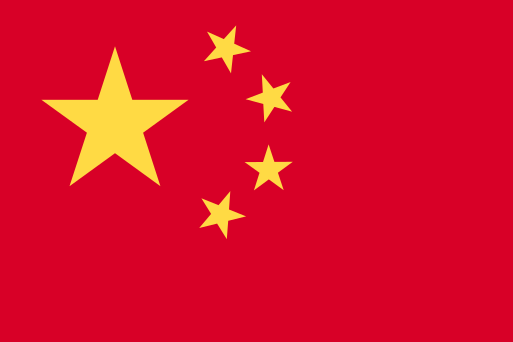
Photo by CEphoto, Uwe Aranas, CC BY-SA 3.0, via Wikimedia Commons
Overview
China, officially the People's Republic of China (PRC), is a country in East Asia. It is divided into 33 province-level divisions, including two special administrative regions. Beijing is the capital, while Shanghai is the most populous city by urban area. Its geography features the Central Plain, major rivers such as the Yangtze and Yellow River, deserts, subtropical and temperate forests, plateaus, and mountain ranges such as the Himalayas. It is the world's second-most populous country after India, with a population exceeding 1.4 billion. Covering 9.6 million square kilometers (3,700,000 sq mi), it is the third largest country by area.
Text from Wikipedia, licensed CC BY-SA.
Where to go in China


Hidden gems
Lesser-known places that travellers on Wikivoyage recommend beyond the main cities of China: villages, national parks and quiet corners. The short descriptions come from those lists (CC BY-SA).

Dazu
53 places listed
A district of Chongqing Municipality, famous for extensive Buddhist rock carvings which are a

Shaoxing
44 places listed
绍兴, is the largest of these, a city of about half a million. It attracts many Chinese tourists to whom it is famous as the "town of fish and rice", an expression indicating prosperity.

Yichang
42 places listed
Cruise along the Yangtze River between Yichang and Chongqing

Xiamen/Gulangyu
29 places listed
Is an island in Xiamen with many European colonial buildings, a.

Pingyao
28 places listed
Ancient city.

Dengfeng
27 places listed
Home to Shaolin Temple which is a famous kung fu center

Jiaxing
27 places listed
An historic town south-west of Shanghai. The final scene from Mission Impossible 3 was filmed here.

Mount Wuyi
26 places listed
Is a scenic and historic area famous for tea.

Leshan
21 places listed
Most famous for its huge riverside cliff-carving of Buddha and nearby Mount Emei.

Libo County
21 places listed
Libo County is a county of southern Guizhou province, China, bordering Guangxi to the south. It is under the administration of the Qiannan Buyei and Miao Autonomous Prefecture.

Kaiping
20 places listed
Guangdong, mainly in the early 20th century, are on the UNESCO World Heritage List

Weizhou
20 places listed
Volcanic island

Qinhuangdao
19 places listed
And – Qinhuangdao’s main seaside resort areas, heavily visited in summer by domestic tourists from Beijing and surrounding regions. Beidaihe is the more established and busy resort district, popular with family-oriented and budget tourism. Nandaihe is generally quieter and more recently developed, with newer coastal resort communities and some areas associated with cultural and artistic developments such as Aranya.

Nyingchi
18 places listed
Containing the world's largest canyon, the Yalung Zangbo Canyon.

Fujian Tulou
17 places listed
Earth roundhouses in Western Fujian.

Qianshan National Park
17 places listed
Nicknamed the Treasure Pearl of North China

Anji
16 places listed
County (Huzhou prefecture, Zhejiang province on the south side of Lake Tai) has over 60,000 hectares (about 235 square miles) of bamboo groves and 40 different species of bamboo.

Wutaishan National Park
16 places listed
Mount Wutai, also known by its Chinese name Wutaishan and as Mount Qingliang, is a sacred Buddhist site at the headwaters of the Qingshui in Shanxi Province, China. Its central area is surrounded by a cluster of flat-topped peaks or mesas roughly corresponding to the cardinal directions. The north peak is the highest and is also the highest point in North China.

Mount Putuo
15 places listed
Is an island near Ningbo, a national park with an important Buddhist temple.

Tiantaishan
15 places listed
Rocks, waterfalls, and an ancient temple

Xingping
14 places listed
Ancient town on the Li River between Guilin and Yangshuo

Zhengding County
13 places listed
Walled city with over 1,000 years of history as an administrative and religious center, including towering pagoda temples.

Danxiashan
11 places listed
Striking red and brown mountains and cliffs in northern Guangdong

Tongxiang
11 places listed
乌镇 is close to Hangzhou and makes a good stop en route between Shanghai and Hangzhou. There are buses from Shanghai Stadium.

Emeishan National Park
10 places listed
Sichuan Province (3,099 meters)

Liu'ao
10 places listed
Peninsula — windswept beaches and ruins of an ancient and modern fortifications

Qingchengshan-Dujiangyan National Park
10 places listed
One of the ancient cradles of Daoism

Shilin
10 places listed
The Stone Forest, a national park full of spectacular stone pillars carved by erosion

Yandangshan
9 places listed
Was formed 120 million years ago, is the edge of the Pacific Rim Volcanic Belt in one of the most complete, and typical of the rhyolite fire breakthroughs, experienced four phases of volcanic eruptions created the Yandang Mountain majestic and magnificent landscape.

Lugu Lake
8 places listed
A lake between Sichuan and Yunnan

Huashan National Park
7 places listed
Mount Hua is a mountain located near the city of Huayin in Shaanxi Province, about 120 kilometres (75 mi) east of Xi'an. It is the "Western Mountain" of the Five Great Mountains of China and has a long history of religious significance. Originally classified as having three peaks, in modern times it is classified as having five main peaks, the highest of which is the South Peak at 2,154.9 metres (7,070 ft).

Moganshan
7 places listed
A mountain getaway from Shanghai

Mount Heng
6 places listed
One of the five sacred Taoist mountains of China. Nan Yue Temple lies in the foothills of the mountain.

Laiyuan County
5 places listed
One of north China's most picturesque mountains.

Pingshan County
5 places listed
Walk across one of the world's longest glass-bottom bridges.

Siguniangshan National Park
5 places listed
Mount Siguniang, or Mount Skubla is the highest mountain of Qionglai Mountains in Western China. It is located in the bordering area of Siguniangshan Town, Xiaojin County and Wenchuan County in Ngawa Tibetan and Qiang Autonomous Prefecture, Sichuan Province.

Wulingyuan
5 places listed
Scenic Area nature reserve

Xixia Wangling National Park
5 places listed
Western Xia Tombs

Chongwu
4 places listed
A well preserved (or restored) seaside fortress

Jiuzhaigou Nature Reserve
4 places listed
Known for its many multi-level waterfalls, colourful lakes and as the home of the giant pandas.

Xidi
4 places listed
And Hongcun - two ancient villages in Southern Anhui - are on the UNESCO World Heritage List

Chengyang
3 places listed
Idyllic Zhuang villages, famous for their wind water bridge (风雨桥)

Lushan
3 places listed
UNESCO World Heritage Site. Beautiful 1,474-m mountain. Good day trip from Nanchang or Jiujiang

Three parallel rivers
3 places listed
More remote but sensational

Xiandu
3 places listed

Jingpohu National Forest Park
2 places listed
Nickname of Mirror Lake

Karakol Lake
2 places listed
The Karakul or Karakuli, is a lake located 196 km southwest of Kashgar, Xinjiang Uyghur Autonomous Region of China. It is located in Akto County, Kizilsu Kirgiz Autonomous Prefecture on the Karakoram Highway, before reaching Tashkurgan, the Khunjerab Pass on the China – Pakistan border and Sost in Pakistan.

Zunhua
2 places listed
And - Discover the imperial legacy of the Qing Dynasty through visits to the Eastern and Western Qing Tombs, both located in Hebei. The Eastern Qing Tombs, near Tangshan, are known for their grand architecture and the tombs of prominent emperors such as Kangxi and Qianlong, as well as the notorious Empress Dowager Cixi. On the quieter side, the Western Qing Tombs near Baoding offer a reflective atmosphere spread over a scenic expanse, featuring the tomb of Emperor Yongzheng, as well as that of China's penultimate emperor Guangxu, the last imperial tomb to be built in China. The grave of China's last emperor Puyi is in a commercial cemetery next to the Western Qing Tombs, but it differs little from the graves of modern-day commoners.

Beichuan
1 place listed
Memorial city destroyed by earthquake and landslide in 2008, parts of it are open to tourists for viewing the damage and paying respect

Huanghe Hukou Pubu National Park
1 place listed
The Hukou Waterfalls is the largest waterfall on the Yellow River, the second largest waterfall in China, and the world's largest yellow waterfall. It is located at the intersection of the provinces of Shanxi and Shaanxi, 165 km (103 mi) to the west of Fenxi County, and 50 km (31 mi) to the east of Yichuan County where the middle reaches of the Yellow River flow through Jinxia Grand Canyon. The width of the waterfall changes with the season, usually 30 metres (98 ft) wide but increasing to 50 m (164 ft) during flood season. It has a height of over 20 m (66 ft). When the Yellow River approaches the Hukou Mountain, blocked by mountains on both sides, its width is abruptly narrowed down to 20–30 m (66–98 ft).

Longmen National Park
1 place listed
Home to the Longmen Grottoes, close to Luoyang in Henan Province.

Shennongjia Forestry District
1 place listed
A World Heritage-listed district featuring an eponymous mountain massif with virgin forests

Wudalianchi National Forest Park
1 place listed
Nature reserve and health spa destination

Yading
1 place listed
Nature Reserve

Benxi Shuidong National Park
No places listed yet
River in a cavern

Changbaishan National Nature Reserve
No places listed yet
Home to Heaven Lake

Fenghuangshan National Park
No places listed yet
Mountain temple fair in April attracts thousands

Huanglongsi National Park
No places listed yet
Jiuzhaigou National Park

Kongtongshan National Park
No places listed yet
Important site in the Taoist religion

Mount Jiuhua
No places listed yet
Mount Jiuhua located in Chizhou, Anhui Province in China is an important Buddhist site and natural scenic spot. It is one of the four famous Buddhist mountains in China, one of the first batch of 5A level scenic spots in China, one of the first batch of natural and cultural heritage sites in China, and the main scenic spot of "two mountains and one lake" tourism development strategy in Anhui Province. The planned area of the scenic spot is 120 square kilometers, and the protected area is 174 square kilometers, which is composed of 11 scenic spots.

Mount Sanqingshan National Park
No places listed yet
Mount Sanqing is a renowned Taoist sacred mountain located 40 kilometres (25 mi) north of Yushan County in Jiangxi Province. Sanqing means the "Three Pure Ones" in Chinese as Mount Sanqing is made up of three main summits: Yujing, Yushui, and Yuhua, representing the Taoist trinity.

Paracel Islands
No places listed yet
A disputed territory in the South China Sea. China has established a few settlements by extensively reclaiming land, but entry is restricted to mainland Chinese citizens.

Qiandaohu
No places listed yet
A scenic lake known for its clear water and 1,000+ islands (hence its nickname Thousand Island Lake)

Qomolangma
No places listed yet
Straddling the border between Nepal and Tibet, this is the world's highest mountain.

Sayram Lake
No places listed yet
Sairam Lake, also known as Santai Haizi or historically the "Clean Sea" (净海), is an endorheic freshwater lake in the northern Tianshan Mountains at Börtala Mongol Autonomous Prefecture, Xinjiang, China, less than 50 km (31 mi) from the border with Kazakhstan. The name Sayram originally derives from Kazakh, meaning "blessing".

Taining
No places listed yet
A UNESCO Global Geopark near Sanming

Tianmen Mountain
No places listed yet
In Zhangjiajie

Tianshan Tianchi National Park
No places listed yet
Tianchi is an alpine lake in Xinjiang, Northwest China. The name (天池) literally means Heavenly Lake and can refer to several lakes in mainland China and Taiwan. This Tianchi lies on the north side of the Bogda Shan range of the Tian Shan, about 30 kilometres (19 mi) south of Fukang and 45 kilometres (28 mi) east of Ürümqi. It is an alpine drift lake shaped in the Quaternary Glacier period.

Zhalong National Nature Reserve
No places listed yet
Peaceful wetlands home to 260 species of birds

Zhangjiajie National Forest Park
No places listed yet
Dense forests, deep ravines, deep canyons, unusual peaks, caves, and pillar-like rock formations blanketed throughout the park. These pillar rock formations are what the park is renowned for around the world.

Zhouzhuang
No places listed yet
Located between Shanghai and Suzhou.
Jianmen Shudao National Park
6 places listed
Jianmen Pass and Ancient Plankway of Shudao
Shunan Zhuhai National Park
1 place listed
Shunan Zhuhai National Park (蜀南竹海国家公园) is in Sichuan province. It is also known as The Bamboo Forest, The Bamboo Sea and The Bamboo City.
Hanas National Nature Reserve
No places listed yet
A national park on the crossroads of Mongolia, Kazakhstan, and Russia
Langde
No places listed yet
A Miao village 20 km south of Kaili; (西江), large traditional Miao village located in LeiGongshan national park; and (肇兴), idyllic Dong minority town nestling in a valley
Maijishan National Park
No places listed yet
Cliffside grottoes and botanic gardens
Mount Dalei
No places listed yet
Mount Dalei is a mountain in the Tiantai Range of eastern China. Its peak reaches 809 metres above sea level.
Xianghai National Nature Reserve
No places listed yet
Over 100 swamps and a wide range of wildlife
Zhangguying village
No places listed yet
A small village from the Ming Dynasty.
Public holidays
National days off in China in the next twelve months. Offices, banks and many shops close, and transport and stays get busier. Regional holidays and local festivals are not included, and holidays that follow the moon can move by a day.
- New Year's Day · 元旦
- Spring Festival · 春节
- Spring Festival · 春节
- Spring Festival · 春节
- International Women's Day · 国际妇女节
- Qingming Festival · 清明节 清明節
- Labour Day · 劳动节
- Youth Day · 青年节
- Children's Day · 六一儿童节
- Dragon Boat Festival · 端午节
- Army Day · 建军节
- Mid-Autumn Festival · 中秋节
- National Day · 国庆节
- National Day · 国庆节
- National Day · 国庆节
Dates from the date-holidays project, based largely on Wikipedia (CC BY-SA 3.0). Check locally before you plan around a holiday.
Travelling in China
Getting around the country
Google Maps does not work in China, and tends to have patchy coverage and data quality even if accessed via VPN. Moreover, China uses its own coordinate system for security reasons, which sometimes causes problems when using foreign map apps. The most common direction-finding app used by the Chinese themselves is Baidu Maps, though it is only available in Chinese. Amap (高德地图 gaode ditu) is a very convenient app available for both, Android and Apple devices. It is useful for navigating on foot or by car and also lists available public transportation options (bus and subway), including the price. Also available in English. It covers all of China and is useful even in seemingly rural places, though sometimes certain routes are only found on Baidu maps, so it's worth having both. Apple Maps uses Amap's data and is reliable, though it lacks certain features that the others offer. Alternative methods include other map apps based on OpenStreetMap data or renting a local GPS. More information at GPS navigation. Names of long streets are often given a middle word indicating the part of the street: north (北 běi), south (南 nán), east (东 dōng), west (西 xī), or central (中 zhōng). For example, White Horse Street or Báimǎ Lù (白马路) may be split up into Báimǎ Běilù (白马北路 "White Horse North Street"), Báimǎ Nánlù (白马南路 "White Horse South Street"), and Báimǎ Zhōnglù (白马中路 "White Horse Central Street"). In some cities, however, these names do not indicate parts of one street.
Money and costs
Money. The official currency of the People's Republic of China is the Chinese yuan, known as the renminbi (人民币 rénmínbì, "People's Money"), denoted by the symbol ¥, international currency code CNY. All prices in China are given in yuan; the Chinese character is 元 (yuán), or in financial contexts (e.g. cheques and banknotes) 圆. A price may be shown as, for example, 20 元, 20 rmb, RMB 20, 20 yuan or ¥20; we use the latter form here. In informal spoken Chinese and sometimes in spoken English, 块 (kuài) may be used instead, much as "buck" can be used in the U.S. or "quid" in the UK. Some Chinese software will display a bigger "full width" character (¥) to differentiate it from the Japanese yen, which uses the same symbol. The Chinese yuan is not legal tender in the Special Administrative Regions of Hong Kong and Macau, which issue their own currencies. However many businesses will also accept Chinese currency, albeit at an unfavorable exchange rate. There are 10 jiǎo (角) in a yuan. A coin worth ¥0.1 will thus say 壹角 ("1 jiǎo"), on it, and a price like ¥3.7 would thus be read as "3 kuài 7". The jiǎo is rapidly heading for extinction, although you will get the odd 1 or 5 jiao coin or note as change. In spoken Mandarin, the jiǎo is usually called the máo (毛). A tenth of a máo is a fēn (分); you may see this digit on prices, but it will be rounded off if you pay in cash. In spoken language, the trailing unit may be dropped.
Foreign currency. Foreign currencies, including the Hong Kong dollar or U.S.
Language
The official language of China is Standard Mandarin, known in Chinese as Pǔtōnghuà (普通话, "common speech"), which is based on the Beijing dialect; Chinese in general is known as Zhōngwén (中文). Standard Mandarin is the main language for government and media, as well as the national lingua franca. While the official language is standardized, local pronunciation of Mandarin does vary by region. Unless otherwise noted, all terms, spellings and pronunciations in this guide are in Standard Mandarin. While national media is broadcast in Mandarin, each area often has its own local media that broadcasts in the local language. Chinese is written using Chinese characters (汉字, hànzì, lit. "Han characters").
Customs and manners
Foreigners are still a rare breed in most parts of China, which means that how you interact with people there may well shape their impression of your country or even of foreigners in general. Follow the law, be polite, and try to leave a good impression as it affects the general reputation of foreigners in China. Unlike Japan and South Korea where bowing is extremely common, in China the practice did not survive into the modern era, and is now only used in certain formal occasions such as marriage ceremonies, funerals, religious rituals, and by students greeting teachers in school. Give a soft handshake when greeting someone, which can be accompanied by a slight bow. Buddhist monks and nuns should be greeted by placing your palms together at chest level with your thumb and fingers pointing upwards (similar to the Thai wai), and bowing your head slightly while saying Ēmìtuófó (阿弥陀佛). Personal space more or less does not exist in China. Elevators and buses can get very crowded. It's common and acceptable for someone to come in close contact with you or to bump into you and say nothing. Don't get mad, as they'll be surprised and most likely won't even understand why you're offended. Important items such as business cards or important papers are given and received with both hands. Business cards in particular are treated very respectfully and formally. How you treat someone's business card is seen as representing how you will treat the person.
Phones and internet
Internet. Most public venues in China, such as libraries, restaurants and malls, offer free Wi-Fi access. Internet cafés remain popular in China, and the term usually refers specifically to gaming cafés. The Great Firewall of China blocks popular web services including Facebook, Twitter, Instagram, YouTube, Google, WhatsApp, Telegram and many others including Wikipedia. To bypass internet restrictions and access popular websites, travelers often use VPN services. As of September 2024, reports from users consider Mullvad and Astrill to be reliable. Popular VPN choices like Express and Nord are not considered reliable. During significant events, VPN services may experience disruptions. Be sure to install the VPN before arriving in China; attempting to do so after landing can be problematic as the service might already be blocked. See the Staying connected in China article for more information about setting up and coordinating VPN services. Other ways to bypass censorship include software such as Freegate, Tor (with an obfs4 bridge), and Psiphon. Travelers with the technical know-how are well-served to setup their own private V2ray relays to minimize the risk of detection.
Staying safe
While China is generally safe for visitors, the government has some authoritarian aspects, and the topic of human rights in China is highly contested. Despite what's written in the Chinese constitution, in practice some freedoms are strongly curtailed, such as free speech, privacy, freedom of information and the press, freedom of religion, and the right to a fair trial. As long as you're not deliberately provocative, most of these are unlikely to affect you during your visit — especially since enforcement is somewhat arbitrary anyway — but if they do, punishments can be heavy. China is known to use extrajudicial detention, torture, and the death penalty. Often criticized as "hostage diplomacy", detentions and enforcement are sometimes stepped up in reaction to geopolitical events. Chinese dual citizens and people of Chinese heritage who are citizens of other countries have been subject to "exit bans", kept in China, sometimes for years, to compel them to cooperate with government investigations or pressure their relatives to return to China. As long as you behave and do not get involved in drugs or political activity, you shouldn't have any problems. Even bypassing the Internet firewall or accessing potentially subversive material is usually overlooked for the average visitor. However, it doesn't hurt to have a contingency plan in case you run afoul of the government.
From the Wikivoyage guide, written by travellers (CC BY-SA), shortened. For entry rules, visas, health and current safety, always check your government's official travel advice (linked above).